
From the Vault to the Box Office: What Coyote vs. Acme’s Debuted Numbers Mean for Ketchup Entertainment and the Future of Looney Tunes
Introduction
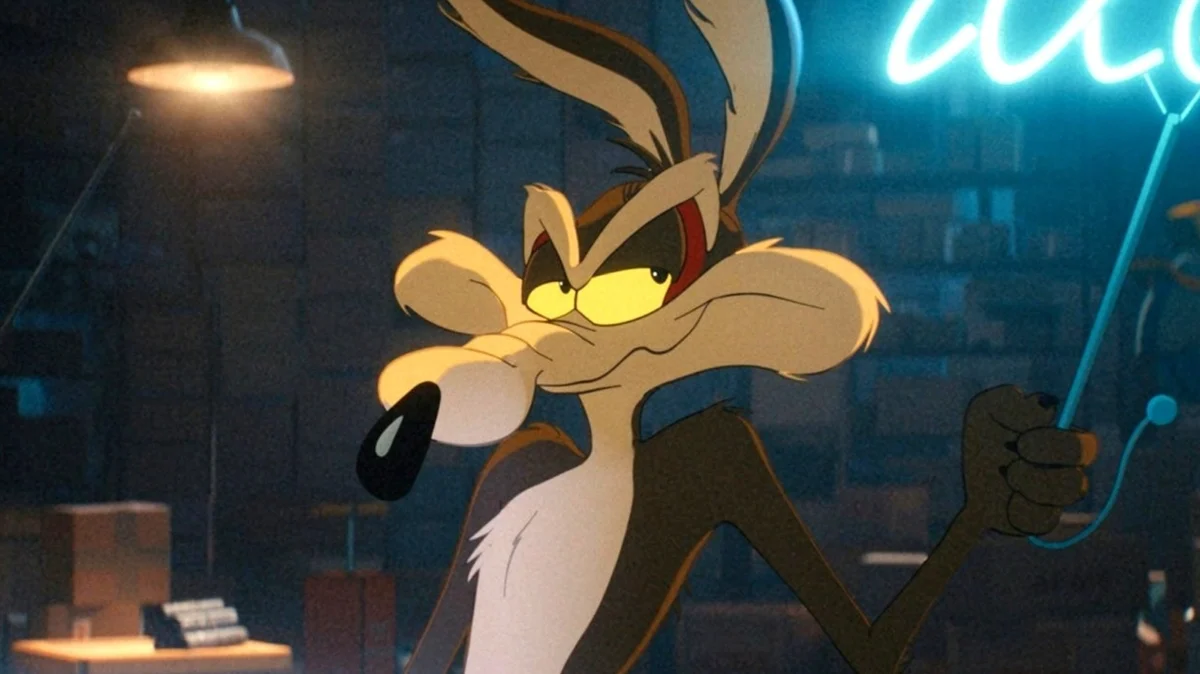
In the unpredictable landscape of modern Hollywood economics, few stories capture the absurdities of the studio system quite like the saga of Coyote vs. Acme. Once sitting squarely on the chopping block as a high-profile corporate tax write-off, the live-action/animated hybrid film has finally clawed its way onto movie theater screens.
The film’s theatrical debut has brought in $15.9 million domestically, securing the number-two spot at the box office. While that figure would normally raise eyebrows for a feature with a reported $70 million production price tag, the trajectory of Coyote vs. Acme is anything but normal. Rescued from oblivion by independent distributor Ketchup Entertainment, the movie’s performance represents a fascinating case study in alternative distribution, public goodwill, and the ongoing commercial struggles of classic animation intellectual property in the 21st century.
Main Facts
- Box Office Debut: Coyote vs. Acme opened domestically with $15.9 million, capturing the number-two spot at the North American box office.
- The Competition: The film finished behind Spider-Man: Brand New Day, which pulled in $22.2 million in its fifth consecutive weekend at number one, and outperformed Ridley Scott’s post-apocalyptic drama The Dog Stars (starring Jacob Elordi and Margaret Qualley), which debuted at $8 million.
- The Production and Rescue Cost: Warner Bros. originally produced the film for roughly $70 million before attempting to shelve it permanently for a tax write-off. Independent distributor Ketchup Entertainment subsequently stepped in, acquiring the rights for $50 million.
- Marketing Constraints: Unlike major studio releases that command $30 million to $40 million in promotional spending, Ketchup operated with a leaner marketing budget estimated at around $10 million.
- Critical Reception: The film has been met with warm critical reception, boasting an impressive A CinemaScore from audiences.
Chronology of a Corporate Escape
To understand how Coyote vs. Acme reached theaters, one must look back at a turbulent timeline that reflects the shifting priorities of legacy media conglomerates.
The Write-Off Era (2022–2023)
Following the corporate merger that formed Warner Bros. Discovery, leadership under CEO David Zaslav initiated aggressive cost-cutting measures. This included shelving completed or near-completed projects to secure tax write-offs, most notoriously demonstrated by the cancellation of the DC film Batgirl in 2022. Coyote vs. Acme—directed by Dave Green (Teenage Mutant Ninja Turtles: Out of the Shadows) and blending live-action with traditional Looney Tunes animation—was slated for a similar fate.
The announcement that a finished, well-tested family film would be locked away forever sparked immediate and fierce backlash from filmmakers, fans, and industry insiders. The outcry forced Warner Bros. to briefly reverse course and allow the filmmakers to shop the project to other studios.
The Ketchup Rescue (2024–2025)
After months of protracted negotiations and industry-wide speculation, independent distributor Ketchup Entertainment emerged as an unexpected savior. In March 2025, Ketchup finalized a deal to acquire the distribution rights for $50 million, rescuing Wile E. Coyote from corporate purgatory.
The Theatrical Launch (August 2026)
Hitting theaters in late summer, the film’s arrival marked a symbolic triumph for artistic preservation. Rather than languishing in a digital vault or being quietly dumped onto a minor streaming platform, Wile E. Coyote’s legal battle against ACME Inc. was finally presented to paying audiences on the big screen.
Supporting Data and Financial Analysis
On paper, a $15.9 million opening weekend for a $70 million production is a formula for financial disaster. However, industry analysts emphasize that the economics of Coyote vs. Acme must be viewed through a radically different lens.
| Metric | Figure / Detail |
|---|---|
| Production Budget | ~$70 Million (Spent by Warner Bros.) |
| Acquisition Cost | $50 Million (Paid by Ketchup Entertainment) |
| Marketing Budget | ~$10 Million |
| Domestic Opening Weekend | $15.9 Million (Number 2 at Box Office) |
| Audience Reception | "A" CinemaScore / Strong Critical Reviews |
Ketchup Entertainment’s Calculated Risk
For Ketchup Entertainment, a boutique distributor with a mixed box office track record—which previously handled releases like Ben Affleck’s Hypnotic, one of 2023’s notable box office misfires—the stakes were high. With a lean $10 million marketing spend, Ketchup did not burden the asset with the astronomical overhead costs typical of major Hollywood studios.
A $15.9 million domestic opening is a surprisingly robust start for a distributor of this scale. If the film exhibits strong legs in the coming weeks, aided by its stellar "A" CinemaScore and positive word-of-mouth, and captures solid international, VOD, and home entertainment revenues, Ketchup could easily turn the $50 million acquisition into a profitable venture.
Industry comparisons illustrate potential paths forward. In a best-case scenario, the film could mirror the trajectory of titles like The Spongebob Movie: The Search for SquarePants ($15.6 million opening, $169.2 million worldwide). At worst, a more modest performance could align with Gabby’s Dollhouse: The Movie ($13.6 million opening, $80.8 million worldwide). Given that the alternative was zero revenue and permanent cultural erasure, any return on investment is a definitive win for Ketchup.
Official Responses and Industry Context
The journey of Coyote vs. Acme laid bare the anxiety surrounding intellectual property management in the streaming age. Filmmakers, writers, and artists openly criticized the weaponization of tax write-offs against creative labor.
While Warner Bros. executives declined to extensively revisit the controversy surrounding the film’s initial shelving, the studio’s broader handling of the Looney Tunes catalog has drawn intense scrutiny. Last year, Warner Bros. sold the distribution rights for The Day the Earth Blew Up: A Looney Tunes Movie—another critically praised, offbeat animated feature—to Ketchup Entertainment. Unfortunately, that film stumbled during one of the worst box office weekends in decades, capping its global run at a meager $15.4 million.
By contrast, Coyote vs. Acme matched that entire global haul in a single weekend in North America alone. Yet, despite the stronger start, industry observers question whether it is enough to alter corporate confidence in the theatrical viability of the brand.
Implications for the Future of the Looney Tunes Franchise
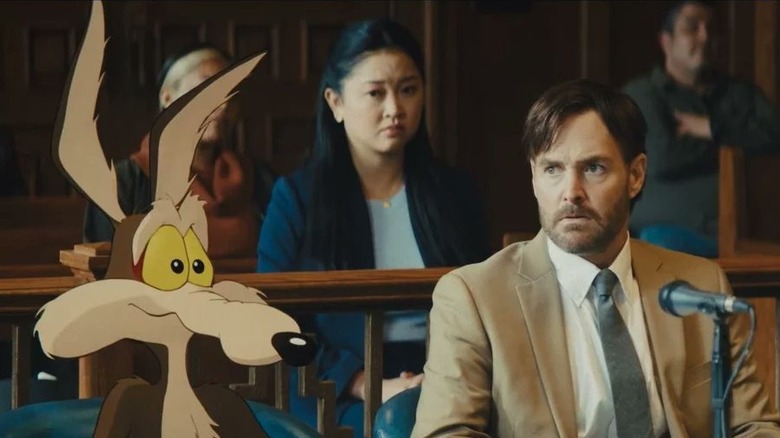
The performance of Coyote vs. Acme leaves the long-term cinematic future of Bugs Bunny, Wile E. Coyote, and the rest of the Looney Tunes roster shrouded in uncertainty.
An IP Without a Compass
For decades, the Looney Tunes stood alongside Mickey Mouse as the pinnacle of global animation. However, modern Hollywood has struggled to translate that anarchic, short-form brilliance into feature-film blockbusters.
- Space Jam: A New Legacy (2021) grossed $163.6 million worldwide, failing to capture the cultural lightning-in-a-bottle magic of the 1996 original.
- HBO Max’s critically acclaimed Looney Tunes Cartoons successfully recaptured the classic theatrical short style, yet failed to generate mainstream cultural penetration or merchandise momentum.
Now, with Coyote vs. Acme performing respectably as an indie-distributed rescue mission—but falling short of blockbuster status—executives are left wondering if modern audiences view the characters as big-screen draws. Furthermore, with ongoing corporate restructuring and potential shifts in studio ownership looming over Warner Bros., incoming leadership will inevitably bring distinct strategic agendas that may deprioritize classic legacy characters in favor of newer, more controllable properties.
The Verdict on Artistic Preservation
Ultimately, the greatest implication of Coyote vs. Acme’s release extends beyond balance sheets. It proves that public pressure can successfully disrupt corporate attempts to erase completed art for financial optimization. Even if the box office numbers do not launch a cinematic universe for the Looney Tunes, the film’s survival ensures that hundreds of hours of artist labor, creative vision, and cinematic joy are celebrating a theatrical release rather than gathering dust in a digital tomb.
Coyote vs. Acme is playing in theaters nationwide.
