
The Heartbeat of the Peloton: Gobelins’ Masterpiece ‘Direction les Champs’ Captures the Spirit of Resilience
By Alex Billington
October 5, 2026
In the landscape of modern animation, few institutions hold the pedigree and consistent creative output of Gobelins, the prestigious Paris-based school that has long served as a greenhouse for the industry’s brightest rising stars. Every year, the school releases a collection of graduation projects that frequently surpass professional studio shorts in both technical ambition and emotional resonance. This year, the crown jewel of their output is undoubtedly Direction les Champs, a seven-minute animated short that manages to weave the high-octane energy of the Tour de France into a deeply intimate, poignant exploration of grief, sibling bonds, and the restorative power of hope.
The Main Facts: A Story of Wheels and Will
Direction les Champs centers on an eight-year-old girl named Sophie living in the fictional, picturesque village of Laventour. The narrative hook is simple yet loaded with stakes: the Tour de France—the ultimate pilgrimage for cycling enthusiasts—is finally passing through their tiny, quiet hamlet. For Sophie, this is more than just a sporting event; it is a vital mission. Her older brother, Benoît, was once the village’s pride, a cycling champion whose life was defined by the speed of his bicycle and the open road.
However, the film opens on a somber note. Months prior to the race, something changed. Benoît has retreated into the silence of his room, effectively mourning a loss that has stripped him of his interest in the outside world. He has become a ghost in his own home. Sophie, fueled by the stubborn optimism of youth, refuses to let the event pass without him. She believes that if she can just get him to the roadside to witness the peloton thundering past, she might be able to reach the brother she has lost to his own internal darkness.

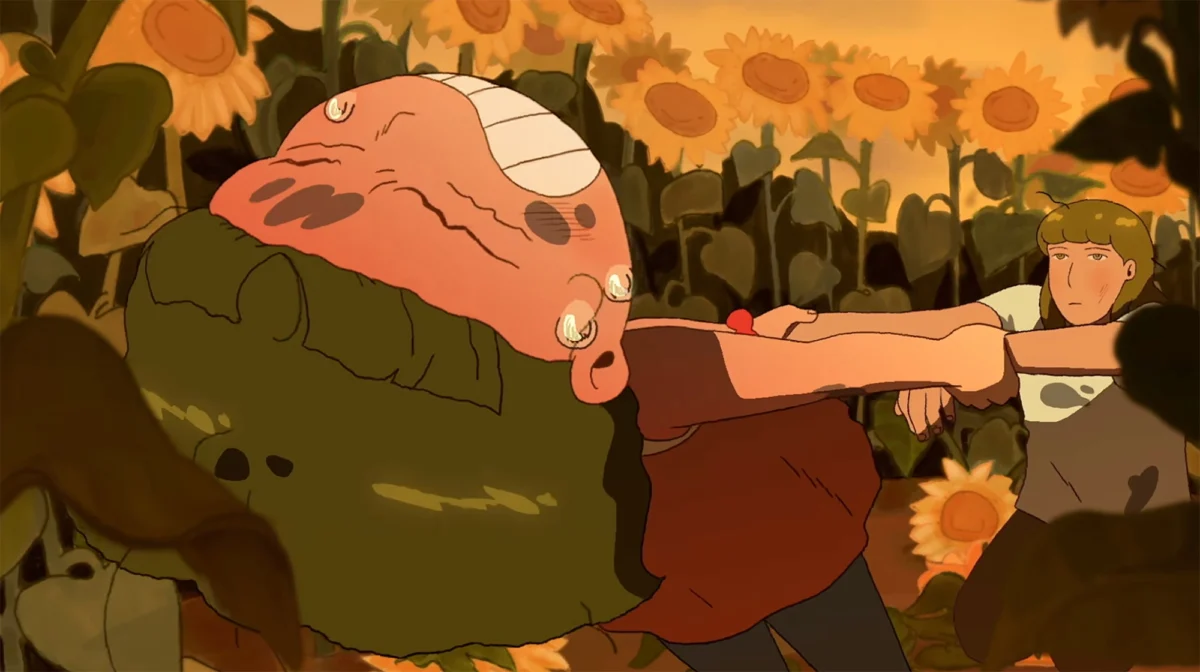
The film is a triumph of pacing, oscillating between the frantic, "goofy" energy of a slapstick comedy—evident in scenes where Sophie navigates the pastoral chaos of their village—and the heavy, grounded reality of her brother’s depression. It is a rare balancing act that marks the directorial team of Calixte Chateau, Mingzhen Cui, Alexandre Kittel, Lancelot Lemau de Talancé, Menghan Li, Cassiopée Melero, and Lucia Pérez Dominguez as talents to watch.
Chronology: The Journey to Laventour
To understand the significance of Direction les Champs, one must look at the timeline of its production within the rigorous structure of the Gobelins curriculum.
- Early 2026 (Pre-production): The team of seven directors began conceptualizing the story, focusing on the cultural gravity of the Tour de France within rural France. They sought to contrast the "static" nature of Benoît’s room with the "kinetic" nature of the race.
- Spring 2026 (Animation Phase): The students employed a distinct 2D aesthetic. They utilized hand-painted textures that evoke the feeling of French impressionist landscapes, punctuated by moments of exaggerated, "wacky" character animation. This stylistic shift is most apparent during a sequence involving a scooter ride past a herd of cows, a moment that serves as a necessary tonal release from the weight of the central drama.
- Summer 2026 (Sound Design): Jérémy Ben Ammar was brought on to craft the auditory landscape. The sound design is crucial to the film’s success; the "woosh" of the peloton acts as a metaphorical heartbeat for the village, a soundscape that Sophie hopes will restart the dormant rhythm of her brother’s heart.
- October 2026 (The Reveal): The film was officially released via the Gobelins YouTube channel, immediately garnering praise for its ability to tackle themes of mental health without resorting to saccharine sentimentality.
Supporting Data: The Gobelins Legacy
The success of Direction les Champs does not exist in a vacuum. It is the latest in a long line of critical successes from Gobelins that have defined the current decade of independent animation.
- The 2026 Context: Earlier this year, the short Nube—an evocative tale about a mother and daughter depicted as clouds—set a high bar for emotional storytelling. Direction les Champs follows this trend, moving away from purely experimental visual art toward narrative-heavy storytelling that prioritizes character development.
- Historical Precedents: Looking back at 2025, the school produced Tears of the Mountain and Niccolo, both of which explored the human condition through vastly different visual lenses. Furthermore, the 2023 horror short Hôtel Nuit Noire showcased the school’s versatility, proving that their students are as capable of producing "bewitching" genre pieces as they are heartfelt dramas.
- Educational Impact: Gobelins Paris remains a lighthouse for the animation industry. Their partnerships with distribution powerhouses like Miyu Distribution ensure that these graduation projects receive global visibility, bridging the gap between academia and the professional festival circuit.
Official Responses and Creative Intent
In discussions surrounding the film’s release, the directors have emphasized that the "Tour de France" is merely a vessel for the story, not the story itself. The village of Laventour is a microcosm of a community that observes, waits, and hopes for the return of its own.

"We wanted to play with the contrast of the peloton," the directing team noted in production materials. "The race is a machine—it’s fast, it’s loud, it’s unstoppable. Benoît is the opposite; he is still, he is quiet, he is stalled. Sophie is the bridge between these two states of being."
Industry critics have lauded the team for their decision to use a "goofy" animation style to frame the humor, which prevents the film from becoming overly didactic or depressing. By allowing Sophie to be a child—prone to clumsiness and frantic, imaginative solutions—the film earns its emotional climax. The animation isn’t just "pretty"; it is functional. When the camera shifts to show the world through Sophie’s eyes, the colors become brighter, the lines more fluid. When it shifts to the silence of the room, the frame tightens, the colors desaturate, and the world feels small.
Implications: The Future of Short-Form Animation
What does the success of Direction les Champs tell us about the future of the medium? First, it reinforces that 2D animation remains a potent, irreplaceable tool for emotional storytelling. While CGI continues to dominate the blockbuster space, the tactile, "painted" quality of Gobelins’ output proves that audiences are still hungry for work that feels human and handmade.
Second, it highlights the increasing sophistication of student filmmakers. The collaborative nature of the seven-person directorial team is a testament to the modern studio model—a process that requires immense coordination and a shared vision. As these students transition into the professional world, they carry with them a refined ability to handle complex emotional themes—grief, trauma, and recovery—with a lightness of touch that is often lacking in larger-budget productions.

Finally, the film serves as a reminder of the power of the short film format. In a world of streaming services and feature-length binges, seven minutes is a remarkably short window to establish a world, develop characters, and deliver a cathartic emotional release. Direction les Champs succeeds because it is disciplined. It does not waste a single frame.
Conclusion: A Must-Watch
Direction les Champs is, quite simply, a magnificent piece of work. It is a film that rewards repeated viewings—once for the sheer technical beauty of its animation, and again for the subtlety of the character work. As Sophie pedals her way toward the roadside, hoping to catch the fleeting glimpse of the cyclists, the audience finds themselves rooting not just for the race, but for the quiet, difficult, and beautiful process of coming back to life.
For those interested in exploring more of the work emerging from this cohort, the official Instagram page @directionleschamps.gobelins offers a behind-the-scenes look at the animation process, providing further insight into how this tiny village of Laventour was brought to life.
In a year marked by high-profile releases, Direction les Champs stands out as a small but vital masterpiece—a reminder that sometimes the most important stories aren’t the ones told in two hours, but the ones told in the blink of a cyclist’s pass. It is, without a doubt, one of the most delightful and emotionally rewarding animated shorts of 2026.
