
The Empire State of Mind in Inglewood: Jay-Z’s “30” Celebration Proves His Longevity as an Elder Statesman
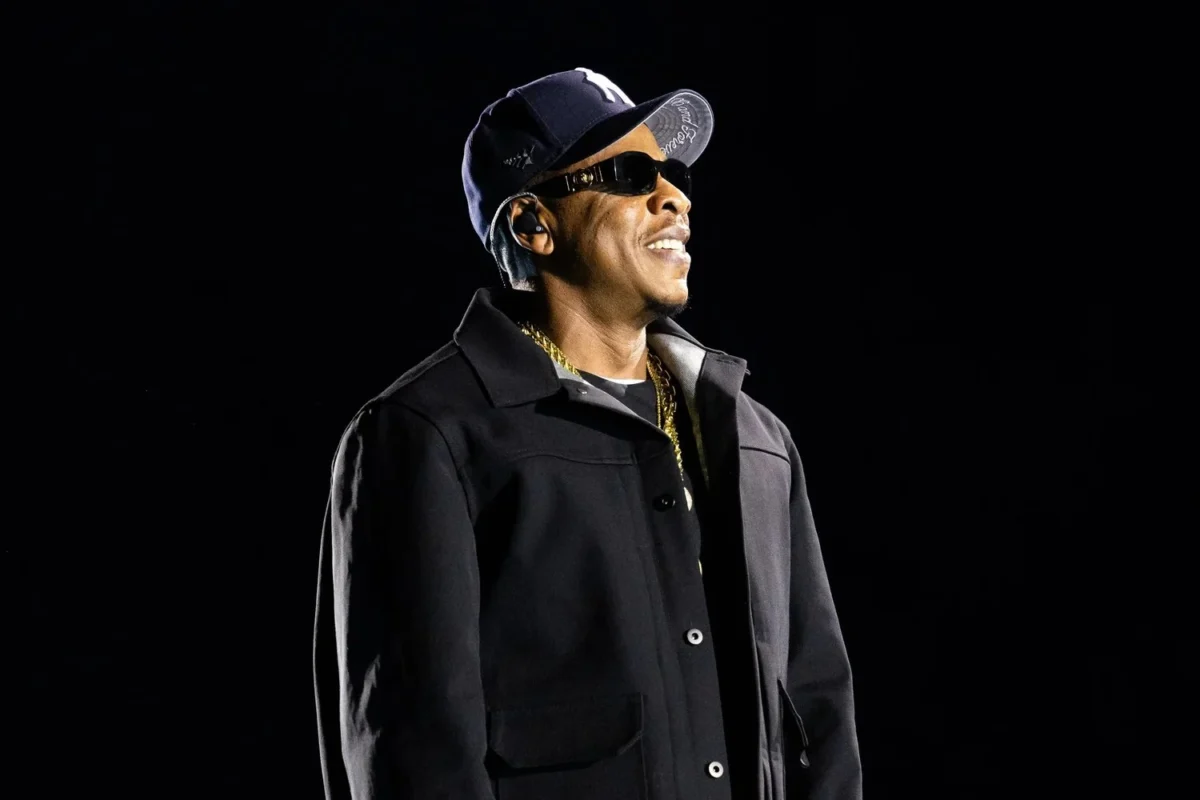
Main Facts: The King of Brooklyn Claims SoFi Stadium
“Can I take you to my home for a second?”
With that invitation, Jay-Z transitioned into his anthemic "Empire State of Mind" during the first of two sold-out nights at SoFi Stadium in Inglewood, California. For the thousands in attendance, the question was rhetorical; Jay-Z had been transporting the audience from the palm-lined streets of Los Angeles to the concrete veins of Brooklyn for the better part of two hours.
The concert served as a centerpiece for the “Jay-Z 30” celebration, a yearlong victory lap marking three decades of a career that has redefined the intersection of hip-hop, corporate enterprise, and cultural dominance. Following a kickoff at Philadelphia’s Roots Picnic in May and a massive, star-studded run at Yankee Stadium, the rapper’s arrival in Inglewood felt less like a standard tour stop and more like a tactical demonstration of endurance. With rumors swirling regarding his potential headlining slot at the 2027 Super Bowl—which will be hosted at the very same SoFi Stadium—the concert took on a weightier significance, serving as both a retrospective of his legacy and a trial run for the most visible stage in the world.
Chronology: A Career Compressed into Two Hours
The performance was a masterclass in pacing. Jay-Z, now 56, moved with the precision of a veteran who understands that a catalog as vast as his requires a surgeon’s touch to curate.
The evening kicked off with a jolt of high-octane energy as he launched into “Hovi Baby,” immediately followed by the infectious “Izzo (H.O.V.A.).” The visual production remained largely consistent with his recent East Coast shows—including the striking, cinematic opening featuring Beyoncé—yet the atmosphere felt distinct, stripped back to focus on the raw electricity between the performer, his live band, and the crowd.
As the setlist progressed, the narrative of his career unfolded in real-time. He navigated through the mid-2000s swagger of “Dirt Off Your Shoulder” and “U Don’t Know,” maintaining a rapport with the audience that felt intimate despite the cavernous nature of the stadium. A standout moment arrived when his daughter, Blue Ivy Carter, joined him on stage to provide piano accompaniment for “The Story of O.J.” and “Dead Presidents.” Her presence underscored the generational bridge Jay-Z has built—a man who once rapped about the struggles of the Marcy Projects now performing alongside the next generation of his own lineage.
The mid-section of the show brought a rare treat for hip-hop purists: the appearance of Scarface. Their collaborative performance of “This Can’t Be Life” and the legendary “Mind Playing Tricks on Me” served as a poignant reminder of Jay-Z’s deep roots in the rap canon. The night concluded with a massive, high-energy finale as John Legend and DJ Khaled joined him for the modern-day gospel of “God Did,” bringing the house down with a performance that felt like a coronation of his continued relevance.
Supporting Data: The Anatomy of a Legend
To understand the gravity of Jay-Z’s “Jay-Z 30” tour, one must look at the data points of his career trajectory. Since the release of his debut, Reasonable Doubt, in 1996, the rapper has maintained a level of commercial and critical consistency that is statistically anomalous in the music industry.
- Longevity: Most hip-hop acts see a significant drop-off in touring viability after two decades. Jay-Z, by contrast, is currently booking sold-out stadium runs in global hubs like London, Paris, and New York after long periods of relative dormancy.
- The Catalog: The “Jay-Z 30” project included an eight-episode HBO docuseries, a move that highlights the analytical approach he takes toward his own discography. By deconstructing his hits, he has solidified his position as an “elder statesman” who views his music not just as entertainment, but as a studied business asset.
- The Setlist Breadth: The SoFi setlist featured over 30 tracks, spanning from the frantic energy of “N—a What, N—a Who” to the introspective “Song Cry” and “Family Feud.” This range is the primary indicator of why he remains a top-tier performer: he has a song for every era, every mood, and every demographic.
Official Responses and Industry Context
While Jay-Z has remained characteristically cool regarding the Super Bowl rumors, the industry chatter is reaching a fever pitch. Analysts suggest that the “30” campaign is a deliberate rebranding exercise designed to position him as the only viable candidate for a Super Bowl performance that requires both massive name recognition and a deep, multi-generational catalog.
The absence of a revolving door of guest stars at SoFi—in contrast to the celebrity-heavy guest list at Yankee Stadium—was widely interpreted as a deliberate artistic choice. Critics and industry observers noted that by relying on his own stage presence and the strength of his backing band, Jay-Z was essentially "auditioning" his ability to hold a global audience’s attention solo.
“He is the star of his own show, no matter which direction it points,” remarked one industry insider following the performance. “At 56, he has moved past the need for validation. He isn’t trying to prove he can hire the biggest names to perform with him; he’s proving he doesn’t have to.”
Implications: The Road to 2027
The implications of the SoFi show are twofold. First, it cements the idea that Jay-Z has successfully transitioned from a hit-maker to a cultural institution. Unlike many of his peers who struggle to find a place in the modern streaming landscape, Jay-Z’s business acumen has allowed him to curate his output, making each performance a rare, high-value event rather than a routine promotional tour.
Second, the show successfully addressed the "Super Bowl question." One of the primary criticisms levied against potential legacy performers is that they have become "rusty" or reliant on features. By delivering a two-hour, high-intensity set that didn’t falter in pace or lyrical accuracy, Jay-Z effectively silenced the skeptics. His performance was an exercise in "bravado and showmanship," as one observer put it, functioning as a preemptive justification for his selection for the world’s biggest stage.
As the “Jay-Z 30” tour winds down, the focus now shifts toward what comes next. If the rumors are true and Jay-Z does take the stage in Inglewood in February 2027, the world now has a template for what that will look like. It will not be a frantic scramble to fit in as many cameos as possible; it will be a victory lap for a man who has managed to build an empire on the dual pillars of lyrical acuity and ironclad business strategy.
The fans who packed SoFi Stadium didn’t just witness a concert; they witnessed the reaffirmation of a legend who, even after three decades, refuses to yield the throne.
Full Setlist: SoFi Stadium (Night 1)
- Hovi Baby
- Izzo (H.O.V.A.)
- Beach Is Better
- FuckWithMeYouKnowIGotIt
- N—a What, N—a Who (Originator 99)
- Run This Town
- The Story of O.J. (with Blue Ivy Carter)
- Dead Presidents (with Blue Ivy Carter)
- Where I’m From
- Hard Knock Life (Ghetto Anthem)
- Lucifer
- No Church In the Wild
- Can I Live
- Family Feud
- U Don’t Know
- On to the Next One
- Clique
- Dirt Off Your Shoulder
- I Know
- Never Change
- This Can’t Be Life (with Scarface)
- Mind Playing Tricks on Me (with Scarface)
- Song Cry
- 99 Problems
- Girls, Girls, Girls
- Excuse Me Miss / La-La-La (Excuse Me Miss Again)
- Change the Game
- Give It to Me / Money, Cash, Hoes
- Jigga My N—a
- Heart of the City (Ain’t No Love)
- Empire State of Mind
- N—s in Paris / Big Pimpin’
- God Did (with DJ Khaled and John Legend)
