
Bringing the Absurd to Life: Inside DNEG’s Visual Effects Triumph on Coyote vs. Acme
Main Facts
The intersection of classic 2D animation and live-action filmmaking has long been a cinematic high-wire act, but few studios have attempted to bridge the gap with the stylistic fidelity seen in Coyote vs. Acme. In a recent deep-dive fxpodcast, Visual Effects Supervisor Alexander Seaman and Animation Director Keith Roberts pulled back the curtain on DNEG’s extensive and innovative work on the hybrid feature. Directed by Dave Green (Teenage Mutant Ninja Turtles: Out of the Shadows) and guided by Production VFX Supervisor George Murphy (Maleficent, King Kong, The Matrix trilogy), the film successfully marries the physics-defying chaos of Warner Bros.’ Looney Tunes with a tangible, photographed physical world.
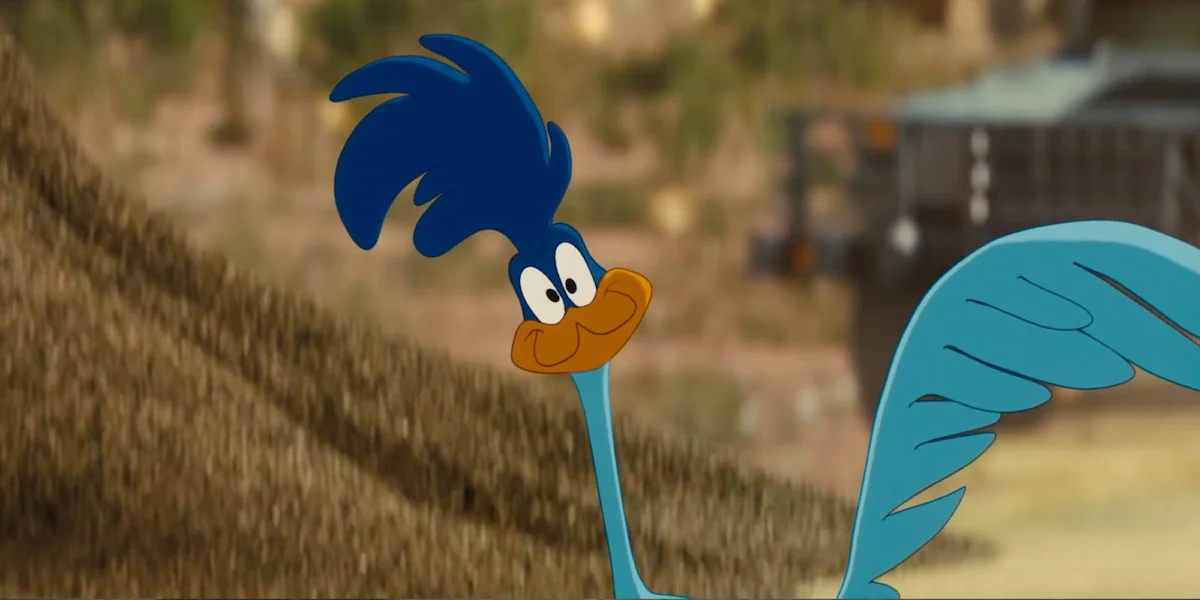
At its core, the production was an exercise in deliberate rule-breaking. Bringing iconic characters like Wile E. Coyote out of their traditional 2D domains and into three-dimensional spaces required both Seaman and Roberts to reject standard computer-generated (CG) practices. Rather than relying on default photorealistic rendering pipelines, DNEG engineered custom tools—ranging from specialized Houdini-generated outline systems to bespoke toon shaders in Clarisse—to preserve the stark economy, sharp timing, and expressive silhouettes defined decades ago by animation legends like Chuck Jones.
The project relied on an intimate synergy between on-set physical performances, rapid-fire "sketchvis" pre-visualization, and meticulous compositing. By blending practical special effects stunts—such as crushing a real car under a cartoon-precise falling piano—with advanced digital character work, the team maintained the manic, spontaneous energy that defines the Looney Tunes legacy.
Chronology
1. Pre-Production and the "Sketchvis" Phase
Long before the first digital rigs were loaded, the production established an agile visual development pipeline known as "sketchvis." Recognizing that traditional 3D workflows could bog down the comedic timing, Roberts assembled a small, nimble team of artists (ranging from four to ten individuals) who drew directly over live-action plates.
This technique allowed director Dave Green to rapidly evaluate comedic options. Artists could churn out multiple variations of a sequence within a single week, bypassing the heavy mathematical limitations of camera lenses and 3D rigs. Once the strongest visual gags were selected through these drawings, the animation and layout teams worked backward, adapting their cameras and character rigs to replicate the hand-drawn compositions.

2. On-Set Interaction and Practical Puppeteering
To ground the digital characters in a physical space for the live-action actors, the production utilized veteran puppeteer Dave Barclay on set. Barclay manipulated a physical proxy of Wile E. Coyote, offering actors a genuine eyeline and someone to react to in real-time.
These physical exchanges established the natural rhythm of scenes. Depending on the needs of the shot, Barclay’s puppet could be scaled down or stripped of components—such as removing ears, nose, or arms, leaving only an expressive pair of eyes—to minimize background occlusion while still providing dynamic feedback for the cast. Seaman’s team would subsequently paint out the puppet and puppeteer in post-production, retaining the spontaneous timing born from the live-action interaction.
3. Animation, Rigging, and Frame-Rate Experimentation
Once plates were locked, the character animation phase introduced unconventional choices regarding frame timing. While early tests explored holding poses on "twos" (updating animation every two frames) to mimic traditional cartoon vocabulary, Roberts discovered that Wile E. Coyote walking alongside a live-action human often required animation on "ones" (updated every frame) to anchor him to the plate.
The film ultimately utilized a hybrid approach, dynamically switching frame-timing strategies depending on the character’s interaction with the photography. Furthermore, to avoid the smooth, flowing curves and overlapping movements that CG naturally produces, animators strictly adhered to the spare, clean posing philosophy of Chuck Jones.
4. Shading, Outlines, and Lighting Integration
The technical execution of the characters required a radical departure from photorealism. DNEG developed specialized toon shaders in Clarisse to evaluate flat lighting passes before adding depth. One of the most technically demanding elements was generating consistent outlines using Houdini. These outlines dynamically adjusted based on movement, screen position, and distance from the camera, ensuring that a paw or snout maintained a uniform graphic weight regardless of perspective shifts.

Lighting artists exercised severe restraint, frequently utilizing Nuke-based roto shapes and simplified key lighting rather than modeling complex light and shadow across every surface. This preserved the graphic integrity of the characters while allowing subtle highlights—such as a gleam along Wile E.’s nose—to pop against the live-action plates.
5. Environment Building and Virtual Production
The production’s environments presented their own unique paradoxes. The iconic desert landscapes required the warmth and familiarity of classic cartoons rendered within a photorealistic space—a location Seaman described as an impossible place one could never physically visit.
Utilizing Unreal Engine, the team blocked out camera moves and spatial ideas for director Dave Green. However, because the virtual environments had to remain completely flexible to accommodate Roberts’ evolving character gags, much of the final visual development for these grand settings took place remarkably late in the production cycle.
Supporting Data
- Leadership Team: Directed by Dave Green; Production VFX Supervisor George Murphy; DNEG Visual Effects Supervisor Alexander Seaman; DNEG Animation Director Keith Roberts.
- Sketchvis Team Size: Typically operated with a core group of approximately four artists, scaling up to around ten artists at peak production periods.
- Software Ecosystem: Utilized Clarisse for toon-shader development and initial flat rendering passes; Houdini for procedural, camera-aware outline generation; Unreal Engine for virtual production, pre-visualization, and shot blocking; and Nuke for compositing, roto-shape manipulation, and targeted lighting adjustments.
- On-Set Collaboration: Integrated physical puppetry via Dave Barclay, whose modular puppet designs (featuring removable ears, noses, and arms) served as interactive eye-line references for live-action actors.
- Core Stylistic Reference: The animation philosophy was explicitly benchmarked against the work of legendary animator Chuck Jones, emphasizing strict economy of movement, flat key lighting, and rigid graphic silhouettes over conventional photorealistic physics.
Official Responses
Reflecting on his lifelong affinity for hybrid animation, Alexander Seaman noted the deeply personal nature of the project. A childhood memory of dressing up as Roger Rabbit for his birthday fueled an immediate desire to join the production when the opportunity arose. For Seaman, the primary hurdle was not merely achieving technical proficiency, but maintaining the delicate elasticity of a cartoon character within a rigid live-action plate.
"It needed to be realistic, but you could never actually go to that place," Seaman remarked regarding the design of the film’s stylized desert environments, highlighting the tightrope walk between tangible photography and surrealist art direction.

Keith Roberts emphasized the psychological discipline required of the animation team to capture the essence of classic Warner Bros. shorts. "Their comedy was all about clean timing and about the spare quality of the animation," Roberts explained. He stressed that animators had to actively fight the tendencies of modern 3D software, which naturally introduces superfluous motion, weight, and fluid curves that would otherwise dilute the sharp comedic timing native to characters like Wile E. Coyote.
Implications
The visual effects achievements unlocked during the production of Coyote vs. Acme carry significant implications for the future of hybrid filmmaking. For years, the industry standard for crossing live-action with animated characters leaned heavily toward hyper-realism—fittingly exemplified by furry, texturally dense renderings designed to blend seamlessly into photographed environments. DNEG’s work on this project forcefully challenges that paradigm, proving that audiences can readily accept a stylized, graphic 2D-derived aesthetic coexisting within a live-action space if the underlying craft is executed with intentionality and restraint.
By pioneering efficient pipelines like sketchvis and developing advanced, camera-aware toon-shading systems, DNEG has outlined a new technical blueprint for studios looking to adapt traditional 2D properties into modern feature films. The project demonstrates that honoring legacy animation styles does not require shunning digital tools; rather, it demands the radical customization of those tools to serve comedic timing, graphic clarity, and character silhouette over blind physical simulation. As studios continue to seek innovative ways to revitalize classic intellectual properties, the methodologies forged by Seaman, Roberts, and the DNEG team will likely serve as a gold standard for translating impossible, cartoonish physics into living, breathing cinematic spectacles.
