From Physical Minis to Digital Dreams: ILM Veteran John Goodson on the Evolution of Visual Effects
By TREVOR HOGG
Main Facts: The End of an Era and the Persistence of Craft
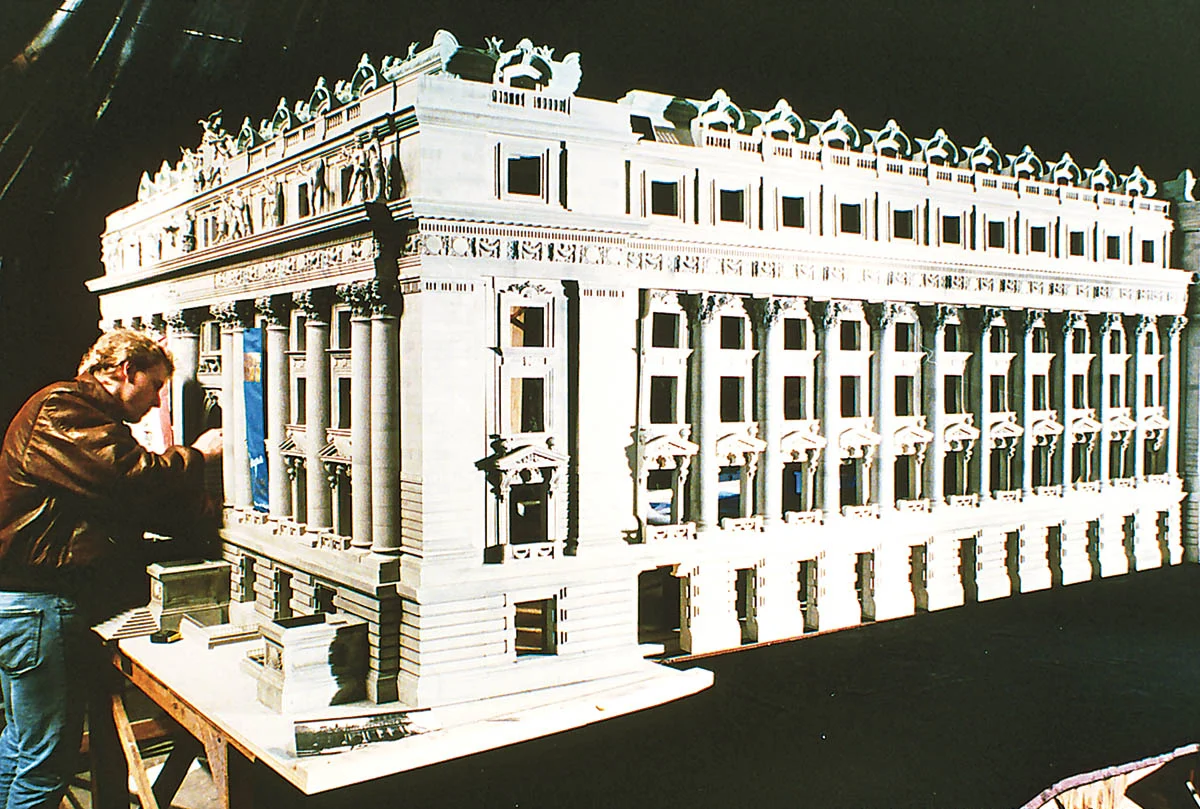
For decades, the physical manifestation of cinematic science fiction lived in the smell of styrene glue, automotive lacquer, and the quiet concentration of the Industrial Light & Magic (ILM) Model Shop. Established by George Lucas to engineer the tactile, World War II-style aerial dogfights of the original Star Wars (1977), the Model Shop served as the beating heart of practical visualeffects for a generation.
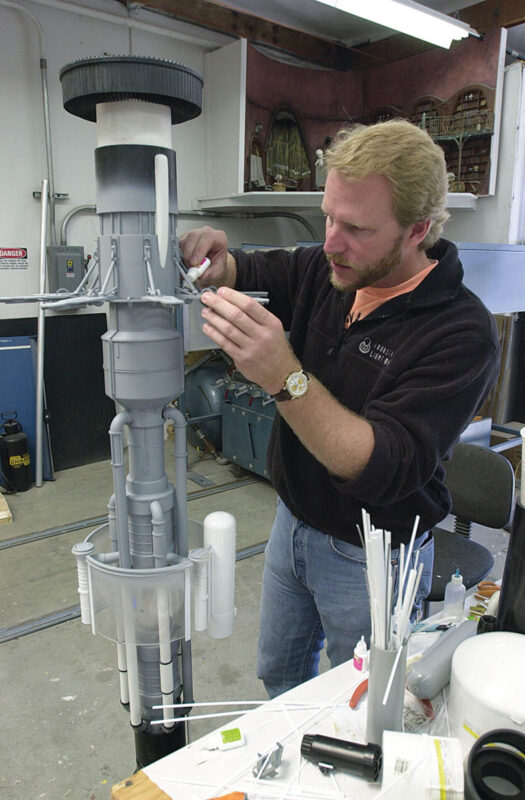
One of the most poignant moments in the Disney+ documentary series Light & Magic captures the heartbreaking closure of this legendary physical department—a casualty of the inevitable industry-wide shift toward digital artistry. Among the artisans caught directly in the gears of this technological revolution was JohnGoodson. Beginning his career as a traditional, hands-on modelmaker, Goodson rose to become a model project supervisor before successfully executing a high-stakes, career-altering pivot into the digital realm as a digital artist and painter.
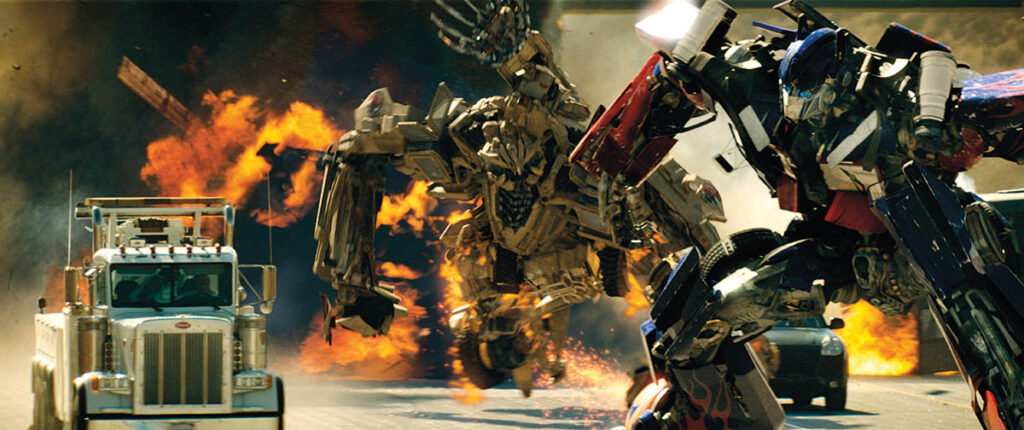
Today, Goodson’s legacy spans more than three decades of blockbuster filmmaking. Despite earning Visual Effects Society (VES) Award nominations for his work on prestige projects like The Mandalorian, Transformers: Age of Extinction, Star Trek Into Darkness, Mission: Impossible – Ghost Protocol, and Iron Man 2, Goodson remains part of an elite, resilient brotherhood of practical purists. Alongside ILM colleagues like John Knoll and machinist Dan Patrascu, Goodson continues to bridge the analog-digital divide, operating out of a decentralized collective they affectionately and wryly call "Three Garages Productions."
Chronology: A Lifelong Journey from Air Force Base to ILM
Goodson’s pathway to Hollywood artistry is a masterclass in lifelong passion meeting unrelenting dedication.
Childhood Inspiration (Late 1960s): At just three years old, Goodson experienced a foundational cinematic awakening watching "The Derelict," an episode of the classic sci-fi television series Lost in Space. Witnessing the Jupiter II filling the television frame as it was drawn into a giant alien spacecraft left him utterly mesmerized. Raised on an Air Force base, Goodson was further influenced by a next-door neighbor fighter pilot who introduced him to Star Trek. When someone handed him a copy of The Making of Star Trek, he realized the illusions were constructed, sparking a deep fascination with how movie magic was made.
The Fan-Mail Era (1977–1980s): When Star Wars premiered in 1977, a 14-year-old Goodson immediately began writing letters to ILM, asking questions and learning about the studio’s inner workings. Noting that many top modelmakers came from industrial arts or architecture backgrounds, Goodson enrolled in the School of Design at North Carolina State University to study Product Design—the closest academic approximation to practical visual effects craftsmanship.
The ILM Breakthrough (1988): Moving to California, Goodson landed his first gig at ILM: a grueling, one-week stint on Body Wars, a Disney theme park motion-simulator attraction akin to Star Tours that shrunk guests down to travel through the human body. This baptism by fire launched a decades-long career inside the physical Model Shop.
The Digital Crucible (Mid-1990s): Following the closure of the physical Model Shop, Goodson was handed a mere month of training in digital painting software. Thrown straight into the fire, he was tasked with revisions for the Special Edition of Star Wars: A New Hope, including texturing Luke Skywalker’s landspeeder in an unfamiliar program. The struggle eventually yielded to mastery with the adoption of Mari, a layer-based texturing software that Goodson admits eventually surpassed the capabilities of the real world.
Modern Hybrid Era (Present): Continuing to push boundaries, Goodson blends physical miniatures with advanced LED volume stages (such as on The Mandalorian and Grogu) and cutting-edge 3D printing workflows, proving that the traditional eye for detail remains essential in a computer-generated landscape.
Supporting Data: Behind the Scenes of Cinematic Masterpieces
The evolution of visual effects is underlined by the sheer resourcefulness required to pull off impossible shots under punishing deadlines. Goodson’s career is defined by moments of brilliant improvisation and technical problem-solving.
The Ghostbusters 2 Titanic Crunch
During the production of Ghostbusters 2, Goodson faced a ticking clock when supervisors demanded that the decorative belts running along the hull of the miniature Titanic model be made thinner—and they needed it done while the crew was away at lunch.
"I wound up putting modeling clay into the low spots between the belts to bring the hull up, took a chip brush and cut it off so I could do a stipple texture on it fast, took pastel and ground it on 60-grit sandpaper and pounded it into it," Goodson recalls. "That’s what we shot."
The 7-Foot Day After Tomorrow Oil Tanker Miracle
Perhaps Goodson’s proudest spontaneous achievement occurred during The Day After Tomorrow. When a digital asset of a frozen, ice-trapped oil tanker was deemed unusable by the director, Goodson took matters into his own hands over a single weekend.
Starting with a two-by-seven-foot sheet of plywood and rounded-off stern, he pin-gunned an eighth-inch styrene plastic sheet to the side.
Using hinges and pine boards, he engineered a dynamic, adjustable elevation tilt.
Working past midnight on a Sunday night, he scoured his house for push-pins to use as mooring bollards.
By 1:00 AM Monday, the physical model was delivered to ILM, sprayed with fake snow, and accented with tiny silicone icicles sculpted by master modelmakers Lorne Peterson and Paul Huston—crafted to look whipped horizontally by gale-force winds.
By Thursday, the shot was completed. Director Roland Emmerich sent Goodson a personal note: "I don’t know how you did it, but thank you so much."
Navigating Mechanical Engineering
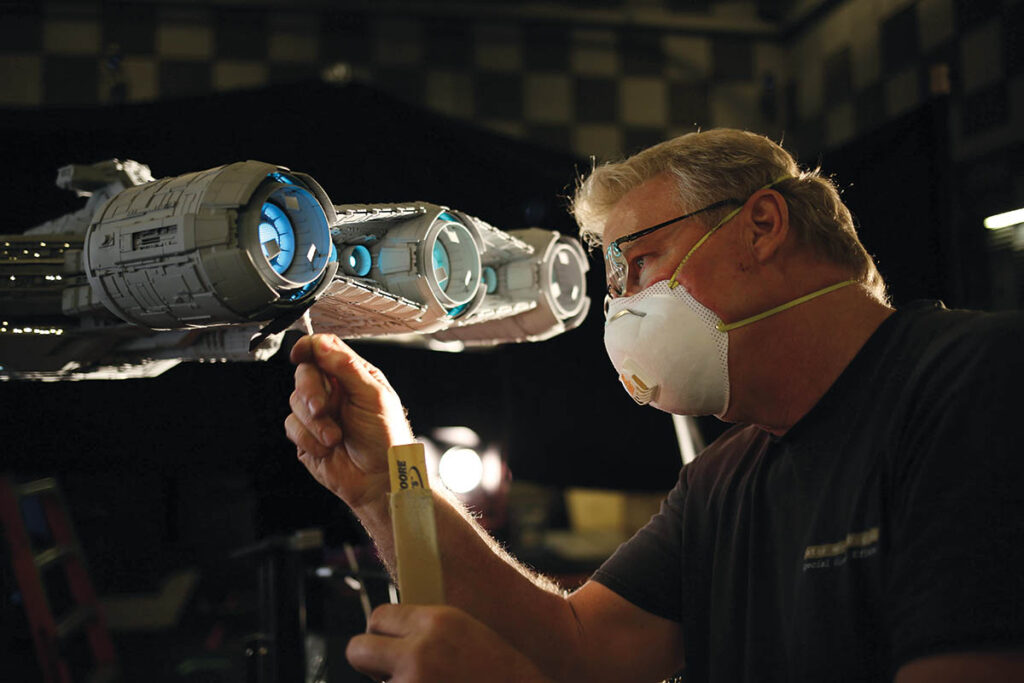
Building physical models for modern franchises often requires solving complex mechanical puzzles. On Ahsoka, Goodson and machinist Dan Patrascu had to construct a miniature ship featuring a rotating wing. Because a central motor placement was blocked by a front mount, Patrascu had to custom-engineer gears operating entirely around the periphery of a narrow tube. Similarly, for the Razor Crest and Moff Gideon’s Light Cruiser in The Mandalorian, Goodson combined handmade fuselages with specialized 3D-printed engines and weaponry—overcoming an initial personal bias against fragile 3D printing materials.
Official Responses and Perspectives on the Digital Transition
The transition from physical to digital workspaces was neither easy nor universally painless. For Goodson, looking back on the closure of the ILM Model Shop evokes complex emotions about the relentless march of industry technology.
"It was really brutal," Goodson admits. "The ripples from that are still happening because so many people didn’t make the transition. It is the story of technology. New technology comes in. Older jobs go away. New jobs are created. But for the people caught in the gears, it’s tough."
Reflecting on the psychological shift of painting physical miniatures versus digital textures, Goodson highlights the collaborative nature of modern filmmaking:
"When you’re building a model and painting it, that’s what you’re going to get. When you’re doing the digital work, you’re working hand in hand with the look development technical director; they take the information you give them in the paint, apply materials to it and massage all those different elements. You can work with one TD and get a completely different result than if you worked with another one. There’s artistry involved in that."
Goodson also emphasizes the educational ecosystem that defined the early days of ILM—an environment where observation and shared wisdom were paramount.
"I joined the Model Shop in 1988 and believed I knew how to paint," he reflects. "I remember looking at the models, which had this dull paint, and thought, ‘God, these things look terrible.’ But it was because that paint would not reflect bluescreen. If you reflected the bluescreen, that would become a hole in the model, so the shot wouldn’t work. In the Model Shop and Digital, I found people were good at sharing techniques or tips, and just by being in the environment you learned and developed your eye."
Implications: The Legacy of the Model Shop in Modern Filmmaking
The narrative of John Goodson’s career is a microcosm of the broader evolution of the visual effects industry over the last fifty years. The closure of traditional model shops across Hollywood marked the end of an era where cinema was touched by human hands in every frame. Yet, the philosophy of the physical model shop—rooted in tactile reality, spatial awareness, and real-world observation—remains vital to digital pipeline success.
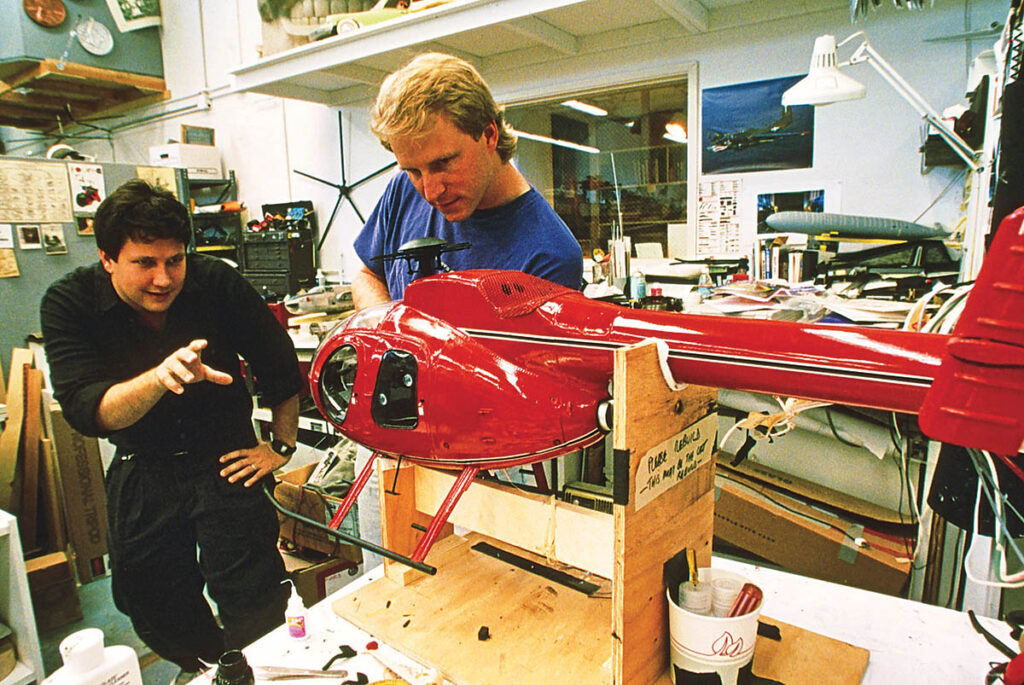
Today, artists like Goodson, John Knoll, and Dan Patrascu keep the flame alive through "Three Garages Productions," proving that the spirit of invention cannot be easily containerized. Whether they are shooting physical two-foot and four-foot Razor Crest miniatures inside modern LED volumes to capture authentic interactive lighting, or meticulously studying helicopter aerodynamics for Mission: Impossible, these veterans ensure that the boundary between fantasy and reality remains seamless.
Perhaps the most poetic summary of this enduring legacy occurred during the clearing out of the ILM Model Shop’s final warehouse. Amidst the discarded wooden patterns, speeder bikes, minecarts, a full-sized snowspeeder, and boxes of Ewok and Stormtrooper costumes, Goodson stumbled upon a small, six-inch cardboard box crammed with old letters. Looking inside, he found the very correspondence he had mailed to ILM as a 14-year-old boy dreaming of a galaxy far, far away.
In recovering those letters, Goodson recovered not just a piece of his own past, but a testament to a lifelong devotion to the craft of visual storytelling—a craft that continues to evolve, adapt, and inspire new generations of filmmakers.