
Deep Space and Fractured Realities: The Untold Story Behind Apple TV+’s Premature Cancellation of ‘Constellation’
Introduction and Main Facts
In the competitive landscape of premium streaming television, Apple TV+ has carved out a distinct niche for itself as a primary destination for cerebral, high-concept science fiction. From the corporate psychological mind-games of Severance to the sweeping galactic scope of Foundation, the platform has consistently invested in dense, challenging storytelling that respects the audience’s intelligence. Yet, even within a streaming ecosystem celebrated for its patience, casualties occur.
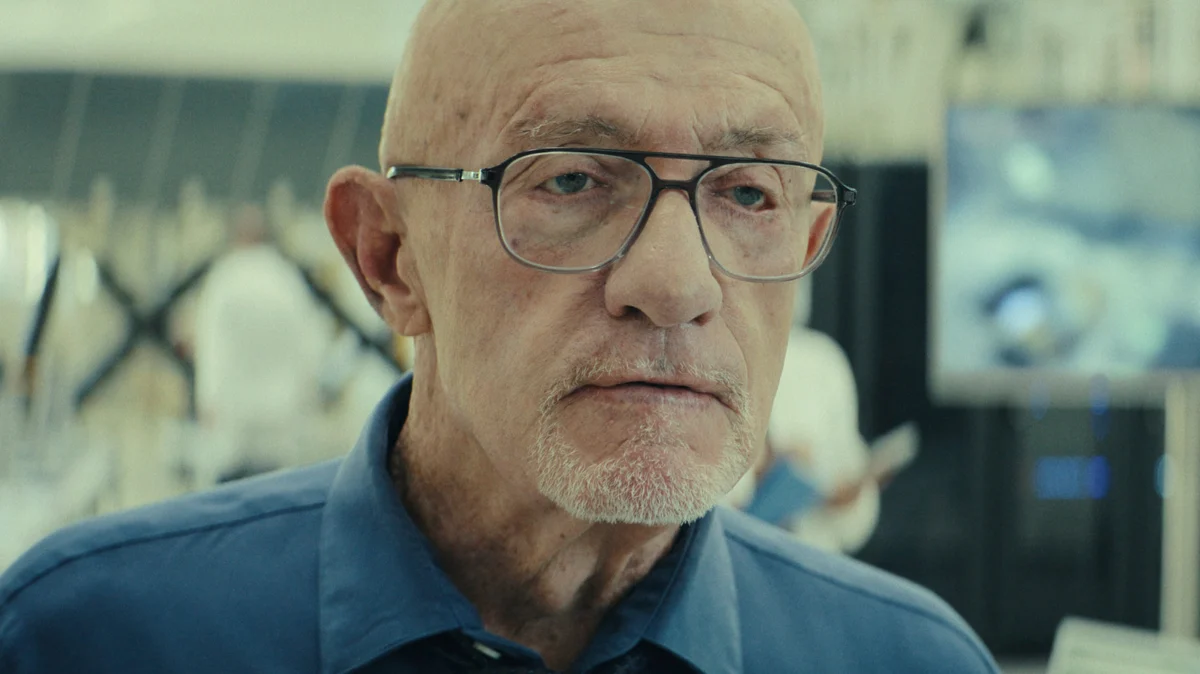
Among the most glaring and debated premature conclusions in recent streaming history is the cancellation of Peter Harness’s metaphysical sci-fi thriller, Constellation. Debuting quietly in early 2024, the eight-episode first season starred Noomi Rapace (The Girl with the Dragon Tattoo) as Jo Ericsson, a Swedish astronaut stationed aboard the International Space Station (ISS). Alongside Rapace, television veteran Jonathan Banks (Breaking Bad, Better Call Saul) delivered a compelling dual performance as Henry and Bud Caldera—two versions of the same brilliant, flawed physicist existing on opposite sides of a cosmic divide.
Despite boasting an Emmy-nominated pedigree, a stellar international cast, and a premise that bridged hard-boiled space survival with quantum physics and existential dread, Constellation was quietly grounded by Apple TV+ after a single season. The series wrapped up its run between February and March 2024, leaving behind a trail of unanswered questions, fractured timelines, and a dedicated fanbase wishing for a trajectory that never came to pass.
Chronology of a Cosmic Catastrophe: A Detailed Breakdown of Constellation
To understand why Constellation struck such a unique chord with its viewers—and why its cancellation remains a point of contention—it is necessary to examine the intricate architecture of its narrative. Created and written entirely by Peter Harness, the series refused to handhold its audience, plunging viewers directly into the disorienting aftermath of a catastrophic orbital accident.
Phase 1: The Incident on the ISS
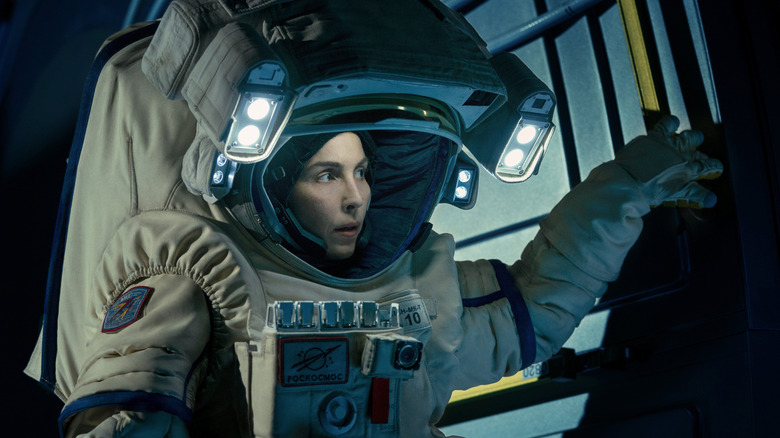
In the pilot episode, the series establishes its dark, haunting tone. While conducting routine maintenance on the International Space Station, the crew experiences a violent, inexplicable collision. The culprit? The mummified corpse of an old Soviet cosmonaut, hurtling silently through deep space before impacting the station.
In the chaos that ensues, Jo Ericsson is left behind to secure the station’s computer core while the rest of the crew evacuates. She manages to escape back to Earth, carrying the vital hardware, but her return home is far from triumphant. She discovers that her life has subtly shifted. Mundane details—from the color of her car to where she keeps household items—are wrong. Most jarringly, she begins speaking Swedish fluently, a language her family insists she never knew.
Phase 2: The Parallel Realities and the Cabin in the Woods
The narrative quickly accelerates into psychological horror. Upon returning to Earth, Jo drives to a remote cabin in the Swedish hinterlands to deliver the computer core. While there, she hears cries in the darkness and discovers a horrifying truth: she stumbles upon a parallel version of her young daughter, Alice (played by twins Davina and Rosie Coleman), who is sick and hiding in an identical, nearby cabin.
As the series progresses, these surreal incursions multiply. Jo realizes she is inadvertently slipping back and forth between two distinct parallel timelines—one where she survived the ISS disaster and returned to a strained marriage, and another where her counterpart did not survive, or where different choices yielded unrecognizable consequences.
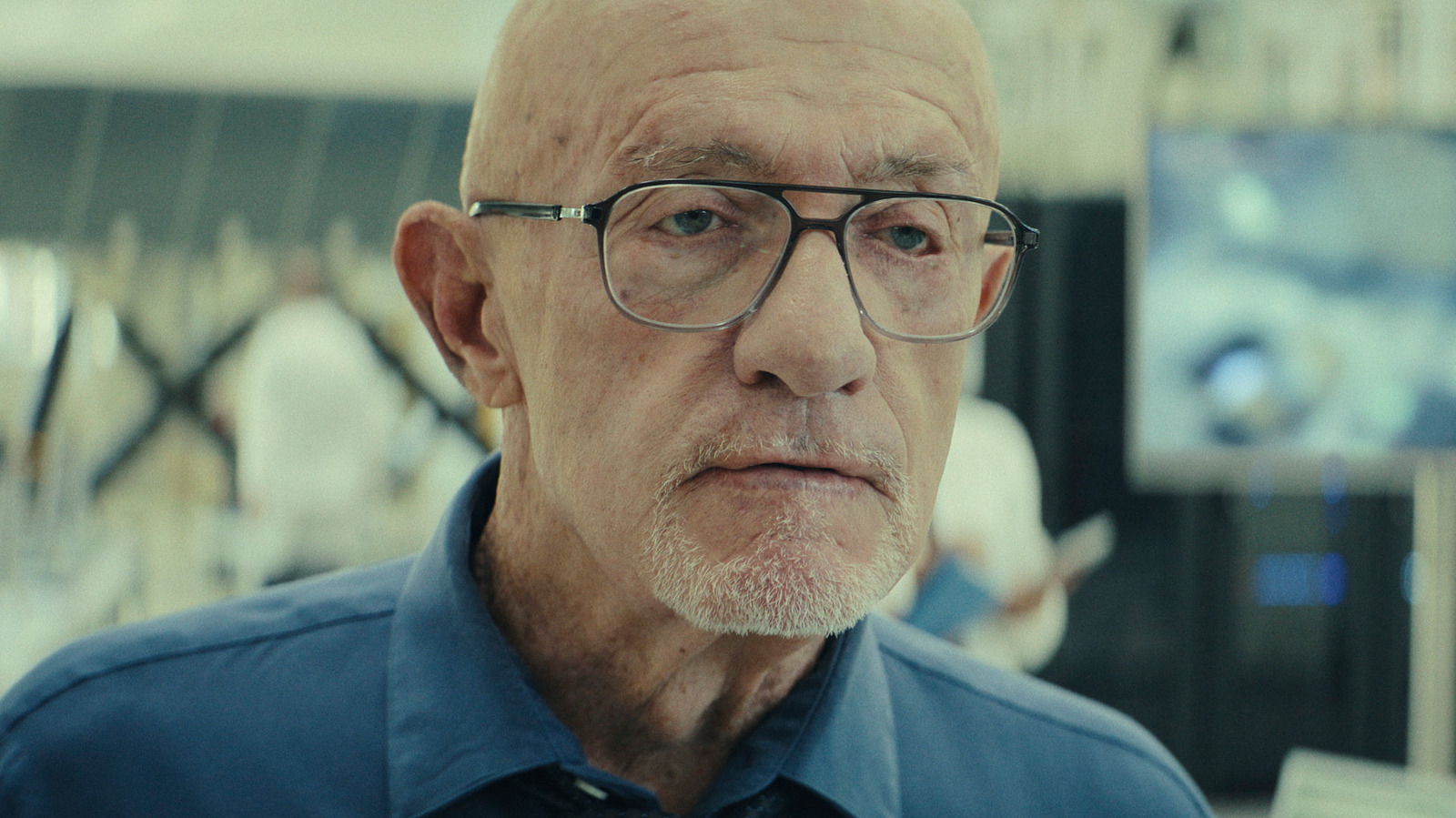
Concurrently, on Earth, Jonathan Banks’s character grapples with his own dimensional rift. As Henry Caldera, a Nobel Prize-winning physicist on one side, and Bud Caldera, a bitter, washed-up former astronaut on the other, Banks portrays two men linked by a quantum entanglement that drives them toward madness, murder, and existential revelation.
Phase 3: The Unresolved Climax
By the time the eight-episode first season reached its finale, Constellation had introduced body-swapping, government conspiracies, cold war space race secrets, and deeply metaphorical artistic motifs—most notably the grim reaper and angel paintings of Finnish artist Hugo Simberg.
However, rather than providing closure, the finale expanded the scope of the mystery. Characters were trapped in wrong bodies, the mechanics of the quantum phenomenon remained largely unexplained, and the showrunners clearly intended for the story to span multiple seasons. Instead, viewers were left stranded in the void, holding a handful of quantum loose ends and a single season of television.
Supporting Data: Critical Reception, Audience Metrics, and the Apple TV+ Model
Analyzing the demise of Constellation requires looking closely at how the series was received by critics, how it fit into the broader Apple TV+ library, and why it failed to achieve the breakout momentum of its stablemates.
Critical Divide: Philip K. Dick Meets a Migraine
Critics were deeply split on Constellation, creating a polarized discussion around its merits:
- The Positive Camp: Reviewers such as A.A. Dowd (Primetimer) championed the series, drawing favorable comparisons to the labyrinthine, reality-bending works of sci-fi master Philip K. Dick. Praises were heaped upon Noomi Rapace for anchoring the emotional chaos with a raw, visceral performance, and upon the directors (including Emmy-winner Michelle MacLaren) for crafting an atmosphere of relentless dread.
- The Skeptical Camp: Conversely, critics like Nick Schager (The Daily Beast) predicted the show’s early demise, arguing that its heavy reliance on "mystery-box" tropes and non-linear storytelling resulted in a narrative that felt more like a "giant headache" than an engaging sci-fi puzzle.
The Apple TV+ Paradox: Why Did It Fail to Launch?
Apple TV+ has built its reputation on cerebral sci-fi. Series like Severance, Foundation, and the post-apocalyptic drama Silo have managed to capture the cultural zeitgeist while dealing with complex, multi-layered premises.
Severance, for instance, operates on an equally bizarre premise: employees at a mysterious corporation undergo a surgical procedure to separate their work memories from their personal memories. Yet, Severance succeeded where Constellation struggled for several distinct reasons:
- The Logline Test: Severance has an instantly graspable, high-concept elevator pitch ("Your work self doesn’t know your home self"). Constellation, by contrast, suffered from a less punchy premise: an astronaut returns from space experiencing dimensional slippage linked to Cold War-era space programs, quantum physics, and psychological trauma.
- Pacing and Accessibility: While Severance leans heavily into corporate satire and distinct workplace aesthetics, Constellation was relentlessly bleak, slow-burning, and oblique, demanding immense cognitive heavy lifting from its audience right out of the gate.
- Marketing and Cut-Through: In an era of content saturation, expensive high-concept sci-fi needs an immediate hook to generate online discourse. While niche internet communities—such as deep-dive film blogs analyzing the show’s use of Hugo Simberg’s paintings—appreciated its artistic depth, it failed to translate into the broad mainstream viewership required to sustain a high-budget production featuring zero-gravity practical effects and international location shoots.
Official Responses and Industry Context
Neither Apple TV+ nor the creative team behind Constellation released a fiery public statement regarding the cancellation, which is standard practice in the modern streaming era. Decisions of this magnitude are routinely calculated behind closed doors based on viewership completion rates, cost-per-viewer metrics, and the projected return on investment for subsequent seasons.
Showrunner Peter Harness and lead actress Noomi Rapace had previously expressed enthusiasm for continuing the story across multiple years, designing the first season explicitly as the foundation for a much larger tapestry. However, the economic realities of 2020s television production caught up with the show. High-end science fiction—particularly series requiring extensive visual effects, authentic-looking space station sets, and European location filming—demands a massive financial commitment. When the audience numbers failed to scale at the same rate as the production budget, the calculus became clear for studio executives.
Implications: The Fragility of Mid-Budget High-Concept Sci-Fi
The premature grounding of Constellation carries broader implications for the future of science fiction television:
1. The Shrinking Lifespan of the "Grow-Into-It" Season
In decades past, complex science fiction series like Star Trek: The Next Generation or Fringe were granted the luxury of a wobbly first season to find their footing, develop their characters, and build a loyal audience. In the modern streaming landscape governed by algorithmic data and completion rates, shows are increasingly expected to perform like blockbuster movies immediately upon release. Constellation was a slow-burn narrative designed to stretch over years; cutting it off after eight episodes highlights the growing intolerance for patience in contemporary television development.
2. The High Cost of Ambiguity
Audiences love a good mystery, but there is a fine line between an engaging puzzle and an exhausting obfuscation. Constellation leaned heavily into ambiguity, withholding straight answers about its physics and mythology in favor of atmospheric dread and symbolic imagery. While this artistic choice endeared it to purists of psychological sci-fi, it ultimately alienated casual viewers looking for a clearer narrative anchor.
3. A Lost Opportunity for Character-Driven Space Drama
Ultimately, the loss of Constellation is most keenly felt in its human elements. Amidst the quantum anomalies, parallel cabins, and cosmic debris, the show was fundamentally about motherhood, grief, and the terrifying realization that the people we love can become strangers overnight. Noomi Rapace’s portrayal of a mother fighting across dimensions to reclaim her family offered a raw emotional core that deserved more than a single orbit.
As streaming platforms continue to recalibrate their spending and chase guaranteed hits, ambitious, mid-tier swings like Constellation may become even rarer. While it ultimately drifted off into the cinematic void too soon, Constellation remains a fascinating artifact of what happens when television dares to look up at the stars and embrace the terrifying unknown—even if the journey was cut tragically short.
