
Inside the Musical Lab of ‘Behemoth!’: How Tony Gilroy, James Newton Howard, and Lukas Frank Forged a Multigenre Masterpiece
MIDDLEBURG, Va. — When assembling the sonic world of a cinematic project, filmmakers usually lean on a traditional formula: hire a singular, dependable composer, lock them in a studio for a few months, and build a cohesive, sweeping underscore to shepherd the audience through the emotional highs and lows of the narrative. But writer-director Tony Gilroy is rarely one to follow conventional playbooks.
For his latest cinematic vehicle starring Pedro Pascal, the two-time Oscar nominee threw out the traditional underscore rulebook entirely. Instead, Gilroy conceived Behemoth! as an ambitious auditory mosaic—a sprawling, multifaceted musical experiment featuring original contributions from nine different composers. Ranging from an invented classic cartoon theme penned by Oscar winner Michael Giacchino to a mock-blockbuster score titled Open World by music icon Alan Silvestri, the film’s soundscape is as eclectic as it is audacious.
Yet, perhaps the most fascinating narrative to emerge from the film’s sound design is the arduous, deeply collaborative, and occasionally hilarious path to crafting the musical identity of Viviana, a brilliant young musician who captures the attention of Pascal’s professional cellist character, Alan Serian. At the center of this creative storm is singer-songwriter Lukas Frank—the designated newcomer of the Behemoth! music collective—whose deep-rooted personal history with Gilroy allowed him rare editorial license over a script penned by one of Hollywood’s most revered writers.
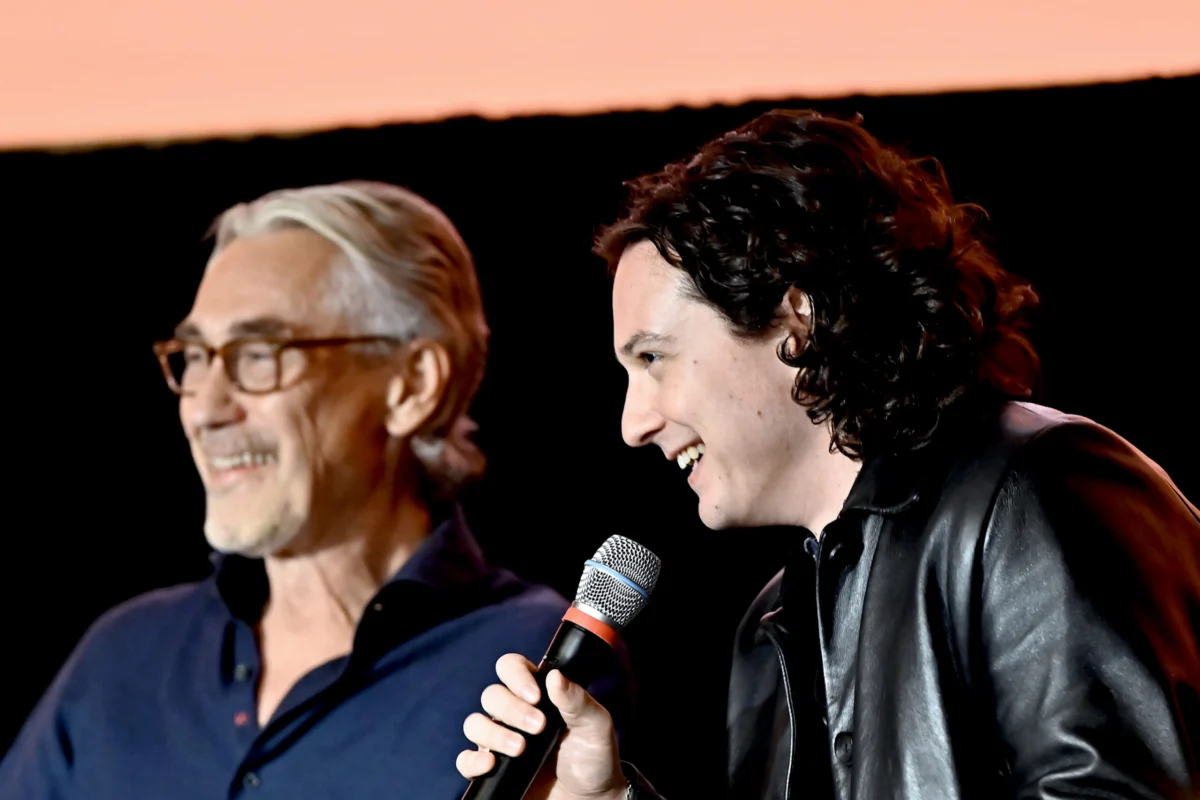
Appearing alongside Frank at a lively post-screening panel at the Middleburg Film Festival following a Sunday morning showcase of the film, Gilroy pulled back the curtain on the creative chaos, high stakes, and creative friction that brought Behemoth! to life.
Main Facts: A Collective Approach to Cinematic Sound
The central premise of Behemoth! relies heavily on diegetic music and contrasting styles to underscore the character dynamics, particularly the world inhabited by Pascal’s Alan Serian and the prodigy Viviana.
- The Collective: Rather than relying on a single voice, Gilroy enlisted a nine-composer collective, featuring heavyweights like James Newton Howard, Michael Giacchino, Alan Silvestri, and indie-rock-leaning newcomer Lukas Frank.
- The Core Conflict: The production’s primary musical hurdle was capturing the essence of Viviana—a character described in the script as a "proto-Mozart" and a transformative musical force—without falling back on generic Hollywood shortcuts.
- The Breakthrough: Frank, frontman of the band Storefront Church and the son of Gilroy’s longtime friend Scott Frank, transitioned from an outsider pitching rejected piano requiems to co-crafting one of the film’s standout centerpieces: the original pop song "Your God Is Sleeping," a strong contender in the Oscar race for Best Original Song.
Chronology: From Script to Screen and the Battle of the Requiems
The genesis of the music of Behemoth! began long before cameras rolled, driven by Gilroy’s desire to avoid a traditional, wall-to-wall orchestral underscore.
Phase 1: Tackling the "Proto-Mozart" Dilemma
Early in the development process, Gilroy faced what he considered his greatest writing and producing challenge: describing and subsequently materializing Viviana’s musical genius.

"It says on the page, oh, it’s this transformational [requiem], this woman beyond a prodigy, a proto-Mozart," Gilroy explained to the Middleburg audience. "It’s like when a writer says, ‘Oh, the greatest sunset ever.’ The director goes, ‘Fuck you. Really?’ So I’m on both sides of that equation, but I know that I have to have this thing, and I just know intuitively that this is going to be the hardest thing to do. So I started very early on."
Phase 2: Casting a Wide Net
Gilroy cast a wide net across his network of legendary collaborators. Nine-time Oscar nominee James Newton Howard eventually cracked the code for Viviana’s foundational sound. Once Howard unlocked the character’s core musical DNA, Gilroy handed him the keys to the rest of the Viviana cues.
Among these was an embryonic version of "Your God Is Sleeping," conceived as an experimental pop song performed by Viviana in a packed, sweaty Los Angeles music club—a scene witnessed by Pascal’s character.
Phase 3: Frank’s Intervention
Though Gilroy and Howard had a functional version of the track, they brought it to Lukas Frank to give it modern commercial appeal. Frank, maintaining his trademark candor, immediately critiqued the demo.
"Lukas listens to it and goes, ‘It’s really good, but it’s really old,’" Gilroy recalled.
Seated beside the director, Frank defended his critique: "Tony wrote this great song, it felt like a ’70s protest song."
"It wasn’t that lame," Gilroy quickly interjected, sparking laughter from the crowd.
"It was a good song. It did not feel like something a 16-year-old girl could write was my complaint about it," Frank countered.
Conceding the point, Gilroy told the young musician, "OK, you can have the title. Do whatever you want." Within days, the final version of "Your God Is Sleeping" was born.

Supporting Data: The Creative Friction Behind the Scenes
The collaborative process between Gilroy and Frank was defined by a mix of mutual respect and merciless artistic critiques. Long before landing the success of "Your God Is Sleeping," Frank made repeated attempts to write the pivotal piano requiems meant to showcase Viviana’s early talent—only to face constant rejection from the veteran filmmaker.
"All along the way, Lukas is like, ‘What are you doing? What happened? What’s going on? Let me try,’" Gilroy said. "He tried a bunch of Viviana requiems and kept sending them to me, but our relationship is different. I can just say ‘No, no, no, no, no, no, no, no. Don’t stop, but no. Forget it. I don’t see how this is going to happen.’"
Frank humorously recounted the psychological toll of submitting his best work to the director:
"Someday I’m going to release my four projected piano requiems. I got such great feedback. My favorite one, the piece was called ‘My Mother.’ Tony had the title for me, he wanted me to call it ‘My Mother.’ So I sent him one of them. I’m so proud of this piano requiem I sent. I sent it over to him. He goes, ‘I mean, it’s great. I’m sure your mother will love it.’"
After the audience’s laughter subsided, Frank shared another anecdote involving a rejected melody:
"I sent him another one over and he goes, ‘This is the definition of interesting for interesting’s sake.’ I then put that song [and melody] on my record. I don’t tell him. I send it to him. He goes, ‘Track four is great.’ I go, ‘Motherfucker! That’s the one that you said wasn’t that good.’"
Official Responses and Cross-Pollination Among Composers
Despite the playful friction between Frank and Gilroy, the overarching atmosphere among the Behemoth! music team was one of unprecedented mutual admiration. Bringing together nine distinct musical minds created a unique cross-pollination of ideas that kept the creative momentum high throughout post-production.
According to Gilroy, James Newton Howard—who ultimately dominated the scoring for Viviana’s primary cues—became deeply "obsessed" with what Frank was cooking up in the studio after hearing the final iteration of "Your God Is Sleeping."

"All the composers on this movie wanted to hear what the other ones were doing," Gilroy noted, highlighting the collaborative spirit of the collective. Speaking specifically about Frank’s contributions and the Oscar buzz surrounding the track, Gilroy added, "‘Your God Is Sleeping’ is the dopest. It’s really hard to be that simple and that effective. It’s really cool."
Implications for Future Film Scoring Models
The success of the Behemoth! music collective points to a potentially shifting paradigm in Hollywood sound design. For decades, standard blockbuster and prestige drama models have relied on a singular composer to establish a monolithic sonic universe. While effective, this traditional approach occasionally boxes in directors who want to portray complex, multi-layered cultural environments—such as an eclectic Los Angeles music scene where characters interact with radically different genres of music organically.
By decentralizing the score and treating different musical cues as artifacts generated by different fictional artists within the same narrative universe, Gilroy has mapped out a refreshing alternative.
Furthermore, the integration of indie artists like Lukas Frank alongside established cinematic royalty like James Newton Howard, Michael Giacchino, and Alan Silvestri bridges the gap between traditional film scoring and contemporary popular music production. It proves that generational creative friction—fueled by decades-long personal relationships and uncompromised artistic feedback—can yield unexpected gold.
As Behemoth! heads into awards season with heavy buzz around Pedro Pascal’s central performance and its innovative soundscape, the project stands as a testament to the fact that when creative collaborators are brave enough to tear up the script and start over, the final product resonates far beyond the screen.
