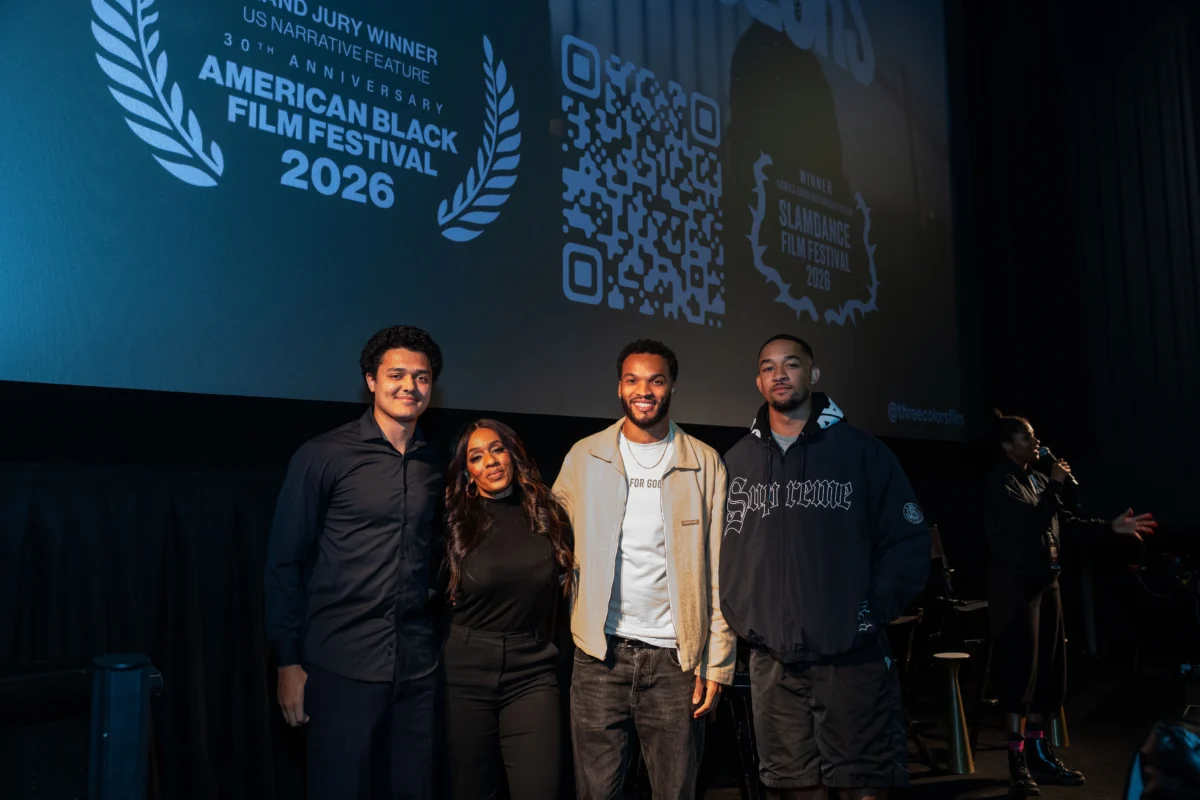
Main Facts: A New Era for Black Independent Cinema
The American Black Film Festival (ABFF), a cornerstone institution for Black cinema and a vital launchpad for emerging creators over the last three decades, is officially stepping into the realm of theatricaldistribution. With the launch of ABFF97, a groundbreaking new initiative named in honor of the festival’s founding year (1997), the organization is bridging the historical gap between the festival circuit and commercial movie theaters.
Rather than stopping at discovery, ABFF97 will curate select independent films and spearhead their localized theatrical rollouts, handling everything from release strategies and marketing to publicity and direct audience engagement. To ensure these titles reach critical mass across the country, AMC Theatres has signed on as the initiative’s inaugural theatrical provider.
The initial rollout will see curated indie features play across several major U.S. markets, including:
Los Angeles
New York
Atlanta
Washington, D.C.
Chicago
Detroit
Dallas
Houston
Charlotte
Philadelphia
Priority consideration for the inaugural slate will be given to projects that have previously screened at the American Black Film Festival. However, as the platform scales, ABFF97 plans to open its submission and curation pipeline to independent films from outside the festival ecosystem. The official inaugural slate and release schedule are slated to be announced in the coming months.
Chronology: Thirty Years of Growth Leading to ABFF97
To understand the magnitude of ABFF97, it is essential to trace the trajectory of the American Black Film Festival and its parent company, Nice Crowd (formerly Film Life).
1997–2000s: The Genesis of a Movement
Founded in 1997 by Jeff Friday, the festival was established during a time when Hollywood’s studio system routinely overlooked Black filmmakers, writers, and actors. Operating as an independent platform, ABFF quickly gained a reputation for being a risk-taking incubator. It offered a rare space where diverse storytellers could screen their work, network with industry executives, and find their foundational audiences. Over the years, the festival has introduced the world to powerhouse talents, Academy Award winners, and visionary directors who went on to reshape mainstream entertainment.
The 2020s: Adapting to a Shifting Landscape
As the theatrical marketplace endured seismic shifts due to the rise of streaming platforms, changing consumer habits, and post-pandemic recovery challenges, independent cinema bore the brunt of the industry’s volatility. Mid-budget and indie Black films struggled to secure reliable theatrical footprints, often bypassing the big screen entirely for digital-only premieres.
Despite these structural hurdles, ABFF continued to expand its physical footprint. The ongoing 2026 ABFF Pop-Up Tour served as a vital testing ground for this new distribution model. Having already successfully completed stops in Washington, D.C., and New York—with highly anticipated engagements in Atlanta and Houston following shortly—the tour demonstrated undeniable consumer demand. Audiences repeatedly showed up in droves, proving that moviegoers are eager to experience Black independent cinema collectively on the big screen rather than strictly in isolation at home.
October 2026: The Birth of ABFF97
Capitalizing on the momentum of the Pop-Up Tour and the steady stabilization of the theatrical box office, ABFF officially announced the creation of ABFF97. By evolving from an annual festival event into a year-round distribution entity, ABFF is effectively taking control of the theatrical pipeline for its alumni and broader community.
Supporting Data & Industry Context: The Mechanics of Modern Indie Distribution
The launch of ABFF97 arrives at a fascinating inflection point for the theatrical exhibition business. Major theater chains, including AMC, have increasingly recognized the necessity of carving out specialized, alternative distribution models to fill empty screen inventory and cater to underserved, highly engaged demographic segments.
The mechanics of ABFF97 are designed to directly address the economic fragility of independent filmmaking:
Visibility and Validation: By securing screens in key metropolitan hubs like Atlanta, Chicago, and Los Angeles, the initiative grants indie titles the cultural cachet and critical visibility that only a theatrical run can provide.
Data-Driven Success: The high turnout rates observed during the 2026 ABFF Pop-Up Tour provided the organization with hard demographic and regional data. This information directly informed the selection of the launch cities for ABFF97, aligning supply with proven local demand.
Amplified Ancillary Value: A targeted theatrical run does more than just generate box office receipts; it serves as a powerful marketing engine. Films that prove their commercial viability in theaters are significantly better positioned to command lucrative secondary licensing, streaming, and global distribution deals.
Furthermore, Nice Crowd—the live events and media company founded by Nicole and Jeff Friday—continues to produce high-impact cultural experiences. By leveraging Nice Crowd’s operational expertise, ABFF97 is backed by a corporate infrastructure capable of executing nationwide event cinema releases.
Official Responses: What Industry Leaders Are Saying
The announcement has sent waves of optimism through the independent film community, signaling a collaborative effort between major exhibitors and cultural institutions to democratize access to the big screen.
"For three decades, ABFF has helped discover filmmakers and connect their work with audiences," said Jeff Friday, founder of ABFF and co-founder and CEO of Nice Crowd.
"As the theatrical market builds momentum, we see an opportunity to bring more independent films into that growth. ABFF97 extends our role from discovery to distribution, drawing on the audience relationships and cultural reach we have built over 30 years. With AMC as our initial theatrical provider, we have a strong foundation to bring these films to market."
Exhibition partners have similarly echoed the strategic importance of tailoring content to diverse audiences. By partnering with AMC Theatres, ABFF97 gains access to state-of-the-art projection facilities and prime real estate in the country’s most lucrative film-going markets. This partnership underscores a growing industry consensus that localized, curated programming is a vital engine for future box office growth.
Implications: What ABFF97 Means for the Future of Black Cinema
The launch of ABFF97 carries profound implications for the future of independent filmmaking, particularly for creators of color navigating a crowded and often indifferent media landscape.
1. Disrupting the Traditional Gatekeeping Model
Historically, independent filmmakers spent immense resources trying to secure traditional distribution deals, frequently losing ownership rights or seeing their films buried on digital video-on-demand (VOD) platforms with zero marketing support. ABFF97 flips this paradigm. By acting as both curator and distributor, ABFF ensures that marketing budgets and release strategies are handled by a team that intimately understands the cultural value and target demographic of the content.
2. Redefining "Box Office Success" for Indie Films
For years, indie films were judged against the blockbuster metrics of studio tentpoles. ABFF97 establishes a sustainable framework where targeted, eventized theatrical releases in key urban centers can achieve profitability and cultural impact without needing a 3,000-screen national footprint.
3. A Year-Round Cultural Footprint
By transitioning from a once-a-year festival held every summer to a 365-day operational powerhouse, ABFF cements its status as an enduring media institution. With the upcoming 2027 edition of ABFF scheduled for May 20–23 in Los Angeles, the festival will now serve as the flagship event of a continuous, year-round cycle of discovery, theatrical distribution, and audience engagement.
As the industry awaits the official unveiling of the ABFF97 inaugural slate and release schedule, one thing is clear: the rules of film distribution are changing, and Black independent filmmakers now have a powerful, dedicated highway straight to the silver screen.