
The Soul of Cinema in the Age of Algorithms: Fan Bingbing on the Future of Performance
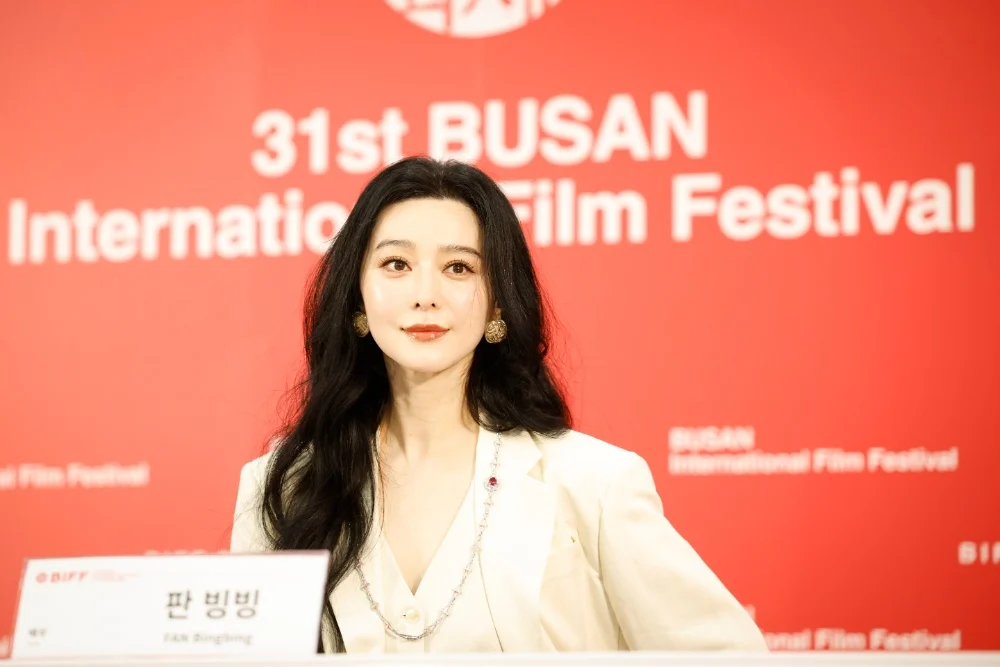
At the 29th Busan International Film Festival (BIFF), amidst the crisp air of South Korea’s coastal film hub, one of China’s most recognizable cultural icons, Fan Bingbing, offered a candid critique of the shifting landscape of entertainment. While the global industry is currently obsessed with the rapid integration of Artificial Intelligence, Fan’s perspective serves as a poignant reminder of the human element that remains the bedrock of cinematic art.
In a series of press engagements and intimate talks, the actress—making her third visit to the prestigious festival—addressed the rise of AI-generated microdramas in China. Her assessment was direct: while these digital creations are proliferating, they are failing to provide the artistic nourishment necessary for the next generation of audiences.
The Human Essence: Why AI Cannot Replace Art
The primary contention raised by Fan during the festival centers on the "artistic famine" she perceives among China’s youth. As AI-generated content becomes increasingly accessible and hyper-produced, the nuance of the human experience—the very thing that gives cinema its power—is being diluted.
"I feel that young people in China aren’t being fed very well," Fan remarked, drawing a sharp contrast between the ephemeral nature of short-form AI dramas and the enduring legacy of traditional film. To illustrate her point, she cited Lee Chang-dong’s Possible Love. For Fan, the film is a masterclass in emotional complexity.
"Human performances contain so many emotions and expressions," she explained. "The performances in Possible Love cannot be conveyed or replicated by AI." Her argument underscores a growing anxiety in the creative sector: that when the mechanics of storytelling are automated, the "soul" of the performance—the subtle flicker of doubt in an eye or the deliberate pause in a line of dialogue—is lost to algorithmic efficiency.
A Legacy of Resilience and Connection
Fan’s presence at Busan was not merely for reflection; it was a celebration of global collaboration. She presented Wayne Wang’s Diary of a Mad Old Man, screening in the "A Window on Asian Cinema" section, and Ivan Tan’s She Said, which premiered in the "Wide Angle" Asian Short Film Competition.
During a special "Carte Blanche" talk, Fan revisited Park Chan-wook’s masterpiece, The Handmaiden. Her choice of the film was deliberate. She spoke of the "danger and freedom" embodied by the female leads, noting that her fascination with the film has spanned a decade. Because The Handmaiden was never officially released in China, Fan described a personal quest to find the film, emphasizing that its impact on her remains undiminished.
This dedication to cinema as a transformative medium ties into her reflections on her own thirty-year career. Having worked alongside Park Chan-wook as a jury member at the 2017 Cannes Film Festival, she praised his "incisive observations" and "gentlemanly" demeanor, expressing a sincere desire to collaborate with him in the future. For Fan, acting is not merely a job; it is a bridge between generations.
"Actors of my generation in China hold themselves to an internal standard," she noted. "We belong to a generation that connects what came before with what comes next. We have a responsibility to carry that legacy forward, and we hope to be remembered ourselves."
The Chronology of a Global Transformation
Fan Bingbing’s trajectory over the last six years has been nothing short of a forced metamorphosis. Following the 2018 tax evasion scandal that effectively sidelined her from the mainstream Chinese film industry, Fan shifted her focus toward international markets. This shift has not been an end, but a redirection.
- 2018: The tax evasion case leads to a hiatus from domestic Chinese film production, forcing a reassessment of her professional trajectory.
- 2020–2022: Fan begins to seek roles outside of the traditional Chinese studio system, engaging with independent and international directors.
- 2023: She stars in the Korean-language feature Green Night, a noir thriller that signals her full-fledged integration into the global independent film circuit.
- 2024: Her success culminates in winning the Golden Horse Best Leading Actress award for the Malaysian drama Mother Bhumi, proving that her appeal transcends both geography and language.
Reflecting on this period, Fan acknowledges the hardship with grace. She describes herself as having been "forced" to adapt, yet she expresses gratitude for the pressures that pushed her beyond the fixed, glamorous screen image she was once pigeonholed into. By stepping outside the comfortable confines of the Chinese blockbuster machine, she has reclaimed her autonomy as an actor.
Yuanfen: The Philosophy of an Actor
Central to Fan’s worldview is the Chinese concept of yuanfen—a belief in the fateful, predetermined nature of connections. She applies this to her craft, viewing the relationship between actor, director, and role as something that cannot be manufactured or forced.
"I believe that only by continually accumulating experience can you keep challenging who you are and extend your life as an actor," she said. This philosophy explains her pivot toward roles that are culturally and linguistically diverse. She no longer chases the "perfect" star vehicle; instead, she follows the storylines that fate presents, finding happiness in the ability to do justice to complex, challenging characters.
Implications for the Global Film Industry
Fan’s critique of AI-generated content and her embrace of international collaboration carry significant implications for the future of Asian cinema. The rise of AI in entertainment is not a localized trend; it is a global phenomenon that threatens to homogenize content. By speaking out, Fan is highlighting a divide: between "content" meant for consumption and "cinema" meant for human resonance.
Her perspective suggests that the survival of the actor as a profession depends on their ability to offer something that an algorithm cannot: lived experience, vulnerability, and the capacity for moral and emotional nuance. As she puts it, "Following the storyline that fate gives me, and doing justice to my abilities as an actor, is already a source of happiness."
Conclusion: The Path Forward
As the Busan International Film Festival continues to serve as a beacon for artistic exchange, voices like Fan Bingbing’s are essential. She represents a generation of performers who are navigating a world where the traditional barriers to entry—and the traditional definition of a "star"—are dissolving.
Her journey from a domestic superstar to a globally recognized character actress is a testament to resilience. Whether she is discussing the nuances of Lee Chang-dong’s direction or the pitfalls of a digital-first entertainment landscape, Fan remains committed to the idea that cinema is a human endeavor. In an age of synthetic content, her demand for "artistic nourishment" is not just a preference; it is a challenge to the industry to prioritize the human heart over the digital pulse.
As she continues to bridge the gap between her past legacy and her new international horizon, Fan Bingbing stands as a bridge-builder—a performer who understands that while the tools of the trade may change, the mandate to reflect the human condition remains unchanged. Her future projects will undoubtedly be watched closely, not just for the spectacle they provide, but for the authentic performances she continues to fight for in an increasingly automated world.
