
Retouch4me Lab Revolutionizes Post-Production with AI-Driven Color Correction for Full Photography Shoots
In the fast-paced world of professional photography, capturing the image is often only half the battle. For decades, the true bottleneck of the creative process has resided quietly behind closed doors during post-production. While clients marvel at dramatic cinematic styles, vibrant tones, and moody grades, retouchers and photographers spend countless grueling hours on the unglamorous side of the craft: color repair.
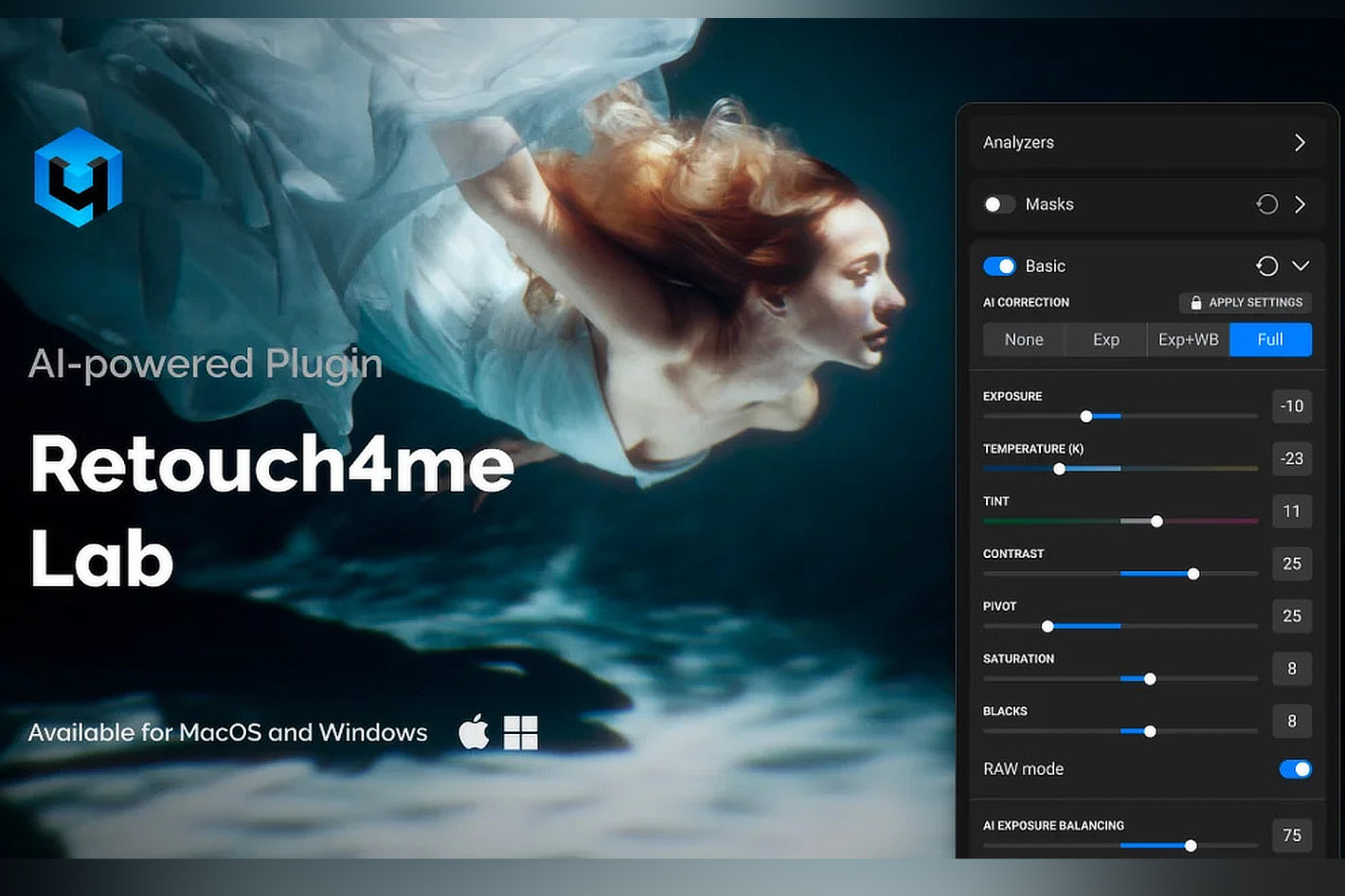
Enter Retouch4me Lab, a groundbreaking AI-powered color correction and visual effects application designed to tackle an entire photo shoot simultaneously. Hot on the heels of the company’s recent release of Lab Video for motion picture professionals, Retouch4me’s latest desktop software aims to eliminate the tedious, repetitive labor of batch-matching frames, promising to redefine how creators bridge the gap between RAW conversion and final retouching.
Main Facts: What is Retouch4me Lab?
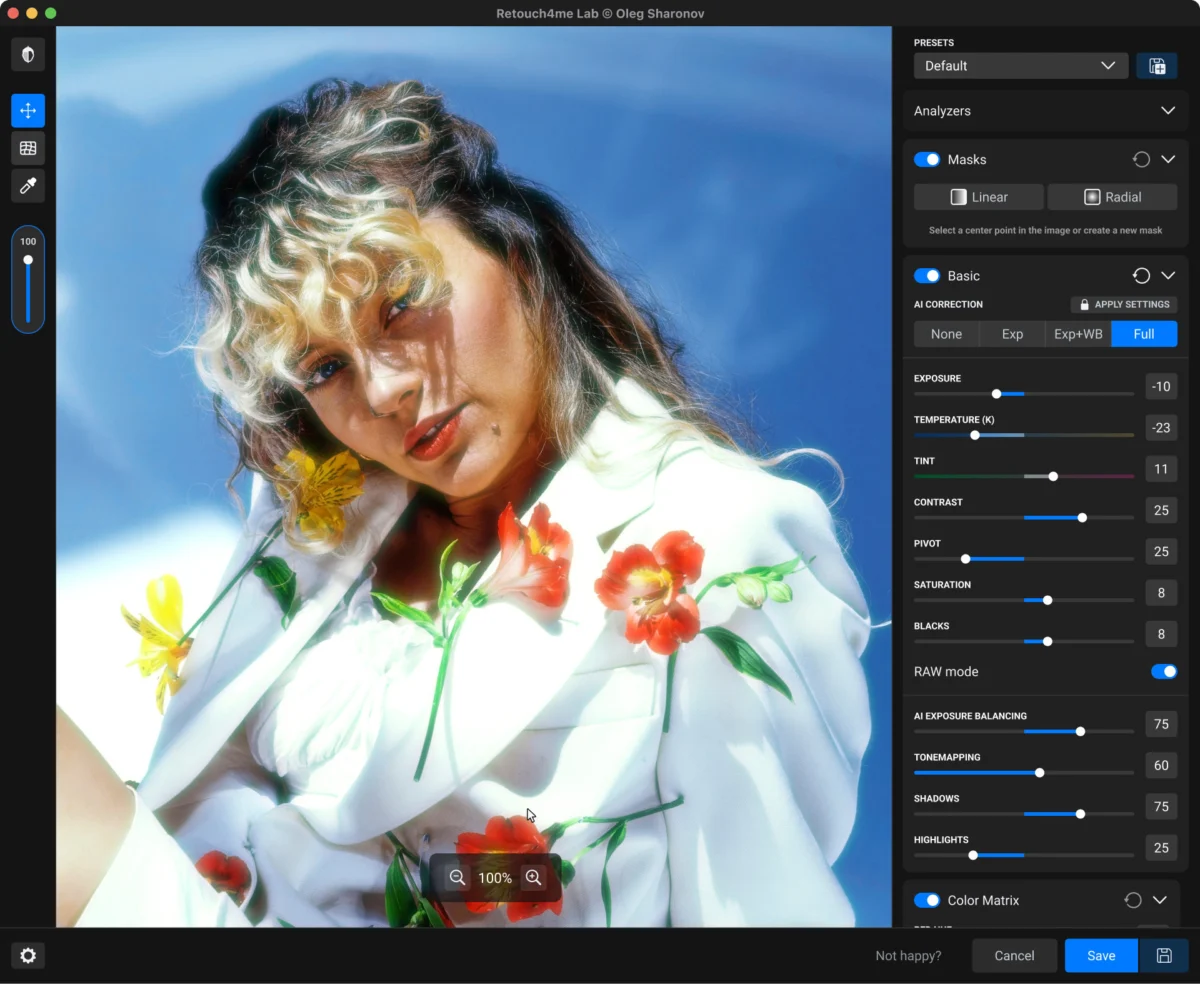
Retouch4me Lab is a dedicated standalone desktop application built specifically to streamline the color-correction phase of a photographer’s workflow. Positioned precisely between initial RAW conversion (using software like Adobe Lightroom or Capture One) and high-end skin retouching, Lab serves as a bridge that brings every single frame of a large shoot onto a unified, consistent color baseline.
Rather than forcing users to manually tweak white balance, exposure, and tone across hundreds or thousands of individual images—especially when ambient lighting conditions shift unpredictably from frame to frame—the software leverages advanced neural networks to automate the process.
Key product highlights include:
- Automated Batch Correction: Intelligent algorithms analyze a full set of images, evening out exposure and color anomalies automatically.
- Professional Standards: Neural networks trained on the work of elite professional photographers and retouchers ensure that corrections stay within a natural, high-end aesthetic range.
- Granular Control Suite: Includes foundational tools like exposure, white balance, and tone, alongside advanced color mechanisms including HSL, curves, and a color matrix.
- Creative Styling & Effects: Complete support for LUTs (Look-Up Tables), saved user styles, local masks for selective adjustments, and three distinct optical effects: halation, bloom, and chromatic aberration.
- Privacy-First Processing: The software runs locally on the user’s machine, ensuring that sensitive client files never leave the local hard drive.
- Pricing and Availability: Available immediately for $145 USD, with a free functional demo available for download on the official Retouch4me website.
Chronology: The Evolution of Color Workflows
To understand the significance of Retouch4me Lab, it helps to examine how color correction tools have evolved over the last decade. The journey of modern digital color grading has long been plagued by fragmented interfaces and manual redundancy.
The 2013 Breakthrough: The Color Grid
Long before deep learning became accessible to software developers, Oleg Sharonov—co-founder of Retouch4me and legendary creator of 3D LUT Creator—recognized a fundamental flaw in how digital imaging software handled color. In traditional editors, hue, saturation, and luminosity (HSL) were treated as three completely separate, independent sliders. However, in physical photography and natural light, these three dimensions of color are inextricably linked; they move together.
To solve this, Sharonov built a revolutionary color grid in 2013 to simplify color manipulation for photographers. This tool laid the conceptual groundwork for understanding how intuitive visual representations of color could bypass clunky, isolated sliders.
The Rise of Neural Networks in Post-Production
Over the subsequent ten years, artificial intelligence transitioned from academic research into consumer-ready desktop applications. While AI tools initially focused on easy wins—such as automatic subject masking, background removal, and skin smoothing—the complex domain of holistic color science remained largely resistant to reliable automation. Most AI photo tools focused on single-image enhancements rather than cross-frame consistency.
The Convergence of Video and Stills
Recognizing that the challenges of color matching plagued both moving and still imagery, Retouch4me developed parallel systems. Following the successful rollout of Lab Video for cinematic professionals, the company fine-tuned its neural networks to address the unique demands of batch photography. By late 2024 and early 2025, the development culminated in the commercial launch of Retouch4me Lab for photographers, effectively merging automated frame repair with traditional desktop post-production pipelines.
Supporting Data: The Economics of Color Repair
In professional photography, time is literally money. To understand why Retouch4me Lab represents a major financial and operational shift for studios, one must analyze where post-production hours are actually spent.
Repair vs. Style: The Great Divide
Post-production generally divides into two distinct operational categories:
- The Style: Applying a creative look, cinematic grade, or specific mood to an image. This is usually achieved using custom presets, commercial LUTs, or signature looks. Everyone talks about the style because it is the visible artistic signature of the photographer.
- The Repair: Correcting technical inconsistencies, balancing exposure fluctuations, neutralizing color casts, and ensuring that Frame A matches Frame B.
While photographers love spending time on style, it is repair that quietly consumes 70% to 80% of post-production labor hours. In scenarios such as outdoor portraiture under shifting clouds, fast-paced event photography, or studio shoots where models move relative to strobe lights, lighting temperatures and exposures vary wildly.
The Under-Saturation Trap
One of the most persistent telltale signs of amateur or half-finished post-production is under-saturated or poorly balanced color gradients across a set of deliverables. When photographers attempt quick batch-syncing in standard converters without intelligent baseline correction, skin tones drift, shadows turn muddy, and highlights blow out unpredictably.
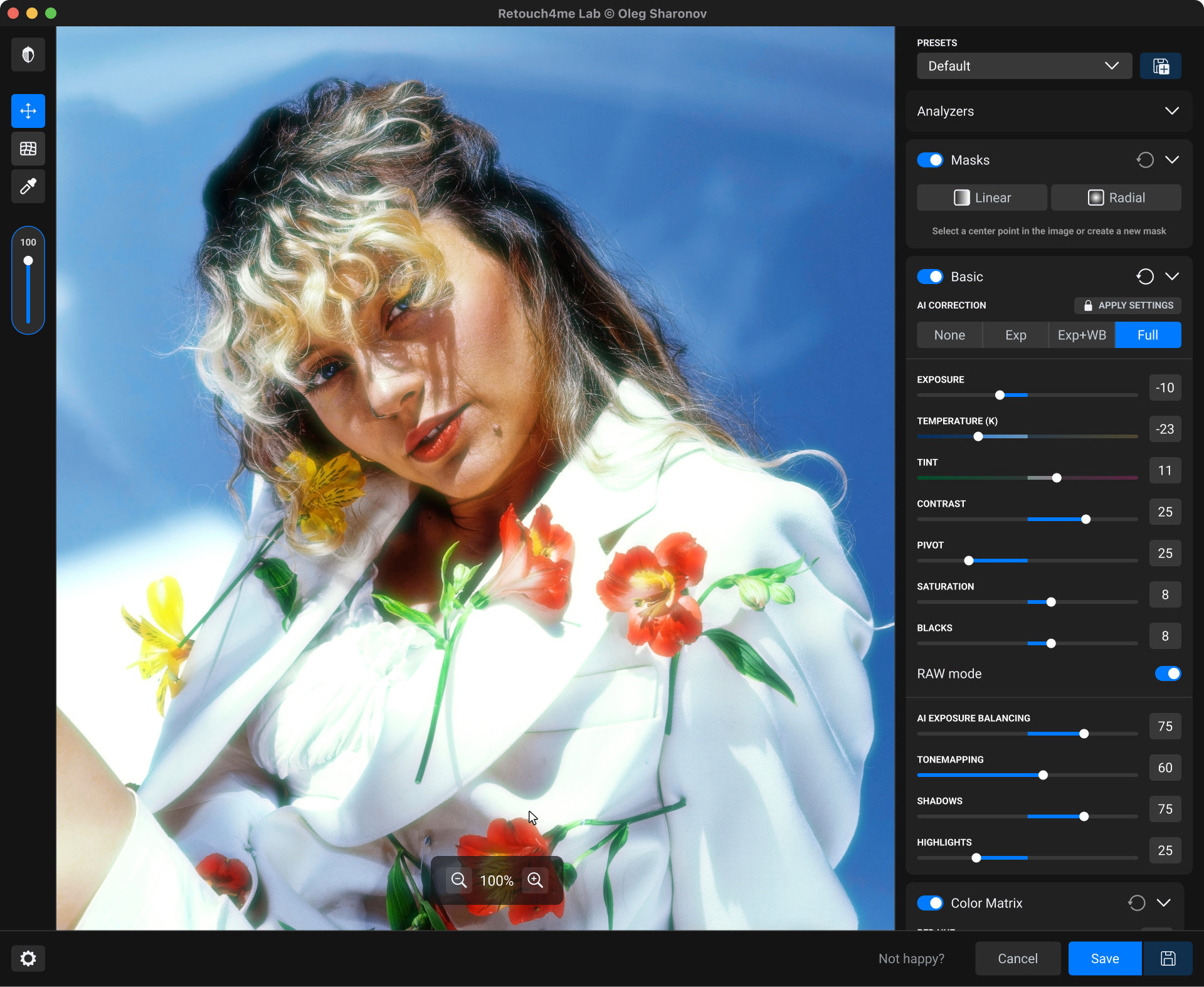
Retouch4me Lab’s neural networks were trained specifically to avoid these pitfalls. By studying millions of professional edits, the AI learns to target the exact thresholds that a seasoned human retoucher would deem acceptable, maintaining rich, vibrant color fidelity across unfamiliar camera systems—whether the files originate from Canon, Sony, Nikon, Fujifilm, or medium-format digital backs.
Official Responses and Industry Insights
The philosophy behind Retouch4me Lab is deeply rooted in decades of color science experience. Oleg Sharonov, co-founder of Retouch4me and the brilliant mind behind 3D LUT Creator, elaborated on the core mission of the software during its launch:
"In 2013 I built a color grid to simplify color correction for photographers, because every program I opened treated hue, saturation and luminosity as three separate sliders, when in a photograph they move together," Sharonov explained. "Lab does that job with AI now, automating the base layer of color correction. It takes a raw shoot and brings every frame to a good starting point. I am looking forward to seeing it make color work simpler for photographers."
Industry analysts and early beta testers have echoed Sharonov’s sentiments, noting that the software does not attempt to replace the artist’s creative vision, but rather liberates them from the mechanical chores of color grading. By functioning smoothly alongside industry mainstays like Adobe Lightroom and Capture One, Lab fits seamlessly into pre-established pipelines without demanding that studios completely overhaul their existing file management systems.
Implications: What Retouch4me Lab Means for the Future of Photography
The introduction of dedicated AI-driven color repair tools carries profound implications for various sectors of the photography industry.
1. Enhanced Efficiency for High-Volume Studios
For wedding photographers, event shooters, commercial studios, and fashion houses that routinely process thousands of images per project, the economic impact is massive. By cutting batch-matching time down from hours to mere minutes, studios can dramatically increase their turnaround times, improve client satisfaction, and take on higher booking volumes without burning out their post-production teams.
2. Perfecting Personal Presets and LUTs
A common frustration among photographers is applying a beloved signature preset or custom LUT to a shoot, only to discover that it destroys half the images because the underlying exposure and white balance of the source frames were inconsistent.
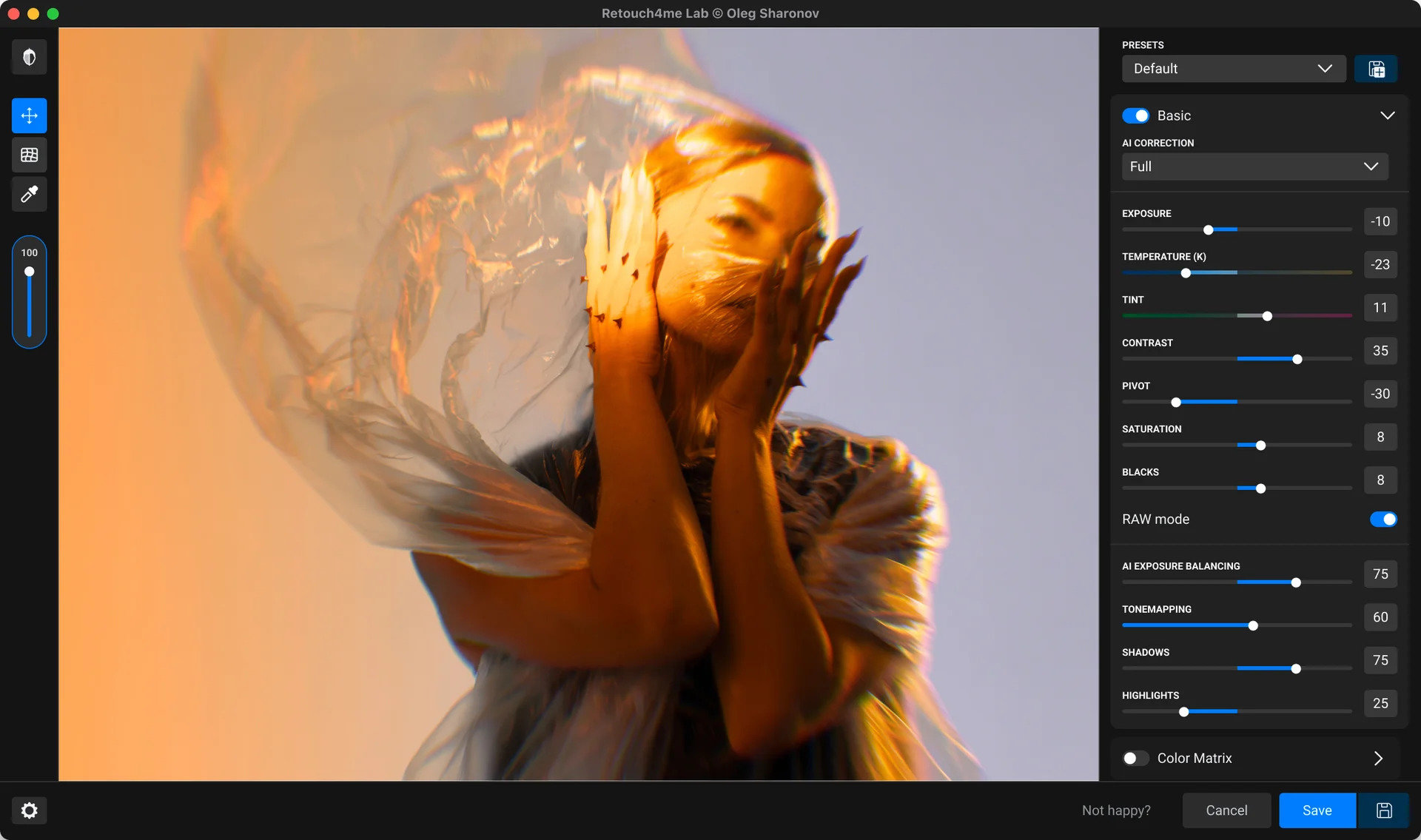
Because Retouch4me Lab establishes a uniform baseline across all images before styling is applied, personal presets finally behave predictably. When every frame starts from the exact same tonal foundation, a LUT lands with absolute consistency from the first image to the last.
3. Complete Creative Control Remains Intact
A recurring anxiety surrounding artificial intelligence in creative fields is the fear of losing artistic agency. Retouch4me has carefully engineered Lab to counter this concern. Automation is treated strictly as a starting point. Every single adjustment—from basic exposure tweaks to advanced local masking and optical effects like halation and bloom—features granular intensity controls. Photographers retain absolute dominion over their final look, using the AI merely as an ultra-efficient digital assistant.
4. Privacy and Local Computing Power
In an era where cloud-based AI tools often require uploading massive, confidential RAW files to external servers (raising serious copyright and privacy concerns for commercial and celebrity photographers), Retouch4me Lab stands out by executing all neural network processing entirely offline. Running locally on the photographer’s machine guarantees total data security and eliminates dependency on internet connectivity during mission-critical deadlines.
Conclusion
Retouch4me Lab represents a mature evolution in AI-assisted creative software. By accurately diagnosing and solving the industry’s most tedious bottleneck—cross-frame color repair—it transforms a painful chore into an automated breeze.
Priced at $145 USD and available now for immediate download (complete with a trial demo for prospective users), Retouch4me Lab is poised to become an indispensable tool in the modern digital darkroom, allowing photographers to spend less time wrestling with sliders and more time doing what they love: creating extraordinary imagery.
