
The Digital Frontier: Tracing the Evolution and Future of CGI in Cinema
From the humble, flickering frames of the 1970s to the photorealistic, immersive environments of today’s blockbusters, Computer Generated Imagery (CGI) has fundamentally restructured the DNA of filmmaking. Once a niche experiment reserved for science fiction curiosities, CGI has become the backbone of modern cinema. As we stand at the precipice of a new era defined by artificial intelligence and real-time virtual production, it is essential to examine how this technology evolved, where it stands in the current cultural landscape, and what its future holds for the art of storytelling.
Main Facts: Distinguishing the Digital Tools of the Trade
To understand the trajectory of cinema, one must first dismantle the common misconception that "VFX" and "CGI" are synonymous. While the terms are frequently used interchangeably in casual conversation, they occupy different rungs on the production ladder.
Visual Effects (VFX) is an umbrella term encompassing any imagery created, altered, or enhanced for a film outside the context of live-action shooting. This includes everything from the practical artistry of matte paintings and the erasure of stunt wires to the addition of atmospheric elements like artificial snow. CGI, conversely, is a specific subset of VFX; it refers exclusively to imagery generated through computer software.
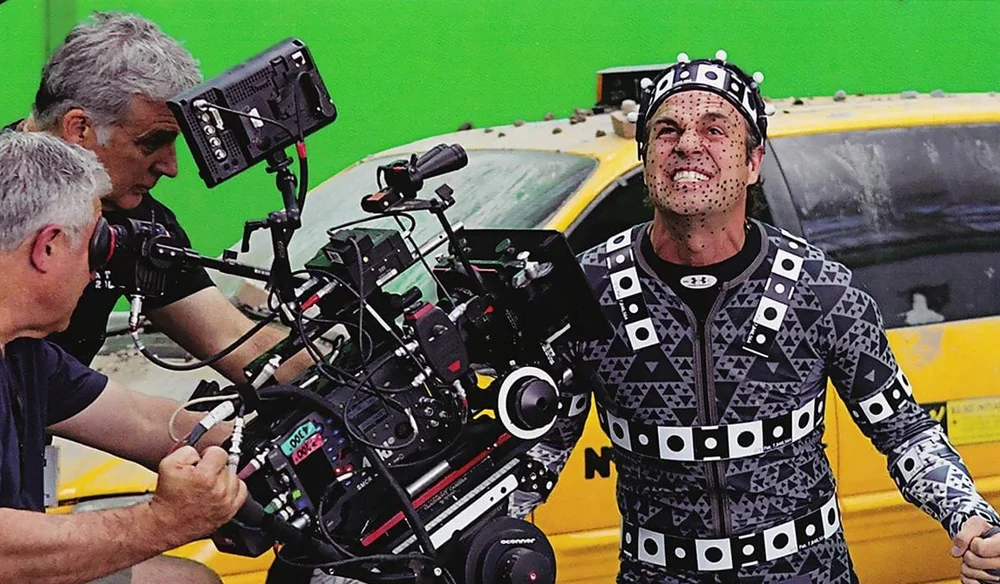
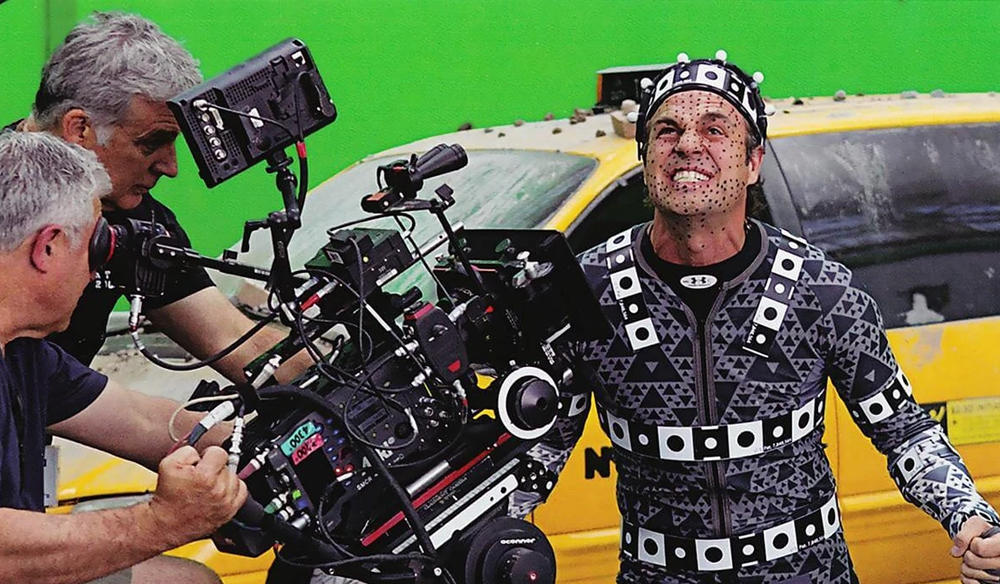
The modern "Marvel" aesthetic often serves as the most prominent case study for this interplay. In The Avengers, when Mark Ruffalo performs in a motion-capture suit, the digital "skin" of the Hulk is pure CGI. However, when the background of a New York street is digitally inserted behind the actors to replace a green screen, that is the broader work of VFX. Understanding this distinction is vital, as it highlights how cinema has shifted from "capturing reality" to "constructing reality."

A Chronology of Innovation
The history of CGI is not merely a technical timeline; it is a story of ambition outpacing hardware.
The Genesis (1973–1977)
The first flickering instance of CGI in a feature film appeared in the 1973 sci-fi classic Westworld. Creators John Whitney Jr. and Gary Demos utilized NASA-developed technology to digitize film frames, deconstructing them into numerical data to simulate a robot’s point-of-view. Though it lasted a mere ten seconds, it proved that the computer could be a canvas.
Shortly after, George Lucas’s Star Wars (1977) utilized CGI to visualize the Death Star tactical map. While the film was a triumph of practical effects and miniatures, that brief 3D wireframe sequence signaled the beginning of the end for purely physical filmmaking.
The Rise of the Digital Character (1990s)
The 1990s saw CGI move from background utility to center stage. Terminator 2: Judgement Day (1991) stunned audiences with the liquid-metal T-1000, a feat achieved by mapping a grid onto actor Robert Patrick’s face. This was followed by the groundbreaking blend of animatronics and CGI in Jurassic Park (1993), which proved that digital creatures could possess weight and presence. By 1999, Star Wars: Episode I – The Phantom Menace introduced Jar Jar Binks—the first fully CGI character with speaking lines and direct interaction with human actors—a milestone that, regardless of its critical reception, changed the feasibility of digital performance forever.

The Modern Standard (2000s–Present)
The turn of the millennium brought the "bullet-time" revolution of The Matrix (1999) and the motion-capture mastery of James Cameron’s Avatar (2009). Cameron’s work, which utilized facial-mapping technology to capture the nuance of human emotion, set a new bar for performance capture. This evolution reached its zenith with Avatar: The Way of Water (2022), which pushed underwater motion capture into the realm of the impossible.
Supporting Data: The Economics of Spectacle
The integration of CGI is driven by a massive economic engine. Major blockbusters now routinely feature thousands of VFX shots. The industry standard has shifted toward a high-volume, high-complexity model. However, this shift comes with significant risks.
In recent years, the "blockbuster model" has faced scrutiny. For example, while Top Gun: Maverick was marketed heavily on its "practical" approach—with Tom Cruise insisting on real jets—the film still required over 2,500 VFX shots to achieve its seamless final look. The data suggests that the most successful films are not those that avoid CGI, but those that hide it in plain sight, using it to augment physical reality rather than replace it entirely.
Official Responses and Industry Criticism
Despite the technological marvels, the industry is currently undergoing a period of intense self-reflection. The "CGI backlash" from audiences is largely a reaction to "crunch culture" within VFX houses.
Kevin Feige and the Marvel Studios machine have come under fire for a production model that relies on constant reshoots and last-minute changes. When a film’s narrative structure remains in flux until weeks before release, VFX artists are forced into unsustainable work cycles. This results in the "rushed" look that audiences have identified in recent projects like Thor: Love and Thunder.
Industry veterans and visual effects supervisors have argued that the problem is not the technology, but the workflow. When CGI is used as a "fix-it" button for poor planning, the quality inevitably suffers. The recent pushback against the "fix it in post" mentality is a plea for studios to respect the artistic process, rather than treating digital effects as a low-cost, high-speed solution to fundamental storytelling errors.
Implications for the Future of Cinema
The future of CGI is currently being written on the stage of virtual production. Technologies such as volumetric LED screens (the "Volume") allow filmmakers to project photorealistic environments in real-time, effectively replacing the need for traditional green screens. As seen in The Mandalorian and The Batman, this allows actors to interact with the environment they are "in," drastically improving performance and lighting accuracy.
The Democratization of Digital Art
Perhaps the most significant implication of the current CGI landscape is its democratization. In 2024, the barrier to entry is lower than ever. Software like Blender is free, powerful, and backed by a global community of educators. Platforms such as YouTube have replaced traditional film schools for thousands of aspiring VFX artists. We are entering an era where a lone creator with a high-end PC can produce visuals that would have required a Hollywood studio budget two decades ago.

The Ethical Horizon
As we move forward, the industry must address the ethical implications of AI-driven animation, deepfakes, and the potential displacement of human labor. While the tools of the trade are becoming more accessible, the value of the "human touch"—the artistic intent behind the pixels—remains the differentiator between a soulless digital construct and a cinematic masterpiece.
Conclusion
CGI is neither the savior nor the destroyer of cinema; it is a tool, as vital and transformative as the invention of color film or sound. Its evolution from the point-of-view of a Westworld robot to the lush, aquatic landscapes of Pandora shows that we are only limited by our imagination.
The path forward requires a shift in studio philosophy: away from the "rush-and-fix" culture and toward a model that treats VFX artists as storytellers. If the industry can strike a balance—using digital tools to enhance the emotional core of a story rather than obscuring it—the future of cinema promises to be not just visually spectacular, but profoundly human. As the tools for creation continue to democratize, the next great revolution in film may not come from a massive studio, but from an independent artist with a vision and a render farm.
