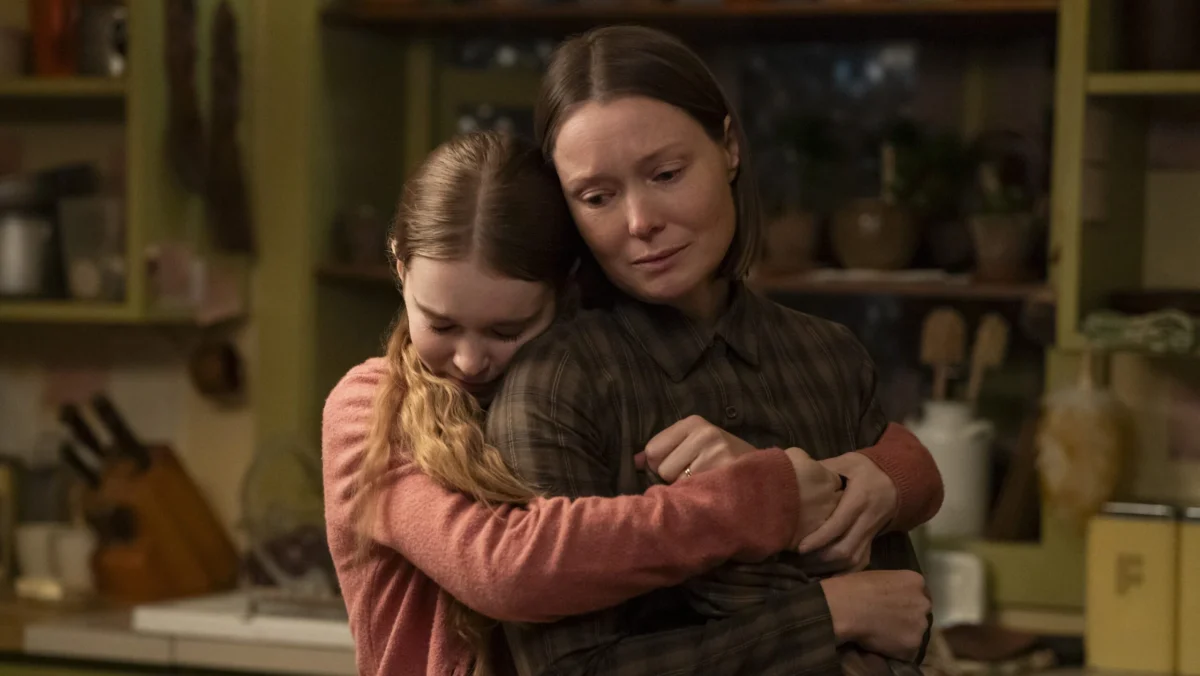
When visionary horror creator MikeFlanagan set out to adapt StephenKing’s foundational 1974 novel Carrie for PrimeVideo, he knew he needed a transformative approach to characters ingrained in pop-culture history. Rather than leaning entirely on Brian De Palma’s iconic 1976 feature film starring Piper Laurie, Flanagan opted to reinvent the deeply complex, fanatically religious mother, MargaretWhite. To bring this nuanced interpretation to life, he turned to frequent collaborator SamanthaSloyan.
All episodes of the first season of Prime Video’s Carrie are currently available to stream, and they have quickly become a major talking point for horror aficionados. Sloyan, widely recognized by Flanagan fans for her chilling portrayal of the overzealous church zealot Bev Keane in the 2021 limited series Midnight Mass, admits she was initially terrified by the prospect of tackling Margaret White. However, under Flanagan’s direction, the character evolved away from a one-note caricature into a grounded, deeply maternal figure driven by a tragic paradox: a mother who genuinely loves her daughter, yet is pushed to the edge by her own hidden history and a terrifying, hereditary curse.
Chronology: From Terror to Triumph on Set
The journey toward realizing this new iteration of Margaret White began long before the cameras started rolling, rooted in a creative partnership forged across multiple projects, including The Haunting of Hill House, Hush, The Life of Chuck, and Midnight Mass.
Initial Hesitation
When Flanagan first approached Sloyan about playing Margaret, the actress experienced immediate anxiety. Having grown up reading King’s novel and watching De Palma’s cinematic classic, she feared she would inevitably try to emulate Piper Laurie’s bombastic, theatrical performance. Furthermore, because of her unforgettable work as Bev Keane, Sloyan worried audiences would see Margaret as a mere repeat of past performances—loud, terrifying, and fiercely dogmatic.
The Creative Pivot
Those fears vanished the moment Flanagan explained his core thesis for the adaptation: Margaret and Carrie love each other deeply. This single shift in perspective transformed Margaret from a cartoonish religious tyrant into a "whole different human." By rooting the mother-daughter dynamic in genuine affection, Flanagan created a much more tragic framework. When Margaret eventually turns on Carrie, the betrayal feels far more devastating and emotionally resonant.
Production and Collaboration
Production on the series allowed Sloyan to step into her largest footprint within Flanagan’s cinematic universe yet. Operating under an open-set philosophy where cast members—even the younger actors—were encouraged to observe filming on their days off, the production cultivated a deep sense of family. This environment contrasted sharply with the isolated shooting conditions of Midnight Mass, which was produced under strict COVID-19 protocols.
Supporting Data: Unpacking the Narrative Twists
The first season of Prime Video’s Carrie introduces several dramatic departures from the original novel and previous adaptations, culminating in a jaw-dropping Season 1 finale titled "AP Physics."
The Hereditary TK Gene
In a major narrative twist, the finale reveals that Margaret White is also telekinetic, proving that the TK gene giving Carrie her powers is entirely hereditary. This revelation completely reframes Margaret’s behavior throughout the entire season. Rather than acting out of blind ignorance or arbitrary cruelty, Margaret has always understood what was happening to her daughter because she experiences the exact same reality.
Cult Dynamics and Vulnerability
Speaking on Margaret’s backstory—particularly following the death of Carrie’s father—Sloyan resists labeling the marriage as purely abusive, instead viewing it as a mutually agreed-upon "cult of three." When her husband dies, Margaret’s ideological bunker is blown wide open. Stripped of her familiar safeguards, she feels profoundly vulnerable in a chaotic world. This deep-seated fear of an outside society that preys on "monsters" accelerates her aggressive, reactionary tendencies as she tries to protect the last remaining piece of her world: her daughter.
Key Collaborations
The season also benefits from powerful supporting performances. Sloyan highlights the chilling addition of Katee Sackhoff as Amanda, a character who serves as a dark counterpart to Margaret, whispering the fatalistic notion that if Margaret does not destroy her daughter to save her, the outside world will do it much worse. Additionally, the finale features a poignant, albeit brief, onscreen crossover with Kate Siegel, whose character interaction cements the multigenerational weight of the story.
Official Responses and Insider Insights
In a detailed conversation regarding her role, Sloyan offered deep insights into the thematic weight of the series, the philosophy of Mike Flanagan’s writing process, and a sneak peek into her next collaboration with the director.
"Mike is so good, and with Bev… he writes people we recognize, which allows us as the viewer to disconnect so quickly and sometimes helps give you that benefit of the doubt. It gives the viewer doubt. Like with Chris in this piece, it’s so hard to just write her off as a terrible human being. We get to know everything that’s happening."
— Samantha Sloyan on Flanagan’s character-building philosophy.
Addressing the chilling finale and her scene alongside Kate Siegel, Sloyan noted:
"Well, my first reaction to reading it, I was like, ‘That’s awesome.’ And I do think it does play into so much of parents wanting, trying so hard for their kids not to suffer the same things that they suffered, and in doing so, sometimes create a new trauma for that kid. And I think, what I loved about it also was it really helped to anchor how… if you go back, all the decisions she made. She understands because she knows it’s real."
Beyond Carrie, Sloyan briefly discussed her involvement in Flanagan’s upcoming adaptation, The Exorcist: Martyrs. Though she describes her footprint in the film as "very tiny," what she witnessed from the production monitors left a lasting impression.
"For me personally, I think from what little I saw, it’s the scariest thing that I’ve seen him do. So, I’m very excited. I’m excited as everybody else is to see it."
Implications: Modern Horror, Generational Trauma, and the Future of the Franchise
Prime Video’s Carrie does more than simply retell a classic supernatural horror story; it repurposes the narrative as an exploration of generational trauma, isolation, and mental health. By emphasizing the psychological toll of systemic bullying—highlighted by Carrie’s confrontations not only with schoolmates, but with her mother, and underscored by the presence of school guidance counselors and administrators—the series anchors its supernatural elements in contemporary anxieties.
The Real-World Parallels
Sloyan’s grounded performance resonates with modern cultural phenomena, capturing the tense, insular paranoia found within contemporary extremist subcultures. By stripping away mustache-twirling villainy and replacing it with a misguided, desperate maternal instinct to shield a child from a cruel world, the adaptation forces audiences to confront uncomfortable truths about how cyclical trauma is perpetuated within families.
What’s Next for the Flanaganverse
With Carrie currently streaming in its entirety, the series has proven that classic horror properties can be successfully revitalized when handed to creators who prioritize emotional depth and character psychology over cheap jump scares. As Mike Flanagan continues to expand his horror empire—with The Exorcist: Martyrs looming on the horizon as potentially his most terrifying work to date—actors like Samantha Sloyan stand as vital pillars of a collaborative universe that continually redefines the genre.