
Summer Box Office Dispatches: The Mandalorian’s High-Stakes Gamble, Nolan’s Epic Mystery, and the Masterclass of "Send Help"
As the summer cinematic season kicks off with the much-anticipated release of The Mandalorian and Grogu, the industry finds itself at a fascinating crossroads of audience skepticism, massive corporate transitions, and screenwriting masterclasses. From the hallowed halls of Lucasfilm to Christopher Nolan’s cinematic interpretations of ancient Greece, and down to Sam Raimi’s latest survival thriller, the entertainment landscape is undergoing a rigorous stress test.
Main Facts: The Summer Slate and Its Discontents
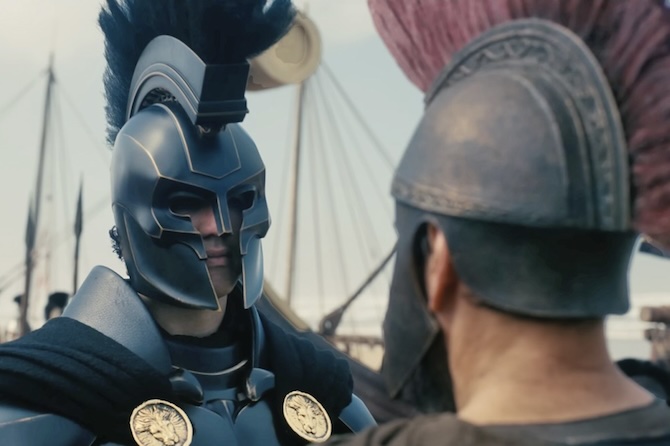
The summer movie season frames a broad spectrum of commercial bets, bookended by two vastly different cultural titans: The Mandalorian and Grogu launching the season, and Christopher Nolan’s The Odyssey closing it out two prime months later.
Both films face substantial online scrutiny, though for entirely distinct reasons. While the debate surrounding The Mandalorian and Grogu questions the necessity of its narrative existence, the pushback against The Odyssey concerns its visual translation to the screen.
Concurrently, the cinematic ecosystem continues to evaluate the power of strong spec scripts, highlighted by Sam Raimi’s newly released survival thriller Send Help. The film serves as a textbook example of how high-concept, character-driven premises can survive narrative logic gaps purely on the strength of their interpersonal chemistry and tightrope-walk tension.
Chronology: A Season Defined by Corporate and Creative Shifts
The timeline leading up to this summer’s theatrical releases reveals a cascading series of executive decisions that could fundamentally alter major intellectual properties:
- January 15: Dave Filoni is installed as the top creative authority at Lucasfilm, tasked with architecting the future of the Star Wars galaxy.
- March 18: Josh D’Amaro assumes the role of CEO of Disney (Lucasfilm’s parent company), a succession timeline indicating that Filoni’s promotion was not handpicked by the incoming corporate chief.
- Early Summer: The Mandalorian and Grogu premieres to an unprecedented lack of enthusiastic early social media reactions, sparking immediate box office anxiety.
- Mid-Summer: Promotional campaigns ramp up for Christopher Nolan’s The Odyssey, contrasting starkly with the quiet panic at Lucasfilm.
- Present Weekend: Sam Raimi’s Send Help drops in theaters, offering screenwriters a case study in high-concept spec-script execution.
Supporting Data: The Warning Signs at Lucasfilm
The box office projections and early critical reception for The Mandalorian and Grogu point toward a grim milestone for the Star Wars franchise. Following standard industry press screenings, the film reportedly failed to generate even a handful of the hyper-enthusiastic "first-wave" tweets that typically flood social media platforms.
For historical context, even critically reviled blockbusters like 2015’s Fantastic Four managed to pull in roughly 50 positive "first-impression" tweets following its premiere. The complete silence surrounding The Mandalorian and Grogu suggests that the film is tracking to become the lowest-performing theatrical release in the history of the Star Wars franchise.
This underperformance carries immense financial weight. Under former leadership—specifically Kathleen Kennedy—Star Wars maintained a baseline of financial dominance, with initial efforts grossing upwards of $2 billion. While Kennedy faced frequent criticism from fans regarding her grasp of the broader mythos, her production resume remained among the most lucrative in Hollywood history.
Official Responses and Industry Reactions
With The Mandalorian and Grogu facing a projected historical low, leadership at Lucasfilm and Disney has remained publicly focused on long-term strategy. Dave Filoni, stepping into his new role, has heavily promoted an upcoming "game plan" designed to map out the next evolutionary phase of the franchise.
However, industry analysts are expressing deep concern over the transition. Critics of the current regime point out a stark dichotomy in leadership styles: while Kennedy possessed a seasoned, A-plus executive producing background despite narrative blind spots, Filoni steps into the top job with a comprehensive encyclopedia-like knowledge of Star Wars lore, but a largely untested executive track record in managing massive, multi-quadrant feature film infrastructure.
Moreover, because Disney CEO Josh D’Amaro took the helm mere months after Filoni’s appointment, industry insiders speculate that the corporate corner office did not explicitly greenlight the current structural hierarchy at Lucasfilm. Should The Mandalorian and Grogu falter financially, analysts expect swift administrative interventions from Disney’s executive suite.
Implications: Parallels in Sports Management and the Future of Franchises
To fully understand the precarious position in which Lucasfilm now finds itself, one must look outside the entertainment industry to sports management—specifically, the trajectory of the Chicago Bulls over the last two decades.
When a dominant franchise loses its golden era, organizations often make panic-driven personnel changes under the guise of a "rebuild." Much like the Chicago Bulls trading star player Jimmy Butler in 2017—hoping to reset through the draft, only to plunge into organizational irrelevance due to ownership indifferent to competitive excellence—Lucasfilm risks trading stability for deep obscurity.
If Disney fails to course-correct, Star Wars fans may be forced to endure a decade of creative wilderness, watching a cultural touchstone once equivalent to the Michael Jordan-era Chicago Bulls plummet down the franchise power rankings.
The Screenwriting Lesson of Send Help
Away from the corporate-mandated universe of Star Wars, the theatrical release of Send Help offers a brilliant counter-narrative on the enduring power of the spec script.
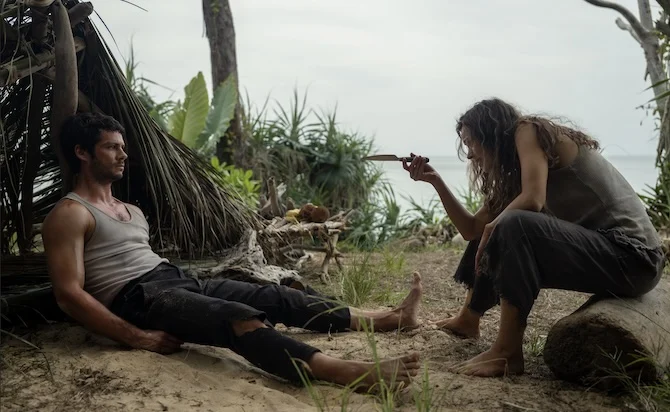
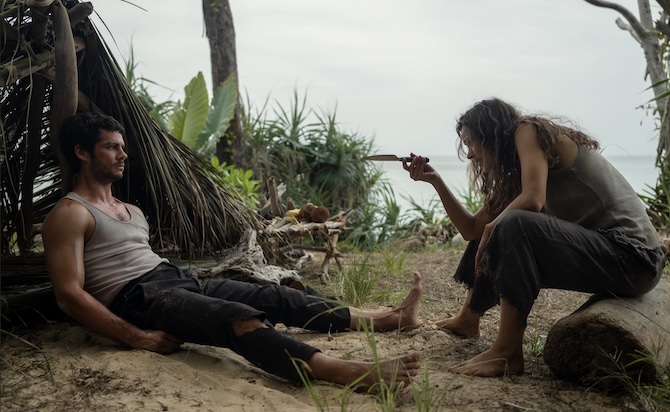
The film—produced by Zainab Azizi and directed by Sam Raimi—follows an abrasive corporate CEO (Bradley) who crash-lands on a deserted island with a peculiar female accountant (Linda) whom he intended to fire. When Bradley sustains severe injuries, the power dynamic inverts, forcing him to rely entirely on Linda for survival.
As a spec-friendly concept, Send Help proves why high-concept thrillers continue to thrive on the page and screen. Unlike sprawling mythologies like Dune or exposition-heavy historical epics like The Brutalist, tight survival thrillers are exceptionally easy for readers to digest. They rely on minimal characters, high-octane interpersonal conflict, and clear, ironic setups.
Yet, close analysis of the film reveals deep narrative tightropes. For instance, the plot hinges heavily on Linda possessing a knife, which grants her total control. Yet, Bradley frequently constructs camp shelters using a heavy rock-hammer—a tool that could easily be used as a weapon while Linda sleeps, neatly bypassing the need for the knife. Similarly, the narrative asks audiences to swallow a complex psychological pivot where mutual hatred blossoms into romantic attraction.
The ultimate takeaway for aspiring screenwriters is simple: perfection is impossible. Every script will feature tonal inconsistencies, minor plot holes, or character logic gaps. The secret to a successful screenplay lies in identifying the core engine of the story—in this case, the volatile, magnetic chemistry between Bradley and Linda—and executing it with absolute precision. If the core works, audiences will willingly forgive the logical slips at the edges.
Looking Ahead
As the summer box office continues to unfold, all eyes will be on whether Christopher Nolan’s The Odyssey can shatter expectations and prove that post-adventure narratives can grip modern audiences just as effectively as traditional hero’s journeys. Meanwhile, the fate of Lucasfilm hangs in the balance, waiting for the weekend returns of The Mandalorian and Grogu.
Stay tuned this Wednesday for an in-depth review of the new AMATEUR Top 25 script, coming in at a massive 180 pages, complete with a direct link for readers to evaluate the material themselves.
