
Diving into the Unknown: How Bára Anna Stejskalová’s Stop-Motion Musical 9 Million Colors Swam Its Way to Oscar Contention
As the global animation community sets its sights on the upcoming Academy Awards, Cartoon Brew continues its exclusive series spotlighting the remarkable animated short films that have officially qualified for the 2027 Oscars. This season, qualification comes through prestigious pathways, ranging from theatrical runs and student accolades to top-tier wins at Oscar-qualifying international film festivals.
Today’s feature dives deep beneath the ocean waves with 9 Million Colors, a visually stunning, emotionally resonant Czech stop-motion musical directed by Bára Anna Stejskalová. Produced by Bionaut Animation in co-production with Divize, the film has captured the industry’s attention since its early development stages, making waves on the festival circuit and securing its coveted Oscar eligibility at the Indy Shorts Film Festival.
Main Facts: An Underwater Tale of Vision, Friendship, and Empathy
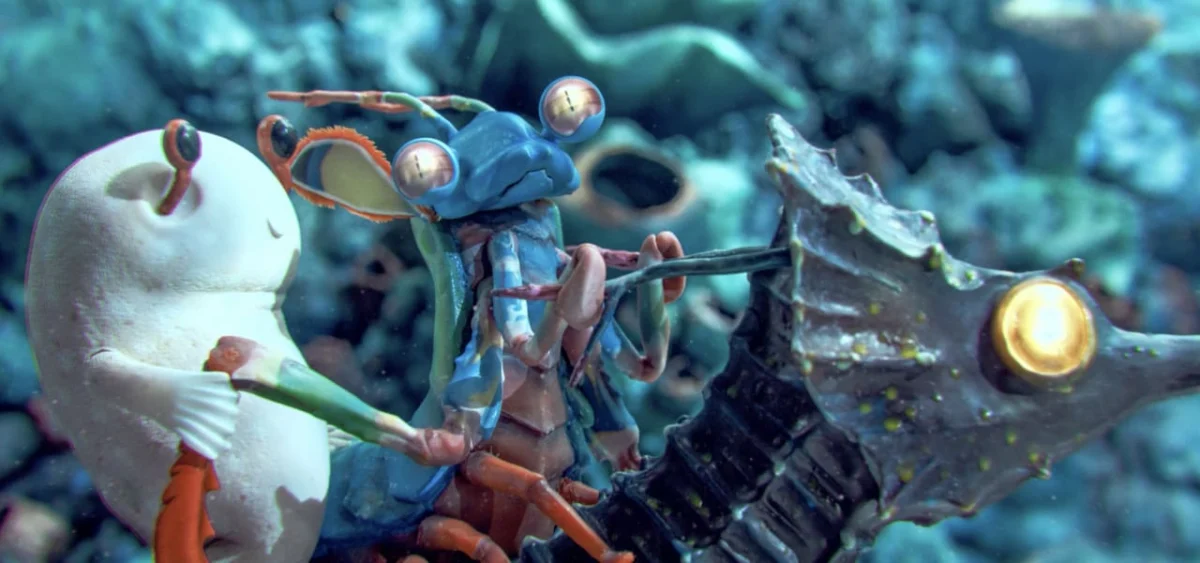
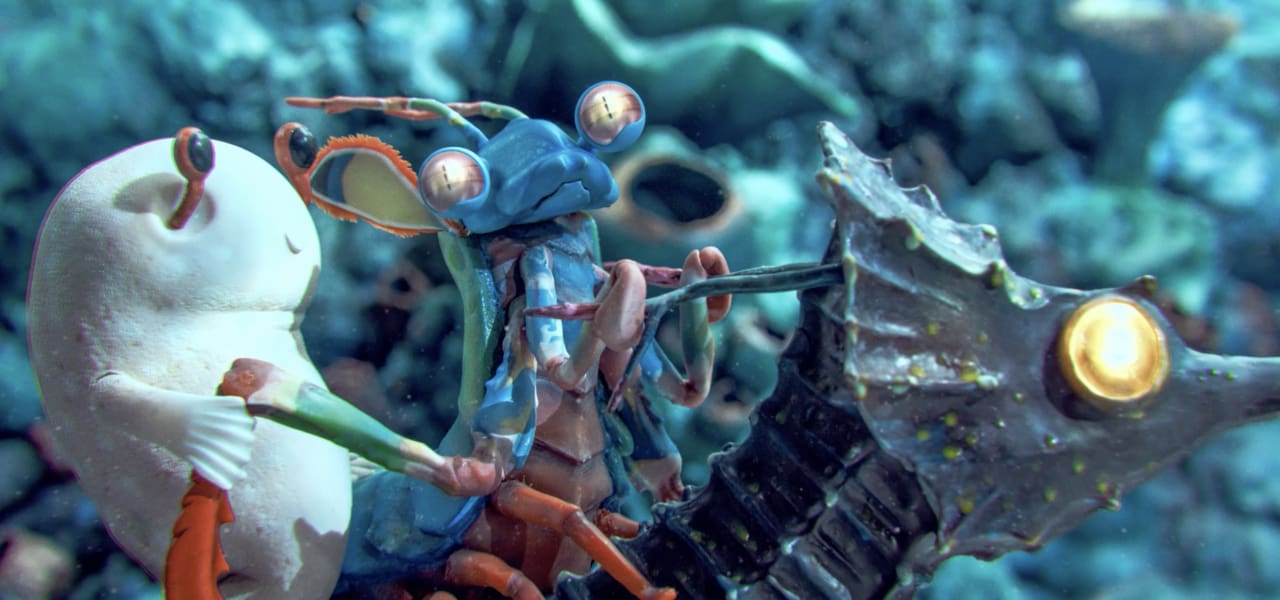
9 Million Colors is a 15-minute stop-motion musical that explores an unlikely, deeply moving bond between two contrasting marine creatures: a vibrant mantis shrimp possessing extraordinary visual capabilities and a gentle, blind deep-sea fish.
Rather than relying on typical dialogue-heavy storytelling, Stejskalová uses the physical environment, light projection, character design, and an evocative musical score to communicate the emotional complexities of female friendship. The film poses a poignant central question: When two individuals perceive and experience the world through entirely different colored lenses, can they truly bridge the gap and remain close?
The short qualified for the 2027 Academy Awards following a successful run at the Indy Shorts Film Festival. For Stejskalová, the festival held a special significance; she previously won Best Student Film there for her pandemic-era project Love Is Just a Death Away. This time around, the filmmaker was able to attend in person, celebrating the culmination of years of rigorous stop-motion craftsmanship.
Chronology: From 2022 Pitch to Academy Award Contender
The journey of 9 Million Colors from an ambitious concept on a presentation screen to an Oscar-qualifying masterpiece spans several years of creative hurdles, structural evolution, and meticulous production.
The Genesis (2022)
The project first landed on industry radars in 2022 when Stejskalová pitched the film at Cartoon Springboard in Madrid. Even in its conceptual infancy, the project stood out for its audacious premise—attempting to visualize the complex, ultra-wide color spectrum of a mantis shrimp through stop-motion animation.
Development and Financial Realities
Like many independent European animation projects, 9 Million Colors faced significant financing constraints and logistical roadblocks. Originally envisioned as a sprawling 25-minute epic, the production team ultimately compressed the narrative into a tightly paced 15-minute runtime. Despite the reduction in length, the core emotional architecture and narrative impact remained entirely intact.
Production and Trial-and-Error
The physical production phase demanded extensive experimentation. Stejskalová and her team spent months navigating creative dead ends, particularly regarding how to analogously simulate underwater movement, physical weight in puppets, and the hyper-saturated color spectrums perceived by the mantis shrimp protagonist.
Festival Circuit and Oscar Qualification (2026)
Following its completion, the film entered the international festival circuit, ultimately securing an Oscar-qualifying victory at the Indy Shorts Film Festival in 2026. This triumph officially thrust 9 Million Colors into the race for the 2027 Academy Award for Best Animated Short Film.
Supporting Data and Technical Craftsmanship: Recreating the Unseen
Bringing the microscopic wonders of the ocean floor to life using traditional stop-motion techniques required a brilliant marriage of practical effects, digital compositing, and marine biology research.
Exploring the Mantis Shrimp’s World
Mantis shrimp are renowned in the scientific community for their extraordinary eyes, capable of seeing ultraviolet, infrared, and polarized light across a spectrum of millions of colors that human eyes cannot comprehend. Stejskalová embraced this creative challenge head-on.
"Nobody has really tried before, because it is a given that we will always fail, as our eyes simply aren’t as perfect as hers. But I couldn’t resist trying," the director explained in a recent interview.
To achieve this unique POV, the production team conducted extensive lighting tests with UV lights, experimenting with ultraviolet and infrared styling. They supplemented these scientific references with an imagined color palette dominated by pinks and aquamarines, seamlessly blending these layers during post-production to craft the shrimp’s subjective perspective.
.png)
Grounding Fantasy in Reality
To maintain a sense of tangible realism, Stejskalová took up scuba diving prior to production, studying how natural light and color behave beneath the ocean surface. The default camera perspective utilizes naturalistic brown and blue tones typical of deep-sea environments.
However, a closer look at the seabed reveals a subtle, sobering environmental message. Embedded among the marine flora and coral are discarded toothbrushes, plastic bottles, and fragments of plastic bags—a quiet, poignant commentary on the state of modern oceans.
Character Design and Animation
Designing the lead characters required a blend of biological accuracy and expressive personality. The mantis shrimp was redesigned to combine actual crustacean features with structural traits of a praying mantis, balancing a sassy, likable demeanor with striking visual flair. Meanwhile, the blind fish was conceptualized by merging the skin texture of a coffinfish with the body shape of a faceless eel, resulting in an innocent, well-rounded companion.
To achieve fluid, convincing underwater movement without traditional CGI, the production relied on creative lighting solutions—such as using a projector to cast moving sun rays directly onto the set—and the elite artistry of animators Jiří Krupička, Vojtěch Kiss, Matouš Valchář, and Tomáš Červený.
Official Responses and Creator Insights
Reflecting on the grueling production process and the thematic core of 9 Million Colors, Bára Anna Stejskalová shared candid insights into what the film taught her as both a director and a storyteller.
"My desire with this film at first was to portray the different faces of female friendship," Stejskalová noted. "Being together through the good and the bad. The power of it, the intensity, which can sometimes almost border on love. As I progressed with the script, other topics became mixed into it… Mostly, there was this question: if two people see the world in completely different colors, can they still be together?"
When asked about the major takeaways from the production, the director humorously emphasized the value of resilience:
"I learned to fail. Gracefully, of course, but over and over again. There were a lot of challenges during the production… Now I think it is perfect, but during development we found ourselves in so many dead ends."
Stejskalová also praised her core animation team, attributing the film’s convincing aquatic atmosphere to the immense skill and emotional investment poured into the puppets by Krupička, Kiss, Valchář, and Červený.
Implications: The Future of Independent Stop-Motion
The trajectory of 9 Million Colors highlights several broader trends within contemporary European animation and the global festival circuit:
- The Resurgence of Crafted Shorts: As hyper-realistic 3D CGI dominates commercial pipelines, handcrafted stop-motion shorts like 9 Million Colors continue to prove that physical texture, tangible imperfections, and analog ingenuity offer unmatched emotional resonance.
- Pushing Visual Boundaries in Animation: By tackling abstract scientific concepts—such as an animal’s non-human visual spectrum—Stejskalová has expanded the toolkit for how animation can explore subjective perception and psychological states.
- The Power of Co-Productions: Supported by Bionaut Animation and Divize, the film demonstrates the viability of regional European co-productions in bringing high-concept, artistic stop-motion animation to international prominence and elite awards platforms.
As 9 Million Colors moves closer to the 2027 Academy Awards, it stands as a testament to creative persistence, artistic risk-taking, and the enduring power of storytelling that dares to look at the world through entirely different colors.
