
Bridging the Immersive Divide: Main Course Films Successfully Downconverts Apple Immersive Video to Traditional 4K
As the cinematic landscape embraces immersive formats, filmmakers face a persistent dilemma: how to future-proof their projects for cutting-edge headset environments while retaining the viability to adapt footage for standard, non-immersive distribution channels. Until recently, bridging this gap was virtually unchartered territory. Reformatting natively captured immersive content—such as Apple Immersive Video (AIV)—for traditional flat screens typically resulted in awkward screen captures, jarring head-movement tracking artifacts, or heavily compromised marketing clips.
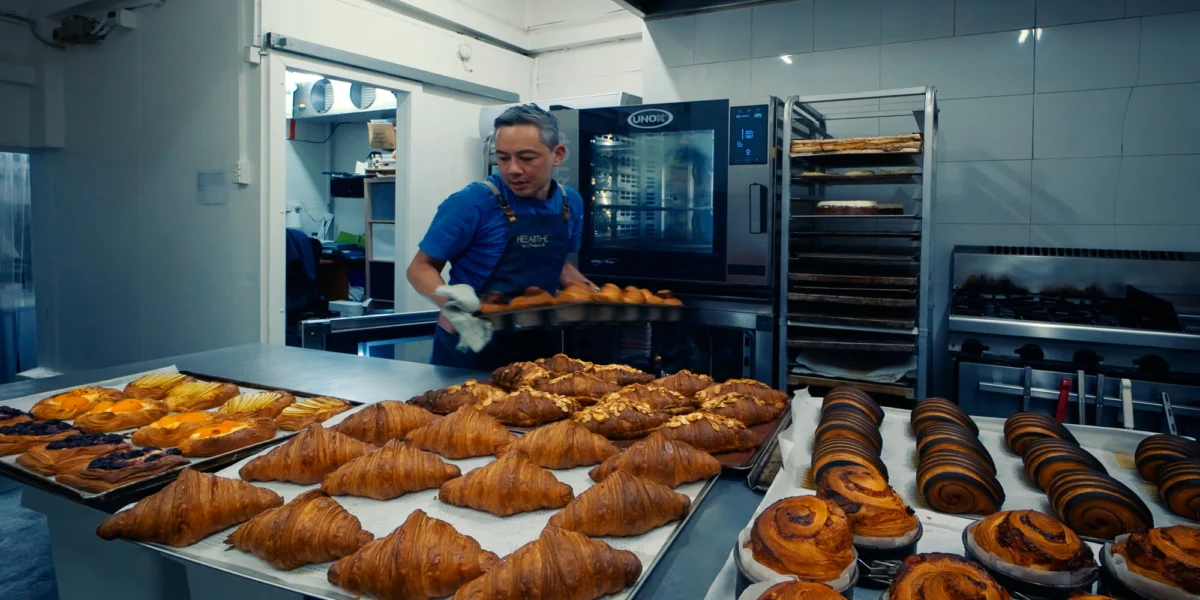
However, a major milestone has been reached in modern post-production. More than a year after completing their documentary short Thé Fine Dining Bakery, production outfit Main Course Films (MCF) has successfully released what is being heralded as the world’s first complete Apple Immersive Video film converted entirely for conventional, non-immersive viewing.

The documentary has been meticulously reformatted into a standard 4K Scope release boasting a 2.40:1 aspect ratio and a robust 7.1 surround sound mix. While the original mid-2025 immersive master remains fully accessible to Apple Vision Pro users via streaming platforms like Fovii and Theatre, this newly engineered flat version expands the project’s potential audience drastically. By solving the complex technical and conceptual hurdles of downconverting spatial video, MCF has significantly boosted the commercial and creative appeal of advanced formats like AIV for independent and studio producers alike.
Main Facts: Breaking Down the MCF Conversion
The technical scope of transforming a native Apple Immersive Video production into a conventional 4K master is immense. Unlike standard 2D workflows, native AIV relies on ultra-high frame rates, massive fisheye lens spaces, and spatial audio objects mapped dynamically to a viewer’s real-time head movements.

The core specifications of the MCF workflow highlight the scale of the operation:
- Source Material: Shot on the Blackmagic URSA Cine Immersive camera in Blackmagic RAW (BRAW).
- Original Immersive Master: 180-degree stereoscopic 3D, mastered in PQ HDR (1000 nits tone-mapped to 108 nits), running at 90 frames per second with Apple Spatial Audio Format (ASAF).
- New 4K Remaster: 4K UHD Scope (2.40:1 letterboxed aspect ratio within a standard container), 30 frames per second, Rec.709 (Scene) color space, and 7.1 surround sound.
- Software Environment: DaVinci Resolve Studio (utilizing the Fusion page for geometric patches, Fairlight for audio stem printing, and DaVinci Wide Gamut Intermediate for color management).
Chronology: A Year-Long Evolution from Concept to Execution
The journey to bringing Thé Fine Dining Bakery to conventional screens was neither swift nor straightforward. It required a methodical, iterative workflow that spanned more than a year of engineering and creative testing.

Mid-2025: The Immersive Debut
MCF completed principal photography and post-production on Thé Fine Dining Bakery using the URSA Cine Immersive camera. The finished project was optimized specifically for Apple Vision Pro headsets, utilizing a 90 fps capture rate, complex stereoscopic 3D metadata, and an immersive spatial audio layout.
Late 2025 to Early 2026: Prototyping and Workflow Design
Recognizing the market necessity for broader distribution, MCF’s core team—writer/director/editor Clara Chong and cinematographer/colorist/sound mixer Ben Allan ACS CSI—began experimenting with downconversion techniques. Early attempts faced severe roadblocks regarding frame rate translation, geometric lens un-distorting, and spatial-to-surround audio mapping.

Mid-2026: The ProRes Pre-Render Breakthrough
The workflow crystallized when the team established a stable protocol for generating stereoscopic 3D ProRes pre-renders from the original BRAW camera files. By baking in vital metadata—such as the Inter-Lens Pupillary Distance (ILPD) and Apple Immersive Motion Data—while applying targeted noise reduction, the team created a pristine baseline. They then leveraged DaVinci Resolve’s Dynamic Project Switching to port these elements into a clean 4K/30fps master project.
Late 2026: Finalization and Public Release
Following rigorous fine-tuning of camera framing, color management pipelines, and analogue-inspired audio stem routing, MCF finalized the 4K Scope master. The release marks a turning point for the URSA Cine Immersive ecosystem, proving that high-end immersive projects can successfully cross over into standard cinema and television pipelines.

Supporting Data & Technical Deep Dive
Translating an experience designed around the viewer’s absolute freedom to look in any direction into a fixed, filmmaker-controlled frame required innovative engineering across every department.
Frame Rate and Project Architecture
A critical early decision involved managing the frame rate. While AIV requires 90 fps to maintain the biological smoothness expected in a head-mounted display, dropping directly to 60 fps introduces the undesirable "soap opera effect" associated with high frame rate 2D video. Conversely, dropping all the way to 24 fps risked conversion artifacts.

The team ultimately opted for 30 fps, establishing a mathematically proportional 3:1 change from the original 90 fps source. This ensured a clean, artifact-free frame rate conversion while keeping the footage firmly in the realm of traditional cinematic motion.
Color Management and Aspect Ratio
To maintain compatibility without sacrificing dynamic range, the team preserved the DaVinci Wide Gamut Intermediate (DWG) color space established in the 2025 master. DWG proved vastly superior to ACES for this application, offering efficient bit-depth handling without bloating already massive file sizes. The output color space was transitioned cleanly to Rec.709 (Scene).

Surgically extracting a rectangular frame from a circular 180-degree immersive source presented unique compositional challenges. Although a standard 16:9 box seemed logical at first, Chong and Allan quickly realized that a 2.40:1 Scope aspect ratio yielded far superior framing. Because human audiences naturally scan horizontally rather than vertically much of the time, the widescreen letterbox format matched the compositional weight of the original spatial shots more organically.
Un-Distorting the Fisheye Space in Fusion
In DaVinci Resolve Studio’s Fusion page, the team applied two distinct approaches to flatten the raw fisheye imagery:

- The Technical Route: Utilizing Fusion’s Immersive Patcher tool on a unified stereoscopic node. This allowed precise control over the X, Y, and Z axes (functioning as tilt, pan, and roll) and let the team dial in specific Angles of View (typically ranging between 65° and 110° per shot).
- The Organic Route: For extreme shots where mathematically perfect flattening felt too sterile, MCF combined a Transform node with multiple Lens Distortion nodes. This intentionally reintroduced subtle, organic optical imperfections reminiscent of real-world physical glass lenses, counteracting the ultra-clean digital removal native to Vision Pro projection mapping.
Audio Transformation: From ASAF to 7.1 Surround
Audio engineering proved to be one of the steepest challenges. Apple Spatial Audio Format (ASAF) relies on 3D object-based positioning, ambisonics, and head-locked vectors tied directly to visual orientation. Simply routing an ASAF master bus into traditional submixes causes drastic, unintended shifts in loudness, EQ, and reverb due to distance-processing algorithms.
Drawing inspiration from vintage analogue radio workflows, Ben Allan engineered an innovative stem-printing workaround:

- Using Rogue Amoeba’s Loopback software, the team established virtual stereo and 7.1 output destinations.
- They routed the ASAF Master Bus into these virtual outputs within Fairlight’s patch bay.
- By judiciously soloing and muting elements using VCAs, they recorded down discrete dialogue, music, foley, and effects stems.
- Ambience tracks were exported as 360-degree Ambisonics into 7.1.
This hybrid approach allowed them to craft a balanced, highly responsive 7.1 surround mix without having to completely reconstruct the soundscape from scratch.
Official Responses and Creative Insights
Reflecting on the mental and artistic shifts required for the conversion, writer, director, and editor Clara Chong emphasized that the true roadblocks were conceptual rather than purely technical.

"The challenges are more creative and conceptual than technical, although there were plenty of technical issues to solve as well!" Chong noted. "Because the way we experience AIV is on a biological level, there’s a lot of things that we had to take into account… We have been attempting to get to a down-converted version of this over the last year, but are only now at the point where we’re happy enough with the results both in terms of technical quality and conceptual approach."
Cinematographer and colorist Ben Allan elaborated on the translation of viewer agency into traditional blocking:

"In Apple Immersive, the pan and tilt is controlled by the viewer in real time, so the images are composed to give them the freedom to look where they want, while guiding them to notice the important things. Converting to a traditional format involves converting that pan and tilt guidance into formal framing decisions."
To solve the pacing issues inherent when moving a slow-paced immersive documentary into a traditional editing rhythm, Chong employed an aggressive approach to cutting within single source clips. Instead of relying on a single, static perspective from an immersive shot, she split sequences into dynamic pairs—cutting smoothly between wide views and tight close-ups derived entirely from the same original 180-degree frame.

Implications for the Future of Immersive Filmmaking
The successful downconversion of Thé Fine Dining Bakery carries profound implications for the media and entertainment industry:
- Enhanced Commercial Viability: Producers have historically been hesitant to commit budgets to proprietary immersive formats due to limited distribution ceilings. Knowing that a native AIV project can be successfully reformatted for conventional 4K displays and standard streaming services drastically mitigates financial risk.
- Workflow Standardization: Main Course Films’ utilization of DaVinci Resolve Studio, Dynamic Project Switching, and creative audio stem-routing establishes a practical, repeatable blueprint for other post-production houses tackling spatial video.
- Democratization of Content: High-end spatial films are no longer strictly locked behind hardware ecosystems like the Apple Vision Pro. Creators can now build ambitious immersive experiences while retaining the flexibility to reach mainstream audiences on traditional television sets, laptop screens, and theatrical projection systems.
As toolsets across software suites like DaVinci Resolve continue to mature, MCF’s pioneering work signals the dawn of a truly format-agnostic era in modern filmmaking—one where stories can seamlessly transcend the physical boundaries of screens and headsets alike.
