
Sonic Booms and Synth Waves: The Sonic Landscape of the New ‘Street Fighter’ Adaptation
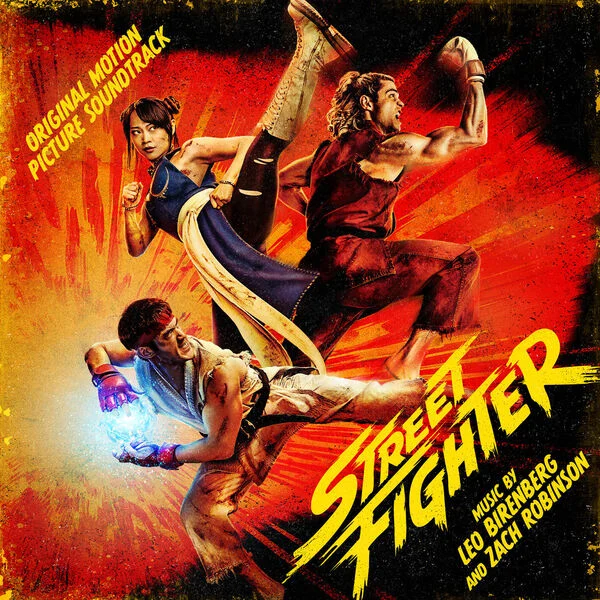
The wait for the most anticipated video game adaptation of the decade is almost over. As Paramount Pictures prepares to unleash the high-octane, star-studded Street Fighter film into theaters nationwide this Friday, October 16, the film’s sonic identity has finally been unveiled. Milan Records has officially confirmed the details of the original motion picture soundtrack, a sprawling, 39-track collection that promises to bridge the gap between 1993 nostalgia and modern, aggressive sound design.
At the helm of the film’s musical composition are Emmy Award-winning duo Leo Birenberg and Zach Robinson. Known for their work on genre-bending hits like Cobra Kai, Weird: The Al Yankovic Story, and Obliterated, the pair has established a reputation for blending thematic orchestral depth with the grit of modern synthesizers. For Street Fighter, they have been tasked with the monumental responsibility of reinterpreting one of the most iconic musical legacies in gaming history: the score originally composed by Yoko Shimomura.
The Compositional Vision: Bridging Eras
The soundtrack is a testament to the collaborative spirit of the production. While Birenberg and Robinson lead the charge, the album also features contributions from artists like Jiaju Shen, Charlie Robbins, Jemma Heigis, Myrone, and Jacob Umansky.
Perhaps most notably, the industrial-noise rock powerhouse HEALTH has contributed two original tracks, "NEGATIVE EDGE" and "BRAINROT," which are expected to underscore the film’s more visceral, high-stakes combat sequences. Fans have already received a taste of the duo’s stylistic approach through the previously released digital single, a modernized, pulse-pounding rendition of the legendary Guile’s Theme, which has already garnered significant praise for its fidelity to the source material while sounding undeniably contemporary.
A Cinematic Journey Through 1993
Set against the backdrop of 1993, the film—directed by Kitao Sakurai—follows the estranged legendary fighters Ryu and Ken Masters. Forced back into the fray by the mysterious and formidable Chun-Li, the duo finds themselves embroiled in the clandestine World Warrior Tournament.
The film boasts an eclectic ensemble cast that reflects the global scale of the Street Fighter universe. Noah Centineo and Andrew Koji take on the roles of Ryu and Ken, respectively, while Callina Liang portrays the pivotal Chun-Li. The supporting cast is a veritable "who’s who" of pop culture icons, including Joe "Roman Reigns" Anoai, David Dastmalchian, Cody Rhodes, Eric André, Curtis "50 Cent" Jackson, and Jason Momoa, among others.
The soundtrack’s tracklist serves as a narrative roadmap for the film’s progression, moving from the explosive opening of "FIGHT!" to the climactic finality of "The Final Awakening" and the anthemic "The Fight Continues!"
The Full Soundtrack Tracklist
The album, releasing digitally on October 16 via Milan Records, features the following sequence:
- FIGHT! (2:44)
- NEGATIVE EDGE – HEALTH (3:29)
- Chun-Li: Woman of Vengeance – Leo Birenberg & Zach Robinson, Jiaju Shen (1:01)
- The Greatest Fighters in History (3:03)
- M. Bison (0:58)
- Combat News (2:15)
- World Warriors – Leo Birenberg & Zach Robinson, Charlie Robbins (2:42)
- Ryu: Lost Champion (2:25)
- Guile’s Theme – Leo Birenberg & Zach Robinson, Jemma Heigis, Myrone & Jacob Umansky (2:46)
- BRAINROT – HEALTH (2:38)
- Metrolao Hotel (0:45)
- Gouken’s Fate (2:40)
- Haircut (2:27)
- Honda’s Wager (1:27)
- Interpol (3:35)
- Red Cyclone (1:16)
- Thigh Fidelity (1:42)
- The Branding (3:01)
- Sacred Hado (2:30)
- Good Friend, Ken (0:53)
- 1993 World Warrior Showdown (0:56)
- Ken vs Balrog: Give the People What They Want (1:44)
- Blanka Brawl (3:57)
- Guile’s Guile (0:43)
- Let Go of What Binds You (2:52)
- A More Important Calling (1:46)
- Jailbreak (1:36)
- Beauty, Spoiled (1:38)
- It’s Tuesday (1:34)
- Vanilla Gumdrop (0:48)
- Running from What’s Inside (1:15)
- I Made a Promise (2:06)
- KEN VS RYU (2:42)
- Akuma’s Arrival (1:47)
- The Final Awakening – Leo Birenberg & Zach Robinson, Charlie Robbins (3:06)
- Hadoken! (2:48)
- To Live Is to Fight (1:38)
- The Fight Continues! – Leo Birenberg & Zach Robinson, Charlie Robbins (4:59)
- Let Go of What Binds You (Dhalsim’s Cave Rave Remix) (6:21)
Creative Implications: The "Birenberg & Robinson" Sound
The decision to hire Birenberg and Robinson was clearly intentional. Their work on Cobra Kai proved they could handle a property steeped in 1980s and 90s nostalgia while elevating it with modern production values. Street Fighter requires a delicate balance: the score must honor the MIDI-driven chiptune origins of the 16-bit era while delivering the sonic weight required for a major blockbuster action film.
The inclusion of HEALTH, an industrial band known for their contribution to video game scores (most notably Max Payne 3 and Cyberpunk 2077), suggests that this adaptation is leaning into a dark, gritty, and somewhat transgressive aesthetic. The track "Dhalsim’s Cave Rave Remix" also hints that the film is not afraid to embrace the wackier, more experimental side of the source material, providing a moment of levity amidst the intense tournament stakes.
The Legacy of the World Warrior
The Street Fighter franchise is perhaps the most influential fighting game series in history. Since its 1987 debut, it has defined the genre, creating a lexicon of moves, characters, and musical motifs that have become ingrained in global culture. For a film adaptation to succeed, it must balance these established fan expectations with the needs of a wider cinematic audience.
By choosing to set the film in 1993, the filmmakers are grounding the narrative in the era where the game reached its cultural peak with Street Fighter II. This period-accurate setting allows the score to utilize the aesthetic of early 90s action cinema—think analog synths, heavy percussion, and driving electric guitars—while Birenberg and Robinson’s expertise ensures the final mix is clean, expansive, and cinematic.
Official Responses and Industry Outlook
While Paramount Pictures has remained tight-lipped regarding specific plot twists, the promotional campaign—highlighted by a trailer that emphasizes the physical intensity of the performances—has been received with overwhelming positivity by the gaming community. The music team credits, which can be viewed in full on the official Street Fighter music portal, suggest a deep level of collaboration with Capcom’s own audio team, ensuring that the "soul" of the game remains intact.
Industry analysts are watching the October 16 release closely. Should Street Fighter succeed, it would further cement the current trend of successful video game adaptations, following the critical and commercial breakthroughs of recent years. The soundtrack’s availability on digital platforms immediately following the premiere is a strategic move, allowing fans to integrate the score into their own listening habits as they leave the theater.
Conclusion: A Sonic Knockout?
The release of this soundtrack confirms one thing: the new Street Fighter film is taking its source material seriously. By pairing the seasoned expertise of Birenberg and Robinson with the avant-garde sensibilities of HEALTH, the production team has signaled a commitment to high-quality, high-impact audio. Whether through the pulse-pounding tension of "Ken vs Balrog" or the experimental energy of the "Dhalsim’s Cave Rave Remix," the soundtrack is clearly designed to be more than mere background noise; it is an active participant in the film’s narrative.
As fans count down the hours until the theater doors open, the music serves as the perfect teaser for what promises to be a definitive entry in the Street Fighter canon. The fight begins this Friday, and if the score is any indication, the experience will be a resounding, symphonic victory.
