
Engineering the Skies of Gotham: Deconstructing the Visual Effects of ‘The Bat’ in The Dark Knight Rises

In the pantheon of modern cinematic achievement, Christopher Nolan’s The Dark Knight Rises (2012) stands as a monumental exercise in practical filmmaking tempered by cutting-edge digital artistry. While the film is often lauded for its gritty realism and large-format cinematography, one of its most complex technical challenges was the realization of "The Bat"—Batman’s agile, multi-rotor aerial vehicle.
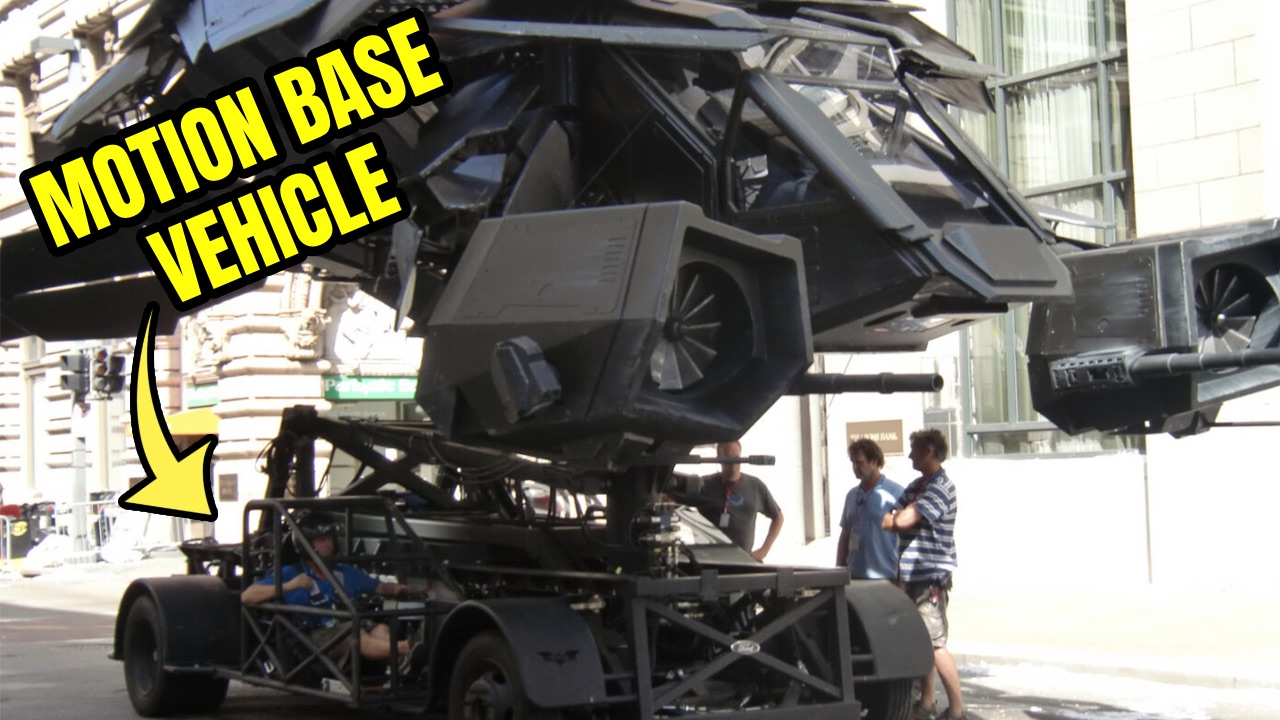
Recent insights into the production, facilitated by befores & afters, highlight the intricate dance between physical engineering and digital augmentation. The creation of The Bat was not merely a CGI exercise; it was a collaborative feat involving heavy-duty motion base vehicles, complex wire-work, and the refined digital artistry of DNEG (Double Negative).
The Genesis of a Flying Tank
The design philosophy for The Bat was rooted in the same "real-world" aesthetic that defined the Tumbler in Batman Begins. Nolan, alongside production designer Nathan Crowley and special effects supervisor Chris Corbould, insisted that the vehicle look and function like a military prototype.
The challenge for the visual effects team was twofold: they needed to convey the weight and mechanical complexity of a machine capable of urban vertical take-off and landing (VTOL) while simultaneously ensuring it could maneuver with the grace of a predator. The result was a marriage of practical effects—using full-scale rigs on motion bases—and a digital layer that smoothed out the physics of flight, ensuring the machine felt tethered to the reality of the Gotham cityscape.
Chronology of Production: From Rigs to Render
The production of The Bat’s flight sequences followed a strict, iterative pipeline that prioritized physical accuracy.
Phase 1: Practical Rigs and Motion Bases
Before a single pixel was rendered, the team utilized massive, custom-built motion bases. These rigs allowed the physical model of The Bat to tilt, rotate, and pivot, providing the actors and the cinematographer with a realistic sense of inertia. By placing the vehicle on a gimbal system, the production captured authentic lighting interactions on the hull, which proved vital for the final integration.
Phase 2: The Wire-Work Integration
To simulate the vehicle’s flight through the narrow, oppressive canyons of Gotham, the production utilized a combination of crane work and sophisticated wire-rigs. These rigs allowed the model to be suspended and moved across physical sets, capturing the interaction between the machine and the environment. This phase was crucial for generating the motion blur and atmospheric interaction that digital artists would later refine.
Phase 3: DNEG’s Digital Overlay
Once the practical footage was secured, DNEG took over. Their primary objective was to replace support cables, enhance the mechanical movement of the rotors, and integrate the craft into environments that were often a mix of location photography and digital matte paintings. The DNEG team utilized high-fidelity 3D models of The Bat, matched frame-by-frame to the practical rigs to ensure that the lighting on the digital model perfectly mirrored the practical photography.

Supporting Data: The Mechanics of Realism
The success of the sequence rested on the concept of "Digital Enhancement of Practicality." Industry experts often point to the following technical metrics as key to the sequence’s believability:
- Lighting Fidelity: By utilizing HDRI (High Dynamic Range Imaging) probes on set, the DNEG team could recreate the exact lighting environment of downtown Pittsburgh (which doubled as Gotham). This ensured that the reflective metallic surfaces of The Bat reacted correctly to the ambient urban light.
- Physics-Based Animation: Rather than keyframing the flight path manually, animators utilized physics simulations to calculate how a craft of that mass would drift or bank. This eliminated the "floaty" look often associated with early 2010s CGI.
- Atmospheric Integration: Compositors layered in digital smoke, debris, and heat haze generated by the rotors. This environmental interaction—seeing the wind stir papers or dust as the craft descends—was the final key to grounding the vehicle in the film’s reality.
Official Perspectives and Industry Impact
Industry analysts and visual effects historians, including Ian Failes (author of WOAH! Great Moments in Effects History), have noted that the work on The Dark Knight Rises represents a "golden age" of hybrid effects.
"The Bat sequence is a textbook example of how to use CGI to serve the practical," says an industry source close to the production. "You aren’t watching a cartoon; you are watching a machine that was built in a workshop, then given the ability to fly through the power of computation. The wire-work wasn’t just a guide; it was the foundation."
The collaboration between the special effects department, led by Chris Corbould, and the digital teams at DNEG, set a benchmark for the industry. By forcing the digital artists to work around the constraints of a physical object, the production avoided the common trap of "over-animating" the vehicle, keeping its movements tethered to the laws of inertia and gravity.

Implications for Modern Filmmaking
The legacy of The Bat’s visual effects is still felt today. In an era where volume stages (LED walls) and fully digital environments are becoming the norm, the methodology employed in The Dark Knight Rises reminds filmmakers of the importance of tangible, physical input.
The Shift Toward Hybrid Pipelines
Many modern blockbusters have moved toward entirely digital set extensions. However, the success of the Gotham aerial sequences suggests that audience immersion is significantly higher when the digital elements are derived from physical, real-world interactions. The "weight" of The Bat is felt precisely because the base model was a heavy, physical object that occupied actual space on a set.
Educational Value for VFX Artists
For the new generation of digital artists, the DNEG workflow on The Dark Knight Rises serves as a masterclass in integration. The focus has shifted from "how can we make this look cool?" to "how can we make this look like it obeys the laws of physics?" Courses like those offered by ActionVFX continue to emphasize these core principles, teaching students that the best visual effects are those that the audience never realizes are effects at all.
Conclusion: The Persistence of Vision
As we look back at the cinematic landscape of the early 21st century, the aerial sequences in The Dark Knight Rises remain a high-water mark. They represent a rare moment where the sheer scale of physical filmmaking met the precision of digital artistry.

Whether it is through the meticulous wire-work captured on set or the nuanced, physics-driven rendering by DNEG, The Bat stands as a testament to the belief that the best way to film the impossible is to start with something entirely possible. For fans and professionals alike, the sequence remains an essential study in the architecture of illusion—proving that when the practical and the digital work in harmony, the result is nothing short of legendary.
For those interested in exploring more of these technical breakthroughs, Ian Failes’ "WOAH! Great Moments in Effects History Vol. 1" provides an in-depth look at the pioneers who shaped the craft. Additionally, those looking to master the techniques discussed can take advantage of professional training through platforms like ActionVFX, which continue to push the boundaries of what is possible in the digital medium.
