
Unveiling the Myth: How Pearl Studio Reimagined the Eight Immortals for a Global Audience
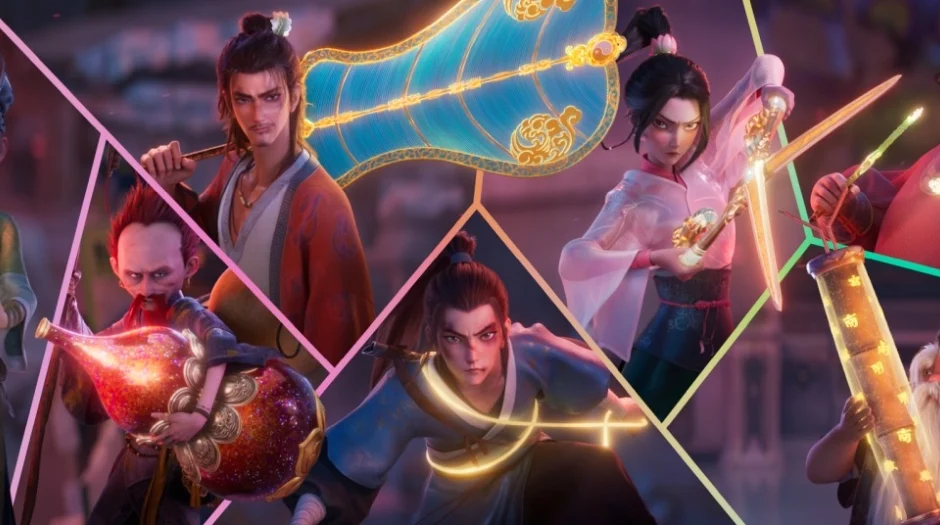
For centuries, the Chinese proverb "The Eight Immortals cross the sea, each showing their own magic" has been a cornerstone of cultural folklore. It is a phrase known to every schoolchild in China, yet as Pearl Studio CEO Catherine Yin points out, the narrative has always lacked a fundamental pillar: the "why."
Why were these legendary figures crossing the sea? What brought them together, and what were they before they ascended to immortality?
With the release of the 3DCG feature All Wishes Come True!, director Mu Zhengyang has finally provided an answer, transforming a fragmented legend into a cohesive, high-stakes mythological comedy. The film, which has already dominated the Chinese box office, marks a significant milestone for Pearl Studio, signaling its return to major theatrical prominence and its ambitions for the international market.

The Genesis of a Mythological Heist
All Wishes Come True! is set on the mystical island of Penglai, a realm where mortals and deities coexist. The narrative arc is a departure from traditional, reverent retellings. Instead of presenting the Eight Immortals as static, god-like icons, Mu Zhengyang chooses to ground them in their humanity.
The film follows two primary schemers, Lü Dongbin and Zhongli Quan, who concoct a daring plan to infiltrate the heavens by posing as Immortals. What begins as a classic "heist" premise evolves into an epic journey as they recruit six companions—He Xiangu, Tieguai Li, Han Xiangzi, Cao Guojiu, Lan Caihe, and Zhang Guolao. As the group navigates the treacherous path toward immortality, they find themselves embroiled in an ancient conspiracy that threatens to unravel the fabric of both the mortal and divine worlds.
For Director Mu, the challenge lay in balancing an ensemble cast of eight leads. "Clearly, we realized that we cannot have all of them equal," Mu explains. By focusing on a core trio that embodies the lineage of the myth, Mu uses the other characters as "mirrors" to reflect the themes of the story. The result is a film that feels both intimate and grand, grounded in human emotion rather than just supernatural spectacle.

Chronology of Production and Release
The journey of All Wishes Come True! reflects the broader evolution of the Chinese animation industry over the last decade.
- 2012: Pearl Studio is launched as Oriental DreamWorks, a joint venture with DreamWorks Animation, famously co-producing Kung Fu Panda 3.
- 2018: The studio transitions to full Chinese ownership, rebranding as Pearl Studio. Under this new banner, the studio produced critical successes like Abominable and the Oscar-nominated Over the Moon.
- Early 2020s: CEO Catherine Yin begins searching for a narrative that could bridge the gap between traditional Chinese myth and modern cinematic storytelling. She discovers Mu Zhengyang, whose original vision for the Eight Immortals aligns with her goal of creating a "team story" that prioritizes character-driven scripts.
- July 2024: The film debuts in China, quickly becoming a summer sensation.
- August 14, 2024: CMC Pictures, the sister company of Pearl Studio, expands the film’s reach to theaters in the U.S., Canada, the U.K., Ireland, and the Netherlands.
Supporting Data and Market Performance
The film’s performance has been nothing short of a blockbuster success. In China, All Wishes Come True! surpassed $270 million, cementing its status as one of the most successful animated features of the summer.
This financial achievement is particularly noteworthy given the competitive landscape. The summer season saw the film contending with major domestic live-action blockbusters and high-profile international imports, such as Spider-Man: Across the Spider-Verse and The Odyssey.

The success of the film also serves as a strategic victory for Pearl Studio. After a hiatus from major theatrical releases following 2020, All Wishes Come True! validates the studio’s shift toward narrative-first animation. "The biggest issue in the animation industry in China," Yin notes, "is that everybody puts too much attention on the visualization… but they ignore the script. On an animated movie, its script has to stand up to the real standard of live-action movies."
Official Perspectives: The Philosophy of the Storytellers
In an exclusive discussion with Animation World Network, Director Mu Zhengyang and CEO Catherine Yin reflected on the complexities of bringing the Eight Immortals to life.
On Balancing Tradition and Innovation
Mu emphasized that while the legend has been reinterpreted for centuries—from the Yuan zaju operas to Ming Dynasty novels—the core of the story must remain accessible. "There are some things that we must keep because it is the legend," he noted. "However, there is also a lot that we can add that is unexpected for the modern viewer, because we want them to be able to fully empathize, feel, and fall in love with the story."

On International Appeal
When asked if the film was designed with a global audience in mind, the creators were clear: the goal was to tell a great story first. "I did not personally plan in some way to make sure that this film reaches international audiences," says Mu. "But I’m also very sure that my story has universal values."
Yin added that the goal for international audiences is twofold: to be impressed by the quality of Chinese animation and to resonate with the film’s underlying message. "I want them to say, ‘Wow,’ and then I hope they say, ‘Chinese animation is amazing. Chinese mythology is amazing. I want to know more.’"
Implications for the Industry
The success of All Wishes Come True! suggests several key trends for the future of global animation:

1. The Rise of the "Narrative-First" Chinese Studio
For years, the critique of Chinese animation was that it was technically brilliant but narratively thin. Pearl Studio’s pivot—prioritizing script development and character depth—marks a maturation of the industry. By treating animation as a serious medium for storytelling, Pearl is setting a new standard that challenges the dominance of Western animation houses.
2. The Power of Ensemble Mythology
The film proves that audiences are eager for ensemble-led, myth-based stories that move beyond the "chosen one" trope. The Eight Immortals provide a unique framework for exploring friendship, sacrifice, and the struggle to be "good" in a world of chaos—themes that transcend cultural boundaries.
3. A Template for Cross-Cultural Distribution
By utilizing CMC Pictures to handle international distribution, Pearl Studio is effectively bypassing traditional gatekeepers, bringing Chinese-language content (subtitled) to Western theaters. If this model continues to yield strong results, it could pave the way for a more diverse global animation ecosystem where stories from non-Western mythologies are viewed as mainstream content rather than niche interest.

Conclusion
All Wishes Come True! is more than just a box office hit; it is a testament to the power of a well-told story. By stripping away the divine layers of the Eight Immortals and focusing on the human ambition of their origin, Mu Zhengyang and Catherine Yin have created a work that feels both ancient and remarkably current.
As the film continues its international run, the legacy of its eight leads is likely to grow. For audiences in London, Los Angeles, and beyond, the film serves as an invitation to engage with a rich, complex mythology that—until now—was missing its most important chapter. With this project, Pearl Studio has not only successfully crossed the sea; they have shown the world that the most effective way to share a culture is to ground its legends in the universal experience of humanity.
