
The Eternal Afterlife of ‘Murder House’: Why Gen Z Is Obsessed with the Roots of ‘American Horror Story’
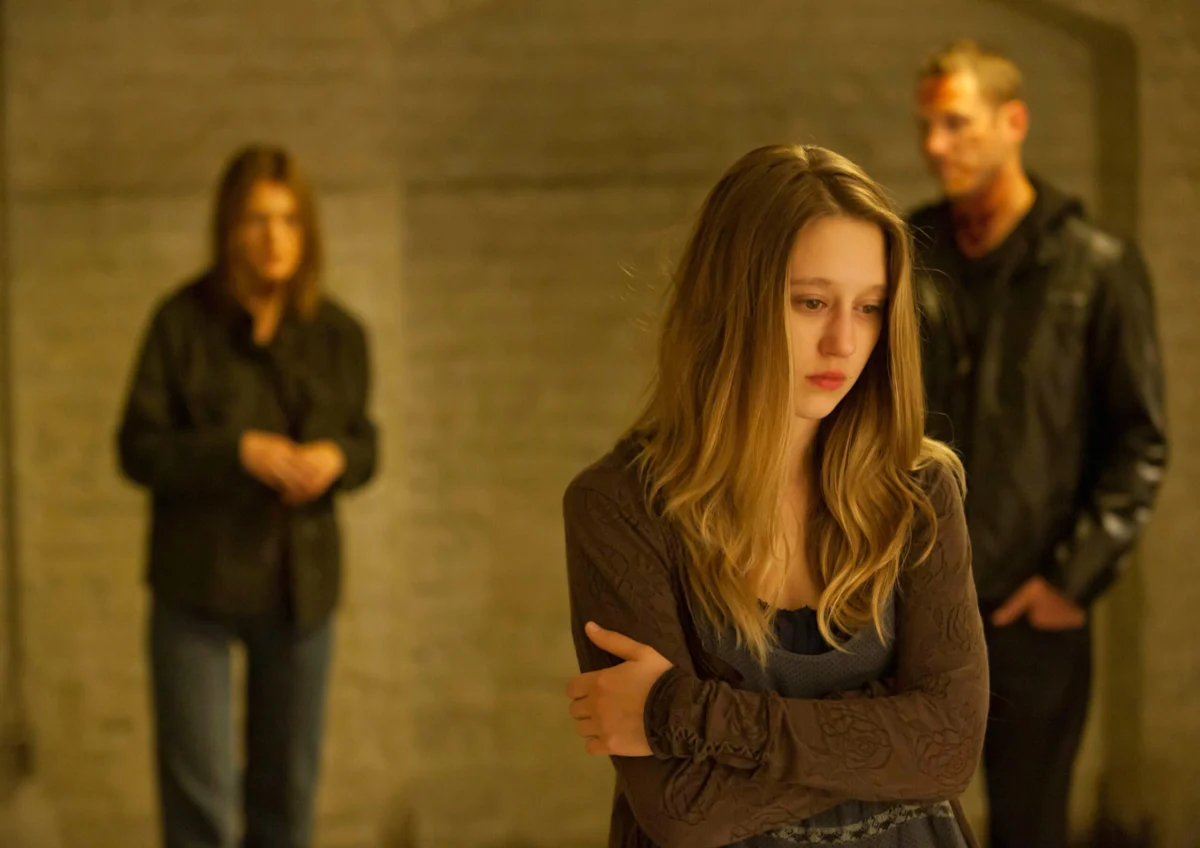
Fifteen years after Ryan Murphy and Brad Falchuk first unlocked the gates to their macabre playground, the original season of FX’s American Horror Story, subtitled "Murder House," has defied the natural laws of television decay. In an era of content saturation where most shows are "fossilized" by streaming algorithms within months of their conclusion, "Murder House" remains a vibrant, pulsing staple of the cultural zeitgeist. Most tellingly, it has found its most fervent new audience among a demographic that was barely in elementary school when the Harmon family first moved into their doomed Los Angeles mansion: Generation Z.
Recent data from Nielsen provides empirical weight to this anecdotal phenomenon. Gen Z now accounts for a staggering 36 percent of all streaming traffic for "Murder House" on Hulu—a figure that outpaces every subsequent installment of the long-running anthology. Even the critically lauded second season, "Asylum," captures 35 percent of the same age group, but the downward trend for newer seasons is undeniable. By comparison, the most recent completed cycle, "Delicate," which aired across late 2023 and early 2024, sees Gen Z viewership dip to just 20 percent.

This creates a paradox: in a series built entirely on the novelty of reinvention, the audience is consistently choosing the past.
The Architecture of a 2011 Aesthetic
To understand why a 2011 relic continues to haunt 2026, one must first look at the "aesthetic" of the era. For the modern viewer, 2011 is not merely a year; it is a curated, sepia-toned mood board. It was the year of Rebecca Black’s "Friday," the Royal Wedding, and the viral absurdity of "planking." But more importantly, it was the final stand of the "Sad Girl" internet culture.

The character designs of "Murder House" are now read by Gen Z as a high-fashion, unintentional time capsule. Violet Harmon, played by Taissa Farmiga, defined the era’s look: floppy felt hats, floral maxi dresses, and oversized, slouchy cardigans paired with a precise center part. Opposite her, Evan Peters’ Tate Langdon—the quintessential "troubled boy" archetype—wore striped sweaters and unkempt blonde hair that channeled a distorted, nineties-grunge nostalgia.
This visual language, combined with an indie-rock-heavy soundtrack and the moody, shadows-drenched cinematography of the era, created a "dream home" for teen angst. While older critics might look at the romanticization of Tate Langdon as a problematic legacy, for a younger generation, the pair represents a peak in the "aestheticization" of suffering. It is a look that is harder to replicate in today’s hyper-fast, algorithmic fashion cycle, making the 2011 look feel ironically aspirational.

Supporting Data: The Power of the "Coven" vs. "Murder House" Split
While "Murder House" holds the crown for Gen Z, the streaming data reveals a fascinating generational divide. Across all demographics, the third season, "Coven," remains the most-streamed American Horror Story installment by total time watched.
Between May 2024 and August 2026, Nielsen reports that "Coven" dominated among Millennials and Gen X, with the latter group streaming the season for 86 million more minutes than "Murder House." This suggests that for Millennials, who grew up during the height of the Harry Potter phenomenon, "Coven" provided the perfect transition into adult-oriented fantasy—a world of rivalries, power struggles, and "girlboss" iconography.

However, Gen Z’s preference for "Murder House" remains the outlier. They spent 107 million more minutes on the first season than they did on the third. The data implies that while older generations seek the empowerment of the Coven, Gen Z finds comfort in the absolute, inescapable hopelessness of the House. As the world faces complex, systemic threats—from the threat of an AI-driven economic shift to the rise of global instability—the narrative of "Murder House," which posits that there is no exit, feels, paradoxically, like a source of validation.
The TikTok Effect: A Show Built for Snippets
The enduring success of the series is a testament to the way media is consumed in the digital age. "Murder House" was effectively the "final boss" of the Tumblr era, and its transition to TikTok and Instagram Reels was seamless.

The show was, by design or by accident, perfectly built for the short-form, fragmented internet. It is a series of "moments": Jessica Lange’s withering delivery of a one-liner; a haunting image of a latex-clad figure; a visceral, bloody set-piece. These segments do not require the viewer to have sat through the full 12-episode arc to understand the emotional stakes.
A Reddit thread from 2024 perfectly summarized this behavior: "I don’t even think I watched much of the show," one user admitted. "But I remember those GIFs and fan-vids." Today, this behavior has been industrialized. A 20-second edit of a scene in the Murder House acts as a gateway drug. For a young viewer overwhelmed by the prospect of starting a 13-season, 15-year-old series, the "edit" serves as a bite-sized entry point. Once the algorithm serves enough of these beats, the full season becomes a "discovery" rather than a homework assignment.

Official Critiques and the "13" Conundrum
The current season of the franchise, "13," attempts to lean into this legacy by reaching back into the archives, bringing back iconic tropes and familiar narrative structures. While the critical reception has been relatively warm—hovering around 86 percent on Rotten Tomatoes—the audience reception sits at a dismal 41 percent.
This gap reflects the difficulty of "manufactured nostalgia." Critics are looking at the technical competence and the callback-heavy script, while fans are looking for the raw, unpolished, and slightly chaotic energy that defined the 2011 premiere. The showrunners, Ryan Murphy and Brad Falchuk, are effectively competing against the memory of their own early brilliance. The "13" season offers polish, but "Murder House" offered a feeling—a specific brand of 2011-era malaise that cannot be replicated through intentional references.

Implications: The New Lifecycle of Television
The shift in viewing habits has profound implications for the television industry. In the era of linear television, a show’s value was determined by its premiere ratings. In the streaming-first era, a show’s value is determined by its "evergreen" status.
"Murder House" has proven that a show can become a "repertory" title—something that audiences return to not because it is new, but because it is a fixed point in their cultural identity. The fact that Gen Z is discovering "Murder House" through fragmented social media clips means that the show is no longer a static piece of media; it is an evolving conversation.

If there is a lesson for FX and other networks, it is that they cannot force a "cult classic" status on a new project. The longevity of American Horror Story is not a result of a marketing budget; it is the result of the audience’s need to find a space that feels uniquely their own. As one of the series’ most iconic lines suggests, for the characters, "You’ll be here forever." For the show’s legacy, the same holds true. By becoming a home for a generation that feels just as trapped, confused, and desperate for connection as the Harmon family, "Murder House" has secured its place in the television pantheon—not as a relic of the past, but as a permanent fixture of the present.
Ultimately, for Gen Z, the house is not just a setting. It is a reflection of their own "Season 1"—a time of intense, beautiful, and terrifying transformation. As long as the show remains on the platform, it will continue to invite new residents, ensuring that the lights in the Murder House never truly go out.
