
The Role That Got Away: Why Tim Curry’s Missed Opportunity as Hannibal Lecter Remains a Cinematic "What If"
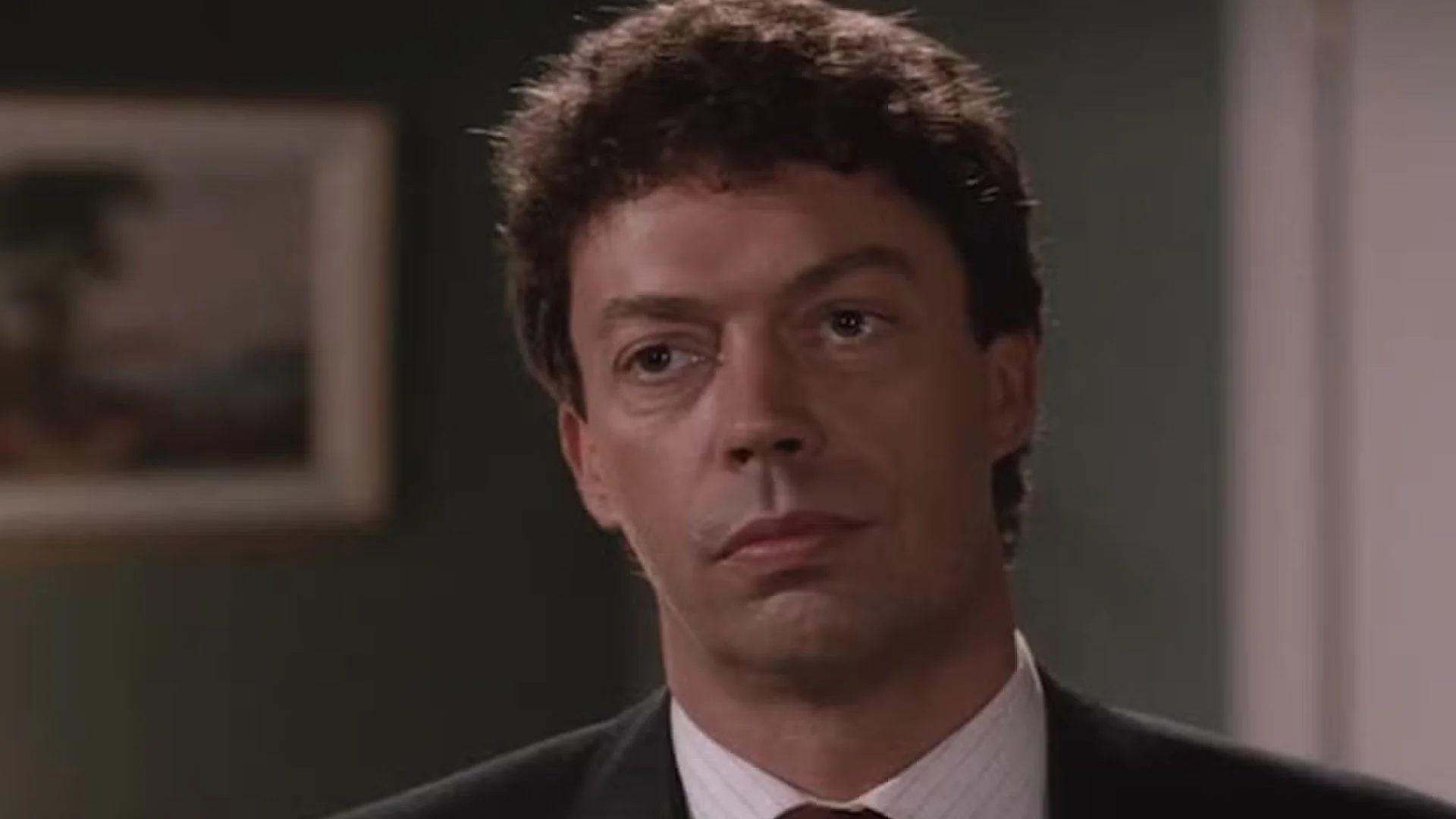
In the vast, interconnected tapestry of Hollywood history, certain casting decisions serve as the pillars upon which cinematic legends are built. Anthony Hopkins’ portrayal of the brilliant, cannibalistic psychiatrist Dr. Hannibal Lecter in Jonathan Demme’s 1991 masterpiece The Silence of the Lambs is one such pillar. It is a performance so definitive that it garnered an Academy Award for Best Actor despite the character appearing on screen for less than 25 minutes. Yet, behind every iconic casting choice lies a graveyard of "what-ifs"—actors who were considered, actors who campaigned, and actors who were denied even the dignity of a formal audition.
Among those who still harbor a sense of professional regret is the legendary Tim Curry. Known for his chameleon-like ability to inhabit both the grotesque and the sophisticated, Curry recently reflected on his career in a series of archival interviews held at the Academy’s Margaret Herrick Library. Among the many roles he discussed, one stood out as a profound missed opportunity: Hannibal Lecter.
The Chronology of a Missed Connection
To understand the weight of this revelation, one must look at the landscape of 1990s casting. As production for The Silence of the Lambs geared up in the late 1980s, the role of Lecter was one of the most coveted in the industry. The character, adapted from Thomas Harris’s 1988 novel, required an actor capable of projecting immense intellectual superiority paired with a terrifying, primal stillness.
During his visit to the Academy’s archives, Curry was presented with documentation regarding various projects he had been linked to throughout his storied career. While he expressed genuine surprise at records suggesting he was considered for the role of Dr. Ian Malcolm in Steven Spielberg’s Jurassic Park—a role he had no recollection of—his reaction to the Hannibal Lecter files was markedly different.
"One of my great regrets is that I read the script of Silence of the Lambs and I desperately wanted to play Hannibal Lecter," Curry remarked.
The chronology of this missed connection highlights the bureaucratic barriers that often dictate the trajectory of film history. Despite Curry’s established pedigree as a master of theatrical menace—having already cemented his place in pop culture history as Dr. Frank-N-Furter in The Rocky Horror Picture Show and later as the terrifying Pennywise in the 1990 miniseries IT—his representation could not break through the initial casting walls.
"My agent couldn’t get me in the room," Curry admitted. It is a stark reminder that even for an actor of his caliber, the path to a career-defining role is often obstructed by the gatekeepers of the casting process. While Anthony Hopkins was ultimately selected by Jonathan Demme, the knowledge that a performer with Curry’s range was effectively blocked from auditioning adds a layer of intrigue to the film’s pre-production lore.
The Architecture of a Villain: Curry vs. The Archetype
To analyze what a "Tim Curry Lecter" might have looked like, one must examine his unique approach to character work. Curry’s performances have historically been defined by a blend of sharp, theatrical intelligence and a wicked, almost playful sense of menace.
The Elements of the Curry Style
- Vocal Precision: Curry possesses a voice that can pivot from smooth, baritone sophistication to a jagged, predatory rasp in a single syllable. This vocal range would have been a potent tool in Lecter’s famous "quid pro quo" interrogation scenes.
- Physicality: Whether through the flamboyant kinetic energy of Frank-N-Furter or the eerie, calculated stillness of his later work, Curry understands how to use his body as an instrument of psychological manipulation.
- The "Villain’s Joy": During his archival interviews, Curry touched upon the inherent appeal of playing the antagonist. "I think writers have so much more fun writing villains than they do heroes," he noted. "Heroes are boring, you know."
This philosophy is central to why Curry would have been a fascinating choice. Anthony Hopkins’ Lecter was defined by a reptilian, icy composure—a man who had successfully transcended human emotion. A Curry interpretation likely would have leaned further into the "wicked sense of humor" he alluded to. It might have resulted in a Lecter who was more overtly charismatic, perhaps more flamboyant in his cruelty, and deeply unsettling in his ability to mock the vulnerability of his captors.
Supporting Data: The Casting Landscape of 1991
The casting of The Silence of the Lambs was a rigorous, highly competitive process. Before Anthony Hopkins secured the role, the production considered a variety of high-profile actors, including Sean Connery, Daniel Day-Lewis, and Derek Jacobi. The inclusion of Tim Curry in this list—or at least his desire to be on it—reflects the wide net the production team was casting to find the perfect blend of gravitas and danger.
The success of Hopkins, however, cannot be overstated. His performance became the gold standard for cinematic villainy, shifting the audience’s perspective to the point where they found themselves rooting for the cannibal. The film’s sweep of the "Big Five" Academy Awards (Best Picture, Best Director, Best Actor, Best Actress, and Best Adapted Screenplay) solidified the cast in their respective roles.
Yet, for film historians, the question remains: was the casting of Hopkins a necessity born of pure artistic alignment, or was it the result of a specific casting director’s vision that left other viable alternatives, like Curry, on the cutting room floor? The fact that Curry couldn’t even secure an audition suggests a systemic bias in how certain actors were categorized. At the time, Curry was often pigeonholed into "genre" or "theatrical" roles. Hollywood’s traditional reluctance to cast "character actors" in prestige, high-stakes dramas often resulted in the loss of performances that could have challenged the status quo.
Official Responses and Industry Implications
While Curry has been gracious in his retrospective comments—acknowledging that "Tony Hopkins did a great job"—the industry implications of his story are significant. It highlights the power dynamics of 1990s Hollywood, where access was strictly controlled by agents and casting directors who favored established archetypes over unconventional casting choices.
In modern cinema, casting processes have become more transparent, with directors often utilizing "chemistry reads" and more open audition processes to find the right fit. The "Curry-Lecter" narrative serves as a cautionary tale for modern filmmakers: how many iconic performances are we missing because a brilliant actor couldn’t "get in the room"?
Furthermore, Curry’s comments provide insight into the mindset of a performer who views villainy as an art form. His assertion that heroes are "boring" is a sentiment shared by many of the most prolific actors of the 20th century. By viewing the villain not as a caricature but as a character with agency, intelligence, and—crucially—a sense of humor, Curry has spent his career humanizing the monstrous. Had he been given the chance to play Lecter, it is highly probable he would have focused on the character’s intellectual vanity, perhaps making him even more relatable and, therefore, more terrifying.
The Legacy of the "What If"
As time passes, the "what-ifs" of film history often grow more vibrant than the reality. We have the film that The Silence of the Lambs is, and it is undoubtedly a masterpiece of the thriller genre. However, the curiosity surrounding a Tim Curry performance as Hannibal Lecter is not a slight against Anthony Hopkins; rather, it is a testament to Curry’s enduring talent.
Curry’s career has been marked by a refusal to be contained by genre. From his work in musical theater to his iconic turns in television and film, he has consistently displayed a commitment to the craft that few can match. The fact that he held onto the regret of missing out on Lecter for over three decades underscores the passion he brought to his work.
In conclusion, the story of Tim Curry and Hannibal Lecter is more than just a casting anecdote. It is a reflection of the arbitrary nature of fame and opportunity in the entertainment industry. It reminds us that behind every iconic role, there is a complex history of ambition, exclusion, and the occasional stroke of fate. While we will never see Curry behind the glass of a Baltimore State Hospital for the Criminally Insane, the mere suggestion of his involvement invites us to re-examine the character of Hannibal Lecter—not as a static figure of stone-cold evil, but as a role that could have been interpreted through a thousand different lenses of genius.
For now, we are left with the chilling, award-winning performance of Anthony Hopkins—a performance that forever changed the face of horror. But every time the screen flickers with the image of Lecter’s piercing gaze, those of us who appreciate the depth of Tim Curry’s craft will inevitably wonder: What if?
