
The "City" That Never Was: Inside the Failed Attempt to Bring William Shatner Back to Star Trek
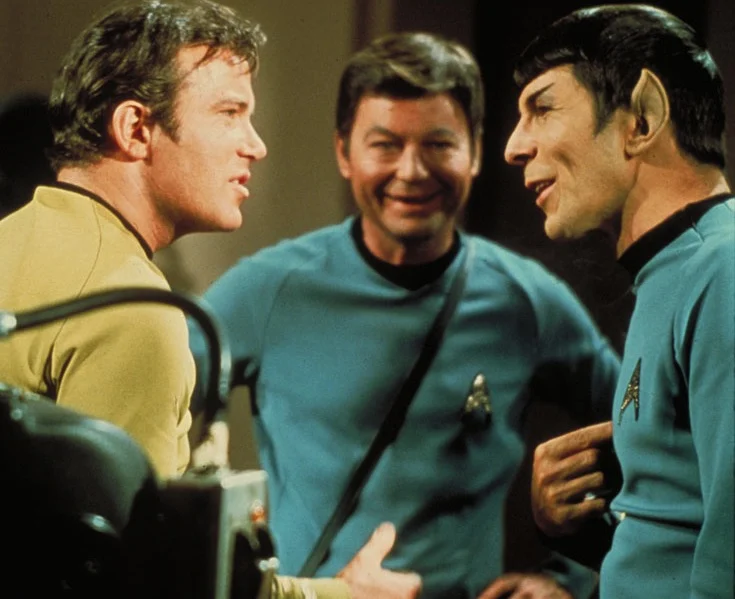
As Star Trek: Strange New Worlds navigates the high-stakes narrative arcs of its fourth season, the creative team behind the Paramount+ hit has pulled back the curtain on a tantalizing "what-if" scenario that would have sent ripples through the science fiction landscape. In a recent exclusive interview with TrekMovie.com, co-showrunner Henry Alonso Myers revealed that the writers’ room spent significant time developing a concept for an animated episode that would have featured the return of the original Captain James T. Kirk: William Shatner.
The ambition was nothing short of legendary: a direct, canonical follow-up to the 1967 Star Trek: The Original Series masterpiece, "The City on the Edge of Forever." Despite the creative team’s fervor for the project, the ambitious crossover ultimately remained on the cutting room floor.
A Legacy of Excellence: Why "City on the Edge of Forever"
To understand the weight of this creative decision, one must look at the source material. Written by science fiction titan Harlan Ellison, "The City on the Edge of Forever" is widely considered the crown jewel of the original Star Trek run. In the episode, Captain Kirk and Mr. Spock travel back to 1930s New York City during the Great Depression. Kirk falls in love with social worker Edith Keeler, only to realize that for the future to exist as he knows it—and for the Allied forces to win World War II—he must allow her to die in a tragic accident.
It is a poignant exploration of sacrifice, the weight of command, and the agonizing permanence of time. By choosing to revisit this specific narrative, the Strange New Worlds team was attempting to engage with the most sacred text in the franchise’s history.
The Pitch: An Animated Bridge Across Time
The proposed episode was not intended to be a mere cameo. According to Myers, the writers aimed to construct a "very serious" narrative that functioned as a sequel or a thematic extension of the original encounter. The creative team’s solution to the hurdle of age—given that Shatner is now 93 years old—was to utilize animation.
"We wanted to do like a very serious one," Myers told TrekMovie.com. "We had a whole plan to do it around him and to redo ‘City on the Edge of Forever’ and do a retelling—not a retelling, like a part two kind of thing."
By opting for an animated format, the showrunners sought to bypass the limitations of physical reality, allowing Shatner to voice a younger, visually accurate version of the iconic Captain Kirk. This technique, previously utilized to great effect in the Star Trek: Lower Decks crossover episode "Those Old Scientists," would have allowed the show to maintain visual continuity with the 1960s aesthetic while exploring mature, complex themes that bridge the gap between the past and the present.
Chronology of the Development
The development of this episode did not happen in a vacuum. It was the result of a deliberate, multi-year strategy to integrate legacy characters into the Strange New Worlds timeline, which serves as a prequel to the Original Series.
- Early Concept Phase: Following the success of the first two seasons, the writers began exploring ways to deepen the connection between the Enterprise crews.
- The "City" Proposal: The idea to revisit the 1967 classic was proposed early in the development of the latest season, with the assumption that the high-concept nature of the premise would appeal to a legendary actor like Shatner.
- Negotiations: Discussions were initiated to gauge Shatner’s interest in returning to the role that defined his career.
- The Standoff: Despite the high esteem in which the showrunners held the material, the logistical and creative alignment required for such a high-profile return could not be reached.
- Final Cancellation: The project was shelved, and the team pivoted to other narrative directions for the current season.
The Nonagenarian’s Busy Schedule
While fans may be disheartened by the news of the lost episode, William Shatner’s absence from the Enterprise is not due to a lack of vitality. At 93, the actor remains as active as ever, consistently defying the conventions of his age.
Shatner has channeled his energy into a surprisingly robust musical career. This month alone, he made waves at Chicago’s legendary Riot Fest, where he performed alongside his metal band, The F—s. The performance, which included high-octane covers of Metallica’s "Enter Sandman," Ozzy Osbourne’s "Crazy Train," and Motörhead’s "Ace of Spades," served as a reminder that the man behind Captain Kirk is still a performer of immense, unpredictable talent. His current focus on music and public appearances suggests that while he remains proud of his Star Trek roots, he is currently preoccupied with exploring artistic avenues that exist far outside the orbit of the United Federation of Planets.
Official Responses and Creative Vision
The Strange New Worlds team has maintained a tone of profound respect regarding the failed collaboration. Myers and his co-showrunner, Akiva Goldsman, have frequently spoken about the challenge of honoring Star Trek history without becoming enslaved by it.
The goal for Strange New Worlds has always been to provide a "classic" Trek feel—episodic, adventurous, and character-driven—while utilizing modern production values. Revisiting "The City on the Edge of Forever" was, in their view, the ultimate test of this philosophy. By choosing to let the idea go rather than compromise on the vision, the producers have demonstrated a level of restraint that many feel is necessary when dealing with such foundational lore.
Implications for the Future of the Franchise
The attempted return of William Shatner raises significant questions about the future of the Star Trek franchise and its relationship with the past.
1. The Power of Legacy
The fact that Strange New Worlds is even attempting these kinds of narratives proves that the legacy of the 1960s show remains the bedrock upon which all new Trek is built. The "Kirk factor" remains the most powerful marketing and narrative tool in the franchise’s arsenal.
2. The Role of Animation
The reliance on animation as a tool for "de-aging" or historical recreation is likely to increase. As digital technology becomes more sophisticated, we can expect to see more "lost episodes" that utilize voice acting from legacy cast members to fill in the gaps of the franchise’s extensive history.
3. The End of an Era
There is a bittersweet reality in this news: the window for original cast members to reprise their iconic roles in any form is closing. While modern technology allows for digital preservation, there is a tangible difference between a performance driven by contemporary AI and one driven by the actor’s own lived experience. The failure to secure Shatner for this project serves as a reminder that, eventually, the living connections to the franchise’s inception will pass into history.
4. Protecting the Canon
Finally, the decision not to move forward with the project if it couldn’t be done "right" protects the sanctity of the original episode. By not forcing a reunion, the producers have ensured that "The City on the Edge of Forever" remains a singular, untarnished work of art.
Conclusion
The story of the lost Strange New Worlds episode is a testament to the enduring allure of Star Trek. Even after nearly 60 years, the creative team continues to look back at the original episodes as the North Star for their storytelling. While fans may never get to see the animated, high-stakes sequel the showrunners dreamed of, the mere existence of the pitch serves as a fascinating footnote in the history of the franchise. It highlights the ambition of the modern era of Star Trek and the unwavering respect the current creators have for the pioneers who first took us to the final frontier.
As for William Shatner, he continues to boldly go where few in their nineties have gone before—commanding stages, recording music, and remaining a vibrant, if elusive, icon of popular culture. For now, the "City on the Edge of Forever" remains, as it always has been, a perfect moment in time—untouched, preserved, and forever legendary.
