
Sony Unveils the ECM-AX10: A Groundbreaking USB-C Spatial Audio Microphone Aimed at Content Creators and Mobile Filmmakers
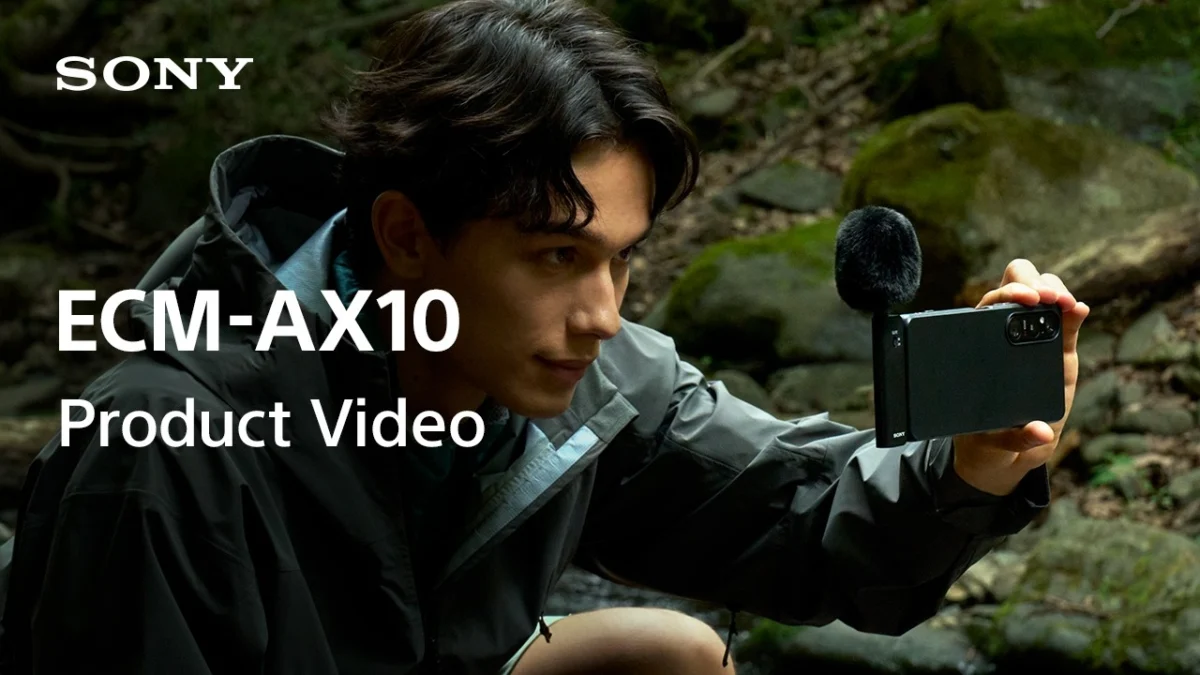
October 2026 — In an era where immersive media and spatial computing are rapidly transitioning from niche technological frontiers to everyday consumer experiences, Sony has announced its latest audio innovation. The Sony ECM-AX10 is a sophisticated, highly versatile spatial audio USB-C microphone designed to bridge the gap between professional-grade 3D audio capture and mobile-first content creation.
Equipped with four omnidirectional electret condenser capsules, the ECM-AX10 is engineered to handle everything from traditional stereo and binaural recordings to full Ambisonics-based spatial audio. This capability allows creators to produce immersive soundscapes natively optimized for platforms like YouTube utilizing Eclipsa Audio.
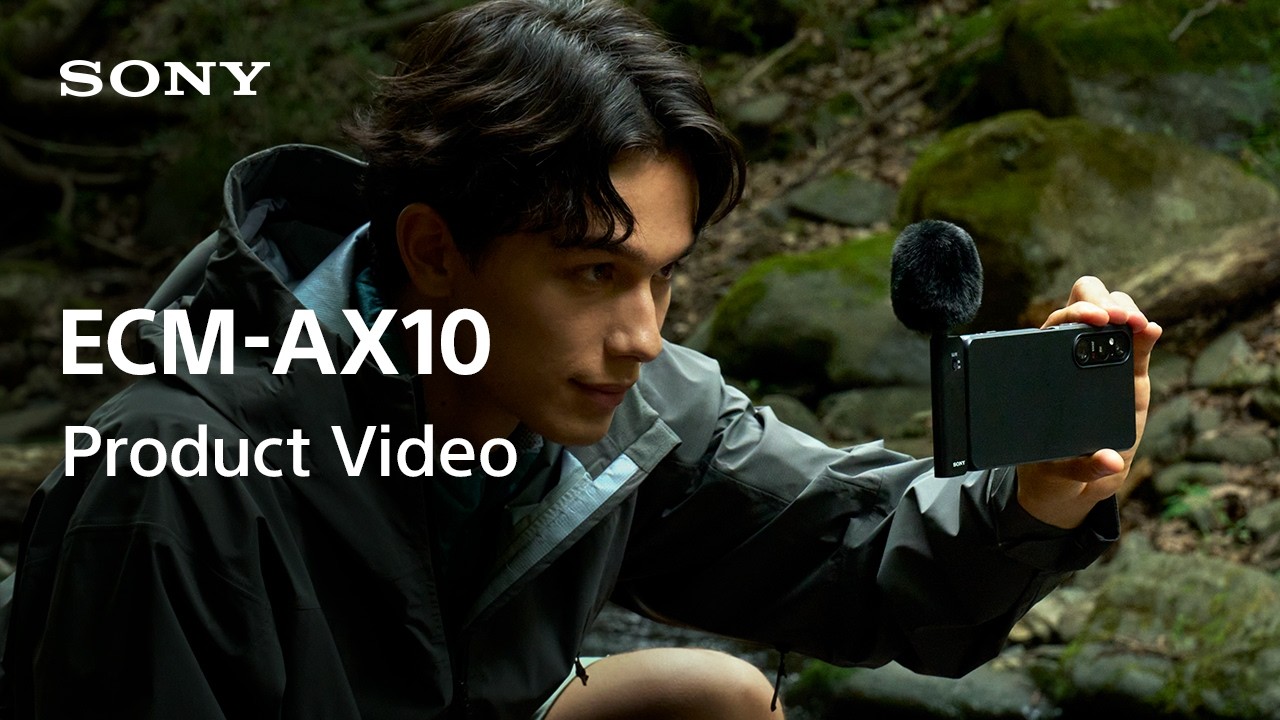
Priced at $249.99 USD, the ECM-AX10 is positioned as an essential tool for modern vloggers, mobile journalists, and indie filmmakers looking to elevate the sonic dimension of their video content without hauling heavy, complex field-recording rigs.
Main Facts: What is the Sony ECM-AX10?
At its core, the Sony ECM-AX10 is a compact, highly portable external microphone that connects directly to modern smartphones, tablets, and cameras via a USB-C interface. Unlike conventional mono or stereo microphones that capture sound on a flat, two-dimensional plane, the ECM-AX10 is built to record the environment in a 360-degree sphere.

Key Hardware Specifications:
- Transducer Type: Four omnidirectional electret condenser capsules.
- Recording Formats: Stereo, binaural, and full spatial audio via Ambisonics.
- Connectivity: USB-C interface for direct digital connection; 3.5mm headphone jack for zero-latency monitoring.
- Smart Orientation: Built-in accelerometer that automatically detects microphone orientation and adjusts spatial axes in real-time.
- Dedicated Controls: Physical toggle buttons for Spatial vs. Stereo modes, switchable noise-cut and low-cut filters, auto-gain control (AGC), a dedicated attenuation (ATT) switch, and a specialized "SELFIE" switch.
- Companion Software: Fully compatible with the Sony Spatial Audio Video Tool app for deeper device management and post-processing adjustments.
- Included Accessories: Custom windscreen, extension cable, and a dedicated shoe-mount microphone holder for mirrorless and DSLR cameras.
Chronology: The Evolution of Mobile Spatial Audio
The announcement of the ECM-AX10 did not happen in a vacuum; it represents the culmination of years of convergence between consumer video technology and professional immersive sound formats.
- The Rise of Immersive Video (2018–2021): As platforms like YouTube introduced support for Ambisonics and spatial audio playback, content creators faced a bottleneck. While 360-degree cameras became accessible, capturing matching 3D sound required expensive, multi-microphone ambisonic arrays that were impractical for run-and-gun mobile shooters.
- The Creator Economy Pivot (2022–2024): With the explosion of short-form video, live-streaming, and mobile journalism, manufacturers began focusing heavily on audio quality. Smartphone manufacturers dropped headphone jacks, accelerating the adoption of digital USB-C microphones.
- The Spatial Computing Boom (2025–2026): The mainstreaming of spatial headsets and spatial video recording on consumer smartphones created an urgent market demand for sound that matches the depth of modern visuals.
- October 2026: Sony officially reveals the ECM-AX10, addressing the creator market’s need for a lightweight, intelligent USB-C spatial microphone. Pre-orders open immediately at $249.99 USD, with retail shipments scheduled to commence on October 19th.
Supporting Data and Deep-Dive Feature Analysis
To understand why the ECM-AX10 commands a $249 price point in a crowded market of budget shotgun mics, one must look closely at the engineering and software integration packed into its compact chassis.

1. The Power of Four Capsules and Ambisonics
Traditional microphones capture pressure waves linearly. The ECM-AX10 utilizes a tetrahedral or closely arrayed configuration of four omnidirectional electret condenser capsules. By capturing audio signals from four distinct points simultaneously, the microphone can mathematically recreate a complete 3D sound sphere using Ambisonics B-format encoding.
When played back on compatible platforms utilizing Eclipsa Audio, viewers can perceive not just the volume of a sound, but its exact spatial coordinate—whether a car is passing behind them to the left, or a bird is singing directly above the frame.

2. Intelligent Orientation via Built-in Accelerometer
One of the historical pain points of multi-capsule spatial microphones is orientation error. If a creator flips the camera from landscape to portrait, or switches from a front-facing selfie shot to a rear-facing subject shot, the spatial soundfield typically inverts or scrambles.
Sony has solved this elegantly by integrating a built-in accelerometer. The ECM-AX10 physically detects its orientation in real-time and dynamically remaps the spatial audio channels. Furthermore, the dedicated SELFIE switch ensures that when creators turn the camera on themselves for vlogging, the sound orientation adjusts seamlessly to maintain proper front-facing alignment.

3. Advanced Environmental Filtering
Field recording is notoriously plagued by unpredictable acoustic challenges. Sony has equipped the ECM-AX10 with hardware-level processing tools to combat unwanted noise:
- Noise-Cut Filter: Designed to isolate and suppress persistent background hums (such as urban traffic or crowd chatter) in loud environments.
- Low-Cut Filter: Effectively rolls off low-frequency rumblings below the human voice threshold, minimizing wind buffeting, air conditioning drone, and mechanical handling vibrations.
- Auto Gain Control & ATT Switch: Prevents audio clipping when sudden loud noises occur, ensuring a balanced dynamic range without manual intervention.
4. Zero-Latency Monitoring and Ecosystem Integration
Audio professionals know that monitoring what goes into the recorder is non-negotiable. The inclusion of a physical 3.5mm headphone output allows creators to plug in headphones and hear the audio feed directly from the microphone with zero latency.

For advanced users, the Sony Spatial Audio Video Tool app unlocks deeper configuration options, allowing creators to fine-tune polar patterns, monitor channel levels, and update firmware directly from their mobile devices or computers.
Official Responses and Industry Positioning
Industry analysts and early reviewers have noted that Sony is deliberately carving out a new category of "intelligent smart-mics" designed specifically for the solo creator.

In official product briefs, Sony emphasized that the ECM-AX10 was built to democratize spatial storytelling. "As consumer demand shifts toward immersive and experiential media, creators need tools that do not require an audio engineering degree to operate," noted product representatives during the initial rollout. "The ECM-AX10 takes the complexity out of Ambisonics, packaging professional 3D sound capture into a plug-and-play USB-C form factor."
By bundling essential accessories—including a specialized windscreen for outdoor shooting, an extension cable for flexible placement, and a shoe-mount mic holder—Sony has ensured that users can take the microphone straight out of the box and mount it directly onto a mirrorless camera cage or a mobile rig without purchasing third-party adapters.

Implications: What the ECM-AX10 Means for the Future of Content Creation
The launch of the Sony ECM-AX10 carries several significant implications for the broader creator economy and audio-visual industry:
1. The Mainstreaming of 3D Audio in Social Media
For years, spatial audio formats were restricted to high-end cinematic productions, virtual reality experiences, and specialized music mixing. By streamlining the capture process and integrating natively with platforms like YouTube (via Eclipsa Audio), Sony is encouraging everyday vloggers and independent filmmakers to adopt spatial audio as a standard baseline rather than an exotic luxury.

2. Workflow Simplification for Run-and-Gun Shooters
Mobile journalists and travel vloggers operate under extreme time constraints. Traditional spatial recording setups required post-production matrix decoding, multi-track syncing, and complex channel routing. The automated orientation adjustment of the ECM-AX10 drastically reduces editing and post-production friction, allowing creators to spend less time fixing audio tracks and more time publishing content.
3. The Universal Appeal of USB-C Versatility
By designing the microphone around a universal USB-C connection, Sony ensures cross-platform compatibility. Whether a creator is shooting on the latest flagship smartphone, an iPad, or a mirrorless hybrid camera, the ECM-AX10 functions seamlessly as a digital audio interface, eliminating analog signal degradation.

Pricing and Availability Summary
The Sony ECM-AX10 Spatial Audio Microphone is available for pre-order now at a retail price of $249.99 USD. Official retail distribution and customer shipments are scheduled to kick off globally on October 19th. Given its robust feature set, intelligent accelerometer orientation, and comprehensive accessory bundle, it is expected to become a highly sought-after accessory for mobile creators and videographers looking to future-proof their audio production toolkit.
