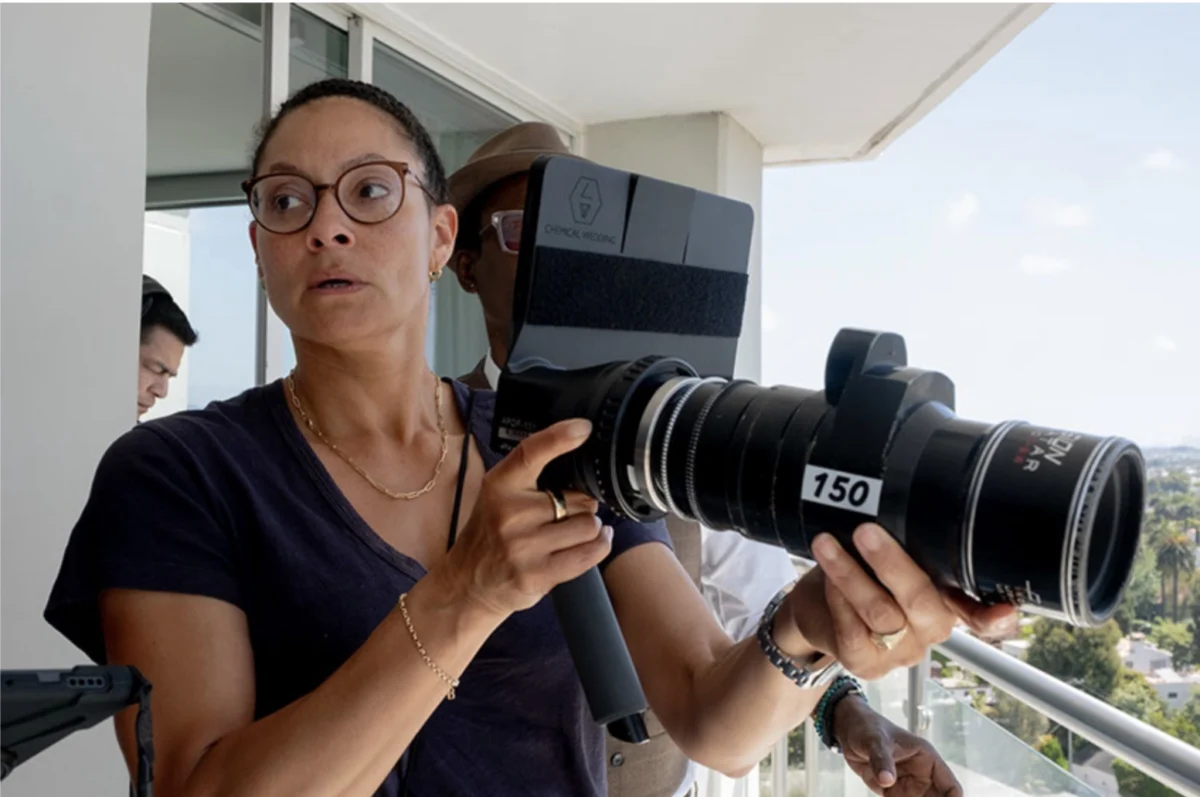
Inside the Fall Festival Lens and Camera Survey: How Cinematographers Shaped the Look of 2026’s Most Anticipated Indie Films
Main Facts
The intersection of art, technology, and logistical constraint forms the bedrock of modern independent filmmaking. In IndieWire’s latest and most expansive camerasurvey to date, cinematographers representing feature films screened at the prestigious Telluride, Toronto, and New York Film Festivals pulled back the curtain on their visual strategies. Surveying 58 distinct Directors of Photography (DOPs), the publication posed three defining questions: What format did they shoot on? Which specific cameras and lenses did they utilize? And, most importantly, why did they make those technical choices?
The results highlight a fascinating dichotomy in contemporary cinema. While hardware ubiquity—namely the enduring dominance of the ARRI ALEXA 35—proves that many different technical roads lead to the same high-end digital standard, the creative methodologies employed by individual cinematographers remain wildly diverse. From old-school analog tricks like smearing Vaseline and deploying rare star filters, to stark, uncompromising black-and-white palettes and disciplined restraint with Japanese vintage glass, the survey reveals that technical limitations are often the very catalysts that spark brilliant aesthetic breakthroughs.
Rather than relying on generic industry standards, these 58 cinematographers adapted to micro-budgets, tight shooting schedules, and eccentric directorial visions, transforming obstacles into signature visual styles for some of the year’s most celebrated independent features.
The journey of crafting a film’s visual identity is a multi-stage marathon that begins long before cameras roll on set and culminates on the grand, high-pressure stages of the international fall festival circuit.
Phase 1: Pre-Production and Philosophical Alignment
Months before arriving on set, cinematographers and directors must negotiate the grammar of their films. For Gerald Kerkletz, cinematographer of the historical drama Rose, this phase involved an intense philosophical debate with director Markus Schleinzer. Rather than defaulting to a standard "period look," Kerkletz and Schleinzer established early on that they would bypass color entirely. This foundational decision dictated every subsequent choice, forcing the crew to view locations, wardrobe, and lighting exclusively through the lens of luminance and shadow rather than chromatic hue.
Phase 2: On-Set Adaptation and Practical Experimentation
Once production begins, theory meets the chaotic reality of live sets. For Alexandre Lampron, shooting Ladies and Gentlemen, Bryan Mulroney under punishingly brief schedules meant embracing immediate, tactile physical manipulations of the image. Working alongside director Matthew Rankin, Lampron integrated vintage diffusion filters and specialized multi-spike star filters directly into the shooting workflow. This hands-on approach allowed the crew to soften harsh digital lines and blend live-action footage seamlessly with historical archival photography on the fly.
Phase 3: The Exercise in Creative Restraint
During production, cinematographers are frequently forced to exercise severe self-control. Sean Price Williams, working on the feature Vintage Violence in Japan alongside director Eugene Kotlyarenko, faced the classic trap of aesthetic overindulgence. Armed with the freedom to select virtually any vintage glass available in the region—including classic Kowa or anamorphic setups—Williams deliberately reined in his impulses. By opting for straightforward, classic lenses rather than leaning into gear-fetishism, he preserved the raw, unadorned integrity of the narrative.
Phase 4: The Fall Festival Circuit Debut
The culmination of these intense technical and artistic negotiations is the festival premiere. Having navigated low-light environments, tricky location logistics, and rapid-fire shooting days, these cinematographers finally present their calibrated visions to audiences and critics at Telluride, Toronto, and New York. The festival circuit serves as the ultimate proving ground, where the invisible labor of color science, glass selection, and camera rigging is judged by its emotional and aesthetic impact.
Supporting Data: The Hardware and Methodology Behind the Lens
While the philosophical motivations driving these cinematographers vary wildly, the hardware data offers a concrete look at the tools shaping modern independent cinema.
Scale of the Survey: Encompassing 58 distinct Directors of Photography, this year’s fall festival survey stands as one of the largest data-gathering initiatives undertaken by IndieWire regarding independent feature production camera packages.
The Industry Standard: The ARRI ALEXA 35 emerged as the undisputed heavy favorite, proving to be the central pillar upon which numerous distinct visual styles were built. Despite the camera’s ubiquity, DOPs utilized customized sensor modes, unique shutter angles, and bespoke LUTs to ensure their projects retained a singular look.
Format Diversity: While digital capture dominated, productions integrated varied hybrid approaches—pairing ultra-modern digital sensors with retro physical optics, physical filtration devices, and custom-tailored wardrobe fabrics to achieve in-camera effects rather than relying entirely on post-production visual effects.
Geographical and Logistical Pressures: Projects ranged from lightning-fast multi-day shoots requiring immediate, analog-style problem solving (Ladies and Gentlemen, Bryan Mulroney) to international location shoots where gear availability forced snap judgments regarding lens packages (Vintage Violence).
Official Responses: Insights Straight from the Cinematographers
To fully understand the artistic decisions driving these indie features, one must look directly at the words of the cinematographers who lived through the shoots. Their reflections provide invaluable insight into the psychology of modern camera work.
Alexandre Lampron on Ladies and Gentlemen, Bryan Mulroney
Addressing the challenges of blending newly shot footage with archival materials on an aggressive timeline, Alexandre Lampron highlighted the joy of analog experimentation:
"I’ve shot a couple of projects with [director Matthew Rankin], and on each of them we used special diffusion filters, even great quantities of Vaseline, but mainly the now infamous star filter (10 spikes), which is, to my surprise, so underrated. Apart from its perfect shine effect, it lifts contrast and smooths the overall sharpness of the image. A perfect combination with Patricia McNeil’s out-of-this-world shiny costume, custom-made from thousands of rhinestones."
Gerald Kerkletz on Rose
Explaining the decision to strip away color in favor of a high-contrast, black-and-white aesthetic, Gerald Kerkletz noted the uncompromising nature of monochrome capture:
"[Director] Markus Schleinzer and I weren’t interested in a ‘historical’ or a ‘period’ look. For me, the first is an illusion, while the second usually says more about the era a film was made in than the one it is set in. If you forgo color, you don’t lose information; it condenses, and what remains stands out. That challenges a cinematographer, as black-and-white is less forgiving."
Sean Price Williams on Vintage Violence
Detailing the battle against equipment fetishism while shooting on location in Japan, Sean Price Williams described the necessity of aesthetic discipline:
"It’s usually a whim, not a strategy. I knew our leads are pretty people, so I picked pretty lenses. I am sure I was tempted to use Kowa lenses since we were in Japan, and [Director Eugene Kotlyarenko] and I definitely considered anamorphic, but I think it would have been a choice of fetish."
Implications: What This Means for the Future of Independent Cinema
The insights gleaned from IndieWire’s latest camera survey point to several significant shifts and enduring truths within the independent film landscape.
1. The Death of the Cookie-Cutter "Indie Look"
For years, digital cinematography was occasionally criticized for producing a flat, homogenized aesthetic. However, the survey proves that today’s cinematographers are actively fighting against this uniformity. By pairing cutting-edge sensors like the ARRI ALEXA 35 with primitive physical tools—such as Vaseline, vintage diffusion, and custom star filters—DOPs are successfully carving out distinct, tactile visual identities that feel handmade rather than factory-generated.
2. Conceptual Purity Over Technological Excess
Sean Price Williams’ conscious rejection of trendy anamorphic glass and exotic vintage lenses serves as a vital lesson for emerging filmmakers. The temptation to rent the most expensive, exotic hardware package available often overshadows the core narrative needs of a project. By prioritizing straightforward, classic optics that flatter the performers, cinematographers are rediscovering the power of restraint.
3. The Resurgence of Monochrome and Bold Stylistic Constraints
Gerald Kerkletz’s work on Rose demonstrates that removing color is not merely a nostalgic gimmick, but a powerful tool for distillation. As streaming platforms and digital distribution channels are flooded with hyper-saturated, color-graded content, films that embrace stark black-and-white cinematography or heavily stylized in-camera effects naturally stand out in a crowded marketplace.
Ultimately, these 58 cinematographers remind us that great cinematography is not about having access to the infinite budget or the newest piece of hardware. It is about how deeply a creative team understands their story, and how fearlessly they bend their tools—whether through high-tech sensors or smears of petroleum jelly—to bring that story to life.