
The Echoes of Genoa: Margherita Ferrari Reimagines History in ‘Föa — Once Upon a Future’
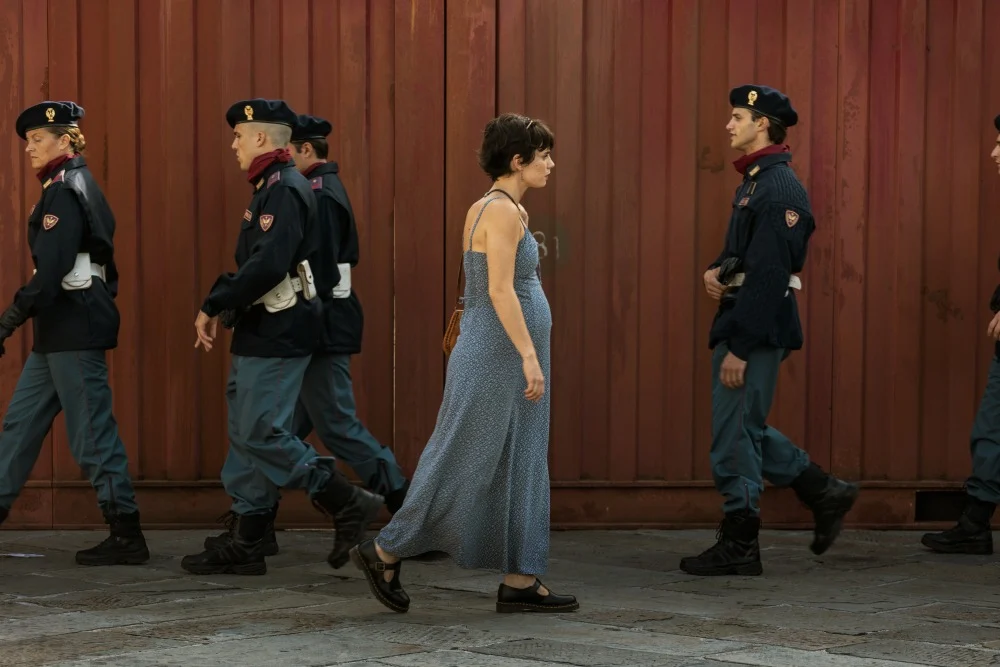
At the Busan International Film Festival, a new, singular voice in Italian cinema has emerged. Debut director Margherita Ferrari has unveiled Föa — Once Upon a Future, an ambitious, dreamlike drama that breathes new life into the historical trauma of the 2001 G8 summit in Genoa. The film is notable not only for its bold narrative experimentation but also for serving as the inaugural production for Oscar-winning director Paolo Sorrentino’s new production banner, Numero 10.
By eschewing the traditional documentary or historical-reconstruction format, Ferrari has crafted a fable that balances the weight of political violence with the intimacy of a coming-of-age story. As the film makes its international rounds, it stands as a testament to the power of a "female gaze" in re-examining the scars of the past.
The Genesis of a Fable: Context and Narrative
Set against the backdrop of the July 2001 Genoa G8 summit—a watershed moment in the global anti-globalization movement marked by brutal clashes between police and protestors—the film follows Nicole, an 18-year-old girl. Eight months pregnant and on the precipice of motherhood, Nicole finds herself unexpectedly sheltering three protestors within her home.
The title itself, Föa, is a Genoese term for "fable" or "little story." This choice is central to Ferrari’s thematic intent: to move away from the cold, clinical records of history and toward the emotional, subjective reality of those who lived through the era. The narrative serves as a bridge between the historical "capital-H" History and the personal, interior lives of those whose futures were shaped—or shattered—by that volatile summer.
A Chronology of Creation: From Student Film to Global Stage
The journey of Föa is as unconventional as its content. The project originated as Ferrari’s graduation short film at Rome’s prestigious Centro Sperimentale di Cinematografia. Recognizing the strength of the concept and the maturity of the vision, Ferrari was given the rare opportunity to pitch an expanded feature version to one of Italy’s most prominent filmmakers, Paolo Sorrentino.
Following the successful pitch, the project moved into development under the newly formed Numero 10 production house, in collaboration with The Apartment and PiperFilm. The production process was characterized by a delicate balance of guidance and autonomy. While Sorrentino provided input during the scriptwriting and editing phases, he maintained a respectful distance during the principal photography. This allowed the young director to preserve her creative integrity, ensuring the finished film remained an authentic expression of her unique perspective.
The Weight of Memory: Why 2001 Still Matters
To understand the gravity of Föa, one must understand the lingering shadow of the 2001 Genoa summit. For a generation of Italians, those days represent a loss of innocence and a violent rupture in the relationship between the state and its citizens.
For Ferrari, the memory is deeply personal. "On July 20, 2001, I was only four," she recalls. "I remember the windows and the typical green shutters of our living room in Genoa had to be closed because outside there was smoke and noise."
This sensory memory—the isolation, the heat, the feeling of being trapped while a historical cataclysm occurred just outside the door—became the emotional anchor for the film. During the global lockdowns of the COVID-19 pandemic, Ferrari found herself revisiting that childhood feeling of powerlessness. She realized that her own disillusionment with contemporary society was not an isolated experience, but a collective one shared by her peers. The film, therefore, is not merely a look back at 2001; it is a meditation on the cyclical nature of history and the uncertain future that young people face today.
Supporting Data and Production Details
The film features an ensemble of emerging Italian talent, including Gaia Ravina, Clara Tramontano, Iker Urgoiti, and Gabriele Falsetta. The collaborative effort behind the lens was equally crucial. By partnering with The Apartment—a seasoned powerhouse in European cinema—Numero 10 ensured that the film possessed the technical polish required to compete on the international circuit.

- Director: Margherita Ferrari
- Producer: Paolo Sorrentino (Numero 10)
- Co-producers: The Apartment, PiperFilm
- International Sales: PiperPlay
- Key Themes: Coming-of-age, Political Trauma, Fable/Magic Realism, Female Agency
The film’s aesthetic, which blends the stark reality of the 2001 riots with a dreamlike, almost ethereal visual style, serves to distance the viewer from the documentary-style fatigue often associated with historical dramas. By framing the events through the perspective of a pregnant protagonist, Ferrari introduces a tangible symbol of the future—a child who, in real-time, would be in their mid-twenties today, grappling with the same questions of purpose and political agency.
Official Responses and Creative Vision
The partnership between a veteran like Sorrentino and a newcomer like Ferrari has drawn significant attention. In a statement provided to Variety, Sorrentino praised the film’s ability to turn political memory into something intimate.
"Föa begins with a wound that history never quite managed to close," Sorrentino stated. "Margherita Ferrari turns the memory of Genoa into something intimate and dreamlike, where the past quietly returns to question the future."
Sorrentino further elaborated on his role as a producer, noting that his primary objective was to protect the "singular vision" of a new author. He expressed pride that his company’s first journey into production was defined by a powerful female gaze, emphasizing the importance of nurturing new talent in an era where imaginative storytelling is increasingly threatened by commercial pressures.
For her part, Ferrari credits the collaboration for her personal and professional growth. She notes that Sorrentino’s restraint on set was an act of "great tenderness," allowing her to reach creative conclusions on her own terms. "He helped me pursue and protect my vision all the way to the end," she said.
Thematic Implications: A New Language for Historical Trauma
Föa — Once Upon a Future challenges the audience to consider how we process historical trauma. By using the framework of a fable, Ferrari argues that literal reenactment is often insufficient to capture the "truth" of an event. Instead, metaphors and symbols—like the interior of a home during a riot—can better articulate the lingering psychological impact of such events.
The film serves several important implications for modern cinema:
- The Re-evaluation of the G8 Protests: By shifting the focus from the streets to the domestic sphere, the film offers a perspective that is rarely explored in political dramas. It humanizes the protesters and the bystanders, stripping away the binary of "police vs. rioters" to reveal the human cost of polarization.
- The "Female Gaze" in Historical Narrative: Ferrari’s focus on pregnancy as a central motif forces the viewer to confront the future. It is a biological imperative that exists in direct opposition to the destruction happening outside.
- The Evolution of the Fable: The film suggests that the "fable" is a necessary tool for the contemporary age. Just as historical fables were used to teach morality and survival, Föa uses the genre to navigate the complexities of modern political disillusionment.
Conclusion: A Breath of Fresh Air
Perhaps the most striking aspect of Ferrari’s work is her insistence on hope. In an era of cynical storytelling, Föa aims to provide a "moment of relief" for the audience. As Ferrari explains, "I hope it allows the audience to imagine that things might turn out a bit better. It’s like in fairy tales; I always envisioned a moment of relief at the end, a breath of fresh air that leaves room for that possibility."
As the film continues to garner acclaim at the Busan International Film Festival and beyond, it positions itself as a significant entry in the canon of Italian political cinema. It is a rare film that manages to be both a haunting remembrance of the past and a hopeful, albeit cautious, gaze toward the future. By allowing the "wound" of 2001 to finally speak, Margherita Ferrari has not only paid tribute to history but has successfully reclaimed the future for a new generation.
