
Into the Belly of the Beast: Brian Duffield’s ‘Whalefall’ Redefines the Survival Thriller
Main Facts: An Unprecedented Descent into Deep-Sea Madness
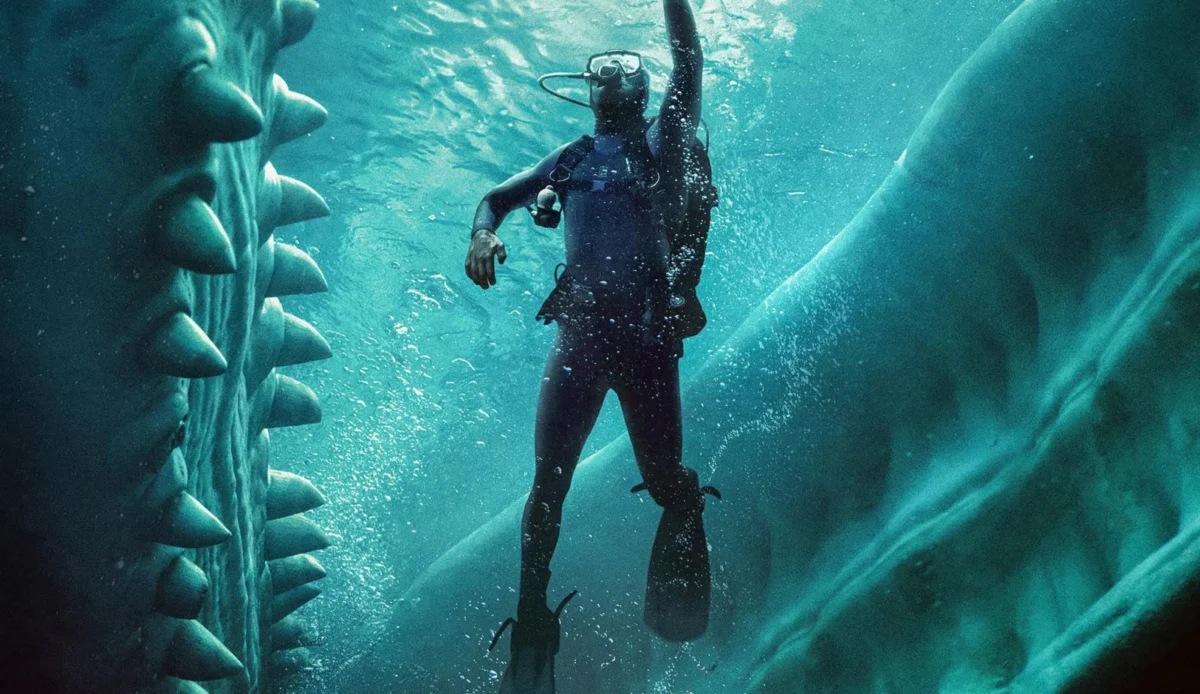
The survival-thriller genre has long explored isolation, pitting protagonists against the elements, hostile wildlife, and their own psychological frailties. Yet, few films in cinematic history boast a premise as audaciously high-concept and visceral as Brian Duffield’s Whalefall. Scheduled for release in 2026, the film adapts Daniel Kraus’s acclaimed bestselling novel of the same name, transporting audiences to an environment both profoundly alien and terrifyingly intimate: the interior of an 80-foot, 60-ton sperm whale.
The narrative centers on Jay, played by Austin Abrams, a young scuba diver searching the ocean depths for the remains of his estranged father, Mitt. Disaster strikes when Jay is accidentally swallowed whole by the colossal marine mammal. Thrust into a nightmarish race against time, Jay is left with a merciless sixty-minute window to escape the digestive tract of the beast before his oxygen supply depletes entirely.
Directed with a frantic, fever-dream energy by Duffield, Whalefall features a starry ensemble cast that includes Josh Brolin as the patriarchal figure Mitt, Elisabeth Shue as Jay’s mother, alongside John Ortiz, Jane Levy, and Emily Rudd. Eschewing the gritty, mud-and-blood realism typical of standard survival dramas, Duffield crafts a hallucinatory cinematic spectacle that marries gonzo body horror with a poignant, if occasionally heavy-handed, exploration of generational trauma and paternal reconciliation.
Chronology: From Tragic Loss to a Sixty-Minute Nightmare
To understand the agonizing trajectory of Whalefall, one must examine how the film carefully structures its narrative timeline, blending frantic present-tense survival with fragmented memories of the past.
Act I: The Prologue and the Plunge
The film opens with a brisk, functional prologue detailing the sudden death of Mitt, a deeply committed deep-sea environmental activist and veteran scuba diver whose life was ultimately cut short by terminal illness. Gathered together for a somber family reunion are Jay, his mother (Elisabeth Shue), and his sisters (portrayed by Jane Levy and supporting cast members). Rather than finding closure in the wake of his father’s passing, a grieving Jay resolves to return to the ocean depths to recover his father’s final resting place.
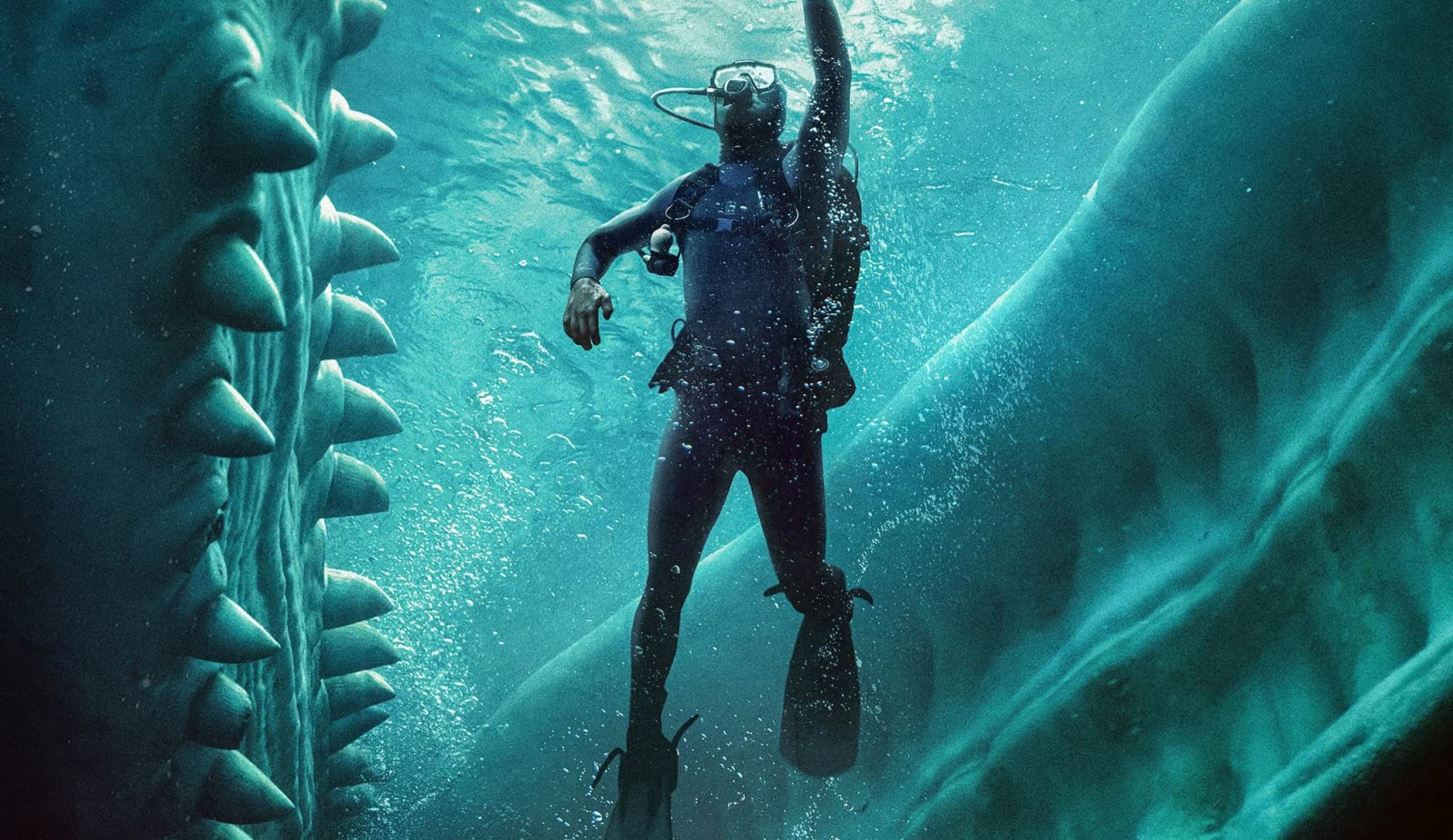
The filmmakers waste little time moving past the exposition, rushing Jay into the water so the central premise can commence. Almost immediately, the expedition goes catastrophically wrong. While diving, Jay crosses paths with a gargantuan sperm whale and is swallowed.
Act II: The Labyrinth of Organs and Memory
Once trapped inside the visceral, crushing interior of the whale, the film shifts gears into a relentless endurance test. Duffield structures Jay’s escape attempt by interspersing the grueling, claustrophobic physical challenges with non-chronological flashbacks. Rather than serving as straightforward biographical background, these memories emerge as disembodied conversations. Jay draws upon his father’s intense, past diving lessons—and the lingering resentment of a childhood overshadowed by Mitt’s ecological obsessions—to figure out how to navigate the whale’s anatomy.
As Jay squeezes through narrow, slimy corridors, battling agonizing pressure against his lungs and toxic body rashes caused by the digestive acids, his psychological state begins to fracture. He hears the booming, resonant voice of his father echoing through the chamber, delivered by Josh Brolin with a mythic gravity reminiscent of Mufasa in The Lion King.
Act III: Resourcefulness and the Final Countdown
With the oxygen timer steadily ticking down to zero, Jay must transition from a grieving, panicked amateur into a resourceful survivalist. Relying on vague remnants of his father’s instruction and sheer human ingenuity, he utilizes whatever tools and organic materials are at his disposal to hack, claw, and force his way upward. The film culminates in a breathless, high-stakes sprint against biological inevitability, forcing Jay to make a definitive choice about whether he can break free from his father’s metaphorical and literal shadow before the ocean claims them both.
Supporting Data: Cast, Crew, and Production Metrics
Behind the bizarre and ambitious premise of Whalefall lies a meticulous technical and creative apparatus designed to bring an impossible setting to life with harrowing realism.
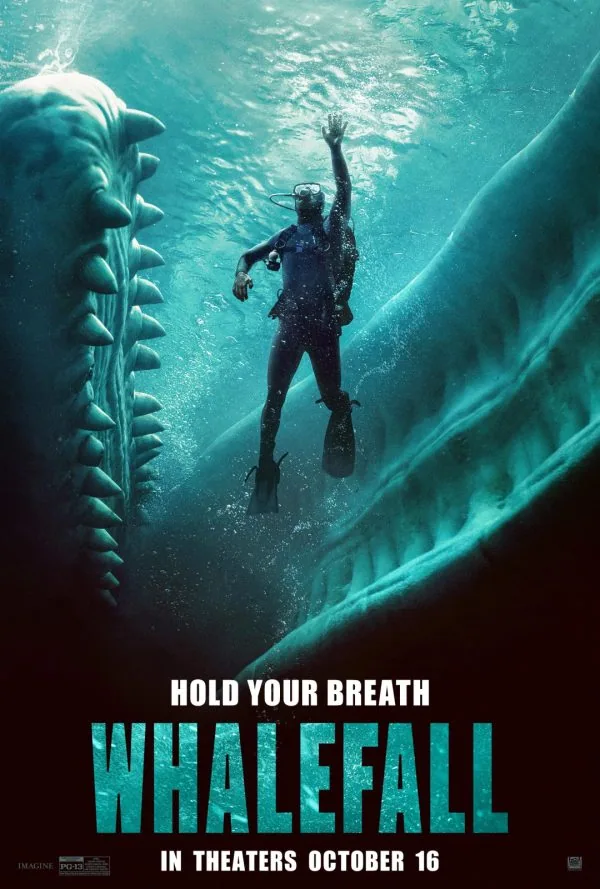
- Release Year: 2026
- Director: Brian Duffield
- Original Source Material: Whalefall (Novel) by Daniel Kraus
- Primary Cast & Characters:
- Austin Abrams as Jay (The trapped scuba diver)
- Josh Brolin as Mitt (Jay’s late father, appearing in flashbacks and voiceover)
- Elisabeth Shue as Jay’s mother
- John Ortiz (Supporting role)
- Jane Levy (Supporting role)
- Emily Rudd (Supporting role)
- Core Conflict Parameters:
- Target: Escape the interior of an 80-foot, 60-ton sperm whale.
- Time Limit: Exactly 60 minutes before oxygen depletion.
- Environmental Hazards: Digestive acids, extreme physical compression of human lungs, toxic skin rashes, and total disorientation in pitch-black, fleshy terrain.
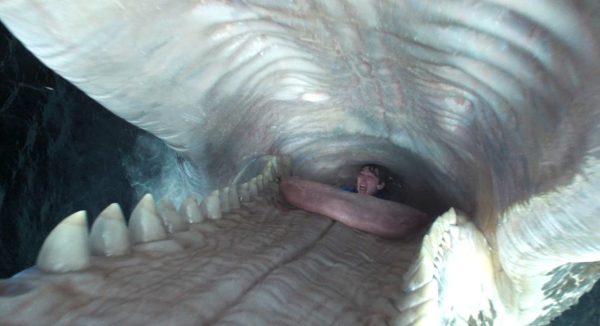
The production design stands as one of the film’s most universally praised achievements. Rather than relying entirely on computer-generated imagery, the filmmakers constructed fully convincing, tactile practical sets that mimic the claustrophobic, gelatinous anatomy of a sperm whale. The set pieces successfully disorient the audience, placing viewers directly alongside Jay as he gropes blindly through tissues, fluids, and unknown organs without a map or an anatomical guide.
Official Responses and Critical Reception
Early reviews and industry buzz surrounding Whalefall highlight its unique position as a polarizing yet undeniably bold entry in modern cinema. Critics have weighed heavily on the balance between its high-concept spectacle and its emotional core.
Praise for Physicality and Tension
Critics have reserved high praise for Austin Abrams, who continues a strong career streak of playing characters subjected to intense physical and psychological torment. Abrams’ portrayal of a man screaming in shock, adapting to horrific conditions, and maintaining emotional vulnerability inside a mountain of blubber has been singled out as the emotional anchor of the movie.
"There is simply nothing quite like watching Austin Abrams scream in shock and pain, move around, and get crafty while attempting to escape the inside of a whale," notes critic Robert Kojder in his review for Flickering Myth, awarding the film a strong three-and-a-half out of four stars for its movie execution.
Debates Over the Family Drama
While the technical wizardry and visceral thrills have won over action and horror enthusiasts, the film’s dramatic subplots have sparked considerable debate among critics. The inclusion of the family grief narrative—complete with flashbacks of Mitt’s terminal illness, tattoos symbolizing nature worship, and strained paternal expectations—has been viewed by some as occasionally hokey or formulaic.
Roles played by high-profile actors such as Elisabeth Shue and Jane Levy are regrettably brief and largely confined to the prologue, leaving critics to wonder if the human drama occasionally weighs down the otherwise electric pacing of the survival sequences. Some reviewers have argued that Whalefall functions so exceptionally well purely as a claustrophobic creature feature that the emotional father-son reconciliation subplots are almost superfluous to the visceral thrill of the core premise.
Implications: Redefining the Boundaries of the Survival Genre
Whalefall arrives at a fascinating cultural and cinematic crossroads, carrying several notable implications for the future of Hollywood thrillers and literary adaptations.
1. The Rise of High-Concept, Single-Location Cinema
In an era where franchise fatigue has driven studios to seek increasingly distinct hooks, Whalefall proves that high-concept premises can still be executed with practical ambition. By shrinking the scope of the film to a single, hyper-specific, and deeply bizarre location (the inside of a marine mammal), Duffield demonstrates that audience engagement can be sustained through sheer atmospheric dread and inventive problem-solving.
2. Evolving Portrayals of Grief and Trauma
The film continues a broader cinematic trend of processing internal psychological burdens through extreme external metaphors. While films like The Babadook or Midsommar utilized horror elements to symbolize grief, Whalefall takes a more literal, literal-minded approach: trapping its protagonist inside a literal tomb of organic matter while forcing him to confront the psychological weight of a demanding father. Whether this blend of body horror and familial melodrama hits every emotional note cleanly remains a point of discussion, but it undeniably pushes screenwriters to take greater risks.
3. Raising the Bar for Practical Effects and Set Design
The critical acclaim directed at Whalefall’s production design signals a potential resurgence in tangible, physical set construction over sterile green-screen environments. By forcing actors to interact with slimy, claustrophobic, and genuinely disorienting physical spaces, the production evokes a level of tactile panic that digital effects alone struggle to replicate.
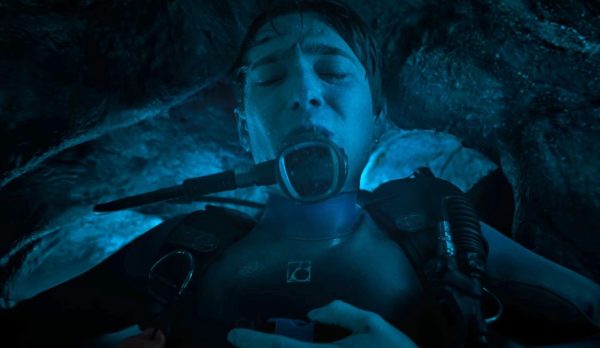
Ultimately, Whalefall stands out as a cinematic oddity that succeeds on the strength of its audacity. Whether audiences tune in for the staggering logistical nightmare of escaping a whale’s digestive system or the poignant, if bumpy, exploration of a son seeking his father’s spiritual approval, Brian Duffield’s 2026 feature guarantees a viewing experience unlike anything else currently playing on the screen.
