
Inside the Cosmic Course Correction of Pixar’s ‘Elio’: How a Trio of Directors Saved the Studio’s Original Sci-Fi Adventure
(Editor’s Note: This article contains major spoilers for Pixar’s “Elio.”)
Bring up the challenges of launching original animated intellectual property in the modern theatrical marketplace, and industry veterans will immediately point to the high-stakes landscape at Pixar Animation Studios. Under the creative leadership of Chief Creative Officer Pete Docter, Pixar has increasingly turned inward, prioritizing deeply personal storytelling that resonates on an emotional, human level. Yet, translating these idiosyncratic, highly personal visions into broadly appealing blockbuster cinema is a formidable tightrope walk.
Nowhere has this creative struggle been more evident than in the tumultuous production history of Elio. What began as a straightforward alien abduction comedy-adventure underwent a massive, high-stakes overhaul behind the scenes. The creative evolution of Elio offers a rare, transparent look at how modern animation giants course-correct when a project’s emotional core needs rescuing, turning potential disaster into a triumphant testament to collaboration.
Main Facts: A High-Stakes Hand-Off and Creative Reimagining
The developmental timeline of Elio saw significant shifts in both leadership and narrative structure. Initially conceived and directed by Coco co-director Adrian Molina, the sci-fi comedy eventually experienced a directorial shift. Molina departed the project to reunite with Lee Unkrich on the upcoming Coco 2, leaving his pet project in the capable hands of fellow Pixar creative and Coco story artist Madeline Sharafian.

Sharafian did not work in a vacuum; she was soon joined by Turning Red director Domee Shi. Together, this trio of creative voices—guided by producer Mary Alice Drumm and galvanized by a creative challenge from WALL-E director Andrew Stanton to "make me care"—completely restructured Elio.
The revisions elevated the emotional stakes of the narrative. The titular character, an imaginative and isolated space fanatic voiced by Yonas Kibreab, was transformed into an orphan. His motherly figure was shifted to a stressed-out aunt, Olga (voiced by Oscar-winner Zoe Saldaña, who stepped into the role following scheduling conflicts with America Ferrera). Furthermore, the central premise was retooled: rather than dreading a traditional alien abduction, Elio actively obsesses over being taken, transforming a sci-fi kidnapping into an eagerly anticipated escape from his lonely life on a remote Air Force base.
Chronology of a Crisis: From Initial Stumbles to the Final Cosmic Vision
Phase 1: The Original Vision and Early Pushback
When Adrian Molina first pitched Elio, the film leaned heavily into his own childhood experiences as an artsy kid growing up with a military-adjacent background—his father was a military dentist. Molina poured his personal feelings of isolation and not fitting in onto the page.
However, as the film moved through Pixar’s rigorous feedback mechanism known as the "Brain Trust," certain narrative threads met resistance. Sharafian, who had joined the project early on to contribute concept art, found herself fiercely defending Molina’s foundational choices during tense studio meetings.

"I remember being in some of those later meetings with Adrian fighting for some of the scenes in the movie," Sharafian recalled in an interview with IndieWire. She highlighted an early, vulnerable sequence where young Elio watches the Golden Record Voyager probe leave Earth. "There were some voices in the room that didn’t think it was necessary. I could see Adrian’s face sort of stricken, and I was like, ‘No, you have to ease the audience into the movie. This is thematically relevant, it’s about Elio connecting with that [NASA] satellite in space.’"
Phase 2: The Arrival of Shi and Sharafian’s Co-Directorship
As Molina transitioned back to the Coco sequel, Sharafian stepped up to the helm, later joined by Domee Shi. Bonding over shared creative sensibilities, Sharafian, Shi, and Molina—alongside producer Mary Alice Drumm—began looking at the story through the unified lens of loneliness.
"With Adrian, he had grown up as an artsy kid… feeling lonely," Drumm explained. "And I think Maddie and Domee both have that similar story and overlap a lot. They’re like a Venn Diagram of taste."
Spurred by Andrew Stanton’s directive to forge a visceral emotional connection with the audience, the creative team established loneliness as their "North Star." This realization dictated every subsequent story beat, moving away from a formulaic alien-invasion plot and toward a deeply resonant character study about a misunderstood boy finding his tribe among the stars.

Phase 3: Structural Re-Engineering and Final Polish
With the emotional anchor firmly in place, the production team executed a series of critical script changes implemented by screenwriter Julia Cho:
- The Orphan Narrative: Elio’s backstory was darkened to make him an orphan, raising the stakes of his isolation and giving immediate narrative justification to his obsession with the cosmos.
- The Talking Heads Montage: To ease audiences into Elio’s eccentricities, Sharafian crafted a quirky, comedic montage set to the Talking Heads’ "Once in a Lifetime," showing Elio wearing a colander helmet and intercepting radio signals.
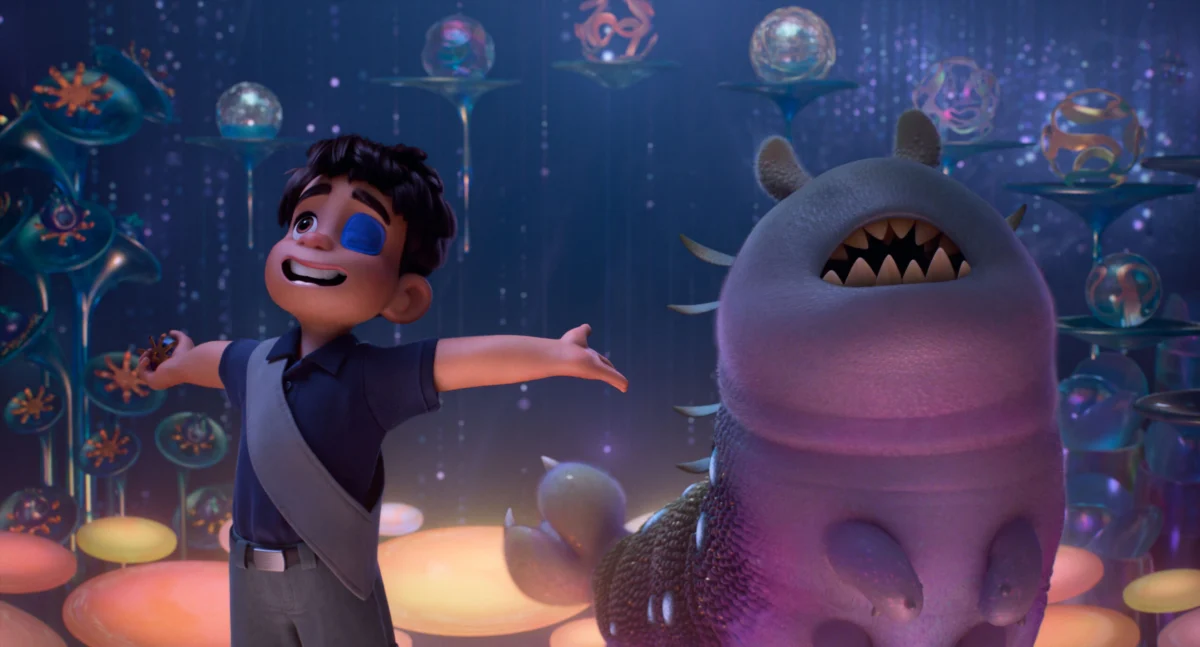
- The Villain Refinement: The primary antagonist was adjusted. Lord Grigon (Brad Garrett) was transformed into an aggressive, armored obstacle whose distant relationship with his worm-like son, Glordon (Remy Edgerly), directly mirrors Aunt Olga’s emotionally distant dynamic with Elio.
- The Eye Patch Payoff: A late-stage rewrite transformed Elio’s physical insecurity—an eye patch worn after a fight with a school bully named Caleb (Jake Getman)—into a powerful visual metaphor for how he is perceived on Earth versus how he feels like a dashing space pirate in the cosmos.
Supporting Data and Creative Decisions
The transformation of Elio highlights how technical and narrative choices in animation serve psychological arcs.
| Narrative Element | Initial Concept | Revised Execution | Emotional Impact |
|---|---|---|---|
| Elio’s Parents | Parents alive or unaddressed; mother Olga is primary guardian. | Parents deceased; Olga is a stressed aunt navigating sudden guardianship. | Establishes immediate, crushing isolation, turning space into a literal beacon of hope. |
| The Abduction | Terrifying, involuntary sci-fi abduction ("No thanks" trailer beat). | Eager, obsessive pursuit; Elio actively schemes and prays to be beamed up. | Aligns the audience with Elio’s wackiness, making his joy upon reaching the Communiverse infectious. |
| The Antagonist | Elio bonds directly with warlord Lord Grigon. | Elio bonds with Grigon’s lonely son, Glordon; Grigon serves as an aggressive barrier. | Creates thematic parallels between father-son and aunt-nephew emotional barriers. |
| The Eye Patch | A static character design choice denoting physical trauma from a bully. | A symbol of earthly insecurity that transforms into a "space pirate" badge of honor. | Facilitates a tear-jerking climax where Olga removes the patch, allowing them to truly see each other. |
Official Responses: The Leadership Perspective
The journey of bringing Elio to the screen required immense vulnerability from its creative leads. Speaking on the collaborative nature of the production, the directors and producers emphasized that the film’s ultimate strength lies in its willingness to embrace genre-bending tones.
Domee Shi noted that the team intentionally leaned into a love of sci-fi and horror tropes to keep viewers on the edge of their seats. "Pixar movies make you laugh or they make you cry, but I feel like movies can make you thrilled or on the edge of your seat, or gasping, surprised, and I love getting those reactions out of audiences, too," Shi said.

Meanwhile, Sharafian highlighted the emotional breakthrough of the film’s final reconciliation scene on the beach—a sequence that underwent multiple iterations before finding its true thematic resonance.
"There were multiple spots where we thought, maybe they can take the eye patch off here, maybe there. We had it more as a joke," Sharafian explained. "But what we realized was this moment of reuniting needed to be reworked because it wasn’t emotional enough. And then we realized what it really was about was these two characters who didn’t even know how to look at each other in Act 1. And having Olga peel off that eye patch, and finally, they’re seeing each other for the first time… It was such a delightful payoff."
Implications for Pixar and Original Animation
The arduous yet ultimately rewarding path of Elio carries significant implications for the future of original animated storytelling at Disney and Pixar:
- The Power of Collaborative Directorial Teams: By bringing together Adrian Molina, Madeline Sharafian, and Domee Shi, Pixar demonstrated that fluid leadership structures can save a troubled project by injecting fresh perspectives without losing the original creator’s emotional footprint.
- Elevating Stakes in Original IPs: As IP-driven sequels continue to dominate box office returns, original films like Elio must dig deeper into universal, visceral human emotions—such as loneliness and the desperate search for belonging—to cut through the noise.
- Genre Blending as a Tool for Engagement: By infusing traditional family animation with sci-fi thrills, monster-movie parodies (via Glordon), and horror-comedy subversions (via Elio’s perfect clone), Pixar is signaling a willingness to expand its tonal palette to capture broader audiences.
As Elio prepares to captivate theatrical audiences, its behind-the-scenes metamorphosis stands as proof that sometimes, getting lost in the creative cosmos is the only way to find your true North Star.
