
The Rebirth of Rodrigo Moreno: A Deep Dive into The Delinquents
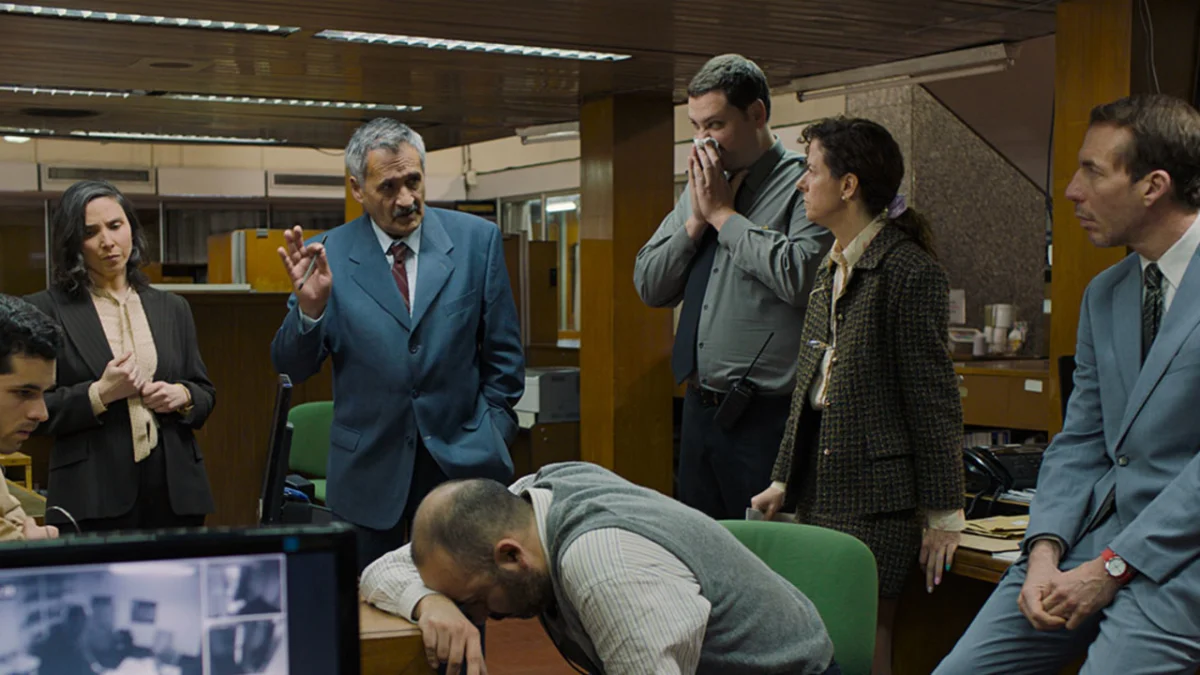
In the landscape of contemporary world cinema, few figures have undergone as compelling an evolution as the Argentine director Rodrigo Moreno. Long considered a foundational yet somewhat enigmatic talent of the New Argentine Cinema, Moreno has recently re-emerged with a work that defies categorization: The Delinquents (Los delincuentes). A sprawling, 189-minute masterwork, the film marks a significant departure from his earlier, more compact existentialist dramas, signaling a bold, ambitious, and profoundly joyful return to narrative storytelling.
Through an extensive examination of his career trajectory and an intimate conversation regarding his latest project, it becomes clear that The Delinquents is not merely a film—it is a philosophical inquiry into the nature of freedom, the tyranny of labor, and the enduring power of cinematic tradition.
The Evolution of an Auteur: From Solemnity to Joy
To understand the magnitude of The Delinquents, one must first examine the arc of Moreno’s career. His early features, such as the sullen, claustrophobic El custodio (2005) and the ironically detached A Mysterious World (2011), were deeply aligned with the prevailing, often austere, art-cinema trends of the early 2000s. These films were characterized by a certain aesthetic cruelty—a willingness to trap characters in rigid, unyielding social and psychological structures.
However, a marked shift occurred with his more recent non-fiction projects: the docu-fiction hybrid Reimon (2012) and the observational documentary A Provincial City (2017). These films traded the existential dread of his earlier work for a more modest, empathetic focus on daily life, leisure, and the quiet rhythms of the mundane.
Moreno views this transition not as a break, but as a maturation of his artistic voice. "I consider myself a director of fiction films," he asserts. "Even though my last film was a strict documentary, I don’t think of the new film as a return to fiction. I’m always singing the same old song, just with different instruments. A Provincial City was important for me… because it’s about daily life and leisure. If I hadn’t shot those scenes of leisure, then the second half of The Delinquents would have been more difficult for me to imagine."
Chronology of a Heist: The Mechanics of The Delinquents
The narrative structure of The Delinquents is as unconventional as its production history. The film draws its central premise from Hugo Fregonese’s 1949 noir classic, Hardly a Criminal (Apenas un delincuente). In both films, an insurance clerk concocts a daring embezzlement scheme: steal enough money to ensure a life of luxury, confess to the crime, serve a manageable prison sentence, and retrieve the loot upon release.
The Two-Part Architecture
The film is divided into two distinct halves, a structure that emerged only during an exhaustive three-and-a-half-year editing process.
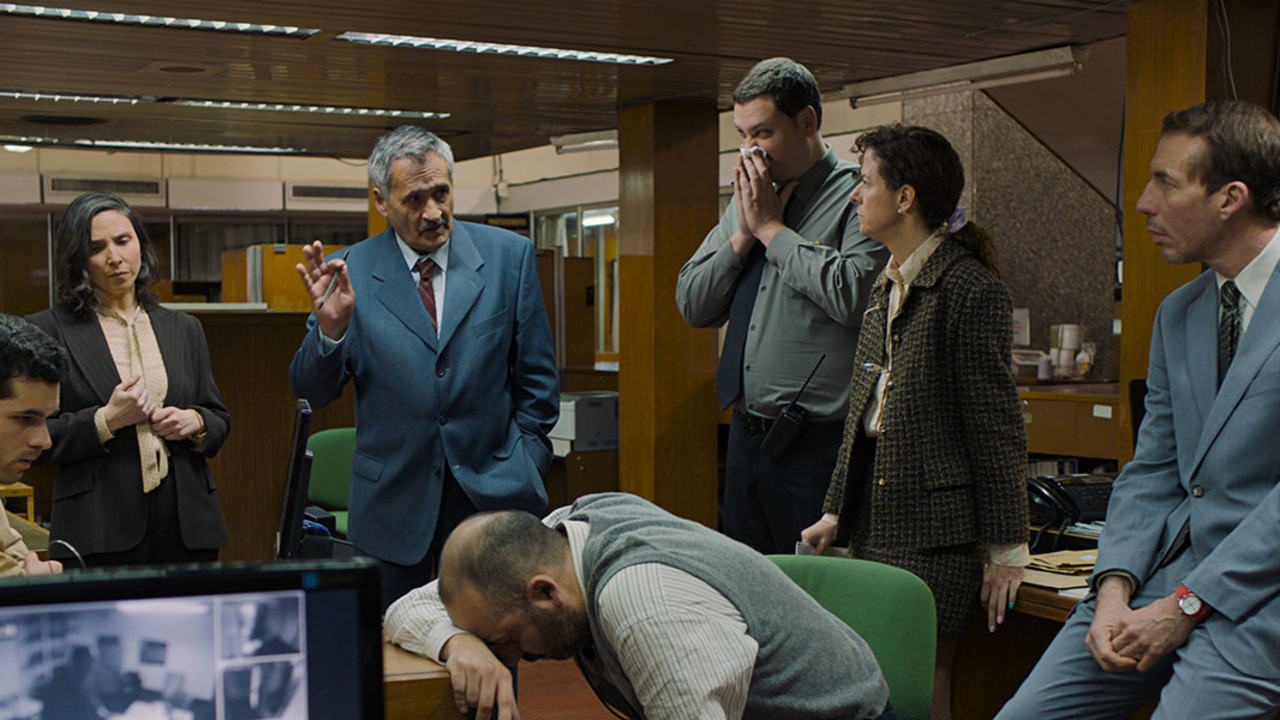
- The Indoor/Urban Chapter: The first half is a brisk, cloistered look at the heist in a ’70s-stylized Buenos Aires. Morán (Daniel Elías) steals $650,000, confronting his coworker Román (Esteban Bigliardi) with a cold, mathematical justification: the sum represents their combined salary from now until retirement.
- The Outdoor/Existential Chapter: As the narrative moves from the bank to the countryside, the film transforms into a languorous, free-roaming exploration of what it means to be truly unbound.
The most pivotal creative decision—moving a crucial flashback regarding a romantic entanglement with a woman named Norma (Margarita Molfino) to the third act—redefined the film. "It was just me at home, editing at night, like playing a video game," Moreno recalls. "It was when I decided to move that scene and turn it into a long, exaggerated flashback that I found the film."
Supporting Data and Thematic Influences
The Delinquents is unabashedly cinephilic, yet it lacks the "anxiety of influence" that plagues lesser works. Moreno weaves in subtle nods to Bresson, Ermanno Olmi, and Jacques Rozier, while maintaining a singular, personal vision.
The Role of Labor and Leisure
At its heart, the film is a critique of the capitalist grind. Moreno’s characters are united by their desire to escape the "upwardly mobile" responsibilities that define modern existence. This is highlighted by the film’s recurring motif: the Pappo’s Blues song "Adonde Está la Libertad," which serves as a talismanic reminder of the characters’ shared quest for meaning beyond the office walls.
The Sound of the City
In a departure from modern trends, Moreno eschewed an original score in favor of pre-existing music, specifically the work of Astor Piazzolla. By selecting an oboe-heavy piece rather than the traditional bandoneon-led tango, Moreno intentionally evokes the mood of classic cinema, creating a sonic bridge between his film and the golden age of Argentine filmmaking.
Official Responses and Creative Philosophy
Moreno is quick to distance his work from the current wave of "novelistic" Argentine epics produced by the El Pampero Cine collective (such as La Flor or Trenque Lauquen). While critics frequently group them together due to their length and shared cast members, Moreno perceives a fundamental difference in approach.
"The films of El Pampero Cine are usually built on two levels: there’s one level that tells the story, and a second level that comments on the story," Moreno explains. "My film is built from a place of solitude… I consider myself a lone soldier."
This solitude allows for a more vulnerable, direct connection to the material. Moreno identifies the "nucleus" of his film in a seemingly innocuous moment: a question posed by the character Román about whether a memory was a song, a riddle, a story, or a game. "I don’t know why [I included that]," Moreno says, "but for me the entire three hours of the film are to tell this one line."
Implications: A New Era for Argentine Cinema
The broader implication of The Delinquents is that Argentine cinema has moved past its era of defensive, reactive filmmaking. For years, young directors sought to reinvent the wheel by actively denying the influence of their predecessors. Moreno represents a generation that has come to terms with its lineage, effectively building bridges to the past while pushing toward a more experimental, "fabulist" future.
The Abandonment of Cruelty
Perhaps the most profound takeaway from Moreno’s recent shift is his deliberate abandonment of cruelty. His earlier works were marked by a cynicism that mirrored the harsh realities of the Argentine economy and social structure. By contrast, The Delinquents offers a reprieve.
"I’ve abandoned cruelty, gotten rid of it completely," Moreno notes. "I’m happy to finally offer spectators who are used to receiving cruelty in life, in TV, and in cinema a film with no cruelty at all."
Conclusion
The Delinquents stands as a testament to the idea that form is the ultimate site of storytelling. By allowing the narrative to ramble, to take tangents, and to prioritize the "unproductive" time of leisure, Rodrigo Moreno has crafted a film that feels less like a structured plot and more like a lived experience. It is a cinematic rabbit hole—sprawling, playful, and deeply rewarding—that cements Moreno’s status as a director who is not only back to work but working at the absolute height of his creative powers. For those willing to get lost in its rhythms, The Delinquents offers a rare, joyous vision of what cinema can achieve when it stops being a prisoner to its own plot.
