
Beyond the Nightmare: Inside Zach Cregger’s Pivot to Sci-Fi Thriller The Flood After Historic Box Office Success
Main Facts
Filmmaker Zach Cregger is riding the wave of a monumental career milestone, having just shattered franchise records with the opening day release of his adaptation of Resident Evil. The horror-action hybrid has claimed the title of the biggest opening day in the storied video-game-adapted franchise’s history—a triumph that followed an extensive test-screening process that famously persuaded Cregger to trim several comedic beats from the final cut.
Yet, even as Resident Evil dominates box office charts worldwide, Cregger’s eyes are firmly fixed on the horizon. His next directorial endeavor marks a sharp, deliberate departure from the genre that made him a household name. Teaming up with New Line Cinema, Warner Bros., and Steven Spielberg’s Amblin Entertainment, Cregger is set to direct The Flood, a high-profile science fiction thriller scheduled for a theatrical release on August 11, 2028.
Despite being categorized under science fiction, The Flood promises to retain the unsettling, psychological unease that has become Cregger’s signature. In recent press rounds, the director has cautioned that while the film contains disturbing elements and harrowing sequences, it is fundamentally an "adult movie" rather than a traditional horror flick. Inspired by a fleeting cinematic moment—specifically, a scene involving a character exploring an abandoned spaceship—Cregger describes the project simply: "I just love the story, dude. That movie is about something in a real way that’s important to me."
Chronology
To understand the trajectory of Zach Cregger’s sudden ascendance to Hollywood’s A-list of genre filmmakers, it is necessary to examine the rapid-fire timeline of his recent career:
- September 2022: Cregger bursts onto the mainstream horror scene with Barbarian, a low-budget, high-concept indie released by 20th Century Studios that becomes a massive critical and commercial darling, famously utilizing a perspective-shifting narrative structure.
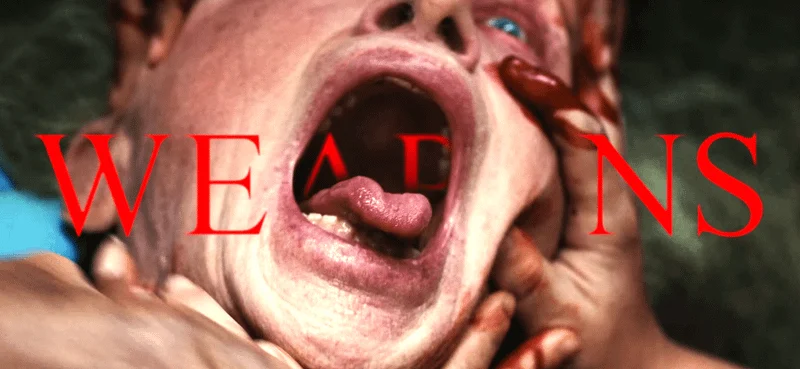
- August 2025: Cregger follows up his debut success with Weapons, a suburban-set horror film that utilizes a fractured, chapter-based narrative relay to examine terror through multiple characters experiencing the same fateful night.
- April 2026: Warner Bros. officially stakes out a release date for The Flood, locking in August 11, 2028, with Amblin Entertainment attached to produce.
- Early July 2026: Cregger’s Resident Evil opens in theaters, smashing franchise records on its opening day following a turbulent but successful round of test screenings.
- Mid-to-Late July 2026: During press obligations for Resident Evil, Cregger opens up in interviews with Men’s Health, TheWrap, and Deadline regarding the genesis, thematic ambitions, and structural framework of The Flood.
- Late 2026 / Early 2027: Cregger plans to take a brief, much-needed vacation, followed by the commencement of soft pre-production for The Flood, with hard pre-production officially kicking off in early 2027.
- August 11, 2028: Projected theatrical release date for The Flood via Warner Bros. and New Line Cinema.
Supporting Data
While specific plot synopses and casting details for The Flood remain closely guarded secrets, a handful of production and structural data points have surfaced through Cregger’s recent promotional interviews:
- Production Backing: A powerhouse collaboration featuring New Line Cinema and Warner Bros. as distributors, alongside Steven Spielberg’s legendary Amblin Entertainment producing.
- Release Date: August 11, 2028 (slated over two years in advance by Warner Bros.).
- Production Timeline: Soft prep slated for late 2026; hard prep scheduled to begin in early 2027.
- Thematic Inspo: Conceived while Cregger was watching an unrelated film featuring a sequence where a character boards an abandoned spacecraft.
- Structural Evolution: Unlike Barbarian (which mid-film abandons its protagonist to follow an entirely new character) or Weapons (which uses a multi-chapter perspective relay), The Flood utilizes a bizarre narrative structure while notably dropping the perspective-jumping mechanism.
- Pace of Production: Cregger will have helmed four major feature films in roughly a span of six years, leading him to voice concerns over sustainable creative output.
Official Responses and Creative Insights
Speaking across multiple outlets, Cregger has been remarkably candid about the creative pressures of Hollywood, his artistic inspirations, and his mental exhaustion.

When discussing the underlying tone of The Flood, Cregger frequently circles back to Stanley Kubrick’s 1968 classic, 2001: A Space Odyssey, though he is quick to add a humble disclaimer. "I’m not comparing it to 2001, because I think 2001 is a true masterpiece in every sense of the word," Cregger told Men’s Health. "But there’s a bizarreness to that movie that’s really undeniable, and it’s also a horror movie."
Film analysts have noted that Cregger’s observation is astute: 2001: A Space Odyssey is traditionally shelved under science fiction due to its hard-tech aesthetic, yet its central AI antagonist, HAL 9000, operates like a relentless slasher villain in a claustrophobic haunted house, while the mysterious monolith acts as a cursed, mind-altering artifact that refuses to offer exposition. Kubrick’s commitment to withholding answers is a storytelling philosophy that Cregger clearly shares.
Elaborating further on the genre classification of The Flood, Cregger told TheWrap that the project is "my most disturbing movie. But it’s not intended to be scary. It’s a bit more of an adult movie."
Perhaps the most revealing commentary involves Cregger’s approach to narrative architecture. Having built his reputation on subverting audience expectations through radical shifts in perspective—such as the unforgettable mid-film pivot in Barbarian and the mosaic-like structure of Weapons—Cregger insists The Flood takes a different structural route. "It’s another bizarre narrative structure, but it’s not jumping perspectives," he explained. "It unfolds in a very unique way."
Implications for the Industry and the Filmmaker’s Future
The announcement and subsequent development of The Flood carry significant implications for both Zach Cregger’s career trajectory and the broader Hollywood studio landscape.
For starters, Cregger’s transition from indie darling (Barbarian) to studio-backed horror hitmaker (Resident Evil) and prestige sci-fi auteur (Amblin-backed The Flood) mirrors the career paths of modern masters like Jordan Peele or Ari Aster. Studios are increasingly willing to hand massive budgets and marquee intellectual properties (like Resident Evil) to visionary directors who have proven they can manipulate audience psychology.

However, the most striking implication of Cregger’s recent press tour is his raw honesty regarding the unsustainable pace of the modern studio filmmaking machine. Speaking to TheWrap, Cregger admitted that The Flood may represent a breaking point for his current work ethic.
"I will never do this again. I can’t," Cregger confessed. "It’s not sustainable and I’ll burn out."
Having directed three feature films in just four years while aggressively developing a fourth under the watchful eye of Steven Spielberg, Cregger expressed a longing to step away from the grueling studio grind eventually. He even floated watercolor painting as a therapeutic alternative—a desire to "create freely and without consensus and without result."
Even as he plans his eventual step back, Cregger’s cinematic universe continues to expand. While he is handing over the directorial and writing reins for Gladys (the planned prequel to Weapons), his immediate future belongs to The Flood. As Warner Bros. maps out a release strategy for late summer 2028, all eyes will remain on how Cregger translates his mastery of dread, misdirection, and architectural storytelling from the cramped basements and suburban streets of his past films into the cold, isolating expanse of science fiction.
