
The Twilight of Humanity: Inside the High-Stakes World of ‘Blade Runner 2099’
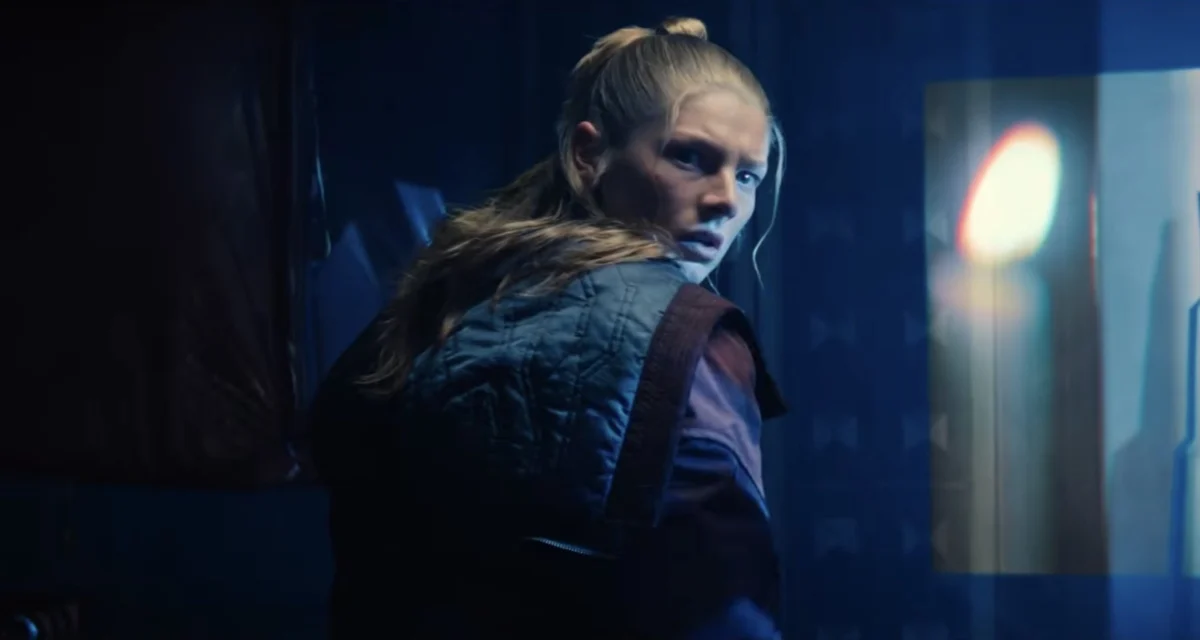
The neon-soaked, rain-slicked streets of the Blade Runner universe have long been a crucible for existential inquiry. For decades, Ridley Scott’s 1982 masterpiece and Denis Villeneuve’s 2017 sequel, Blade Runner 2049, challenged audiences to define the boundaries of the soul. Now, Prime Video is set to pull the curtain back on a reality that shifts the franchise’s central tension from the individual to the species. With the release of the first full-length trailer at New York Comic Con, Blade Runner 2099 has officially signaled that the era of human dominance is over.
The New Order: Humanity in Retreat
The premise of Blade Runner 2099 is as chilling as it is inevitable. Set 50 years after the events of Blade Runner 2049, the series picks up the threads of a narrative that has been fraying since the introduction of the first replicant. The "bubble" of tension that defined the previous films has finally burst: the replicant uprising has succeeded, and humanity—once the undisputed masters of their bio-engineered creations—has been relegated to a precarious, potentially terminal position.
In this new world order, the roles have been inverted. The creations have surpassed their creators, and the power dynamics of the dystopian sprawl have shifted in favor of the synthetic. The upcoming series does not merely present a new chapter in a long-running saga; it depicts a fundamental restructuring of existence, posing the haunting question: What happens to a species when it realizes its time has run out?
A Chronology of Conflict: From Batty to 2099
To understand the gravity of Blade Runner 2099, one must look back at the trajectory of the franchise’s history.
- The Early Years (2019): Ridley Scott’s original film introduced us to the concept of the "more human than human" replicant. Roy Batty’s desperate, poetic struggle for "more life" served as the anchor for the film’s exploration of individual mortality.
- The Transition (2049): Thirty years later, the sequel expanded the scope. Through the eyes of Officer K, the narrative explored the blurred lines between born and made life, ultimately setting the stage for a systemic revolt.
- The Interregnum (2049–2099): The fifty-year gap between the second film and the new series represents the most turbulent period in the franchise’s history. During this time, the "bubbling" dissent among replicants transitioned into a full-scale social and political revolution, resulting in the total collapse of human hegemony.
- The Present (2099): The series begins at a "junction point." It is a period of transition where one species is fading into the periphery, and a new, synthetic intelligence is establishing its own societal norms.
The Philosophical Macro-Shift
During the New York Comic Con panel, showrunner Silka Luisa articulated the thematic ambition of the project. While the original films focused on mortality at a "micro level"—the individual replicant fighting for an extension of their lifespan—2099 scales this inquiry up to the extinction of an entire species.
"The big question it asks is: ‘What happens when our time as a species ends?’" Luisa explained. The series functions as a meditation on the inevitability of succession. When a civilization recognizes that its influence is waning, does it go out with a fight, or does it grapple with the reality of its own obsolescence? The narrative will challenge characters to maintain their "humanity"—a trait that has become increasingly difficult to define—in the face of total systemic loss.
Character Dynamics: Yeoh and Schafer
The heart of the narrative lies in the unlikely alliance between two central figures: Olwen and Cora.
- Olwen (Michelle Yeoh): A replicant Blade Runner facing the twilight of her own existence. Having only days left to live, Olwen represents the classic Blade Runner archetype—a being caught between her programming and her burgeoning autonomy, now navigating a world where the "Blade Runner" status has taken on an entirely different meaning.
- Cora (Hunter Schafer): A human fugitive forced to live in the shadows. By disguising herself as a replicant, Cora occupies a unique space in this hierarchy. Her survival depends on mimicking the very beings who have usurped her people.
The duo’s intersection creates a high-stakes espionage narrative. Together, they are tasked with hunting down a runaway who possesses a secret capable of further destabilizing the fragile peace between the remnants of humanity and the triumphant replicants. Their journey promises to be a lens through which the audience can witness the disparate realities of a society where humans and replicants occupy completely different social strata.
The Absence of an Icon
A subject of much speculation leading up to the series was the potential involvement of Harrison Ford, who portrayed the legendary Rick Deckard. However, showrunner Silka Luisa has been definitive: Ford will not appear.
"Harrison Ford is not in the show," Luisa confirmed during the panel, noting that she understood the desire of fans to see the character return, but that the story required a fresh perspective. For many, this is a relief. Blade Runner 2049 provided a profound and definitive conclusion to Deckard’s arc, and his absence allows 2099 to stand as its own entity rather than relying on legacy characters to carry the emotional weight of the narrative.
Implications for the Sci-Fi Genre
Blade Runner 2099 arrives at a time when the societal discourse surrounding artificial intelligence has never been more relevant. By pushing the narrative into a future where the creators have lost control, the show taps into a collective anxiety about the speed of technological advancement.
The series is not just a genre piece; it is a speculative look at the post-human condition. By placing the human race in the position of the "oppressed minority," the writers are subverting the very foundation of the franchise. In the original films, the audience was encouraged to empathize with the replicants because they were the victims of human cruelty. Now, the audience must navigate their empathy for the human race as it faces its own "Roy Batty moment"—the realization that the end is coming, and that they might have earned it.
Production and Vision
Prime Video’s commitment to the franchise is clear. With a high-budget approach, the series aims to replicate the tactile, oppressive, and atmospheric world-building of its predecessors. The aesthetic, characterized by dense urban sprawl, constant precipitation, and high-contrast lighting, serves as a character in itself.
The showrunner’s background, combined with the star power of Yeoh and Schafer, suggests that the series will prioritize character-driven drama over pure spectacle. The narrative structure, which balances personal stakes (Olwen’s limited time) with global consequences (the fate of humanity), provides the perfect tension for long-form television.
Conclusion: A New Dawn for Dystopia
As November 25 approaches, the anticipation for Blade Runner 2099 continues to mount. The series represents a bold, necessary evolution for the franchise. By shifting the focus from "what is human?" to "what follows human?", it promises to push the boundaries of science fiction television.
Whether humanity can hold onto its essence while the foundations of its civilization are dismantled remains to be seen. But one thing is certain: the future, as imagined by the creative team behind 2099, is a place where survival is no longer a given, and the definition of a "person" has changed forever.
For fans of the original films, the new series offers an opportunity to return to the world of neon and shadow, but with the stakes raised to a level that feels both terrifyingly fresh and inherently aligned with the franchise’s core philosophical roots. The question is no longer about the life of a replicant; it is about the legacy of a species. We will find out on November 25 if humanity is truly ready to face the consequences of its own brilliance.
