
The Anatomy of Compliance: Juliette Strangio’s Learning to Eat Cake and the Grey Zones of Consent
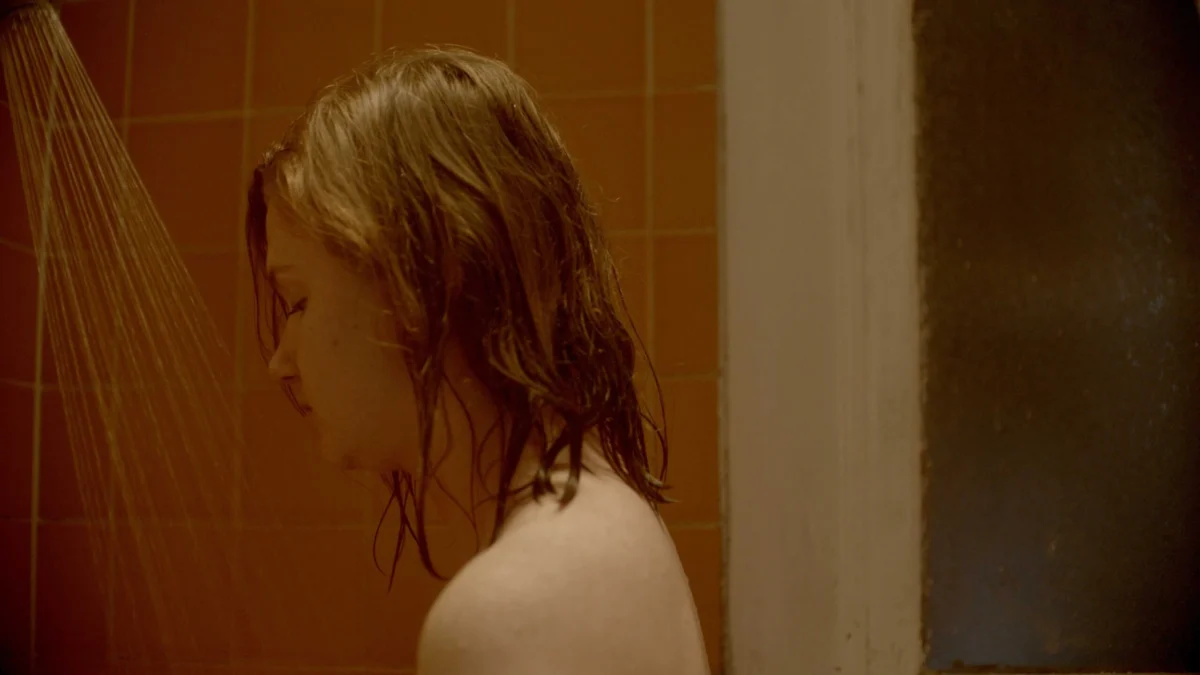
In the landscape of modern cinema, few films manage to capture the stifling, silent tension of social obligation as effectively as Juliette Strangio’s 15-minute drama, Learning to Eat Cake. The film serves as a surgical examination of the “grey area”—that uncomfortable, often agonizing space between mutual attraction and coercion. By dissecting a single, seemingly mundane date that spirals into a narrative of self-betrayal, Strangio challenges the audience to confront a question that is as common as it is misunderstood: Why didn’t she just leave?
Main Facts: The Intersection of Performance and Reality
Learning to Eat Cake centers on Tweety (played with haunting nuance by Molly Ledbetter), a young woman who reconnects with a high school acquaintance, Julian (Hayden Burke). On paper, the evening is a success: there is nostalgia, chemistry, and genuine laughter. However, as the setting shifts from public space to the privacy of Julian’s apartment, the dynamic undergoes a subtle, corrosive shift.
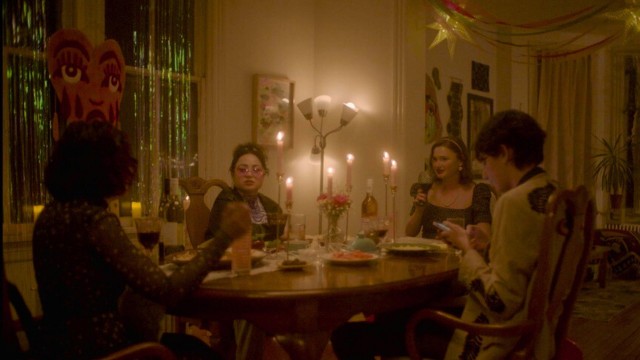
The film operates on a dual-narrative structure, constantly intercutting between the night itself and a later scene where Tweety recounts the experience to friends over a birthday dinner. This juxtaposition creates a visceral dissonance: the audience sees the reality of Tweety’s discomfort—her withdrawal, her attempts to stall, and her physical resistance—contrasted against the polished, comedic anecdote she serves up to her peers. The film posits that for many women, the social pressure to maintain a “polite” demeanor acts as a form of self-sabotage, forcing them to participate in their own victimization to avoid the “rudeness” of setting a hard boundary.
Chronology: From Connection to Coercion
The progression of the film’s central conflict is a masterclass in psychological pacing. The evening begins in a space of safety and shared history. Julian is presented not as a villain, but as a “sweet” and “goofy” figure who ostensibly respects boundaries—at least initially. He asks for permission to kiss her; he verbally affirms his commitment to her comfort.
However, the chronology of the encounter shows a gradual escalation of entitlement. Julian begins to treat consent as a hurdle to be cleared through persistence rather than a state to be maintained. He is not a predator in the traditional sense; he is a man who misinterprets a lack of explicit, forceful rejection as an invitation. Tweety’s responses—changing the subject, pulling away, signaling disinterest—are systematically ignored.
The turning point occurs not during a grand moment of violence, but through a series of "tiny surrenders." The titular scene—a dinner where Julian repeatedly offers Tweety a piece of cake despite her mentioning she is diabetic—serves as the film’s thematic anchor. His insistence, while framed as playful, is a manifestation of the same pattern seen in the bedroom: a refusal to accept "no" as a complete sentence. By the end, Tweety eats the cake, not because she wants it, but because the labor of defending her choice has become more exhausting than the harm of consuming it.
Supporting Data: The Sociology of the "Nice Guy"
Strangio’s exploration of these encounters is grounded in the reality of social conditioning. The film suggests that the "nice guy" is often the most difficult to navigate because he weaponizes his own persona to undermine a woman’s autonomy.
In sociological terms, this is often referred to as "compulsory niceness." Research into sexual assault and coercive behavior frequently highlights that victims are often paralyzed not by physical force, but by the social cost of defiance. Many women are raised to prioritize the comfort of others over their own, leading to a phenomenon where they feel "ruder" by leaving a situation than by enduring an unwanted sexual act.
The film’s dialogue reflects this, particularly when the protagonist realizes that her own internal narrative is being rewritten. By turning the experience into a joke for her friends, Tweety is attempting to regain control. If she can make the encounter "funny," she can strip it of its power to cause her pain. This process of narrative reframing is a common coping mechanism, yet the film highlights its danger: it prevents the victim from processing the trauma, leaving them to wonder if their own perceived passivity makes the violation "less real."
Official Responses and Creative Intent
When asked about the inspiration behind the project, Juliette Strangio was explicit about the intent: to illuminate the "gray space between weird sex and coercion."
"I’ve lost count of how many times I’ve heard cool, bright women tell stories about those kinds of nights, but framed them as comedy," Strangio noted. "If you don’t laugh about it, you have to admit that maybe something you wanted to feel fun actually felt terrible."
Strangio recalls a formative experience in her early twenties where she listened to a friend recount a similar story, only to hear older women in the group criticize the victim for not leaving or saying "no." This reaction sparked a realization in Strangio: the internalized belief that a woman is solely responsible for "policing" her own safety, even when the other party is actively disregarding her cues. The film serves as a rebuttal to this victim-blaming mentality, suggesting that the fault lies with the person who refuses to stop, not the person who struggles to escape.
Implications: The High Cost of Silence
The implications of Learning to Eat Cake extend far beyond the 15-minute runtime. By forcing the viewer to watch Julian ignore Tweety’s subtle retreats, the film challenges the societal standard of "enthusiastic consent."
The Normalization of Low-Level Violation
The film suggests that we are currently living in a culture that treats "low-level" violations as the price of admission for modern dating. When a person is constantly required to negotiate their own boundaries, the result is a psychic exhaustion that many mistake for personal failure. Tweety’s struggle to articulate her experience is a direct consequence of this normalization. If there was no "moment" of overt danger, how does one justify feeling violated?
The Danger of the "Punchline"
The most haunting aspect of the film is the recurring cut-away to the dinner table. It highlights a profound truth about trauma: the pressure to be a "good sport." Women are often expected to be the curators of the social atmosphere. If a woman makes a scene, she is "difficult"; if she laughs along, she is "cool." This binary prevents the processing of harm. The film suggests that the act of turning a bad experience into a joke is the final, most damaging surrender. It is the moment where the victim begins to lie to themselves to survive the memory of the encounter.
Conclusion: Reclaiming the Truth
Learning to Eat Cake is not a film about a monster; it is a film about the banality of boundary-crossing. By focusing on a character like Julian—who is not inherently "evil" but is fundamentally incapable of respecting a woman’s autonomy—Strangio creates a mirror for the audience.
For many viewers, the film will feel less like a narrative and more like a memory. It captures the specific, sharp sting of realizing that you have been complicit in your own discomfort. By the final frame, the film offers no easy catharsis. There is no triumphant moment where Tweety breaks the cycle or confronts Julian. Instead, there is the painful, necessary act of acknowledging that the experience happened, that it was not "just a joke," and that she had every right to leave—even if she didn’t.
Ultimately, Learning to Eat Cake stands as a vital piece of social commentary. It reminds us that consent is not a static check-box, but an ongoing, active conversation—and that when that conversation is ignored, the most profound harm is often done in the silence that follows.
