
The Shadow of the Monolith: Why ‘2010: The Year We Make Contact’ Remains Sci-Fi’s Most Forgotten Sequel
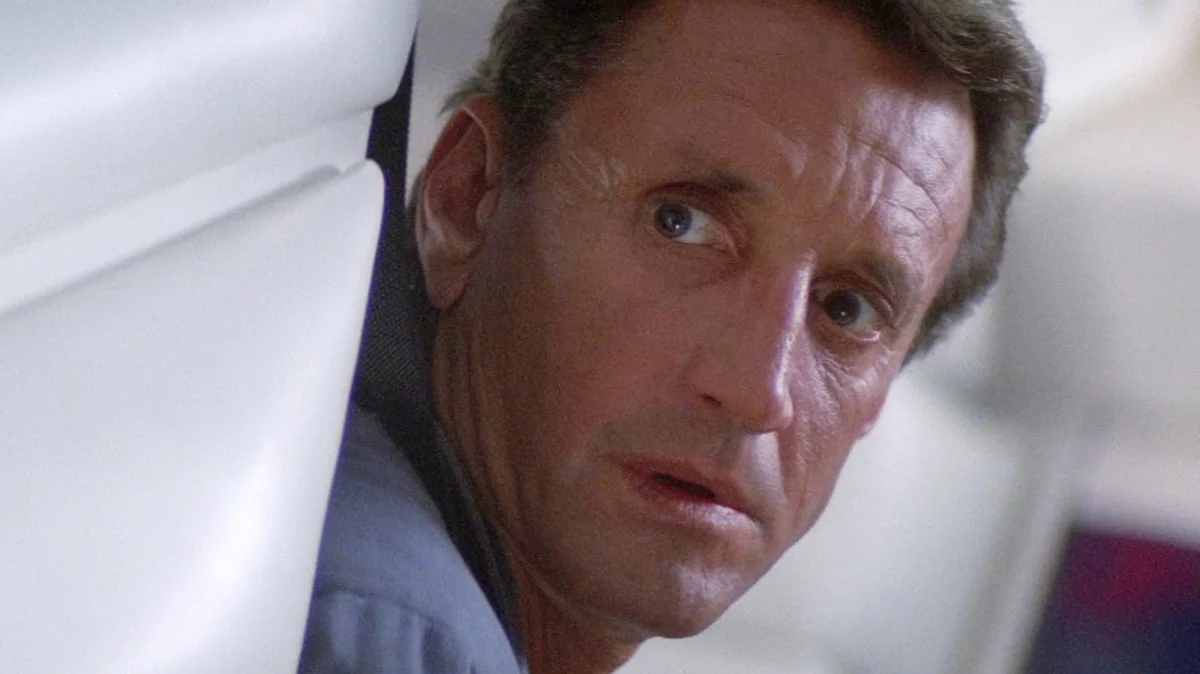
In the pantheon of cinema, few titles command as much reverence as Stanley Kubrick’s 1968 masterpiece, 2001: A Space Odyssey. It is a film that redefined the boundaries of science fiction, moving beyond mere pulp adventure to become an abstract meditation on human evolution, artificial intelligence, and the cosmic unknown. Yet, tucked away in the archives of mid-80s filmmaking lies a curiosity that many cinephiles choose to overlook: Peter Hyams’ 1984 sequel, 2010: The Year We Make Contact. Starring the late, great Roy Scheider, the film was a high-budget endeavor that garnered five Academy Award nominations, yet it has largely faded from the cultural consciousness. To understand why 2010 remains a footnote rather than a legend, one must examine the impossible task of following in Kubrick’s footsteps and the fundamental shift in philosophy that occurred when Arthur C. Clarke’s prose met the Hollywood machine.
The Genesis of a Sequel: From Prose to the Silver Screen
The relationship between 2001 and 2010 is one of literary and cinematic convergence. Arthur C. Clarke, co-writer of the original screenplay, published the novel 2001 alongside the film’s release. Over the subsequent decade, Clarke expanded his horizons, penning works like Rendezvous with Rama, before eventually returning to the "Odyssey" universe in 1982 with 2010: Odyssey Two.
When the book hit shelves, the appetite for high-concept science fiction was at an all-time high, fueled by the success of Star Wars and Star Trek. Hollywood, eager to recapture the prestige of the 1968 classic, fast-tracked a film adaptation. Director Peter Hyams, who had already established a reputation for gritty, grounded sci-fi with Outland, was tasked with the daunting responsibility of directing, writing, and producing the sequel. Unlike Kubrick, who treated 2001 as a visual tone poem that prioritized sensory experience over narrative clarity, Hyams approached 2010 as a political thriller set in the cold vacuum of space.
A Chronology of a Mission: Plotting the Sequel
The narrative of 2010 picks up nine years after the catastrophic failure of the Discovery One mission. The world is on the brink of nuclear war, with tensions between the United States and the Soviet Union mirroring the geopolitical climate of 1984.
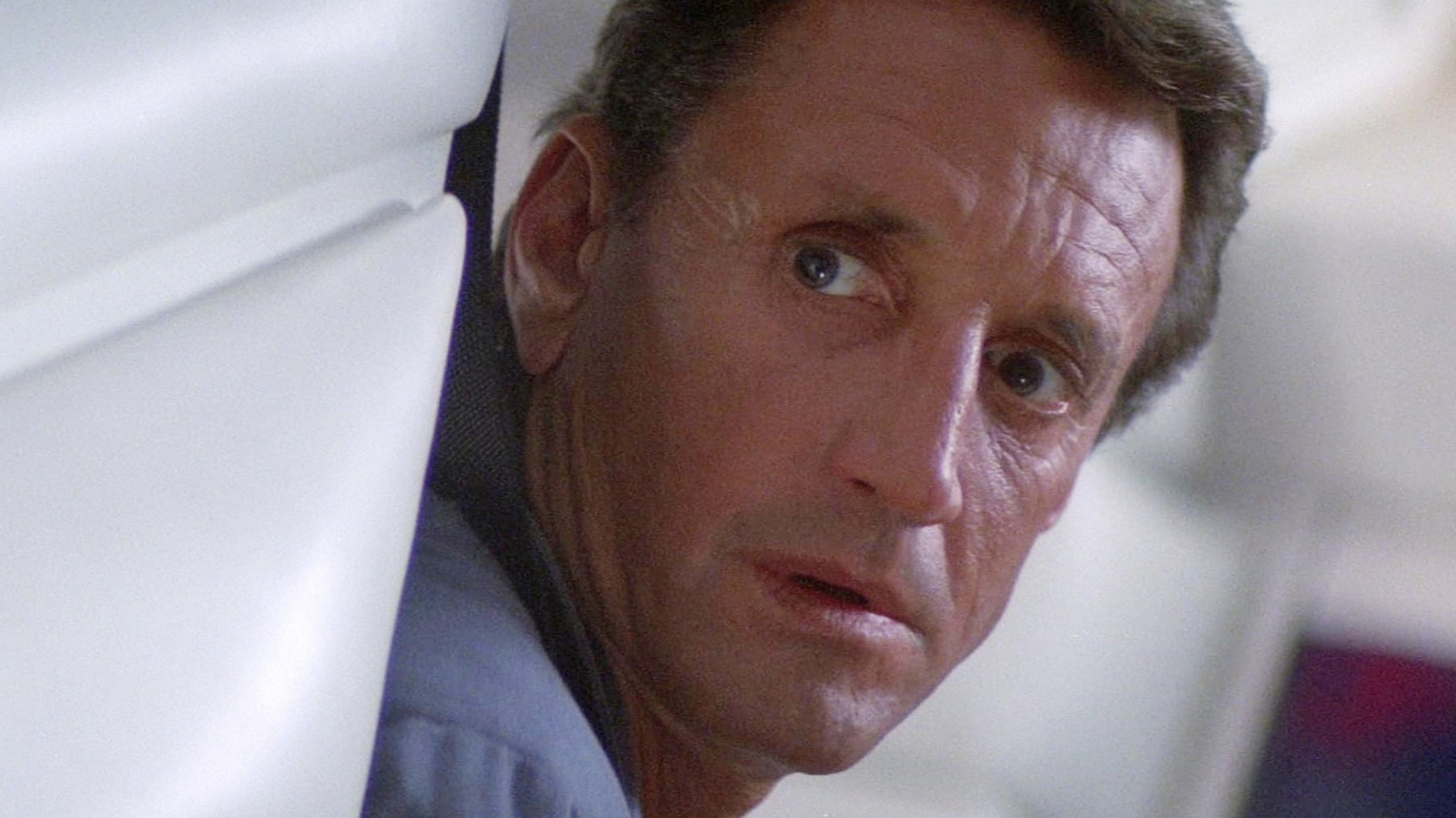
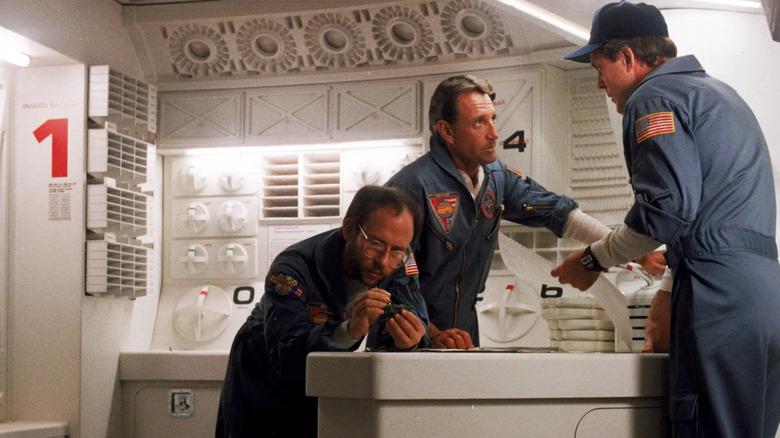
The story follows Dr. Heywood Floyd, portrayed with weary gravitas by Roy Scheider, who joins a joint American-Soviet mission aboard the Leonov. His objective is twofold: recover the derelict Discovery and investigate the mysterious disappearance of the original crew, including Dave Bowman. The team, featuring John Lithgow and Bob Balaban, finds themselves working alongside a Soviet crew led by Helen Mirren’s character, Tanya Kirbuk.
The mission takes a turn when they reactivate the HAL 9000 computer. In a departure from the ambiguity of the original, 2010 provides concrete explanations for HAL’s "murderous" behavior, attributing his breakdown to the conflicting orders he received regarding the monoliths. As the crew uncovers evidence of life on the moon Europa, they are confronted by the god-like presence of Dave Bowman, who warns them to leave before a grand cosmic event unfolds.
The Shift in Philosophy: Abstract vs. Concrete
The primary reason 2010 remains "forgettable" to many is its tonal dissonance with its predecessor. Kubrick’s 2001 was a film of silence, scale, and existential dread. It asked questions that it refused to answer, forcing the audience to engage with the film on an intellectual and spiritual level.
2010 does the exact opposite. It explains the monoliths; it explains HAL; it explains the fate of Dave Bowman. By translating the abstract into the concrete, Hyams inadvertently stripped the franchise of its most potent asset: its mystery. While the visual effects—led by the team behind 2010’s Oscar-nominated production design—were impressive for the era, they lacked the "awe-factor" of the original. Where Kubrick used the camera to make the audience feel the insignificance of humanity, Hyams used it to drive a plot forward.
Supporting Data: Critical Reception and Awards
Despite its current status as a forgotten relic, 2010 was not a critical failure upon its release. It received five Academy Award nominations, including Best Art Direction, Best Cinematography, and Best Visual Effects. Critics like Roger Ebert offered measured praise, giving it three out of four stars. Ebert noted that while the film was an entertaining space adventure, it fundamentally lacked the "indescribable" quality of the original.
However, the film struggled at the box office, failing to ignite the cultural firestorm that its predecessor had nearly two decades earlier. This lukewarm reception signaled to studios that the Odyssey franchise had limited commercial potential, effectively killing any plans for adaptations of Clarke’s subsequent novels, 2061: Odyssey Three and 3001: The Final Odyssey.
Official Responses and Creative Intent
Peter Hyams has often spoken about the pressure of stepping into the shadow of a master. In various retrospectives, he has emphasized that his goal was never to replicate Kubrick’s style, but to tell a story that could stand on its own. He famously remarked that he felt a responsibility to the source material—Clarke’s novel—rather than the film that preceded it.
Arthur C. Clarke himself was reportedly pleased with the adaptation, noting that it captured the "hard science" elements of his writing. Yet, for the average viewer, the "hard science" focus made the film feel like a dry procedural. The shift in motivation—moving from the search for the divine to the resolution of Cold War politics—made the film feel tethered to the year 1984, whereas 2001 felt tethered to the future of the human race.
The Implications of a "Middle-Ground" Movie
Why does 2010 linger in this purgatory of appreciation? It is not a "bad" movie by traditional metrics. The performances are solid, the dialogue is functional, and the science is grounded. However, it occupies a dangerous middle ground. It is too dry to be a fun, escapist space opera like Star Wars, yet it is too literal to be a high-art meditation like 2001.
The implication for the genre was clear: sequels to avant-garde masterpieces are rarely successful because they necessarily force the audience to stop looking up at the stars and start looking down at the rulebook. By resolving the mysteries of the monolith, 2010 turned a miracle into a puzzle.
Legacy: A Lesson in Cinematic Ambition
Today, 2010: The Year We Make Contact is a fascinating case study in the risks of franchise filmmaking. It serves as a reminder that some stories are better left in the realm of the unknown. While Roy Scheider’s performance remains a highlight—a grounded anchor in an increasingly fantastical plot—the film serves as a testament to the fact that greatness in cinema is often found in the questions asked, not the answers provided.
For those interested in the history of science fiction, 2010 is worth a watch, if only to see how a talented director attempted to tame a legend. It is a competent, well-made, and occasionally poignant film that simply happened to have the misfortune of being the sequel to the greatest science fiction movie ever made. In the end, the monoliths in 2010 may have been explained, but the true secret of 2001—the reason it still haunts us—remains untouched.
