
The Truthist’s Return: Why FX’s ‘The Lowdown’ is Essential Viewing in a Post-Truth Era
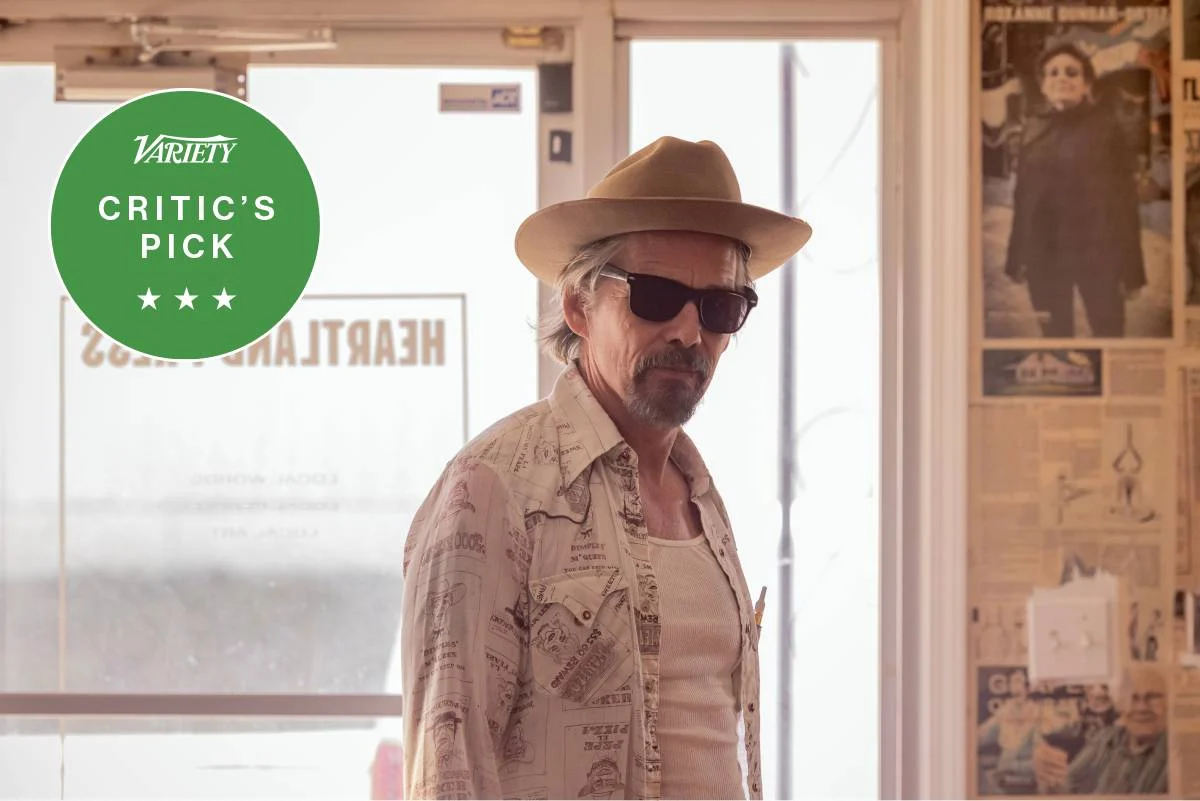
When Reservation Dogs concluded its landmark run, showrunner Sterlin Harjo left a vacuum in the landscape of American television: a space for storytelling that prioritized the specific, the local, and the profoundly human over the high-concept blockbusters dominating the streamers. Last year, Harjo filled that void with The Lowdown, an FX drama that arrived with little fanfare but quickly established itself as one of the most textured, humorous, and daring debuts of the decade.
Despite a lukewarm reception from the broader zeitgeist that left its Season 2 renewal hanging by a thread, the show returns this October with renewed vigor. Anchored by a magnetic performance from Ethan Hawke, The Lowdown proves that it is not merely a show about a scrappy citizen journalist—it is a vital meditation on the nature of truth, the weight of heritage, and the complexities of the American heartland.
The Main Facts: A New Chapter in Tulsa
Set against the sprawling, sun-drenched backdrop of Tulsa, Oklahoma, The Lowdown follows Lee Raybon (Hawke), a man who styles himself a "truthstorian"—a freelance investigative journalist who balances his reporting with the humble trade of running a used bookstore.
Season 2 picks up several months after the events of the inaugural outing. Lee, having successfully navigated the fallout of his investigation into the late Dale Washberg, finds himself grappling with the personal consequences of his professional ambition. The premiere finds Lee at a crossroads, having secured a local journalism award that he promptly turns into a stage for a chaotic, drunken monologue. It is a moment that perfectly encapsulates Lee’s character: brilliant, flawed, and deeply, uncontrollably human.
The narrative engine of the new season kicks into gear when Lee encounters Ginger (played by Emmy winner Betty Gilpin), a beleaguered public defender who believes she is being shadowed. The ensuing investigation into her missing client, Mekko Dean, leads Lee and Ginger down a labyrinthine path of police corruption, shady diversion programs, and the long-reaching shadows of Tulsa’s elite.
Chronology: The Evolution of a "Truthstorian"
To understand the trajectory of The Lowdown, one must look at the progression of Lee Raybon from a solitary seeker of facts to a man forced to confront his own origins.
- The Genesis (Season 1): Lee Raybon establishes his persona, modeling his investigative style after the pulpy paperbacks he sells in his bookstore. He learns that digging for truth often serves the reporter’s ego more than the public’s welfare.
- The Turning Point: The conclusion of the Washberg case leaves Lee with a modicum of validation but highlights his struggle to balance his role as a father to his teenage daughter, Francis (Ryan Kiera Armstrong), with his obsessive need to unearth local secrets.
- The Current Crisis (Season 2): Lee meets Ginger at a journalism gala. Her suspicion that she is being followed leads them to discover that her client, Mekko Dean, has been swallowed by a bureaucratic nightmare.
- The Reckoning: The arrival of Lee Sr. (Tommy Lee Jones), Lee’s estranged father and a career con man, forces the protagonist to reconcile his own pathological need for truth with the legacy of lies he inherited.
Supporting Data: The Craft of the "Hangout Noir"
What distinguishes The Lowdown from the crowded field of crime dramas is its refusal to rely on cheap tropes. While it operates within the framework of a noir—complete with a femme fatale, a cynical PI-turned-editor, and a web of conspiracy—it functions primarily as a "hangout show."
The ensemble cast has matured into a cohesive unit. Keith David’s Marty, once a private investigator, now commands the newsroom of The Heartland Press, while Kyle Maclachlan returns as the Governor, Donald. These are not merely plot devices; they are the gears of a living, breathing social organism.
The show’s commitment to authenticity extends to its production. By filming on location in Oklahoma, Harjo and his directors, Scott Teems and Rafael Casal, capture a specific cultural texture—the 4H fairs, the quiet rural landscapes, and the diner conversations—that feels earned. When Ginger describes the "rupidoop"—a switcheroo performed by corrupt prison officials—it feels like a local legend unearthed from the dust of the plains.
Official Responses and Creative Vision
In recent interviews, Sterlin Harjo has been candid about the challenges of the show’s production. Despite the presence of a Hollywood heavy-hitter like Ethan Hawke, the show struggled to break into the cultural mainstream. Harjo notes that the "truth" he is interested in exploring is often uncomfortable for both his characters and his audience.
"The kind of truth you’re interested in gets people hurt," a fellow journalist tells Lee in the second season. This line serves as a meta-commentary on the show itself. It is not interested in the sanitized, feel-good reporting that wins awards or generates clicks; it is interested in the messy, often damaging reality of digging beneath the surface.
Ethan Hawke’s portrayal of Lee has been lauded for its "keyed-up" energy. Hawke, also serving as an executive producer, has described the character as a man who is "assaulting the world with words" in an attempt to make sense of a reality that constantly eludes him. The chemistry between Hawke and Gilpin is the season’s secret weapon; they share a frantic, intellectual rapport that elevates the investigation from a procedural to a character study.
Implications: Why We Need ‘The Lowdown’
The television landscape is currently defined by a flight to overseas production and the reliance on established intellectual property. The Lowdown represents the antithesis of this trend. It is a deeply American, deeply regional story that trusts the audience to engage with its "shaggy" pacing and its lack of easy answers.
The Value of Localized Storytelling
The show demonstrates that the most universal stories are often those rooted firmly in the soil of a specific place. By focusing on Tulsa, the series highlights the systemic issues—corruption, the failures of the legal system, and the disparity between the powerful and the disenfranchised—that exist in every corner of the country.
The Psychological Skeleton Key
The introduction of Tommy Lee Jones as Lee Sr. provides the "psychological skeleton key" that unlocks the show’s emotional core. The tension between the father who deals in lies and the son who is obsessed with the truth creates a compelling narrative arc that transcends the murder mystery of the week. It forces the viewer to ask: How much of our own identity is a reaction to the secrets kept from us?
The Call to Action
The renewal of The Lowdown for a second season was a victory for prestige television, but its long-term survival is by no means guaranteed. The show is not a "virtuous bit of cultural vegetables"—it isn’t a show one watches because they feel they should, but because they want to.
In a media environment that often treats the audience as consumers to be placated, The Lowdown treats the audience as participants. It invites the viewer to sit in the bookstore, ride along on the horses, and navigate the bureaucratic maze alongside Lee and Ginger. It is a show that luxuriates in its environment, allowing the mystery to unfold at a "slow and steady" pace that demands patience but rewards it with profound moments of insight and humor.
As we look toward the premiere on October 14, the case for The Lowdown is clear. It is a rare piece of television that manages to be both a pulpy mystery and a thoughtful exploration of human foibles. It is a party, and, as the production team suggests, it is one that more people should join. For those who value the nuance of character-driven drama, the search for truth in the heartland has never looked quite this compelling.
Viewing Information:
The first two episodes of The Lowdown Season 2 will premiere on FX and Hulu on October 14 at 9 p.m. ET. Subsequent episodes will be released on a weekly basis, every Wednesday.
