
‘Cameron Winter at Carnegie Hall’ Review: PTA’s Spellbinding Concert Doc Is a Gorgeously Tender Performance
Main Facts
Acclaimed auteur Paul Thomas Anderson has once again bridged the worlds of narrative filmmaking and musical performance, turning his lens toward the contemporary indie-rock scene. In his latest collaborative venture, Anderson has teamed up with Cameron Winter—frontman of the rapidly rising art-rock outfit Geese—to capture a deeply intimate, 72-minute concert film titled Cameron Winter at Carnegie Hall.
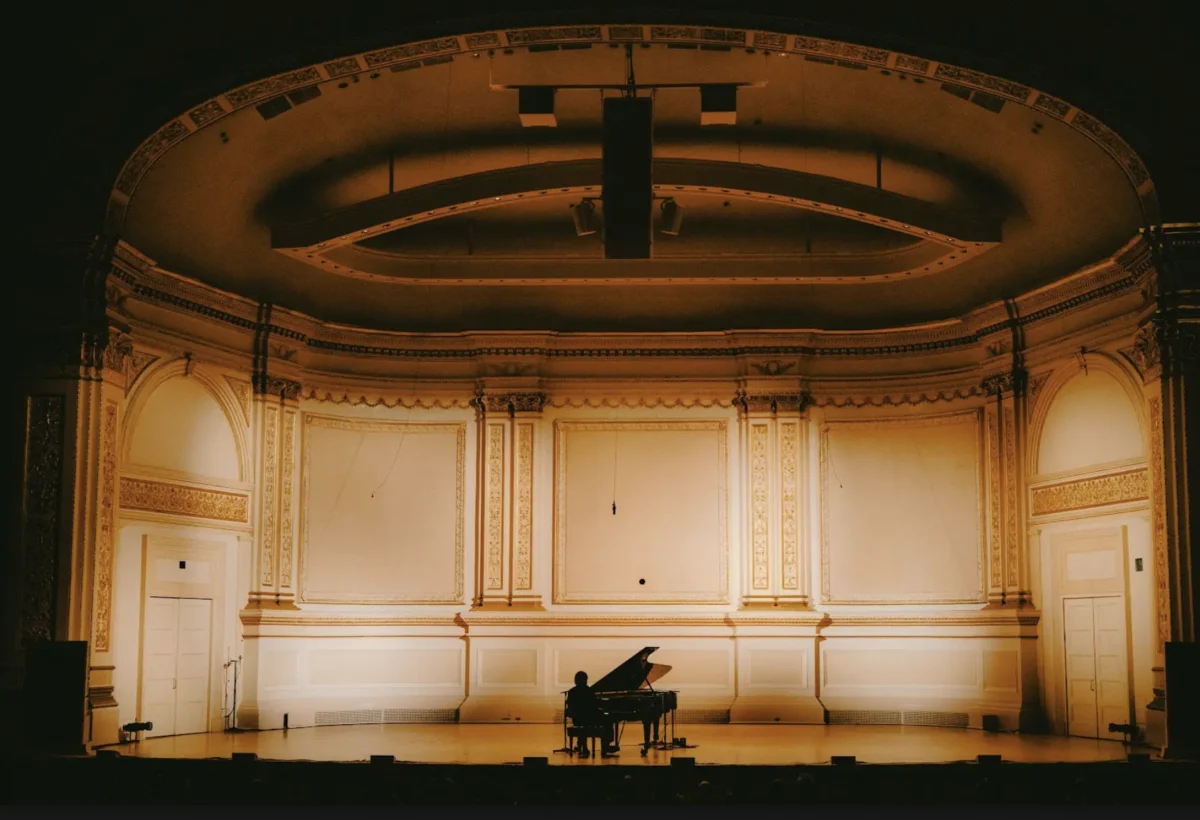
Shot last December, the film documents Winter’s sold-out solo stage performance before a crowd of over 2,700 at New York City’s legendary Carnegie Hall. Operating his own Panavision camera on a fluid, mobile mobile rig, Anderson captures Winter as he runs through sparse, emotionally raw piano arrangements of tracks from his solo album, Heavy Metal.
The resulting cinematic experience is a fragile yet profoundly resonant concert film. Co-produced by Benny Safdie—whose signature gritty New York aesthetic subtly permeates the production—the film avoids standard documentary tropes. Instead, it offers an immersive, uninterrupted visual and auditory incantation. Janus Films has acquired the project for a specialized roadshow theatrical release beginning November 20, ahead of an inevitable home release via the Criterion Collection.
Chronology: From Indie Rock Vanguard to the Stage of Carnegie Hall
The timeline of this unique collaboration traces the convergence of two distinct artistic trajectories: Anderson’s decades-long romance with musical filmmaking and Winter’s meteoric rise in the modern rock landscape.
A Legacy of Musical Collaboration
Paul Thomas Anderson’s fascination with capturing music onscreen is nearly as storied as his narrative filmography. Dating back to the late 1990s, following the breakout success of Boogie Nights, Anderson directed Technicolor, dream-like music videos with his then-partner Fiona Apple. Shortly after, he constructed a San Fernando Valley-sized cinematic shrine to singer-songwriter Aimee Mann with his sprawling third feature, Magnolia.

In the years since, Anderson has maintained a continuous creative dialogue with the modern music world. He formed an enduring creative partnership with Radiohead multi-instrumentalist Jonny Greenwood, who has crafted some of the 21st century’s most unforgettable film scores for Anderson’s movies, including There Will Be Blood, The Master, Phantom Thread, and Licorice Pizza. Furthermore, Anderson championed the band HAIM—directing several of their music videos and casting Alana Haim in a breakout, Oscar-nominated film role in Licorice Pizza.
The Ascent of Cameron Winter and Geese
Parallel to Anderson’s career, Cameron Winter has emerged as one of the most compelling and unpredictable frontmen of his generation. As the creative force behind Brooklyn-based art-rock band Geese, Winter helped propel the group to the forefront of the contemporary indie scene, earning critical acclaim for their wily, energetic rock chaos and literary lyricism.
By late last year, Winter had begun exploring his voice outside the full-band dynamic, working on sparse piano compositions for his solo project, Heavy Metal. The culmination of this introspective pivot arrived in December, when Winter booked a headline performance at Carnegie Hall. At just 23 years old, Winter found himself standing at the exact same historical threshold as Bob Dylan, who famously headlined the hallowed venue at a nearly identical age on the precipice of international superstardom.
Capturing the Performance
Recognizing the magnitude and fragility of the moment, Paul Thomas Anderson stepped in to document the evening. Operating a specialized camera rig himself, Anderson spent the evening weaving across the stage, capturing the interplay of stage lighting, chiaroscuro shadows, and Winter’s raw, unshielded vulnerability at the grand piano. Following its world premiere at the New York Film Festival at Alice Tully Hall to widespread critical acclaim (securing an A- grade from major trade publications), the project is now poised for its nationwide rollout.
Supporting Data & Production Insights
To fully understand the weight of Cameron Winter at Carnegie Hall, one must examine the metrics, personnel, and artistic choices that define the production:

- The Venue: Carnegie Hall’s Isaac Stern Auditorium boasts a capacity of 2,800 seats; Winter’s performance drew a sold-out crowd of over 2,700 attendees, creating an atmosphere that felt simultaneously massive and suffocatingly intimate.
- The Filmmaking Apparatus: Unlike traditional multi-camera concert films edited together from stationary vantage points in the back of a house, Anderson’s methodology relies on immediacy. Using a mobile camera rig, Anderson moves physically around Winter, capturing tight close-ups of the artist’s hands, matted hair, and micro-expressions as the lights shift.
- The Setlist & Arrangements: The setlist strips away the garage-rock distortion and maximalist arrangements of Geese, transforming tracks like the biting single "$0" and the fan-favorite indie ballad "Love Takes Miles" into haunting, skeletal piano interpretations. Lines like "You’re making me feel like a dollar in your hand / You’re making me feel like I’m a zero dollar man" take on a devastating new gravity.
- The Creative Lineup:
- Director/Cinematographer: Paul Thomas Anderson
- Subject/Performer: Cameron Winter
- Co-Producer: Benny Safdie
- Distributor: Janus Films (Theatrical Roadshow starting November 20); anticipated Criterion Collection release.
Official Responses and Critical Reception
The film’s debut at the New York Film Festival generated immense buzz among cinephiles and music critics alike, positioning it as one of the most unique cinematic events of the year.
While formal corporate press statements from major studios are absent due to the independent, boutique nature of the Janus Films distribution model, reactions from the creative team and early reviewers offer profound insight into the film’s ethos.
Critics have overwhelmingly praised the project for subverting the bombastic conventions of standard concert films. Where movies like Jonathan Demme’s iconic Talking Heads documentary Stop Making Sense celebrate extroverted, communal performance art, Cameron Winter at Carnegie Hall has been hailed as "a concert film up there with Stop Making Sense, but for introverts."
Reviewers have also noted the subtle, lingering fingerprints of co-producer Benny Safdie. Though Safdie’s exact division of labor on the production is understated, the film’s scratchy, tactile New York texture shares DNA with the kinetic urban anxieties found in Safdie’s own directorial work (Uncut Gems, Good Time).
Cameron Winter himself, known for a lithe, slightly guarded public demeanor, has reflected the transformative nature of stepping onto such an iconic stage. While appearing visibly nervous during public appearances leading up to the premiere, Winter’s stage presence—as captured through Anderson’s lens—demonstrates a performer achieving complete, quiet transcendence at the keys.

Implications for Cinema and Independent Music
The release of Cameron Winter at Carnegie Hall carries several broader implications for both the independent film landscape and the contemporary music industry:
1. The Revitalization of the Theatrical Concert Film
In an era dominated by tentpole blockbusters and streaming-exclusive visual albums, the roadshow distribution model championed by Janus Films proves that there is a passionate theatrical audience for specialized, high-art musical documentation. By treating a contemporary indie artist’s solo concert with the archival reverence usually reserved for classical masters or legendary heritage acts, Anderson elevates the medium of the concert film.
2. A Blueprint for Cross-Medium Collaboration
Paul Thomas Anderson continues to prove that his artistic sandbox is expansive. By mentoring and collaborating with younger multidisciplinary talents—ranging from Alana Haim to Jonny Greenwood, and now Cameron Winter—Anderson consistently infuses his work with fresh, generational blood. For Winter and Geese, the collaboration cements their transition from indie-scene darlings to generational artists whose cultural footprint extends far beyond standard rock radio.
3. Preservation Through the Criterion Collection
With an inevitable home video release via the Criterion Collection already anticipated, Cameron Winter at Carnegie Hall is destined to be preserved not merely as a promotional artifact, but as a time capsule of 2020s artistic expression. It captures a singular moment when a brilliant young songwriter met a master filmmaker at a historic crossroads, resulting in a cinematic vigil that audiences will feel in their bones for decades to come.
