
A House Divided: Why Rob Savage’s ‘Other Mommy’ Fails to Find Its Identity
In the landscape of modern horror, the "bedtime story gone wrong" is a well-trodden path. From the melancholy dread of Before I Wake to the creature-feature sentimentality of Mama, directors have long sought to bridge the gap between childhood wonder and existential terror. Rob Savage, the filmmaker who made his name with the lean, digital-age anxiety of Host, attempts a massive swing with his latest feature, Other Mommy. Based on Josh Malerman’s acclaimed novel Incidents Around the House, the film arrives in theaters with the weight of Universal Pictures’ October box-office expectations behind it. Yet, as the dust settles, Other Mommy emerges not as a cohesive nightmare, but as a fractured, tonally dissonant experiment that struggles to reconcile its whimsical heart with its horror ambitions.
The Core Premise: A Domestic Fable Wrapped in Shadows
At its narrative center, Other Mommy follows the life of young Bela, played with startling, organic vulnerability by Arabella Olivia Clark. Bela lives in a household defined by a quiet, crumbling tension. Her father, "Daddo" Russell (Jay Duplass), is the quintessential stay-at-home parent, grounding his life in the meticulous assembly of tabletop miniatures. In contrast, "Mommy" Ursula (Jessica Chastain) is the archetype of the modern workaholic, constantly absent and perpetually tethered to the demands of a high-pressure career.
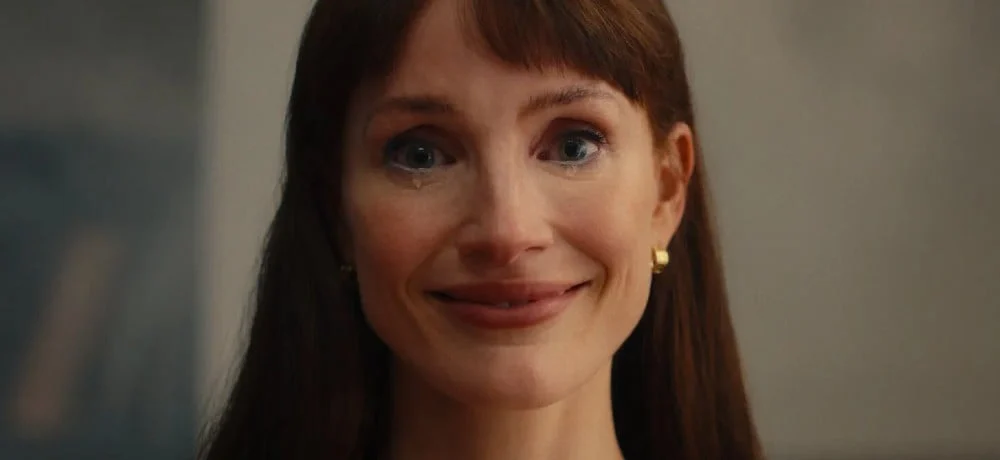
Into this domestic vacuum steps the "Other Mommy" (also portrayed by Chastain). Hiding in the shadows of Bela’s bedroom, this entity is a trickster demon—a shapeshifting mimic that offers the warmth and attention the real Ursula fails to provide. The central tragedy of the film is that Bela, in her innocence, cannot distinguish the predatory nature of this entity from the genuine love she craves. What follows is a high-stakes escape journey as the family realizes their home has been invaded by an entity that intends to consume, replace, and inhabit the life of the daughter it has ensnared.
A Chronology of Artistic Ambition and Execution
The production of Other Mommy has been highly anticipated, particularly given Savage’s track record with practical-meets-digital horror. However, the film’s development suggests a project that may have been pulled in too many directions.
- The Development Phase: Following the acquisition of the rights to Malerman’s Incidents Around the House, Savage was tasked with adapting a story that focuses heavily on the internal perspective of a child. Early production notes suggested a focus on "wholesome horror"—a genre-bending approach meant to highlight the beauty of life by contrasting it with grotesque supernatural interference.
- The Marketing Disconnect: Leading up to the October release, Universal’s marketing campaign leaned heavily into jump scares, loud musical stings, and high-octane horror imagery. This created a profound disconnect between the audience’s expectations and the film’s actual substance, which is far more interested in family dynamics and melancholic metaphor than traditional "boogeyman" thrills.
- The Release and Critical Reception: Upon its debut, the film faced immediate scrutiny for its tonal instability. Critics noted that while the film manages to produce moments of genuine dread, these are frequently undermined by a lack of connective tissue between the horror elements and the family drama.
Supporting Data: The Genre Hybridization Problem
The primary criticism levied against Other Mommy is its inability to sustain a cohesive identity. Savage oscillates wildly between varying sub-genres, including:
- Creature Feature: The film attempts to utilize elongated, shambling, multi-limbed creatures that feel uncomfortably similar to the Backrooms aesthetic popularized by Kane Parsons or the creature designs in recent Resident Evil adaptations. Because these visual beats feel borrowed rather than innovated, they fail to land with the intended impact.
- Psychological Thriller: When the film focuses on the crumbling marriage of Russell and Ursula, the stakes feel grounded and relatable. However, these scenes often bottom out, lacking the necessary tension to propel the plot forward.
- Surrealist Horror: Scenes such as the "séance attack" at Grandma Ruth’s (Karen Allen) house showcase Savage’s visual flair, using blacklight and surrealist imagery to highlight the divide between "fakers" and "true evil." While visually arresting, these sequences feel like they belong in a different movie entirely.
Technically, the film is a paradox. The digital clayface effects on Chastain are, by most accounts, underwhelming and occasionally bordering on the comical. Conversely, when Savage leans into visceral, practical gore, the film finds its pulse. There is a specific death sequence in the latter half of the film that stands as one of the most brutal and effective horror moments of 2026, proving that Savage still possesses the sharp, cruel edge that made him a household name in the genre.
Official Responses and Creative Intent
In interviews surrounding the film’s release, the production team emphasized that Other Mommy was never meant to be a straightforward slasher. Jessica Chastain, tasked with the dual role of the distant mother and the alien mimic, has spoken about the challenge of playing a character that is essentially a caricature of "maternal love" as perceived by a child.
"The goal," sources close to the production noted, "was to explore how children view the messy, often painful reality of adult relationships." The intention was for the Other Mommy to be an exaggerated, almost manic version of a parent, designed to make the audience question the reality of the domestic space. Unfortunately, this high-concept ambition failed to resonate with test audiences and critics alike, who found the "monstrous" portrayal of the entity to be more confusing than compelling.
Implications for the Future of "Wholesome Horror"
The failure of Other Mommy to fully connect with its audience serves as a cautionary tale for studios attempting to blend disparate tones. The film currently occupies an uncomfortable "limbo" space: it is too mature and complex for younger audiences, yet it lacks the narrative tightness and thematic depth required to fully satisfy adult horror enthusiasts.
The implications are twofold:
- For Filmmakers: It reinforces the necessity of "connective tissue." Even in a film that utilizes surrealist logic, the internal rules of the world must remain consistent. When a film tries to be a family drama, a creature feature, and a ghost story simultaneously without a unifying theme, the audience’s suspension of disbelief fractures.
- For the Industry: The box-office performance of Other Mommy will likely influence how studios market "literary horror." There is a clear hunger for high-concept adaptations of authors like Josh Malerman, but the transition from page to screen requires a firm hand to prune away elements that do not serve the film’s central thesis.
Conclusion: A Burned-Out Vision
Rob Savage is a director of immense talent, as evidenced by his previous work in The Boogeyman. However, Other Mommy feels like a missed opportunity—a project where the ambition exceeded the execution. While it features commendable performances from Jay Duplass and Arabella Olivia Clark, and occasional flashes of brilliance in its practical effects and imagery, it remains an unfocused, out-of-sorts experience.
It is a film that wants to tell us that life is beautiful precisely because it is messy, but it fails to demonstrate that beauty within the confines of its own narrative. For fans of the genre, there are moments worth watching, but as a whole, Other Mommy is a glittery, gold-flecked disappointment that never quite manages to shimmer. It serves as a reminder that in the crowded market of October horror, being "different" is not enough; one must also be consistent.
Final Verdict: 2.5/5
