
The Art of the Unseen: Ranking the 10 Best Horror Films Without Blood or Gore
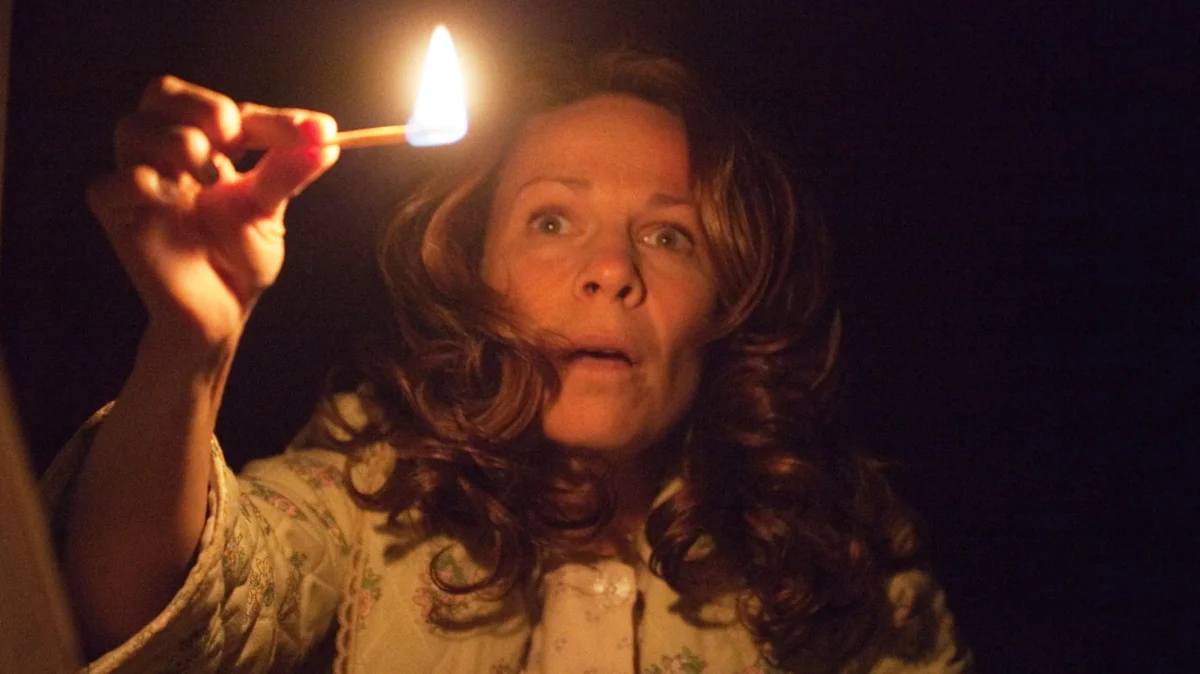
H.P. Lovecraft once observed that the oldest and strongest emotion of mankind is fear, and the oldest and strongest kind of fear is the fear of the unknown. While contemporary horror cinema often leans into visceral displays of blood, bone, and viscera to elicit a response, the most enduring nightmares are often those that reside in the periphery of our vision. For the true connoisseur of suspense, terror is not found in the explicit, but in the restraint—a meticulous orchestration of atmosphere, psychological tension, and the terrifying power of implication.
By stripping away the "yucky red stuff," filmmakers are forced to rely on pure craft. They must manipulate sound, shadow, performance, and pacing to plant an unnerving inkling of dread in the audience’s mind. These films do not need to show a monster to convince you that one is hiding in the corner; they simply need to make you believe it is there. Below, we examine ten masterpieces of the genre that prove psychological violence can wound just as deeply as any slasher’s blade.
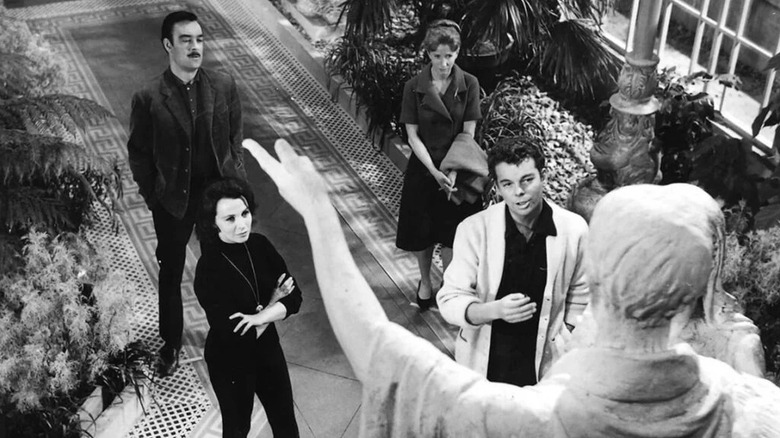
10. The Haunting (1963)
Robert Wise’s 1963 classic remains the gold standard for haunted-house cinema. Eschewing digital effects or gore, Wise utilized the power of tone and composition to translate Shirley Jackson’s The Haunting of Hill House into a gothic masterpiece.
The story follows Dr. John Markway (Richard Johnson), an anthropologist investigating the supernatural, who recruits three individuals to stay at the notoriously malevolent Hill House. Central to the narrative is Eleanor "Nell" Lance (Julie Harris), a woman whose history of poltergeist activity and personal grief makes her the focal point of the house’s malice. Cinematographer David Boulton’s use of an experimental 30mm wide-angle Panavision lens created a sense of oppressive space, forcing the audience into Nell’s paranoid, fractured mental state. It is a haunting that exists entirely within the architecture of the mind.
9. The Ring (2002)
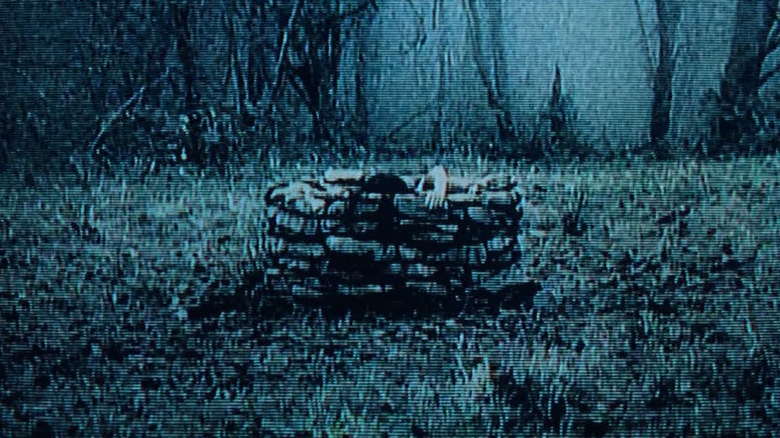
When Gore Verbinski adapted the Japanese masterpiece Ringu for Western audiences, many feared the nuances of the original would be lost. Instead, he crafted a modern horror icon. The Ring introduced a generation to the chilling concept of a cursed videotape—a piece of media that acts as a contagion, leading to death exactly seven days after viewing.
Naomi Watts delivers a powerhouse performance as Rachel Keller, a journalist unraveling the mystery of Samara, a vengeful spirit born from trauma and neglect. The film’s palette—a damp, steely-blue Pacific Northwest aesthetic—drenches every frame in melancholy and dread. By keeping the violence largely off-camera or relegated to single, indelible images, Verbinski proved that a monster rarely seen is infinitely more terrifying than one fully revealed.
8. Paranormal Activity (2007)
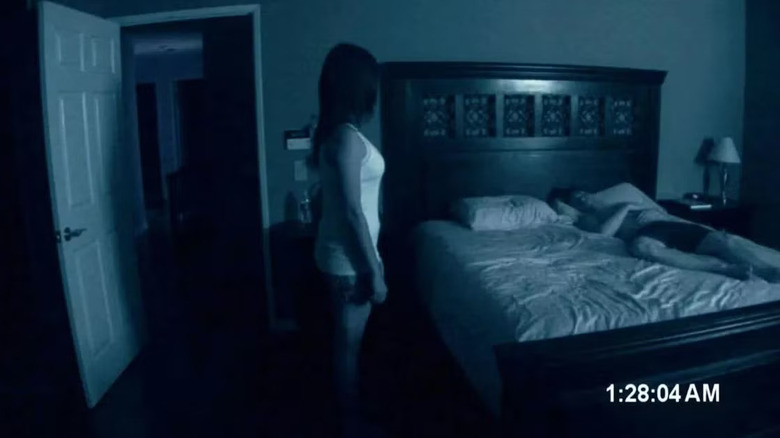
Few films have changed the landscape of horror as significantly as Oren Peli’s Paranormal Activity. Produced on a shoestring budget of roughly $15,000, the film abandoned traditional cinematic artifice in favor of a static, tripod-mounted camera capturing events in a suburban bedroom.
The horror here is procedural and cumulative. A door swings open a few inches further each night; a sheet moves; a rhythmic thumping echoes in the dark. By stripping away the ability to cut away to safety, Peli forced the audience to stare into the void. It revived the found-footage genre and turned the limitation of a low budget into an aesthetic of terrifying intimacy.
7. The Others (2001)
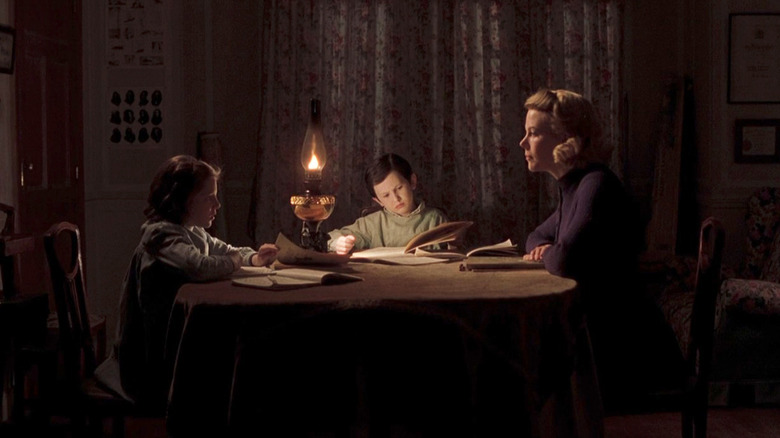
Alejandro Amenábar’s gothic ghost story is a masterclass in repression. Nicole Kidman plays Grace Stewart, a mother living in a fog-choked Jersey mansion in the post-WWII era, shielding her photosensitive children from the light. The film builds its tension through the architecture of the house and the brittle, controlled performance of its lead.
With no gore to be found, the terror arises from the uncertainty of the situation. As new servants arrive and strange phenomena occur, the film shifts from a standard haunting to a poignant study of guilt and denial. Its final reveal remains one of the most effective recontextualizations in genre history, proving that ghost stories are often really stories about the living.
6. The Conjuring (2013)
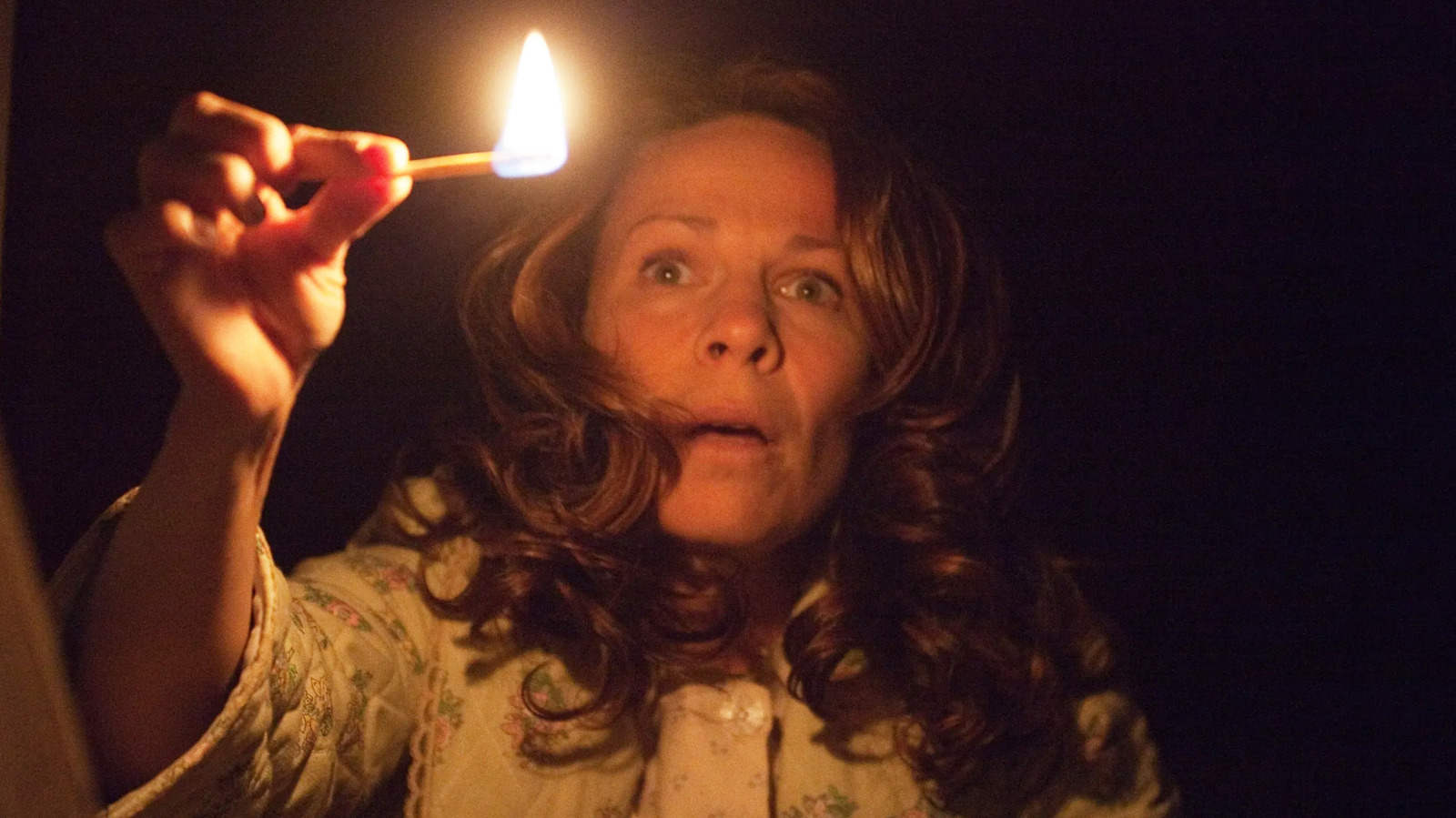
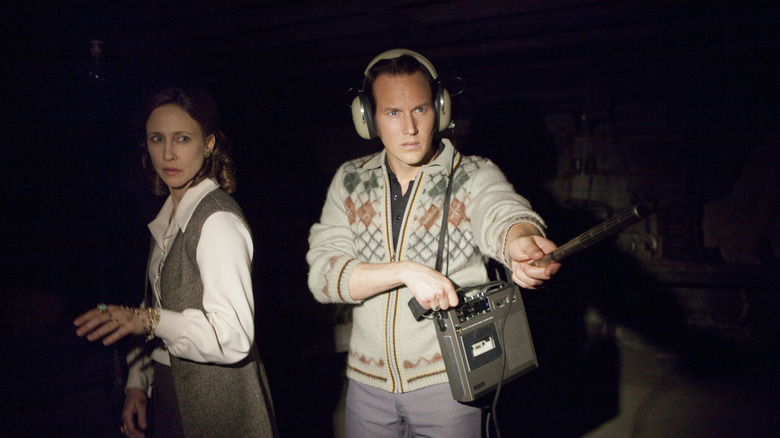
James Wan’s 2013 film was a seismic shift in modern horror, signaling a return to classical craftsmanship. Centered on the real-life paranormal investigators Ed and Lorraine Warren, the film follows their arrival at the Perron family’s Rhode Island farmhouse.
Wan’s success lies in his patience. He utilizes deep-focus compositions and long, slow push-ins to build anticipation. By the time the supernatural entities manifest, the audience is already so primed by the sound design and blocking that the scares land with immense impact. It is a disciplined, respectful nod to the 1970s era of horror that trusts the audience to handle the slow burn.
5. Rosemary’s Baby (1968)
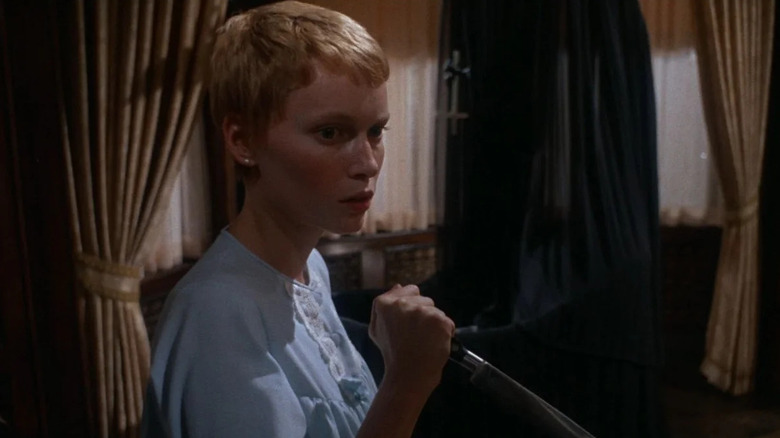
Roman Polanski’s Rosemary’s Baby is perhaps the most unsettling film about pregnancy ever produced. Mia Farrow’s turn as Rosemary Woodhouse—a woman increasingly isolated by a conspiratorial group of neighbors and an ambitious husband—is a harrowing look at institutional gaslighting and the loss of bodily autonomy.
The film relies entirely on mood. We never see the "monster" in a traditional sense; we only see the encroaching paranoia of a woman who realizes her surroundings are not what they seem. The horror is internal and domestic, turning the safety of a Manhattan apartment into a site of profound betrayal.
4. The Innocents (1961)
Based on Henry James’s The Turn of the Screw, Jack Clayton’s The Innocents is the ultimate archetype of psychological ghost stories. Deborah Kerr plays a governess tasked with caring for two orphans, only to become convinced that the estate is haunted by the spirits of two former servants.
The genius of the film is its ambiguity. Is the house haunted, or is the governess descending into madness driven by sexual repression? Cinematographer Freddie Francis used deep-focus black-and-white photography to ensure that even empty rooms felt heavy with presence. It is a film that recognizes how much dread can be cultivated in a hallway lit only by a flickering candle.
3. Halloween (1978)
John Carpenter’s Halloween is the foundational text of the modern slasher, yet it is shockingly bloodless compared to its successors. The film relies on the "shape" of Michael Myers—a figure of pure evil standing perfectly still across the street.
Carpenter’s mastery of the frame and his iconic, minimalist score create a sense of inevitable doom. By keeping Michael in the background of suburban life, he tapped into a primal fear: that the domestic sanctuary is merely a thin veil over the chaotic, violent unknown. It is a masterclass in visual storytelling, proving that a mask and a kitchen knife are more than enough to terrify a generation.
2. Psycho (1960)
Alfred Hitchcock’s Psycho remains one of the most influential films ever made. By enforcing strict rules about no late admissions, Hitchcock ensured that the audience would experience the film’s mid-point pivot with maximum impact.
Shot in black-and-white to keep the violence from becoming "unpalatably red," the film’s iconic shower scene is actually a triumph of editing and sound rather than gore. It relocated the source of horror from the external boogeyman to the domestic sphere, focusing on the fractured psyche of Norman Bates. It is a psychological thriller that transcends its genre, remaining as sharp and unsettling today as it was in 1960.
1. The Blair Witch Project (1999)
Sitting at the top of our list is the film that redefined the possibilities of horror marketing and aesthetic. The Blair Witch Project does not just avoid gore; it avoids showing the antagonist entirely. By handing cameras to the actors and giving them a loose scenario, directors Daniel Myrick and Eduardo Sánchez created a sense of tactility that was entirely unprecedented.
The film focuses on the small, ominous tokens of malice: bundles of sticks, piles of stones, and the desperate, disoriented voices of three people lost in the woods. Its brilliance lies in the fact that it forces the audience to fill in the gaps with their own imaginations. The result was a cultural phenomenon that proved, definitively, that the most terrifying thing a film can do is show you nothing at all.
Chronology of the Psychological Turn
The shift toward non-gory horror has historically ebbed and flowed. While the 1980s were dominated by the "splatter" era of slashers, the late 1990s and 2000s saw a resurgence of the psychological approach. The Blair Witch Project (1999) served as the catalyst for the "less is more" movement, which was later refined by the high-concept ghost stories of the 2010s, such as The Conjuring.
Supporting Data: The ROI of Restraint
Financially, these films are often among the most successful in the industry. The Blair Witch Project grossed nearly $250 million worldwide against a budget of $60,000, and Paranormal Activity became one of the most profitable films in history. These figures demonstrate that audiences are not just tolerant of non-gory horror—they are hungry for it. When a film relies on atmosphere, the barrier to entry for the audience is lower, and the potential for "word-of-mouth" virality is significantly higher.
Implications for Modern Horror
The enduring popularity of these ten films suggests a shift in how audiences consume fear. In an age of high-definition digital imagery, there is a certain "uncanny valley" that explicit gore often falls into. By contrast, the psychological, atmospheric approach remains timeless. As filmmakers continue to experiment with found footage, slow-burn narratives, and high-tension character studies, the legacy of these ten films remains the guiding light: terror is not a matter of what is on the screen, but what is in the mind of the viewer.
