
The Godox C100: A Disruptive Experiment in Pocket-Sized Imaging
The camera market is currently defined by a high-stakes arms race of megapixel counts, autofocus tracking algorithms, and 8K raw video capabilities. Yet, in a move that has left industry analysts and enthusiasts scratching their heads, Godox—a company globally synonymous with professional lighting solutions—has made its debut in the camera manufacturing space with a device that defies traditional categorization.
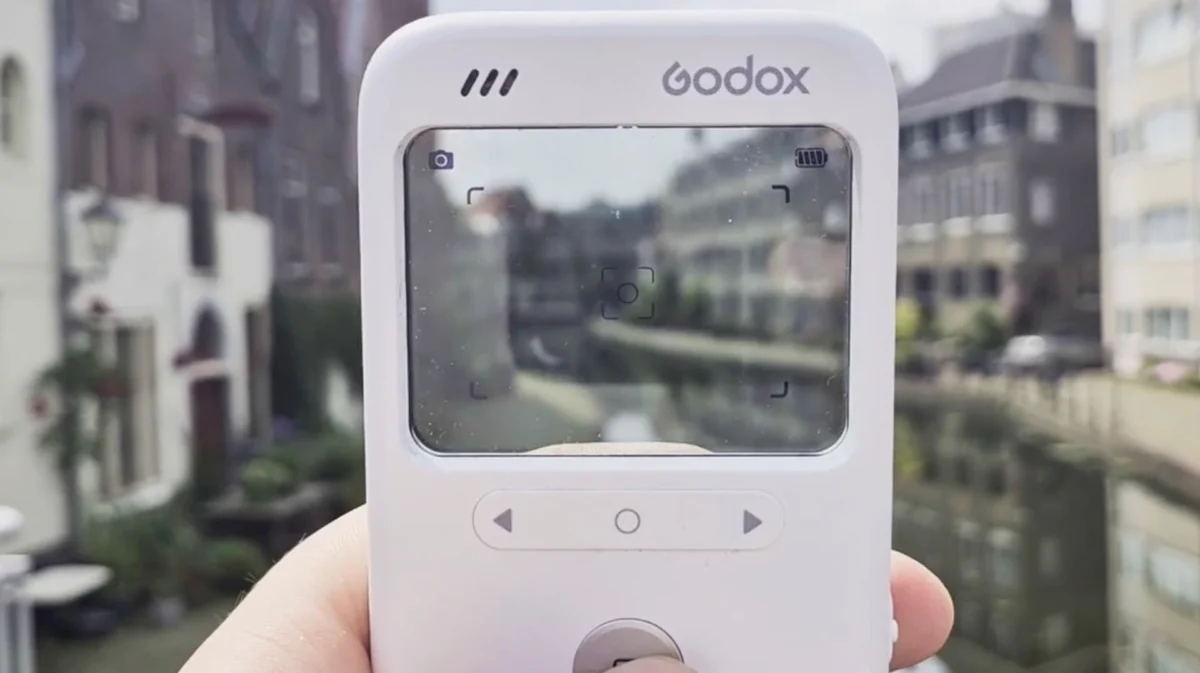
The Godox C100 is not a mirrorless powerhouse designed to challenge Sony or Canon. Instead, it is a $45, transparent-viewfinder compact camera that doubles as a functional light meter. While its modest image quality suggests it is more of a novelty than a workhorse, the implications of its existence speak to a broader trend in how we consume and capture digital media.
Main Facts: What is the Godox C100?
At its core, the Godox C100 is an exercise in minimalist design. Eschewing the complex menu systems and high-resolution OLED screens found on modern smartphones, the C100 opts for a semi-transparent viewfinder that allows the user to see the subject through the lens directly.
The device is marketed as a dual-purpose tool: a lightweight camera for stills and video, and a portable incident light meter. For videographers, the ability to have a secondary, dedicated light meter in one’s pocket for less than the price of a standard dinner is an intriguing value proposition. However, the technical specifications remain entry-level. The camera lacks a live preview, meaning that photographers must rely on their intuition and the transparent viewfinder to frame their shots.
Physically, the device is diminutive. It is designed to be a "grab-and-go" accessory, fitting into the palm of a hand or a small jacket pocket. Its primary interface is stripped back to the bare essentials, emphasizing speed and spontaneity over precision.
Chronology: The Journey from Concept to Curiosity
The release of the C100 did not follow the traditional trajectory of a flagship camera launch. There were no glitzy press events or embargoed reviews from top-tier influencers. Instead, the product emerged quietly, reflecting Godox’s status as a disruptor looking to test the waters of a new segment.
- Pre-Launch Rumors: Initial chatter within the cinematography community centered on whether Godox would leverage its expertise in lighting to build a camera that could communicate wirelessly with their strobe systems.
- The Launch: When the C100 hit the market at a $45 price point, the reaction was immediate confusion. Consumers were unsure if the product was meant to be a serious tool or a sophisticated toy.
- Early Adoption and Testing: Within weeks of its availability, independent creators began to integrate the device into their workflows. Videographer Jesse Calis of Halate was among the first to provide a rigorous, professional assessment of the device, stripping away the marketing veneer to reveal the camera’s true capabilities.
- Current Standing: The device has now settled into a niche, primarily viewed as an "accidental" creative tool for behind-the-scenes (BTS) documentation and experimental photography.
Supporting Data: Performance Metrics and User Experience
To understand the C100, one must look at the data provided by early adopters like Calis. While the technical metrics for image resolution are not designed to compete with professional sensors, the functional metrics tell a different story.
Pros:
- Portability: At a fraction of the size of a standard smartphone, it offers a "stealth" shooting experience.
- The Light Meter: The integration of a light meter is the C100’s strongest selling point. For cinematographers, the ability to quickly gauge light levels without pulling out a dedicated (and often expensive) external meter is highly convenient.
- Price: At $45, the risk to the consumer is virtually non-existent. It serves as an accessible entry point for those interested in film-like aesthetics without the cost of analog film stocks.
Cons:
- Image Quality: The sensor output is "modest" at best, often lacking the dynamic range required for high-end professional post-production.
- Lack of Live Preview: Without a digital screen to verify framing or exposure, the C100 requires a steep learning curve.
- Auditory Feedback: A significant complaint among testers is the lack of a "mute" function for the device’s internal button clicks, which are described as loud and distracting.
Official Responses and Independent Analysis
Godox has maintained a relatively low profile regarding the C100, positioning it as an experimental product rather than a core business pillar. While they have not issued formal rebuttals to the critiques regarding image quality, the company’s silence suggests that the C100 was designed as a "proof of concept."
Independent analysis, such as the comprehensive review by Jesse Calis, highlights a divide in the market. The general consensus among professionals is that while the C100 is not a replacement for a main camera, it excels in specific, narrow scenarios. Calis notes that the C100 thrives in "behind-the-scenes" contexts where the photographer wants to capture the vibe of a set without the intimidating presence of a large rig.
The lack of a live preview is often cited as the biggest hurdle for potential users. In an era where "what you see is what you get" (WYSIWYG) is the standard for digital photography, the C100’s opaque shooting process feels almost retro-analog.
Implications: The Future of Niche Hardware
What does the Godox C100 mean for the future of the imaging industry? It signals a shift toward "specialized minimalism." As smartphones continue to dominate the general-purpose photography market, companies are finding success by creating devices that do one or two things exceptionally well rather than trying to compete with the sheer computational power of a modern iPhone or Samsung device.
The Potential for Iteration
If Godox chooses to refine the C100, the implications could be significant. Imagine a successor that retains the form factor but incorporates:
- Higher Resolution Sensors: Bringing the output closer to the quality required for social media content or secondary angle footage.
- Internal Playback: Adding the ability to display captured images on the transparent screen would solve the biggest "blindness" issue currently plaguing the device.
- Advanced Connectivity: Allowing the C100 to transmit light meter data directly to a Godox flash system would turn it from a novelty into a "must-have" utility for the company’s loyal customer base.
The "Stocking Filler" Paradox
The $45 price point is a double-edged sword. It encourages impulse buys, but it also lowers the perceived value of the product. By pricing it as a "stocking filler," Godox has effectively prevented the C100 from being taken seriously by the professional community. However, this may be a strategic choice. By avoiding the expectations of a professional-grade device, Godox has given itself the freedom to experiment without the pressure of needing to satisfy the demands of high-end wedding or studio photographers.
Final Thoughts: A Conversation Starter
Ultimately, the Godox C100 is a catalyst for conversation. It is a device that forces the user to be more deliberate and intentional with their shots. In a world of infinite cloud storage and continuous burst shooting, the C100 asks the photographer to slow down, look through the viewfinder, and embrace the imperfection of the result.
Whether it will remain a historical footnote or evolve into a legitimate line of minimalist cameras remains to be seen. For now, it sits in the kit bags of curious creators—a pocket-sized reminder that not every camera needs to be a supercomputer. Sometimes, the most interesting tool is the one that forces you to rethink the way you capture the world.
As we look toward the future of the industry, Godox’s willingness to experiment with the C100 is a breath of fresh air. It demonstrates that even as market leaders, companies can—and should—take risks that defy the established norms of the digital age. If Godox continues to iterate on this platform, they may find that the market for "simple" cameras is much larger than the current industry leaders anticipate. Until then, the C100 remains an intriguing, imperfect, and entirely unique addition to the photographer’s arsenal.
