
The Future of Mobile Media: Samsung Unveils P7 and P9 USB4 Portable SSDs at Gamescom 2026
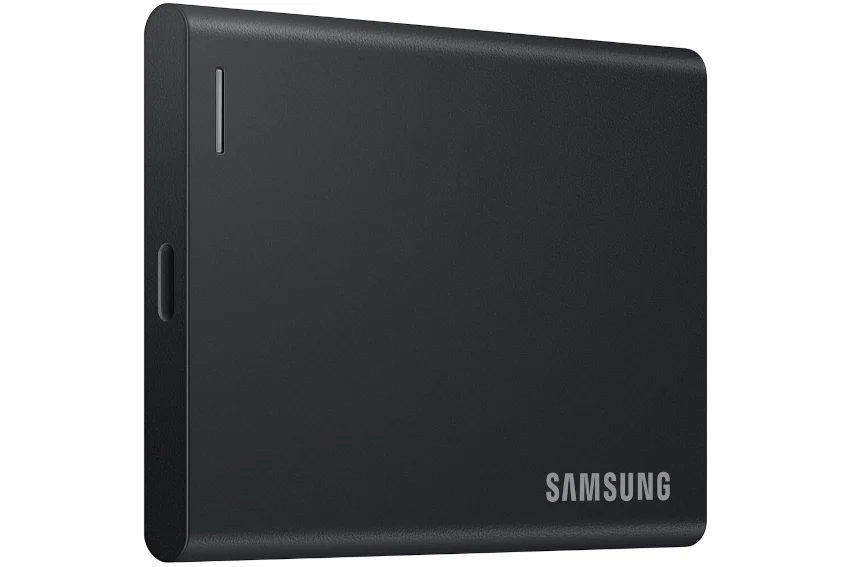
The landscape of professional digital content creation is currently undergoing a radical transformation. As camera sensors push into the realms of 12K resolution and RAW bitrates continue to climb, the bottleneck in the production pipeline has shifted from the camera’s sensor to the storage media itself. Addressing this critical challenge, Samsung Electronics officially unveiled its new P Series portable SSD lineup—the P7 and P9—at Gamescom 2026 in Cologne, Germany.
By integrating high-bandwidth USB4 connectivity and offering capacities of up to 8TB, these drives represent a paradigm shift in how filmmakers, photographers, and creative professionals manage high-volume data in the field and the studio.
Main Facts: The USB4 Revolution in Portable Storage
The headline feature for both the P7 and P9 models is the adoption of the USB4 standard. This interface is the catalyst for the drives’ performance, enabling sequential read speeds of up to 4,000 MB/s and sequential write speeds of up to 3,800 MB/s. To put this in perspective, these figures are roughly double the sequential throughput of the previous-generation Samsung T9, which peaked at 2,000 MB/s.
The P Series is bifurcated into two distinct models to cater to different segments of the market:
- The P9 (Flagship): Engineered specifically for high-bandwidth, professional cinema workflows. It is optimized for sustained write performance, making it suitable for direct-to-drive 12K RAW recording.
- The P7 (Versatile): Positioned as the “everyday” powerhouse. It shares the same high-speed USB4 interface as the P9 but is ruggedized for portability, making it the ideal companion for nomadic creators who switch between workstations, gaming consoles, and mobile devices.
Both drives arrive in a slim, ultra-portable form factor measuring just 90 x 65 x 8.3mm, weighing under 100 grams, and featuring AES 256-bit hardware encryption for data security.
Chronology: From Concept to Global Launch
The development of the P Series has been a strategic roadmap for Samsung, culminating in its mid-2026 debut.
- Early 2026: Samsung’s P9 prototype gained industry attention at CES 2026, where it secured an Innovation Award. The prototype teased the industry-first 8TB capacity combined with 4,000 MB/s speeds, signaling a departure from the traditional limits of portable storage.
- Summer 2026: Throughout the preceding months, beta testing was conducted with select cinema houses and professional post-production studios to ensure that the drives could maintain sustained write speeds required for 12K RAW recording without thermal throttling.
- September 2026 (Gamescom): The official global unveiling at Gamescom 2026 in Cologne served as the launchpad for the product line. This venue was strategically chosen to highlight the versatility of the P7, which caters to both high-end gaming and creative media production.
- Late 2026: Following the September announcement, Samsung began the global rollout, with markets receiving the 1TB, 2TB, 4TB, and 8TB variants in a staggered release cycle.
Supporting Data: Performance and Durability Metrics
To understand the necessity of the P Series, one must look at the data requirements of modern capture devices. A 12K RAW video stream generates massive amounts of data per second. Older SSDs often "choke" when the internal cache is filled, leading to dropped frames.

Performance Metrics
The P9’s ability to sustain 3,800 MB/s write speeds ensures that even the most demanding high-bitrate codecs remain stable throughout a long-form shoot. Samsung’s internal benchmarking indicates that these drives move data at speeds previously relegated to internal NVMe PCIe drives, effectively removing the performance gap between "external" and "internal" storage.
Durability and Real-World Testing
Recognizing that creators often work in unpredictable environments, Samsung subjected the P7 to rigorous durability testing. The drive is rated for 2-meter (approx. 6.5 feet) drop resistance. Furthermore, the unit has undergone extensive shock and vibration testing. While the P9 is focused on the "on-set" professional environment, the P7’s physical architecture is specifically built to survive the transit of a daily backpack or a chaotic production van, bridging the gap between delicate consumer hardware and ruggedized field equipment.
Security and Software Integration
Beyond raw speed, the P Series utilizes the Samsung Magician software suite. This allows users to monitor drive health, manage firmware updates, and configure the AES 256-bit hardware encryption. For production houses handling sensitive intellectual property, this hardware-level security is a mandatory requirement rather than a luxury.
Official Responses and Strategic Positioning
In a statement following the reveal, Samsung emphasized that the P Series was not merely an incremental update, but a response to the "data explosion" caused by higher resolution imaging.
"Our goal with the P9 was to create a bridge between the camera sensor and the edit suite," a spokesperson noted during the Gamescom presentation. "The P7, conversely, acknowledges that the modern creator is a multi-hyphenate. Whether they are editing on a laptop, transferring footage from a smartphone, or clearing space on a gaming console, they need a singular, universal storage solution that does not compromise on speed."
Industry analysts have noted that by positioning the P9 as the world’s first 8TB USB4 drive capable of such high sustained speeds, Samsung is effectively future-proofing the production cycle for the next three to five years of camera technology.
Implications: The Impact on Production Workflows
The introduction of the P Series carries significant weight for the professional filmmaking industry.

The "Direct-to-Drive" Workflow
Traditionally, cinematographers would capture footage to proprietary internal media (such as CFexpress cards) and then "dump" those files to an external SSD or RAID array. The P9 potentially allows for a "direct-to-drive" workflow for specific camera systems. By recording directly to the P9, production teams can eliminate one step in the file-handling process, saving hours of transfer time and reducing the risk of file corruption during multi-stage copies.
The Death of the Transfer Queue
For editors working with high-resolution proxies or even native RAW files, the P7 and P9 mean that external storage is no longer a bottleneck. One can theoretically edit 8K or 12K sequences directly off the P9 without needing to copy files to a workstation’s internal SSD first. This is a game-changer for on-set editors, DITs (Digital Imaging Technicians), and remote creators who require "studio-level" performance in a coffee shop or a hotel room.
Compatibility Challenges
While the performance is impressive, it is important to note that these speeds are contingent on the host device. USB4 is required to unlock the full 4,000 MB/s potential. Users connected to standard USB 3.2 or Thunderbolt 3 ports will see performance scaling down accordingly. Samsung’s decision to move to the USB4 standard is a proactive move to push the industry toward the next generation of connectivity, even if the legacy infrastructure takes time to catch up.
Conclusion: A New Standard for Digital Assets
Samsung’s P Series is a calculated entry into the high-end storage market that addresses the immediate, burning needs of the creative community. By offering the P7 for the versatile, everyday creator and the P9 for the high-end cinematic professional, Samsung has successfully segmented its offering while maintaining the core appeal of USB4 speed and massive 8TB storage density.
As cameras continue to push the boundaries of what is possible in digital capture, the infrastructure supporting those files must evolve in lockstep. With the P9’s certification for 12K workflows and the P7’s rugged, versatile design, Samsung has provided a robust solution that will likely become a staple in camera bags, edit suites, and production houses worldwide as the industry enters the latter half of the decade.
For the professional, the message is clear: the era of waiting for files to transfer is coming to an end. With the P9 in particular, the focus returns to the art of creation, backed by the confidence of industry-leading performance.
