
The 90s Time Capsule: How Patrick Bresnan’s ‘The Contestant’ Turns a Baywatch Prank into Cinematic Gold
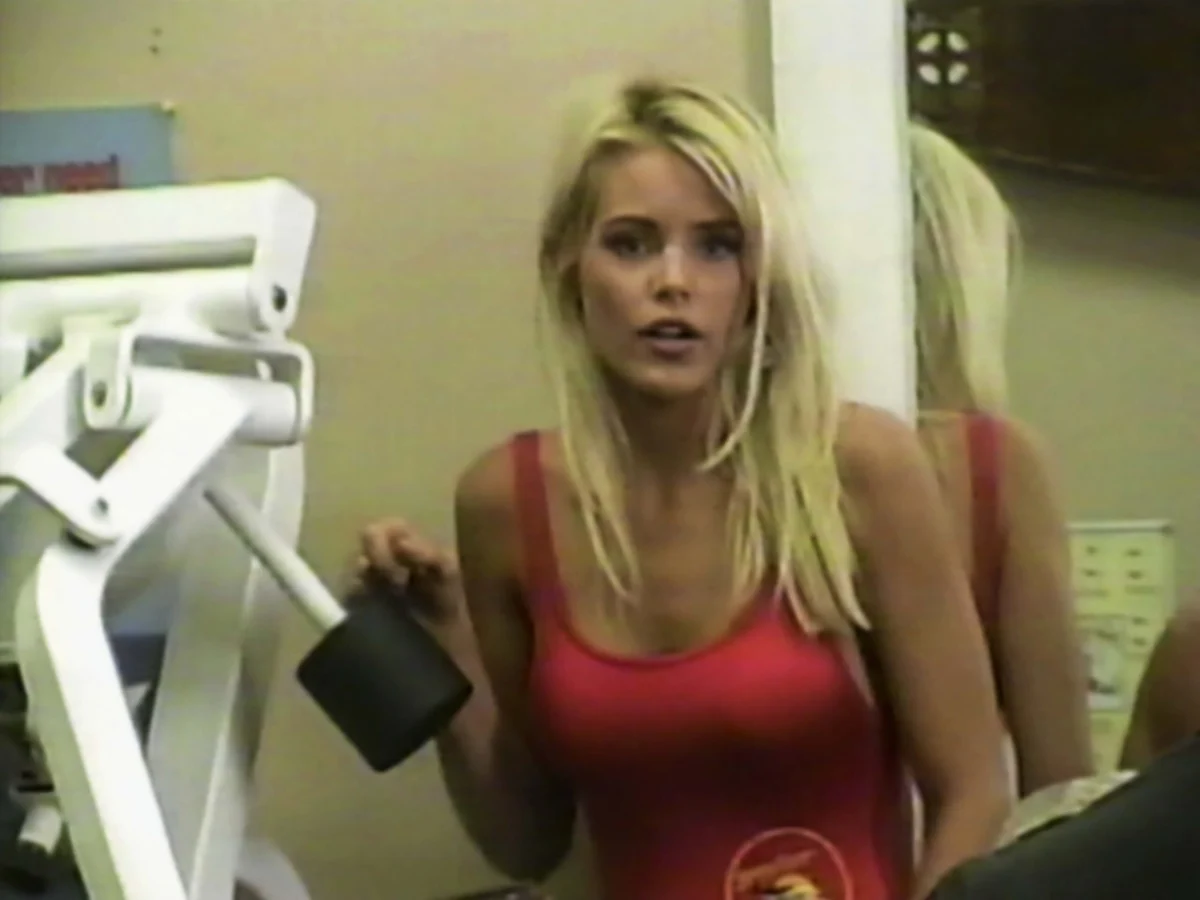
In the mid-1990s, the cultural zeitgeist of the United States was dominated by the slow-motion, sun-drenched aesthetic of Baywatch. It was a show that transcended television to become a global phenomenon, turning its cast into icons and its opening sequence into a cultural landmark. Decades later, filmmaker Patrick Bresnan has unearthed a relic from this era—a piece of personal history that serves as both a hilarious self-portrait and a poignant artifact of 1990s pop culture.
His latest project, The Contestant, is a masterful piece of archival editing that bridges the gap between 1996 and 2025. What began as a teenage prank evolved into a unique documentary short that has captivated festival audiences from the Toronto International Film Festival (TIFF) to the American Film Festival in Poland.
Main Facts: A Journey Through Mini-VHS
The Contestant is fundamentally a story of accidental success. In 1996, a young Patrick Bresnan—who would eventually go on to acclaim as a Short of the Week alum for works like The Rabbit Hunt and Skip Day—found himself at a San Francisco competition. The prize? A coveted set visit to the Baywatch production.
Bresnan, motivated by a sense of irony and a desire to pull a prank on the show’s legendary star, David Hasselhoff, entered the contest as a joke. To his own astonishment, he won. The film, which Bresnan succinctly describes as "Shot in 1996. Edited in 2025," utilizes raw, grainy Mini-VHS footage captured by Bresnan and his friends.
The film serves as a meta-commentary on the nature of fandom. By juxtaposing the earnest, high-energy excitement of the 90s crowd with the cynical, self-aware perspective of the adult filmmaker looking back, The Contestant avoids the pitfalls of simple nostalgia. Instead, it creates a bridge between the innocence of the past and the analytical lens of the present.
Chronology: From San Francisco to the Shores of Malibu
The 1996 Phenomenon
To understand the weight of The Contestant, one must understand the gravity of Baywatch in 1996. The show was in its prime, and the fervor surrounding it was palpable. When Bresnan entered the San Francisco contest, he was entering a space defined by celebrity worship and mass media saturation. The Mini-VHS footage captures the frantic, chaotic energy of the venue, with screaming fans and the larger-than-life presence of David Hasselhoff commanding the stage.
The Transformation
For nearly three decades, this footage sat in a collection of tapes—a private record of a bizarre teenage experience. It wasn’t until 2025 that Bresnan, alongside collaborators Ivete Lucas and Ben Petrie, decided to revisit the tapes. The editing process was not merely about cutting footage; it was about curating a narrative from a mountain of raw, unpolished memories.
The Los Angeles Set Visit
The narrative arc of the film moves from the contest floor to the actual set of the show in Los Angeles. Here, the film shifts from the perspective of a fan to the perspective of an insider. Bresnan’s handheld camera captured the behind-the-scenes mechanics of a television juggernaut—the actors in their iconic red swimwear, the bustling crew, and the peculiar artificiality of a set meant to look like a sun-soaked paradise.
The Final Synthesis
The genius of the film lies in its final act. Lucas and Petrie located the exact episode of Baywatch that corresponded to the time Bresnan was on set. By splicing the amateur VHS footage with the polished, broadcast-quality episode, they created a seamless, jarring, and brilliant visual dialogue between "the myth" and "the reality."
Supporting Data: The Creative Team Behind the Lens
The strength of The Contestant is rooted in the pedigree of its production team. Patrick Bresnan has spent years honing his craft, earning recognition for his gritty, observational documentaries like The Rabbit Hunt and Skip Day. His ability to find deep human truths in unconventional subjects is the backbone of this film.
He is joined by Ivete Lucas and Ben Petrie, both of whom are heavyweights in the short film circuit. Lucas, who co-directed The Rabbit Hunt with Bresnan, brings a structural rigor to the project, while Petrie—known for his acclaimed work on Her Friend Adam—adds a layer of narrative wit that elevates the film beyond a simple home-movie montage.
Festival Reception and Critical Impact
The film’s journey through the international festival circuit—including TIFF, Montreal’s FNC, and the American Film Festival—speaks to its broad appeal. It is not just a film for those who remember Baywatch; it is a film about the universal human experience of "meeting your heroes" and finding them to be, at once, exactly who you expected and entirely different.
Beyond The Contestant, the creative duo of Bresnan and Lucas has remained incredibly busy. Their feature documentary, First They Came for My College, has been a mainstay on the 2025 festival circuit, earning critical praise for its investigative depth. They are currently developing a narrative feature, produced by the industry veteran Ginger Sledge, signaling a significant shift toward long-form storytelling.
Official Responses: The Philosophy of the Prank
In discussions regarding the film’s development, Bresnan has been candid about his initial intentions. "The original idea was simply ‘pranking David Hasselhoff,’" he noted in early interviews. However, the process of looking at the footage years later changed the nature of the project.
"What started as an attempt to capture a funny moment for my friends became something much more," Bresnan explained. "It became a way to look at how we consumed media in the 90s, how we performed for the camera, and how our memories of these events are often filtered through the lens of time."
The collaborators emphasize that their goal was never to mock Baywatch, but to honor the absurdity of the decade. By treating the footage with care, they allow the audience to experience the "energy of the moment" rather than just the punchline of the joke. This transition from "prank" to "homage" is what elevates The Contestant from a novelty item to a piece of legitimate cultural history.
Implications: Why 90s Nostalgia Still Resonates
The success of The Contestant raises an important question: Why are we so obsessed with the 1990s? The decade serves as the final frontier of the "analog-to-digital" transition. It was an era before the pervasive, self-policing nature of social media, where a fan could enter a contest and be ushered onto a world-famous set with little more than a VHS camera and some audacity.
The Death of the "Genuine" Experience
The film implies that the era of the "authentic celebrity interaction" is largely dead. In 1996, the distance between the star and the fan was bridged by physical proximity and contests. Today, that distance is managed by algorithms and PR teams. The Contestant acts as a eulogy for a time when pop culture felt more tangible, more physical, and significantly more chaotic.
The Power of Archival Storytelling
Furthermore, the film sets a new standard for how archival footage can be used in modern documentary filmmaking. Rather than using clips as mere background filler, Bresnan, Lucas, and Petrie treat their footage as a character in its own right. They demonstrate that even the most "useless" home movies, when edited with intent and intelligence, can hold as much weight as a professionally shot documentary.
Looking Ahead
As Bresnan and Lucas continue their work on First They Came for My College and their upcoming narrative feature, The Contestant stands as a vital reminder of their range. They are filmmakers capable of balancing the serious, investigative nature of contemporary journalism with the playful, experimental spirit of indie cinema.
For those who lived through the era, The Contestant is a nostalgic trip. For those who didn’t, it is a fascinating sociological study of a decade that still defines much of our current cultural landscape. It is, ultimately, a reminder that the most interesting stories aren’t always the ones we set out to tell; sometimes, they are the ones we capture by accident, waiting for the right moment to be rediscovered.
As the film makes its online debut, it invites viewers not just to watch a story about Baywatch, but to reflect on the stories buried in their own archives. In an age of infinite digital storage, we are all potentially walking around with our own versions of The Contestant—the question is whether we will have the courage to edit them, the humor to embrace them, and the insight to see them for what they really are.
