
The Curatorial Odyssey: exergue – on documenta 14 and the Crisis of Cultural Authority
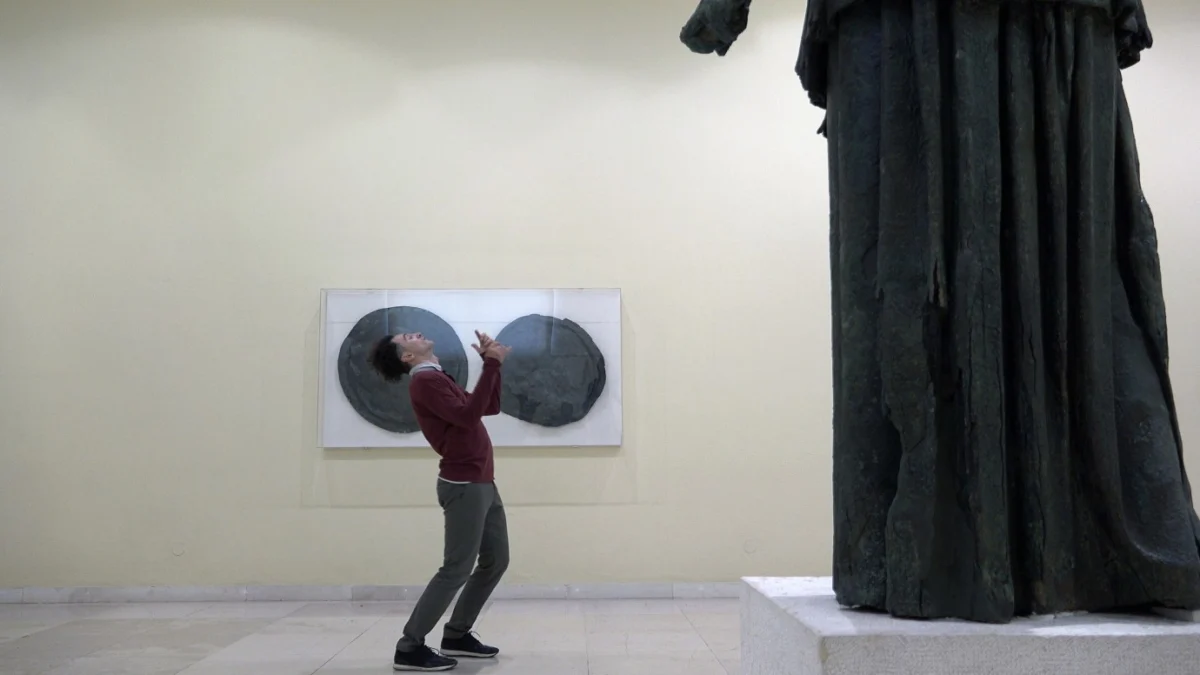
In the contemporary art world, few institutions command as much prestige—or attract as much volatility—as documenta. Held every five years in Kassel, Germany, since its inception in 1955, the "mega-exhibition" serves as a bellwether for global intellectual currents. However, in recent years, the institution has become a battleground for political discourse, censorship, and administrative turmoil.
Against this backdrop of institutional fragility, Greek filmmaker Dimitris Athiridis has delivered a monumental work of documentary cinema: exergue – on documenta 14. Stretching over 14 hours, the film is an unprecedented, fly-on-the-wall chronicle of the 2017 edition, curated by the Polish art historian Adam Szymczyk. At a moment when the future of documenta 16 remains in doubt following the mass resignation of its finding committee, Athiridis’s film provides a vital, if harrowing, case study in what happens when the pursuit of artistic freedom collides with the rigid machinery of state-funded cultural politics.
The Anatomy of an Institutional Crisis
The current malaise surrounding documenta is not a localized anomaly but a deepening pattern of conflict. The recent resignation of the documenta 16 finding committee was triggered by the relentless public and media campaign against member Ranjit Hoskote. The controversy centered on Hoskote’s 2019 signature on an anti-fascist statement—a document that German culture minister Claudia Roth condemned as "clearly anti-Semitic."
This incident is the latest in a series of "scandals" that have plagued the institution. In 2022, documenta 15, curated by the Indonesian collective ruangrupa, faced intense scrutiny over allegations of anti-Semitic imagery, leading to the removal of artworks and a comprehensive, ongoing overhaul of the exhibition’s governance. These crises underscore a fundamental tension: how can a public institution, funded by German taxpayers, maintain a global, provocative artistic mandate while operating within an increasingly narrow and reactive political climate?
Chronology of a Collision: The documenta 14 Experience
Athiridis’s exergue captures the genesis and eventual unraveling of documenta 14, an edition defined by its bold, dual-city structure: Kassel and Athens.
2015: The Proposal and the "Guest" Role
When Adam Szymczyk was appointed, he proposed a radical departure from the traditional model. By bringing documenta to Athens—a city then reeling from the European debt crisis—Szymczyk aimed to invert the power dynamics of the art world. He wanted the institution to function not as a colonial host, but as a "guest" in a foreign land.
2016: The Laboratory of Research
Athiridis began his observational journey during the early planning stages. The film documents the intensive, often grueling, brainstorming sessions between curators like Hila Peleg, Bonaventure Soh Bejeng Ndikung, Pierre Bal-Blanc, and Paul B. Preciado. The footage reveals a team operating with high-minded intellectual fervor, attempting to map the "cognitive extension of our existence" through art.
2017: The Exhibition and the Backlash
As the exhibition launched, the administrative reality began to bite. The dual-city logistics were expensive, leading to a €5.3 million budget shortfall. While the art world debated the exhibition’s merits, German media and politicians began to treat the financial deficit as a moral failing. The film captures the moment the "scandal" was weaponized, exacerbated by the proximity to the German general elections, where the deficit became a convenient political cudgel.
The Filmmaker’s Perspective: Observational Truths
Dimitris Athiridis’s approach to exergue is rooted in the tradition of "faction"—the presentation of facts through a narrative lens. Over three years, he accumulated 800 hours of footage, working largely without a formal crew to maintain the intimacy required to capture the curators’ candid deliberations.
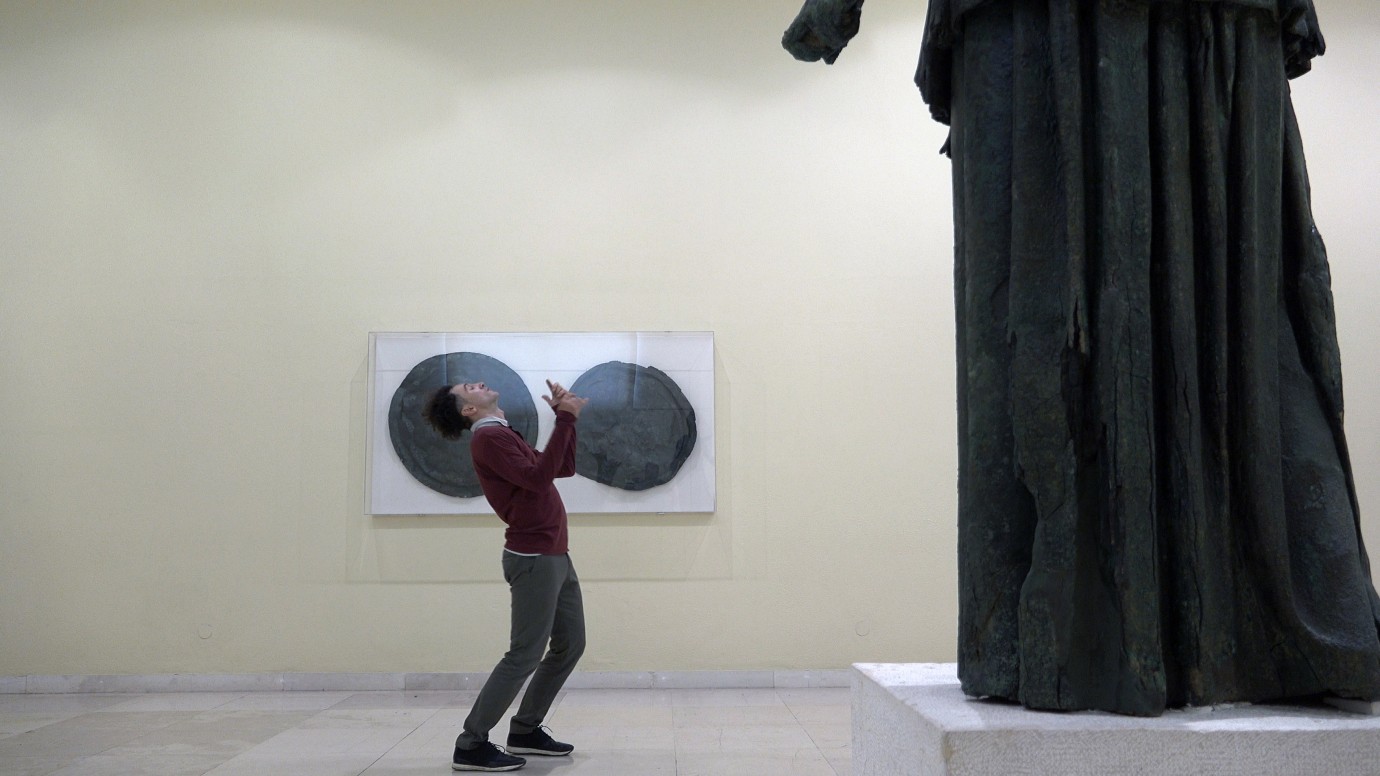
"I didn’t have a producer’s reflexes to secure permissions and signed releases," Athiridis explains. "It was a relationship based on mutual trust." This lack of formal art-world pedigree served as an asset; he approached the curatorial team with fresh eyes, unencumbered by the pre-existing hierarchies of the industry. His role, which he jokingly titled "curator-at-small," allowed him to record moments of pure discovery, such as the eureka moment when the team decided to transport the collection of the National Museum of Contemporary Art (EMST) in Athens to the Fridericianum in Kassel.
Implications: The High Price of Artistic Autonomy
The implications of exergue extend far beyond the specific history of documenta 14. The film serves as a somber meditation on the limits of "soft power." In the post-WWII era, culture and academia were granted autonomy by the German state as a means of rebuilding national identity and fostering democratic dialogue. Athiridis questions whether this model is sustainable in an age dominated by social media outrage and rapid-fire political maneuvering.
"Soft power exists as a manifestation of hard power," Athiridis notes. He argues that as modern media techniques evolve, art’s ability to influence the public sphere is increasingly marginalized. The film concludes not with a triumphant artistic statement, but with a quiet, private scene of Szymczyk introducing the film Wanda to a handful of viewers in a small cinema—a poignant reminder that the true impact of art is often found in individual, private appreciation rather than mass-marketed institutional success.
Official Responses and Governance Challenges
The institutional response to the challenges faced by documenta has been a move toward centralization and caution. Following the 2017 deficit and the 2022 controversy, the supervisory board is now tasked with restructuring the selection process. The fear, according to observers, is that the "artistic freedom" that was once the hallmark of the documenta curator will be systematically dismantled to prevent further reputational damage.
The question of "who owns documenta?" remains the central, unresolved thread. While politicians and market actors attempt to impose corporate directives and administrative guardrails, the artistic community continues to insist that the institution belongs to the public and the practitioners. As Athiridis points out, the term "exergue"—the inscription on a coin outside the primary design—perfectly encapsulates Szymczyk’s tenure. He attempted to place his own stamp on the currency of contemporary art, challenging the very definition of the institution.
Conclusion: The Persistence of Memory
exergue – on documenta 14 is more than a documentary; it is a repository of a vanished era of curatorial ambition. By documenting the "character assassination" of Adam Szymczyk and the relentless pressure exerted on his team, Athiridis has provided a historical record that future curators and historians will likely revisit.
The film suggests that while the structures of the art world are fragile, the ideas birthed within them are resilient. The "scandal" of 2017 may have dominated the headlines, but the intellectual work—the research into Nazi-looted art, the interrogation of the Euro-zone crisis, and the exploration of global inequality—remains relevant. In an era where cultural institutions are increasingly treated as political pawns, Athiridis’s epic project stands as a testament to the importance of documenting the process, the struggle, and the often invisible labor that sustains the life of an exhibition.
As the German cultural establishment grapples with the future of documenta 16, exergue serves as a stark reminder: when you stifle the freedom of the curator to appease the volatility of the present, you risk losing the very thing that makes the institution worth saving. Whether or not documenta can survive its own internal contradictions remains to be seen, but thanks to Athiridis, at least one chapter of its history will remain indelible.
