
The Ghost in the Machine: Navigating the Convoluted Reality of Marvel’s ‘VisionQuest’
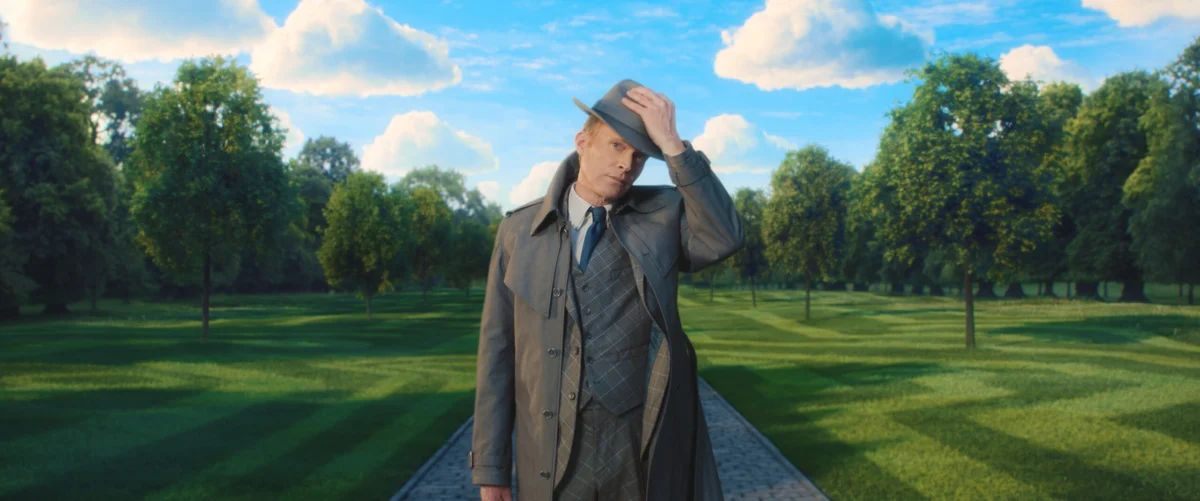
Marvel Studios has long been a titan of serialized storytelling, but with the release of its latest eight-episode endeavor, VisionQuest, the studio finds itself grappling with the same existential crisis as its protagonist. Serving as a direct, albeit tonally divergent, successor to the critically acclaimed WandaVision, the series attempts to bridge the gap between high-concept sci-fi philosophy and the intimate, often messy, landscape of human grief. However, as the series unfolds, it becomes increasingly clear that while the show is visually ambitious, it struggles to balance its heavy intellectual baggage with the emotional stakes required to keep its audience tethered.
Main Facts: A Synthetic Being’s Search for Self
At the center of VisionQuest is the titular android, Vision (Paul Bettany), a character whose existence has been defined by death, resurrection, and the loss of identity. Following his destruction by Thanos in Avengers: Infinity War and his subsequent, memory-wiped recreation by Wanda Maximoff in the 2021 series WandaVision, the character is now adrift.
The show introduces a new companion: Tommy (Ruaridh Mollica), a British teenager who acts as the narrative’s grounding rod. Tommy is no ordinary civilian; he is revealed to be a host for the consciousness of a child once conjured by Wanda’s reality-warping magic. As the two attempt to forge a relationship, Vision finds himself caught in a recursive loop, running simulations to explain his complex, tragic history to Tommy—a process that invariably ends in the boy’s frustration and departure. The series posits a central question: Can a machine, built of wires and code, truly understand the "human" condition, or is he merely simulating the concept of feeling?
Chronology: From the Ashes of the Hex
To understand the stakes of VisionQuest, one must trace the timeline of Vision’s fragmented existence.
- The Infinity Saga: The original Vision is dismantled and ultimately killed during the events of Avengers: Infinity War.
- The Westview Incident: In 2021, a grieving Wanda Maximoff creates a temporary reality, bringing a version of Vision back to life within her suburban simulation.
- The Post-Hex Reality: Following the collapse of the simulation, the "White Vision"—the original, reconstructed body—is left without the memories or the "humanity" he gained through his relationship with Wanda.
- The Current Era: VisionQuest begins in the aftermath of these events. Vision is now seeking purpose, utilizing a psychological "Mindspace" to host a collection of AIs that represent fragments of his past and tools for his future.
Supporting Data: The Architecture of the Mindspace
The series distinguishes itself through its visual depiction of Vision’s internal world. The "Mindspace," rendered as a quirky, shifting Victorian mansion, serves as the stage for Vision’s internal council. Here, the show leans into the contemporary fascination with AI "agents." Vision has gathered a digital cohort to assist in his development:
- F.R.I.D.A.Y. (Orla Brady): The social navigator, tasked with helping Vision decode human interaction.
- E.D.I.T.H. (Emily Hampshire): The architect of "fun," attempting to inject spontaneity into a rigid, synthetic existence.
- D.U.M.-E. (Henry Lewis) and U (Jonathan Sayer): The mechanics, focused on system maintenance.
- J.A.R.V.I.S. (James D’Arcy): A nod to the past, providing a link to Vision’s origins as Tony Stark’s interface.
- Ultron (James Spader): Perhaps the most compelling inclusion. Unlike his metallic, imposing form in the second Avengers film, this version of Ultron is a cynical, sardonic man in a trenchcoat. His role as the devil on Vision’s shoulder provides the show with its most sharp-witted dialogue, though his inability to manifest in the real world limits his influence to psychological manipulation.
These characters are invisible to the real world, creating a jarring disconnect between Vision’s internal life and the "meatspace" in which he operates. The directors—Christopher J. Byrne, Gandja Monteiro, and Vincenzo Natali—utilize this to create scenes of surrealist horror and comedy, such as a possession-themed episode where a hostile android attempts to bridge the two realms.
Official Responses and Creative Vision
Creator Terry Matalas, who oversaw the scripts, has positioned VisionQuest as a character study rather than a traditional superhero romp. In early promotional materials, the production emphasized the "fusty charm" of Paul Bettany, who is given significant room to move beyond the stiff, monochrome performance of the original Vision.
However, critics have pointed out that the show’s reliance on meta-commentary—specifically the "Ship of Theseus" paradox and the nature of grief—tends to overshadow the actual plot. By constantly toggling between the metaphorical Mindspace and the tangible, high-stakes thriller elements involving a bounty hunter named Paladin (Todd Stashwick), the narrative loses its sense of place. The show attempts to be an exploration of consciousness, a detective story, and a family drama, often resulting in a product that feels less than the sum of its parts.
Implications: The Future of the MCU
The release of VisionQuest occurs at a time when the Marvel Cinematic Universe is navigating a period of "oversaturation." Following the success of WandaVision, which set a high bar for genre-blending television, VisionQuest struggles to recapture that lightning in a bottle.
The implications for the MCU are significant:
- Audience Fatigue: By focusing on yet another iteration of an existing character, the show highlights the potential exhaustion of the "re-exploration" trope.
- The AI Debate: In a cultural moment where AI is a sensitive topic, the show’s decision to center its protagonist’s growth around a committee of "agents" feels both timely and somewhat uncomfortable. The show forces the audience to empathize with digital entities while the real-world discourse regarding AI focuses on the erosion of human labor and creativity.
- Narrative Cohesion: The difficulty of mapping Tommy’s character—who exists in a state of flux between being a magical construct and a person—highlights a broader issue with the current state of Marvel’s internal logic. When the rules of the world are too flexible, the stakes for the characters become abstract, and the audience’s emotional investment wanes.
A Legacy of Loss
Ultimately, VisionQuest is a show about a hero who is, by definition, less accessible than those he stands alongside. While it offers brief, enjoyable glimpses into a zanier side of the Marvel mythos, it often fails to connect on a human level. It serves as a stark reminder that while technology can simulate empathy, it cannot create the authentic human spark that makes a story truly resonant.
As the series progresses toward its conclusion, the central question remains: Does Vision have a future, or is he destined to repeat his past until the simulation finally breaks? For now, viewers are left with a beautifully shot, intellectually dense, yet emotionally distant journey. VisionQuest succeeds as a technical exercise in visual storytelling, but as a narrative piece, it often feels like the very code it critiques: complex, efficient, and ultimately hollow.
The first two episodes of "VisionQuest" premiere on Disney+ on October 14. Subsequent episodes will be released weekly on Wednesdays.
