
Navigating the Shadows: John Torres Blends Sci-Fi, Surveillance, and Sorrow in the Neo-Noir Masterpiece The Remotes
Main Facts
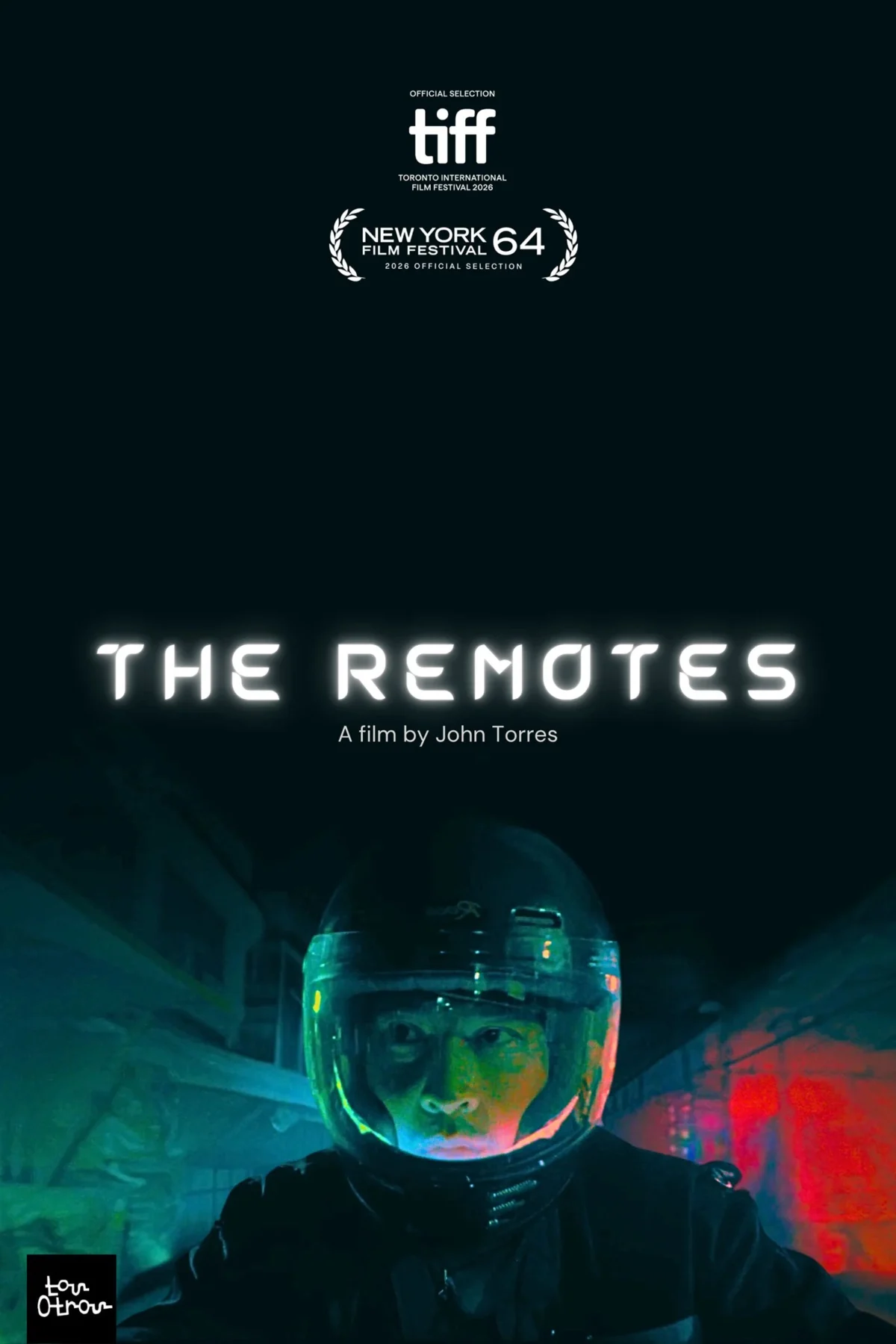
One of the most visually stunning and conceptually ambitious features to emerge on the international festival circuit in recent years is The Remotes, the latest genre-bending project from Manila-based filmmaker, musician, and multi-disciplinary artist John Torres. Centered on a grieving detective navigating a hypnotic, fog-enshrouded metropolis, the film marries the conventions of traditional neo-noir with speculative science fiction and documentary realism.
The narrative follows a detective consumed by the loss of his wife, who died a year prior in a mysterious automobile accident tied directly to a ubiquitous ridesharing and navigation app. As he investigates two sisters inextricably linked to a sinister, unseen navigation software, he begins to surrender his own agency to the spectral voices governing the city. Blurring the line between technological paranoia and psychological trauma, The Remotes serves as a piercing inquiry into the invisible, omnipresent forces—political, algorithmic, and digital—that conspire to manipulate human bodies and identities.
Following its critically acclaimed international premiere at the Toronto International Film Festival (TIFF) and its recent U.S. premiere within the prestigious Currents section of the New York Film Festival (NYFF), the film has established Torres as a visionary voice in contemporary world cinema. Marking a major milestone in the rollout of the project, the official trailer has been exclusively unveiled, offering audiences their first immersive glimpse into Torres’s darkly surreal landscape.
Chronology
The genesis of The Remotes stretches back several years, forged in the hyper-surveilled sociopolitical climate of the Philippines. As production took shape, director John Torres began conceptualizing a project that would reflect not only personal grief but also the collective trauma inflicted upon a populace living under the authoritarian shadow of former President Rodrigo Duterte’s controversial “war on drugs.” This prolonged campaign normalized state surveillance, curfews, and digitized tracking, creating a social fabric where technology and control became deeply intertwined.
By the time the film completed production, it captured the attention of major global film curators. Its world premiere at the Toronto International Film Festival introduced critics to its unnaturally cyclical visuals and haunting soundscapes. Following its Canadian debut, the film crossed the border for its United States premiere at the New York Film Festival, screening as a centerpiece of the Currents program—a section dedicated to adventurous, boundary-pushing cinema that redefines contemporary film language.
With the film currently making waves on the fall festival circuit, the release of the official trailer marks the beginning of its broader public campaign, setting the stage for subsequent theatrical distribution and international audience engagement.
Supporting Data and Critical Reception
The Remotes has drawn immediate, rapturous comparisons to cinematic touchstones of psychological unease. In his review for The Film Stage, critic Jared Mobarak likened Torres’s atmospheric sensibilities to the nightmarish, hallucinatory tone of David Lynch’s Lost Highway.
“It’s no wonder that the film I most thought of was David Lynch’s Lost Highway,” Mobarak wrote. “Between The Remotes’ darkly surreal noir mystery and the unnaturally cyclical nature of its visuals and sound, you wouldn’t need to twist my arm to make me believe everything onscreen is a dream. It’s not—Mijares isn’t the only one desperate for solace—but that doesn’t mean most is. Call it coincidence, fate, or delusion; nothing should be taken at face value.”
Technically, the film relies heavily on impressionistic pacing, utilizing editing and sound design to expand and compress time. The narrative unfolds against the backdrop of a Manila that feels less like a physical metropolis and more like a liminal purgatory. The visual palette, captured in high-contrast tones reminiscent of classic noir yet saturated with the cold, artificial glow of smartphone screens and dashboard displays, reinforces the suffocating atmosphere.

According to festival data from the NYFF and TIFF, The Remotes stands out as a rare hybrid form. It rejects straightforward genre tropes in favor of an experimental blueprint that incorporates documentary-style textures—capturing real fragments of urban Philippine life—and bends them into speculative fiction.
Official Responses and Director’s Vision
Speaking on the thematic underpinnings of his work, John Torres has offered profound insights into the psychological architecture of the film. Rather than framing technology as a simple external villain, Torres views it as an extension of human vulnerability.
“The Remotes is about how longing can become infrastructure,” Torres explained in an artist’s statement accompanying the film’s release. “How grief stifles us while technology listens in and automates our choices in life. This is a world where people willingly surrender to it because it brings them closer to someone they lost, or someone they used to be.”
Festival programmers and official synopses have echoed these sentiments, emphasizing the film’s double-layered critique. The NYFF official description notes that the film functions as a "thought-provoking inquiry into the larger forces—political, technological—that conspire to control our bodies and identities."
By centering the narrative around a telepathic sister-in-law whose recorded voice holds the key to the mysterious automotive tragedy, Torres underscores how human intimacy is increasingly mediated, intercepted, and monetized by digital platforms. The official responses from critics and curators alike highlight that The Remotes is not merely a neo-noir detective story, but an urgent diagnostic of twenty-first-century alienation.
Implications
The arrival of The Remotes signals a significant evolution in Southeast Asian cinema’s engagement with speculative and political themes. By using the framework of genre filmmaking to critique the apparatus of the surveillance state, John Torres joins a lineage of filmmakers who weaponize abstraction and mood to speak truth to systemic power.
Furthermore, the film’s exploration of "grief as infrastructure" carries profound implications for how modern society understands technology. In an era where algorithmic feeds dictate everything from commercial choices to romantic partnerships, Torres’s thesis—that individuals willingly surrender autonomy to digital systems simply to cope with the pain of absence—strikes a deeply resonant chord. As algorithms increasingly learn to mimic empathy, The Remotes asks a chilling question: when our grief is managed by machines, do we remain the authors of our own lives, or do we become merely remote-controlled echoes of the people we used to be?
As the film continues its journey through international festivals and heads toward wider distribution, it challenges viewers to look closer at the glowing screens in their hands, suggesting that the ghosts haunting our cities may not be supernatural at all, but rather the digital footprints of our own unresolved longings.
