
The Sound of Redemption: Christophe Julien’s Score for Fred Cavayé’s Les Misérables Takes Center Stage
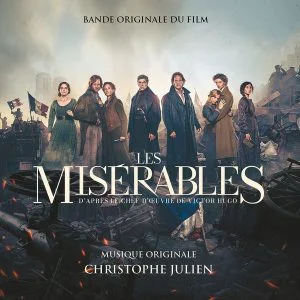
In a cinematic landscape that frequently revisits the canon of classic literature, few works demand as much emotional and musical gravitas as Victor Hugo’s Les Misérables. Today, Milan Records has officially released the original motion picture soundtrack for the latest French period adaptation of this monumental tale, directed by the acclaimed filmmaker Fred Cavayé. The musical architecture of this production has been entrusted to prolific composer Christophe Julien, a craftsman known for his ability to weave complex psychological landscapes into the fabric of historical drama.
As the film makes its grand debut in French theaters, the soundtrack stands as a testament to the enduring power of Hugo’s narrative—a story of institutional cruelty, the crushing weight of systemic injustice, and the transcendent, often painful, journey toward personal redemption.
Main Facts: The Release and the Creative Force
The soundtrack album, now available across all major digital streaming and download platforms, serves as the auditory companion to Cavayé’s ambitious retelling. Christophe Julien, whose previous collaborations include notable works such as See You Up There (Au revoir là-haut), Delicious, and Bye Bye Morons, brings a fresh, modern perspective to the 19th-century setting.
For international collectors, the experience will soon be tactile; Milan Records has confirmed that physical editions, including both CD and vinyl formats, are slated for release in France. These physical media will be accessible to global audiences via import channels on Amazon in the coming weeks, ensuring that the score’s sonic textures—which range from intimate, sparse piano motifs to expansive orchestral swells—can be experienced in their highest fidelity.
The film itself boasts a powerhouse ensemble cast, reflecting the weight of the source material. Vincent Lindon anchors the production as Jean Valjean, supported by a roster of French cinema’s finest, including Tahar Rahim, Camille Cottin, Benjamin Lavernhe, Noémie Merlant, Vassili Schneider, Megan Northam, Marie Colomb, and Louis Peres.
A Chronology of a Classic: From Hugo to Cavayé
Victor Hugo’s 1862 novel is arguably the most recognizable piece of French literature in global history. It has been adapted dozens of times, from early silent films to the global theatrical phenomenon that redefined the musical genre. However, Fred Cavayé’s approach signals a departure from the operatic grandeur of the stage musical, favoring instead the grounded, gritty realism that characterizes his directorial style.
The Development Phase
The project was announced amid significant industry buzz, marking a high-profile return to the "Jean Valjean" narrative for French studios. The production team focused on a meticulous recreation of early 19th-century France, emphasizing the harsh realities of the post-Napoleonic era.
The Composition Process
Christophe Julien began his work on the score during the film’s post-production phase. In interviews regarding his process, Julien has often cited the importance of "not competing with the weight of the story." For Les Misérables, this meant creating a score that functioned as the internal monologue of the protagonist. The music tracks the evolution of Valjean: from the primal, rhythmic resentment of his 19 years in the galleys to the cautious, trembling hope of his later life as a dignitary.
The Release Timeline
- October 2026: Official digital release of the soundtrack via Milan Records.
- Late 2026: Anticipated release of physical media (CD/Vinyl) for the international market.
- Current: Nationwide theatrical release in France.
Supporting Data: Julien’s Discography and the Musical Language of the Film
To understand the sound of this new Les Misérables, one must look at the composer’s trajectory. Christophe Julien has cultivated a reputation for scoring films that deal with the intersection of history and human frailty. His work on See You Up There—which won him critical acclaim for its blend of whimsy and tragedy—demonstrated his capability to handle the "period piece" genre without succumbing to cliché.
Notable Works in Julien’s Portfolio:
- See You Up There (2017): A masterclass in utilizing brass and strings to evoke the melancholy of the trenches.
- Delicious (2021): A lighter, more delicate touch that showcased his ability to evoke sensory pleasure through melody.
- Farewell, Mr. Hoffman (2021): A tense, claustrophobic score that mirrors the film’s narrative constraints.
In Les Misérables, Julien employs a leitmotif-heavy structure. The "Valjean Theme" is introduced early in the album—a sparse, solitary violin line that gradually gathers weight as the orchestration expands, representing the protagonist’s transition from a criminal defined by his shackles to a man defined by his conscience.
Official Responses and Creative Intent
Fred Cavayé has remained vocal about his desire to strip away the "romanticized" veneer often associated with the story. In a recent press statement, the director noted:
"We did not want to make a spectacle. We wanted to make a human study. Christophe Julien’s music is not there to tell the audience how to feel; it is there to exist alongside the characters, like a shadow that never leaves them."
The collaborative synergy between Cavayé and Julien is evident in the soundtrack’s pacing. Unlike scores that utilize wall-to-wall music to dictate emotional beats, the music for this film is surgical. It is used to punctuate the silence of a life spent in hiding, providing a stark contrast to the chaotic, crowded streets of the period setting.
Implications: The Future of the French Period Drama
The release of this soundtrack and the corresponding film raises significant questions about the status of French historical cinema in the global market.
1. The Absence of Domestic Distribution
As of the current writing, there has been no official announcement regarding a domestic (North American) theatrical distribution deal. This is a point of contention for many cinephiles, as high-profile French productions frequently face a lag between European release and international availability. The success of this soundtrack on digital platforms may serve as a barometer for international interest, potentially incentivizing distributors to expedite a North American acquisition.
2. Reinventing the Canon
By choosing to adapt Les Misérables through a non-musical, dramatic lens, Cavayé is participating in a broader trend of "de-mythologizing" literary giants. The implications for the film industry are clear: audiences are currently favoring grounded, character-driven storytelling over high-concept spectacle. If this film achieves the critical and commercial success projected by French box office analysts, we may see a surge in similar "re-grounded" adaptations of classic literature.
3. The Role of the Composer in Modern Adaptation
Christophe Julien’s work serves as a reminder that the "classic" status of a property does not necessitate a "classic" musical approach. By eschewing the bombastic, orchestral tropes typically found in adaptations of Hugo’s work, Julien has carved out a space for contemporary minimalism in a period setting. This creates a bridge between the 19th-century source material and the 21st-century viewer, making the themes of systemic inequality and individual morality feel immediate rather than archaic.
Conclusion: A Sonic Testament to Resilience
The Les Misérables soundtrack is more than a mere collection of cues; it is a profound exploration of what it means to start over. Through the collaboration of Fred Cavayé and Christophe Julien, the film manages to breathe new life into one of the most well-trodden stories in Western culture.
For listeners, the album offers a journey through the dark corridors of human suffering and the blinding light of redemption. As the film continues its theatrical run, the music will undoubtedly serve as the primary vessel for the audience’s emotional engagement. Whether one is a devotee of the original Victor Hugo text, a fan of French cinema, or a connoisseur of contemporary film scoring, this soundtrack represents a significant entry in the 2026 release calendar—a haunting, beautiful, and ultimately human achievement that demands to be heard.
As we await word on international distribution, the music stands as a defiant, standalone work of art, waiting for the world to catch up to the story of Jean Valjean once again.
