
Deconstructing the Illusion: Nathan Fielder and Lance Oppenheim on the Box Office Phenomenon You Can See Everything
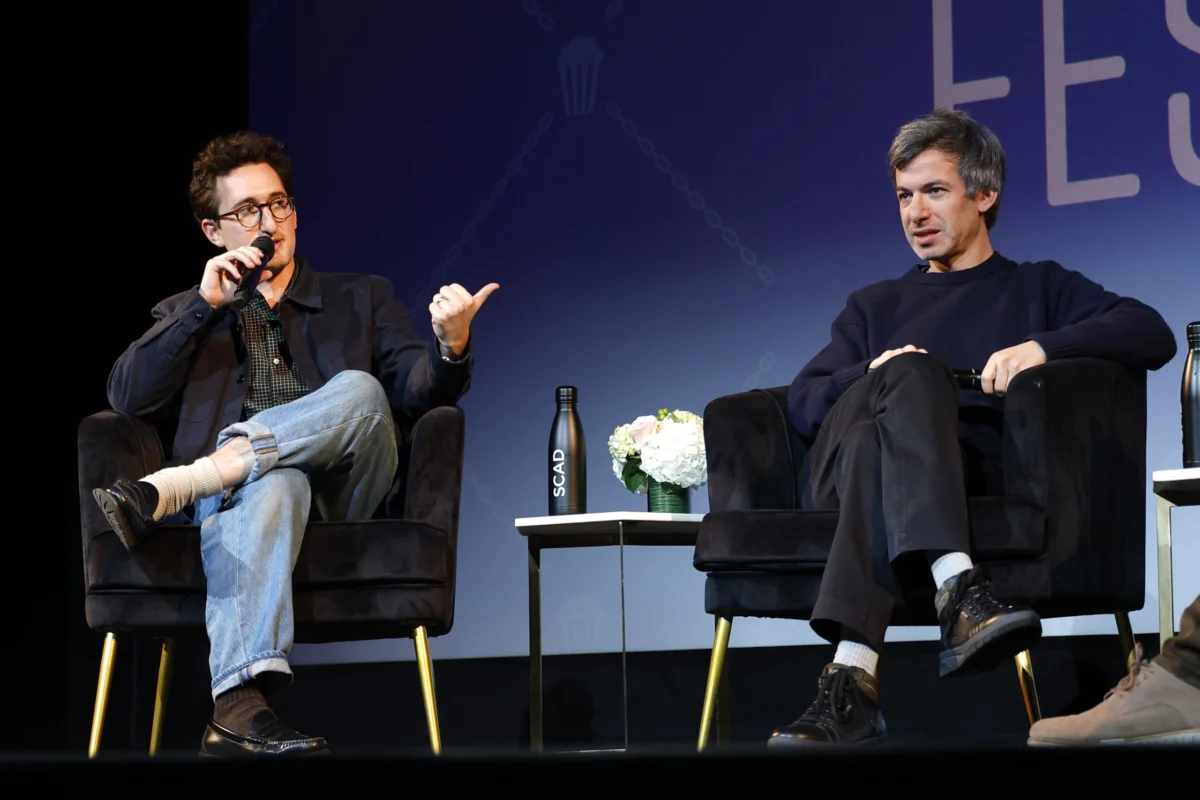
Just over a week after premiering in theaters to a staggering $45 million box office gross, You Can See Everything remains as confounding to its co-directors as it is to audiences. The documentary—focusing on disgraced Theranos founder Elizabeth Holmes in the fleeting days before she began serving her federal prison sentence—has defied traditional genre conventions, sparking fierce debates across film festivals, social media, and the box office alike.
For co-directors Nathan Fielder and Lance Oppenheim, the path from conception to blockbuster success was entirely unplanned, born of a chance encounter and sustained by a persistent, unsettling psychological friction. Speaking at a featured Q&A session during the SCAD Savannah Film Festival, the filmmakers peeled back the layers of a project they describe as an ongoing exercise in navigating a "real-life human optical illusion."
Main Facts: A Box Office Juggernaut Born from Chaos
You Can See Everything has emerged as one of the most commercially successful and critically discussed documentaries in recent memory, hauling over $45 million in its opening week via distributor A24. The film follows Elizabeth Holmes and her partner, Billy Evans, alongside their two young children, inside their home during the final countdown to Holmes’ incarceration.
However, calling it a conventional documentary undersells its formal experimentation. Featuring an organic transition that pulls Fielder from behind the lens into the physical scenes, coupled with surprising stylistic shifts into reenactments featuring a high-profile, secret cast addition, the film challenges viewers to separate performance from reality.
Despite the commercial triumph, the directors maintain a distinct lack of closure. When asked during the Savannah panel whether time and box office success have brought clarity to the project, Fielder offered a succinct, unvarnished assessment: "F—k no."
Chronology: From the Magic Castle to the Big Screen
The origin story of You Can See Everything reads like Hollywood folklore mixed with an absurdist comedy.

The Inciting Incident
The project’s genesis traced back to a casual night out at the Magic Castle in Los Angeles. Amid the evening’s illusions, the name of Elizabeth Holmes casually surfaced in conversation. The remark jogged the filmmakers’ memories regarding rumors that Holmes had been engaged in discussions with A24 regarding a potential documentary project. What began as idle industry gossip quickly catalyzed into action.
The Domestic Access Period
With Holmes’ prison report date looming, the production window was razor-thin. Fielder and Oppenheim mobilized immediately, securing unprecedented access to Holmes and Evans at home. Working on the fly, the crew adopted an aggressive, highly reactive shooting schedule. They routinely arrived at the residence before the family woke up—noting that the front doors were famously unlocked—to capture unfiltered, authentic morning routines.
The Prison Transition and Second Act
Holmes’ departure for prison marked the natural close of the domestic fly-on-the-wall phase, but the directors felt the narrative remained incomplete. Seeking to contextualize the bizarre experience and interrogate the larger sociological phenomenon of Holmes, the directors attempted to interview various public figures. When most declined, a secretive, high-profile actress agreed to participate, shifting the film into a fascinating sequence of reenactments that further blurred the lines of truth and performance.
Supporting Data and Production Mechanics
The creation of You Can See Everything relied heavily on unorthodox documentary techniques, merging the tenets of cinéma vérité with the psychological tension characteristic of Fielder’s previous television work.
Trial by Fire and the "Accidental Investigator"
Initially, Fielder was strictly intended to remain behind the camera. However, Holmes and Evans repeatedly addressed him directly during filming, organically pulling him into the narrative frame. Oppenheim recognized an opportunity: Fielder could serve as an "accidental investigator," attempting to pull Holmes out of whatever constructed reality she inhabited and draw her back toward shared objectivity.
Technical Adaptation
To capture the subtle psychological micro-expressions essential to evaluating Holmes’ sincerity, the production had to adapt rapidly. The crew added extra cameras equipped with long zoom lenses to capture nonverbal reaction shots.

- The Micro-Moment: As Fielder noted during the panel, "The way a person registers a question can feel important, even before they answer."
- Framing Decisions: The narrow aspect ratios chosen by the directors were specifically designed to keep the focus tight on human faces, prioritizing physical emotional cues over wide environmental context.
Viral Moments and the Slipperiness of Truth
Audiences have seized upon several viral moments from the film, including awkward scenes involving scrambled eggs and an impromptu Abbott and Costello "Who’s on First?" discussion. According to Fielder, these moments could not be manufactured. When Fielder confronted Holmes directly with what he had read regarding her legal accusations, hoping for a definitive reading of her character, he encountered a brick wall of absolute denials—such as claiming she had "never lied in her life." Deprived of typical journalistic nuance, the filmmakers had to capture the sheer surrealism of the interaction itself.
Official Responses and Creative Collaboration
The collaborative dynamic between Oppenheim and Fielder was forged through mutual confusion and adaptation. Oppenheim reflected on the underlying strangeness of the entire endeavor: "Why us? Why were we there?"
Fielder echoed that sentiment, describing the shoot as feeling like "some game happening that we couldn’t make sense of," leaving them with little choice other than to "go along with it and see what came out."
Regarding the secretive actress who joined the project for the reenactment phase—whose identity remains under wraps—Fielder emphasized that there was zero pre-production rehearsal. The interactions captured on screen were genuine, first-time meetings, allowing the audience to watch the awkward social mechanics unfold in real-time.
While critics have praised the film as formally revolutionary, Oppenheim views the project as a modern reclamation of documentary filmmaking’s oldest roots. Stripped of traditional archives and talking-head interviews due to access constraints, the filmmakers returned to foundational principles: pure observation, direct confrontation, and vérité immediacy.
Implications for the True Crime and Documentary Genres
The massive financial success of You Can See Everything—pulling in $45 million in just over a week—signals a paradigm shift in how audiences consume documentary cinema.

For years, high-profile true-crime and corporate-fraud documentaries have relied on a predictable formula: retrospective talking heads, slick animations, and neat moral conclusions. You Can See Everything aggressively dismantles this template. By inserting provocative auteurs directly into the narrative space, embracing the inherent unreliability of their subjects, and leaning heavily into formal ambiguity, Fielder and Oppenheim have proven that audiences are hungry for complexity over closure.
Furthermore, the film raises ethical and psychological questions about access journalism and documentary participation. By capturing a high-profile convict in the final moments of domestic freedom, the film bypasses standard journalistic scrutiny, replacing it with an absurdist, theatrical mirror.
As the film continues its strong theatrical run and establishes itself as a major player in upcoming awards conversations, it leaves behind a lingering question: When the subject of a documentary is entirely untethered from objective reality, can a camera ever capture the truth, or does it simply become another tool in the illusionist’s kit? For now, even the directors don’t have the answer—and perhaps, that is the point.
