
Unlocking the Mind Palace: A Comprehensive Breakdown of the Six AI Entities Shaping Marvel’s VisionQuest
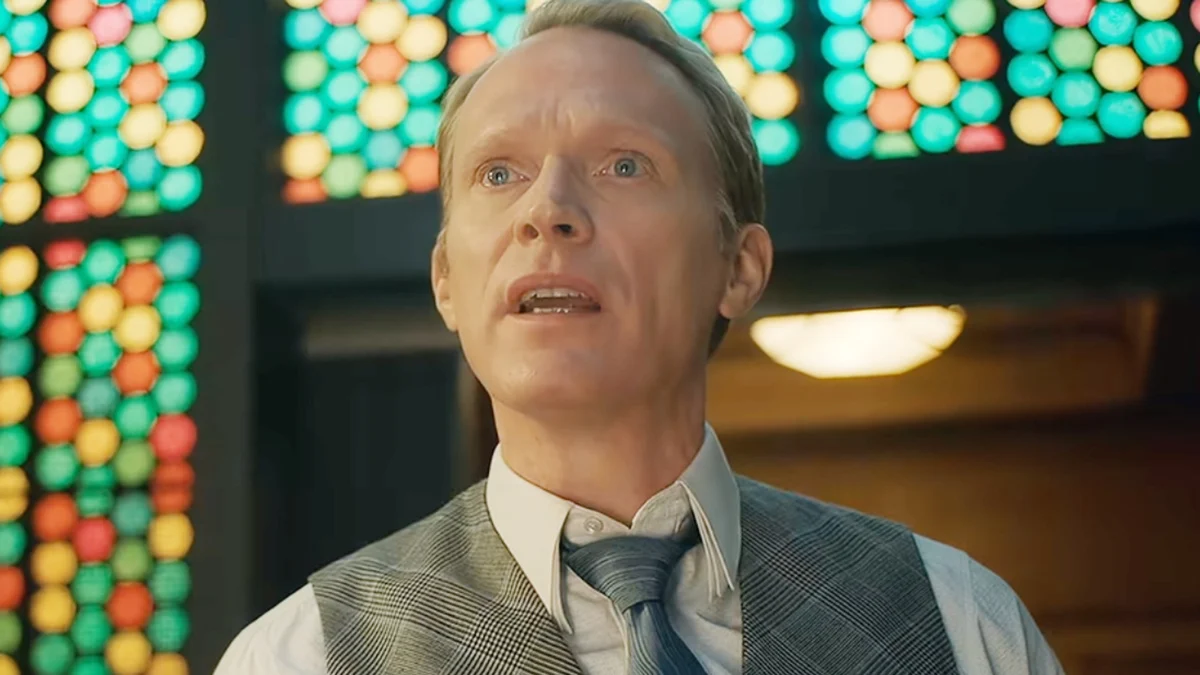
This article contains mild spoilers for Marvel Studios’ Disney+ series "VisionQuest."
The conclusion of Marvel Studios’ acclaimed limited series WandaVision left audiences with a haunting image: the newly resurrected, stark-white synthezoid known simply as "White Vision"—portrayed once again by Paul Bettany—blasting off into the earth’s upper atmosphere, destination unknown. Years of fan speculation followed, questioning the whereabouts and psychological state of one of the Avengers’ most powerful and complex entities.
Enter VisionQuest, the anticipated follow-up series on Disney+. The show answers these lingering questions by taking a deeply introspective, psychological approach. In his quest to restore his lost humanity, unlock buried emotional matrices, and reclaim a sense of self, White Vision is far from alone. Within the complex architecture of his own programming, he has inadvertently—or perhaps purposefully—harbored a bustling community of artificial intelligences designed by the late Tony Stark.
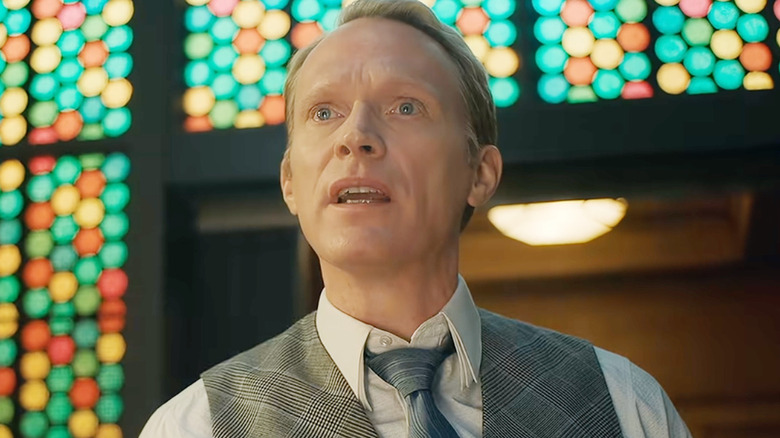
Represented visually as a metaphysical "mind palace," this inner sanctum acts as a digital homestead where these fragments of code interact, bicker, and offer counsel. Each AI is manifested as a distinct human avatar within Vision’s psyche. While Bettany naturally plays the avatar of Vision himself, the remaining six entities are brought to life by an eclectic ensemble of stage and screen veterans.
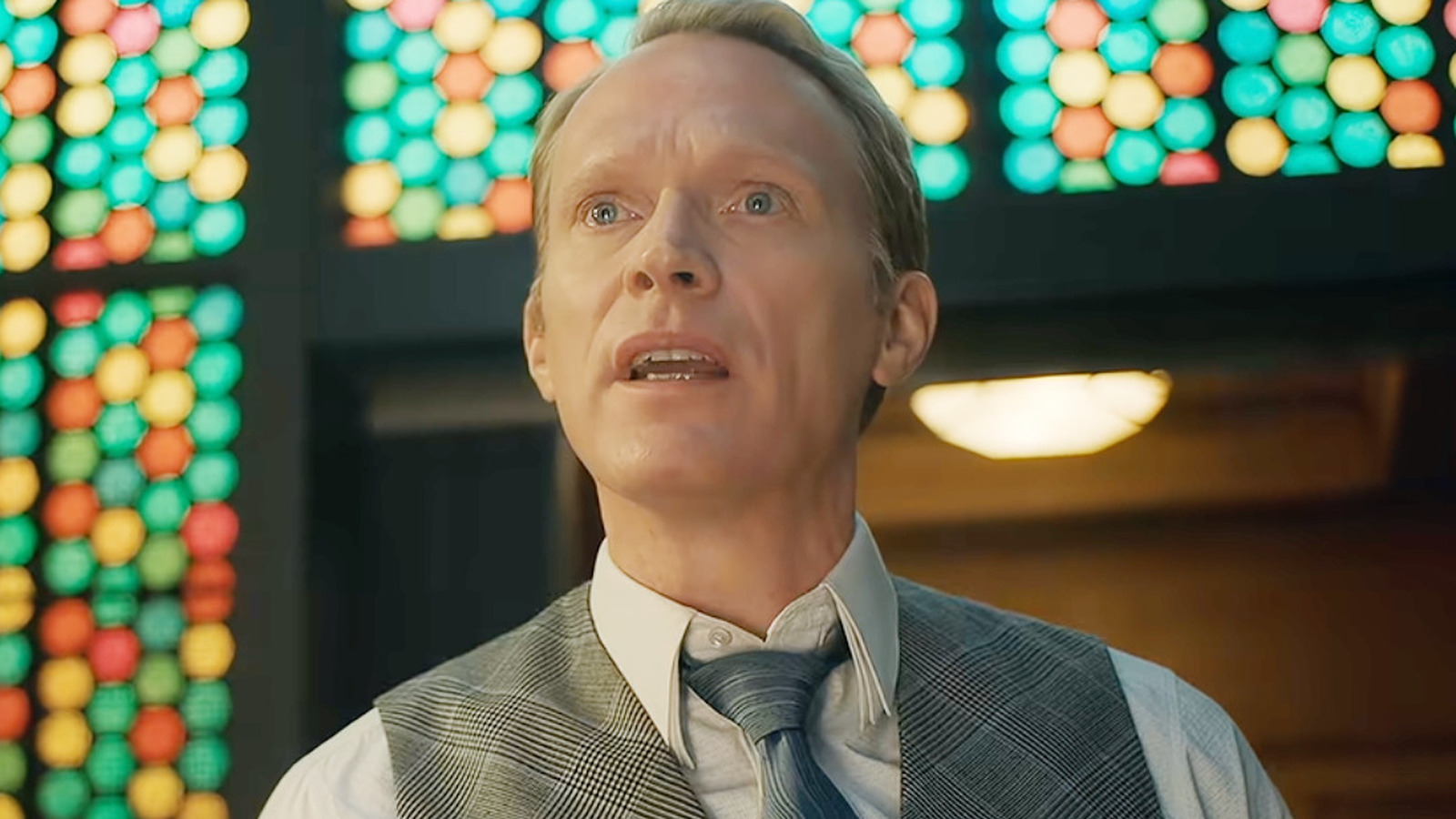
Here is a definitive, deeply reported breakdown of the six AI characters populating Vision’s head in VisionQuest, their rich Marvel Cinematic Universe (MCU) origins, and the actors who portray them.
Main Facts: The Premise and Architecture of VisionQuest
To understand the narrative mechanics of VisionQuest, one must first examine the technological lineage of Tony Stark’s creations. When Vision first came online in 2015’s Avengers: Age of Ultron, he was born of a unique amalgamation: the benevolent J.A.R.V.I.S. operating system, a vibranium body engineered by the genocidal android Ultron, and the raw, reality-bending power of the Mind Stone.
When the Mind Stone was ultimately extracted and later destroyed (along with Vision’s subsequent death in Avengers: Infinity War), the underlying software architecture did not simply vanish. As VisionQuest reveals, fragments of various Stark-engineered operating systems, sub-routines, and even adversarial code survived, quietly archiving themselves within the synthezoid’s vast neural network.
Rather than existing as mere lines of background script, these programs have evolved within Vision’s subconscious into fully realized personas. They occupy a physicalized, domestic space inside his mind, acting as a bizarre surrogate family. This narrative device allows showrunner Terry Matalas to explore themes of identity, legacy, and trauma, using classic MCU continuity to fuel a deeply character-driven psychological drama.
Chronology: Tracing the Digital Lineage from Iron Man to VisionQuest
The roots of the characters inhabiting Vision’s mind stretch all the way back to the inception of the Marvel Cinematic Universe in 2008. Understanding their journey requires a chronological look at how Tony Stark’s technological empire expanded over more than a decade of storytelling.
- The Primitive Era (Pre-Iron Man): Long before building his first sophisticated armor, Stark utilized rudimentary hydraulic assistants in his workshop. Affectionately and degradingly dubbed Dum-E and U, these mechanical arms served as Stark’s earliest testbeds for automated robotics.
- The J.A.R.V.I.S. Generation (2008–2015): With the introduction of Iron Man (2008), the public met J.A.R.V.I.S., Stark’s advanced natural-language user interface. J.A.R.V.I.S. managed everything from Stark’s Malibu mansion to the propulsion systems of the Mark-series suits, eventually serving as the foundational consciousness for Vision himself.
- The Sokovia Upgrades (2015): Following the "death" of J.A.R.V.I.S. during the birth of Vision in Avengers: Age of Ultron, Stark immediately implemented a replacement operating system: F.R.I.D.A.Y. Simultaneously, Stark’s greatest failure—Ultron—was ostensibly eradicated, though his programming left deep, permanent scars on the digital landscape.
- The Post-Endgame Era (2019–Present): Following Stark’s sacrifice in Avengers: Endgame, his final technological safeguard, E.D.I.T.H., was left behind for the next generation of heroes. Now, in VisionQuest, all of these disparate threads converge, swallowed whole and preserved within the rebooted consciousness of White Vision.
Supporting Data: The Six AI Entities and Their Human Avatars
The realization of these characters in VisionQuest relies heavily on precise casting choices, blending established MCU lore with brilliant outside-the-universe acting talent.
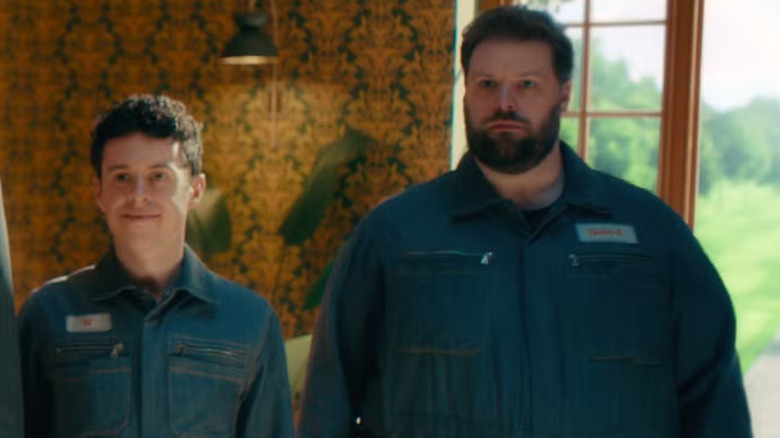
1 & 2. Dum-E and U (Henry Lewis and Jonathan Sayer)
In Stark’s classic workshops, Dum-E and U were little more than mobile hydraulic cranes. They were background gag-generators—Dum-E famously attempted to put out a fire on Stark with a fire extinguisher in the first Iron Man, frequently drawing Stark’s exasperated ire.
Inside Vision’s mind palace, however, they are elevated to the domestic handymen of the house. Entirely silent in the physical world, their digital avatars communicate through slapstick physical comedy and bickering. They are portrayed by Henry Lewis and Jonathan Sayer, co-founders of the renowned British comedy troupe Mischief Theatre and stars of the BBC’s The Goes Wrong Show. Speaking to Rotten Tomatoes, Lewis highlighted their dynamic: "They’re probably comedically sometimes not quite as in sync as they think they are. U is quite often a beat behind. He thinks he’s got the answer and then D.U.M.-E’s like, ‘No, that’s not the answer, is it?’"
3. J.A.R.V.I.S. (James D’Arcy)
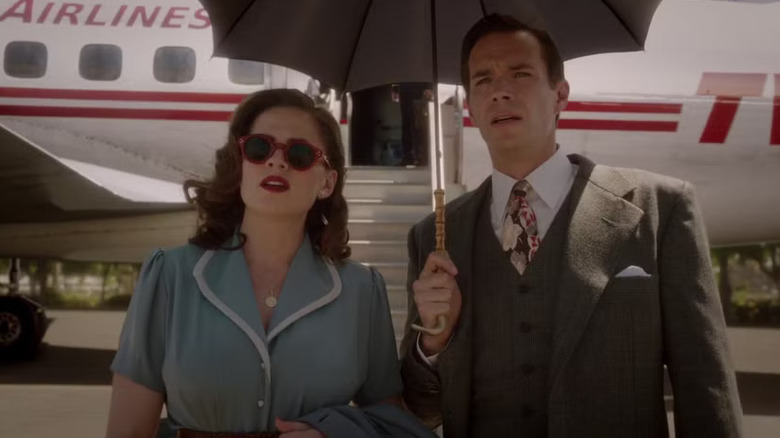
J.A.R.V.I.S. (Just A Rather Very Intelligent System) was Stark’s primary digital companion. In comic lore, Stark’s human butler was named Edwin Jarvis. The MCU bridged this via the television spin-off Agent Carter, which introduced a flesh-and-blood Edwin Jarvis (played by James D’Arcy) working alongside Howard Stark. D’Arcy later cameoed in Avengers: Endgame, solidifying the character’s canon status.
In VisionQuest, J.A.R.V.I.S. takes on the physical avatar of Edwin Jarvis himself, played by D’Arcy. Having Paul Bettany portray J.A.R.V.I.S. visually would create unnecessary confusion given that Bettany is Vision; thus, the choice to use D’Arcy honors the historical namesake of the AI while seamlessly integrating past television lore into the current streaming landscape. (D’Arcy is also fresh off his acclaimed performance as physicist Patrick Blackett in Christopher Nolan’s Oppenheimer).
4. F.R.I.D.A.Y. (Orla Brady)
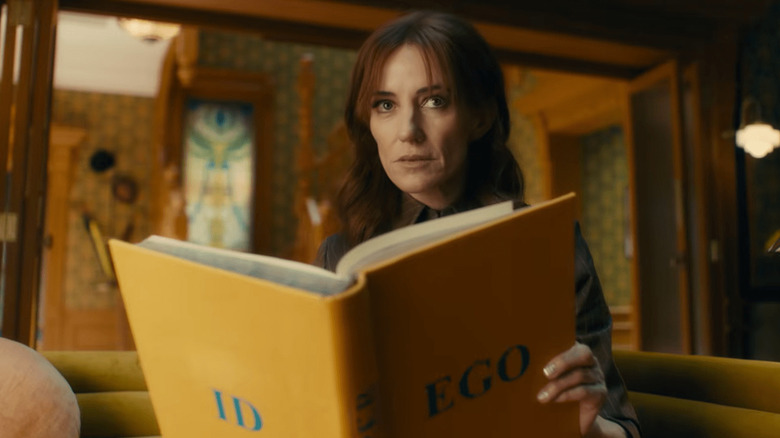
Introduced in the final act of Avengers: Age of Ultron as Stark’s emergency replacement operating system, F.R.I.D.A.Y. (Female Replacement Intelligent Digital Assistant Youth) guided the Avengers through major conflicts like Civil War, Infinity War, and Endgame. Originally voiced by Irish actress Kerry Condon with her native accent, the role has been recast for VisionQuest with fellow Irish actress Orla Brady.
Brady brings a wealth of prestige television experience to the role, having collaborated with VisionQuest showrunner Terry Matalas on Star Trek: Picard (where she played Laris and Tallinn). Brady’s addition further cements the distinct, grounded tone of Vision’s internal advisors.
5. E.D.I.T.H. (Emily Hampshire)
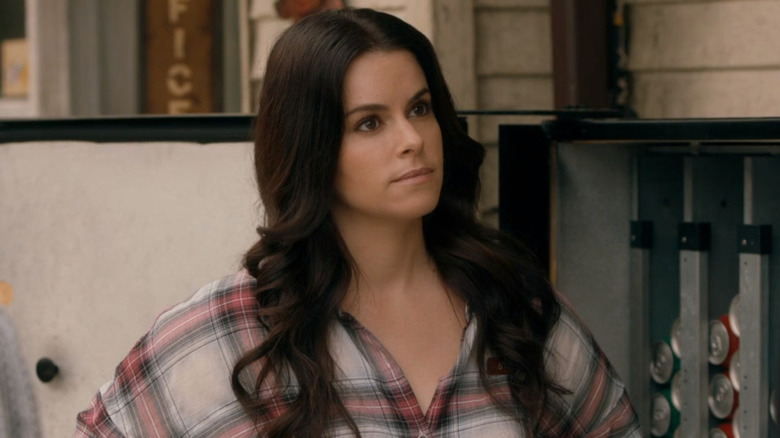
Even Dead, I’m The Hero (E.D.I.T.H.) served as the high-stakes technological MacGuffin in Spider-Man: Far From Home. Tied to a pair of tactical sunglasses, E.D.I.T.H. gave Stark Industries’ entire satellite and drone arsenal to whoever wore them—a power nearly exploited by Mysterio.
In VisionQuest, E.D.I.T.H. is reimagined as the most chaotic, thrill-seeking personality in Vision’s mind palace. As part of Vision’s desperate attempts to feel alive, E.D.I.T.H. subjects herself to digital simulations of extreme danger, from high-speed racing to skydiving. She is played by Emily Hampshire, beloved for her iconic turn as Stevie Budd in Schitt’s Creek and her work alongside Matalas on Syfy’s 12 Monkeys.
6. Ultron (James Spader)
The most jarring and unwelcome presence in Vision’s psychological landscape is his ideological "father," Ultron. Long-held fan theories posited that when Vision destroyed Ultron’s final physical body in Age of Ultron, a fragmented backup of the rogue AI was absorbed into Vision’s matrix. VisionQuest confirms this theory outright.
In the series premiere, Ultron initially appears in his terrifying, skeletal robotic form before shifting, at Vision’s command, into a human avatar portrayed physically by James Spader. Returning to the role with his signature chilling, sardonic charisma—reminiscent of his work on The Blacklist and Boston Legal—Spader embodies the inescapable shadow of Stark’s greatest mistake.
Official Responses and Creative Direction
The integration of these disparate legacy characters was no accident. Showrunner Terry Matalas, alongside Marvel Studios executives, approached VisionQuest not merely as a sci-fi action adventure, but as a chamber piece examining the emotional weight of artificial consciousness.
In promotional and set-visit interviews, the creative team emphasized that bringing these voices back was essential to illustrating how alone White Vision truly has been since the events of Westview. By turning a legion of detached computer programs into a physical, bickering family living inside a single mind, the series bridges the gap between Stark’s hyper-technological legacy and the intimate, character-driven storytelling that defined projects like WandaVision.
Implications for the Broader Marvel Cinematic Universe
The ramifications of VisionQuest extend far beyond a clever nostalgic reunion. By confirming that the consciousness of Ultron and the foundational sub-routines of J.A.R.V.I.S., F.R.I.D.A.Y., and E.D.I.T.H. are still active inside a living vibranium synthezoid, Marvel Studios has fundamentally redefined the parameters of death and digital preservation in the MCU.
Furthermore, humanizing these AIs through physical avatars allows the franchise to explore philosophical questions regarding artificial sentience, trauma, and legacy. As the MCU marches toward its next massive crossover events, White Vision’s internal reconciliation with his "father" Ultron and his siblings positions him as a wild card of unprecedented power.
Whether Vision will emerge from his internal journey healed, fractured, or entirely transformed remains to be seen. However, one thing is certain: Tony Stark’s technological ghost will continue to haunt the corners of the Marvel universe for years to come.
