
A Long Winter: Andrew Haigh Returns with a Breathtaking Adaptation of Colm Tóibín’s Tale
Main Facts
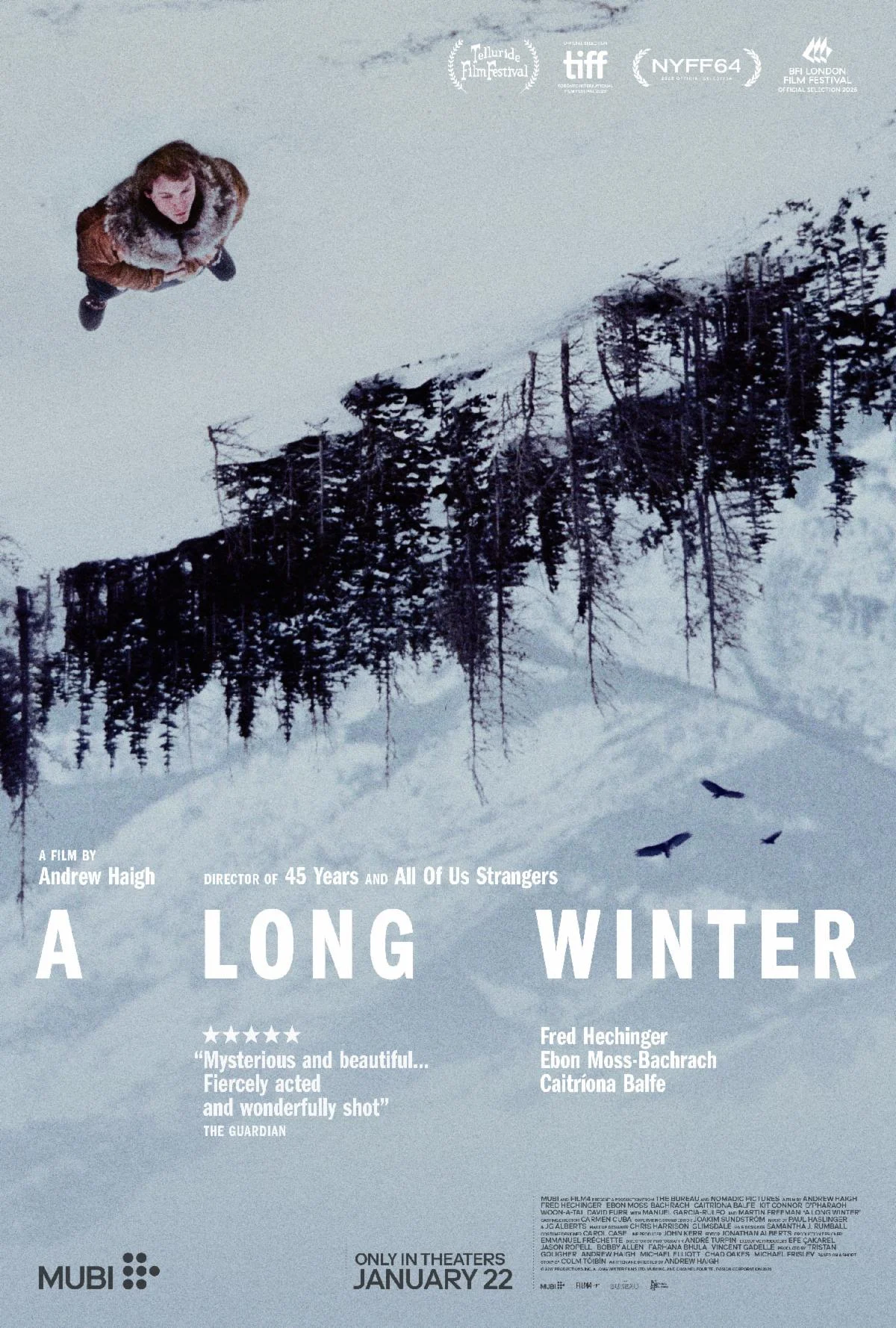
Acclaimed filmmaker Andrew Haigh—renowned for his delicate, emotionally resonant explorations of human vulnerability in modern masterpieces like All of Us Strangers and Weekend—is back. This time, Haigh turns his lens toward the stark, unforgiving landscapes of the American West with A Long Winter. The film adapts a poignant short story by celebrated Irish author Colm Tóibín, translating the master of internal prose onto the cinematic canvas.
Boasting a powerhouse ensemble cast, the film features Fred Hechinger (The White Lotus, Gladiator II) in the lead role of Mike, alongside Emmy Award winner Ebon Moss-Bachrach (The Bear, Andor), Caitríona Balfe (Belfast, Outlander), Kit Connor (Heartstopper), and D’Pharaoh Woon-A-Tai (Reservation Dogs).
Following a celebrated festival run that included a high-profile screening at the prestigious New York Film Festival (NYFF), A Long Winter is gearing up for a theatrical rollout. The film will open with an exclusive, qualifying theatrical engagement in New York starting December 4, ahead of a wider commercial release across U.S. theaters on January 22, 2027.
The narrative is set against the icy backdrop of 1951 in the Colorado Rocky Mountains. The plot follows a young man named Mike whose world shatters when his mother mysteriously vanishes into the freezing wilderness. Thrust into a harrowing rescue effort alongside his emotionally complex father, Mike must navigate not only the punishing elements but also a tightly knit mountain community banding together to survive the brutal season. What begins as a desperate search party slowly transforms into an intimate, life-changing journey of self-discovery, quiet resilience, and the difficult art of carrying on in the wake of profound loss.
Chronology
The journey of A Long Winter from page to screen, and subsequently to the global film festival circuit, reflects a deliberate, carefully crafted production trajectory typical of Haigh’s methodical career.
- The Source Material: Long before cameras rolled, Colm Tóibín’s short story captured readers with its understated examination of family dynamics, isolation, and emotional endurance. Tóibín’s literary style—characterized by subtext, deeply internal character struggles, and atmospheric tension—served as fertile ground for Haigh’s directorial sensibilities.
- Development and Casting: Pre-production saw Haigh assemble a remarkably diverse and high-caliber cast. By bringing together rising dramatic talents like Fred Hechinger and established veterans like Ebon Moss-Bachrach and Caitríona Balfe, the production established a dynamic intergenerational interplay vital to the story’s familial core.
- Production in the Rockies: Filming took place on location, utilizing the genuine, biting chill and towering geography of the Rocky Mountains to capture the authentic isolation of 1951 Colorado. The harsh environmental conditions became a character in their own right, directly influencing the performances and the film’s visual language.
- The Fall Festival Circuit (2026): A Long Winter made its anticipated debut on the fall festival circuit, culminating in a major showcase at the New York Film Festival. Critical reception was swift and overwhelmingly positive, positioning the film as a major player in the upcoming awards season and arthouse circuit.
- Upcoming Theatrical Rollout (December 2026 – January 2027): Distributor plans dictate a staggered release strategy. The film will first command attention with a specialized New York theatrical run starting on December 4, 2026, satisfying Academy qualification rules, before expanding to a nationwide U.S. theatrical release on January 22, 2027.
Supporting Data and Critical Reception
Early critical consensus indicates that A Long Winter maintains Andrew Haigh’s immaculate streak of critically adored features. Writing in his review for The Film Stage following the film’s New York Film Festival premiere, critic Kent M. Wilhelm noted the distinct evolution of Haigh’s career:

"In his second decade of feature filmmaking, Andrew Haigh has stealthily become one of cinema’s most emotionally perceptive voices. His characters never anticipate what’s coming their way, and he uses that element of surprise to test their mettle. Through internal struggle, he interrogates both our frailty and resilience through richly textured characters."
Wilhelm further praised the thematic continuity of Haigh’s filmography, adding that while the adaptation of Tóibín’s work is "sketched more broadly than previous work, it’s still a reflection of Haigh’s empathy, intelligence, and keen narrative instincts."
Box office analysts and industry insiders anticipate that while A Long Winter is fundamentally an upscale, character-driven drama rather than a mainstream blockbuster, it will perform strongly within specialized arthouse markets. Its pedigree—anchored by a celebrated director, a celebrated literary source, and an internet-favorite ensemble cast featuring Fred Hechinger and Ebon Moss-Bachrach—gives it robust crossover appeal among cinephiles and younger, prestige-film-leaning demographics.
Official Responses and Public Discourse
Public interest in A Long Winter surged following the official trailer drop, alongside deep-dive discussions recorded during the film’s festival run.
During the New York Film Festival, audiences were treated not only to the premiere of the film itself but also to extensive Q&A sessions and a deeply engaging public conversation between Andrew Haigh and fellow visionary filmmaker Ira Sachs (Passages, Little Men). These talks offered rare insight into Haigh’s creative process, highlighting how he translates Tóibín’s sparse prose into rich, cinematic audio-visual landscapes.
In the newly released promotional materials, including the official trailer, the stark visual cinematography of the Rocky Mountains is heavily emphasized. The footage showcases breathtaking, snow-choked vistas contrasted against the claustrophobic emotional weight carried by Hechinger and Moss-Bachrach’s characters.

While formal press statements from the cast have been measured, early interviews underscore the grueling yet rewarding physical nature of the shoot. Actors have frequently credited Haigh’s trademark collaborative and empathetic directing style for helping them navigate the heavy psychological and physical demands of their respective roles within the harsh mountain setting.
Implications
The arrival of A Long Winter carries several important implications for contemporary cinema, the careers of its principal creators, and the evolving landscape of literary adaptations.
1. Cementing Andrew Haigh’s Auteur Status
With A Long Winter, Andrew Haigh solidifies his reputation as one of the most reliable and distinct cinematic voices of the 21st century. Having explored contemporary gay relationships (Weekend), aging marital alienation (45 Years), economic precarity (Lean on Pete), and supernatural grief (All of Us Strangers), Haigh now proves his fluency in historical, atmospheric rural drama. The film broadens his canvas without diluting his trademark psychological intimacy.
2. A New Standard for Literary Adaptations
Colm Tóibín’s work has historically proven both magnetic and challenging to adapt due to its heavy reliance on internal consciousness rather than external plot mechanics. By successfully capturing the essence of Tóibín’s writing through visual isolation and pacing, A Long Winter serves as a masterclass in adaptation, potentially opening doors for more of Tóibín’s complex literary library to transition to the screen.
3. Career Milestones for the Cast
For Fred Hechinger, stepping into the emotional anchor of a Haigh drama marks a significant maturation in a rapidly ascending career, shifting from memorable supporting antagonist turns into profound, empathetic leading work. Simultaneously, Ebon Moss-Bachrach continues his streak of powerhouse dramatic choices, proving his range far beyond his comedic and action-oriented television successes.
As A Long Winter approaches its December qualifying run and January wide release, it stands poised to be one of the most emotionally devastating and visually arresting cinematic experiences of the season—a stark, beautiful reminder of humanity’s quiet strength when facing the coldest elements of the world and the human heart.
