
Capturing the Invisible: Military Aviation Photographer Simone Marulli Pushes the GoPro Mission 1 Pro ILS to Extremes
Main Facts
In the high-stakes world of military aviation photography, clarity, speed, and precision are everything. Renowned Italian military aviation photographer Simone Marulli has once again shattered expectations of what compact camera gear can achieve. Known primarily for utilizing high-end professional mirrorless bodies like the Sony a1 and the Sony a7R IV to capture supersonic fighter jets, Marulli recently turned his lens toward a less conventional tool: the GoPro Mission 1 Pro ILS.
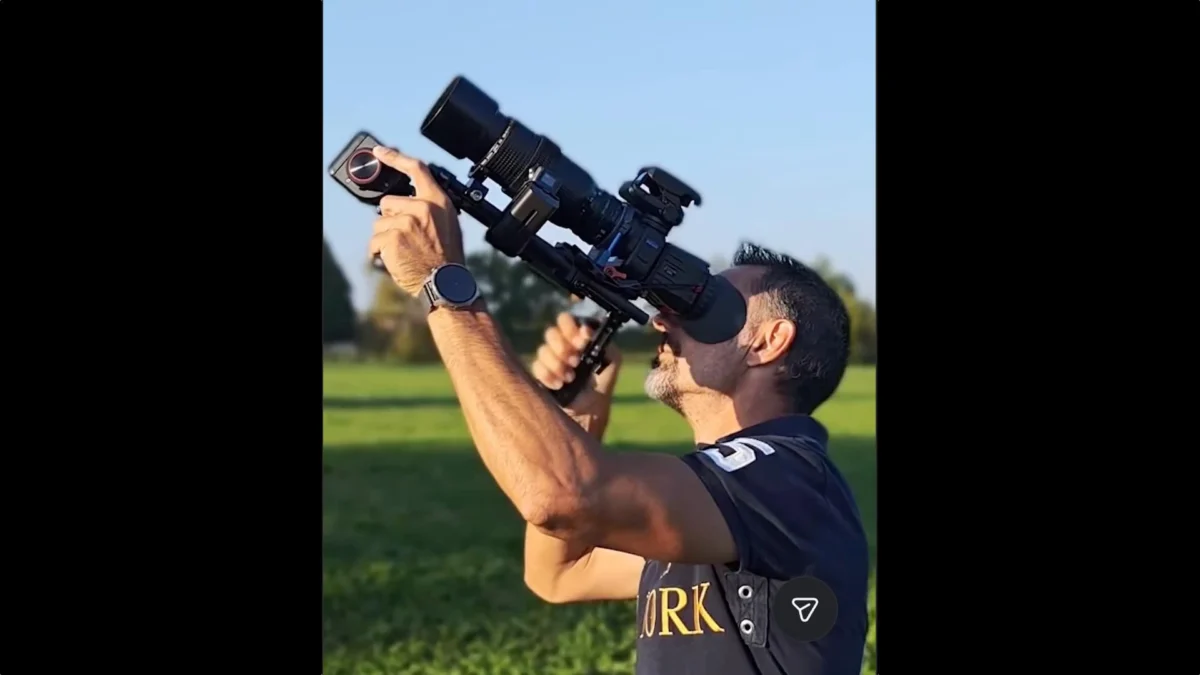
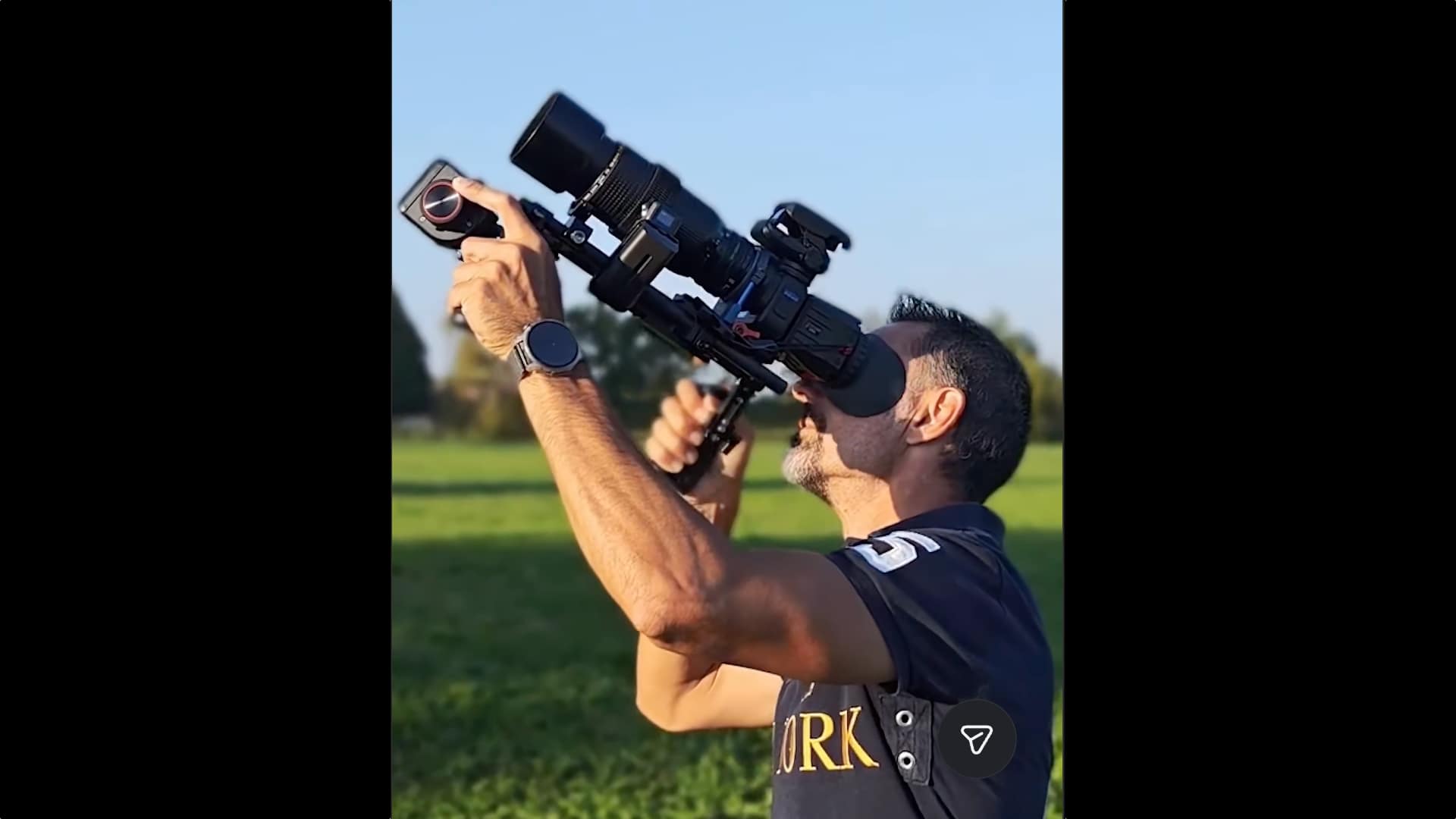
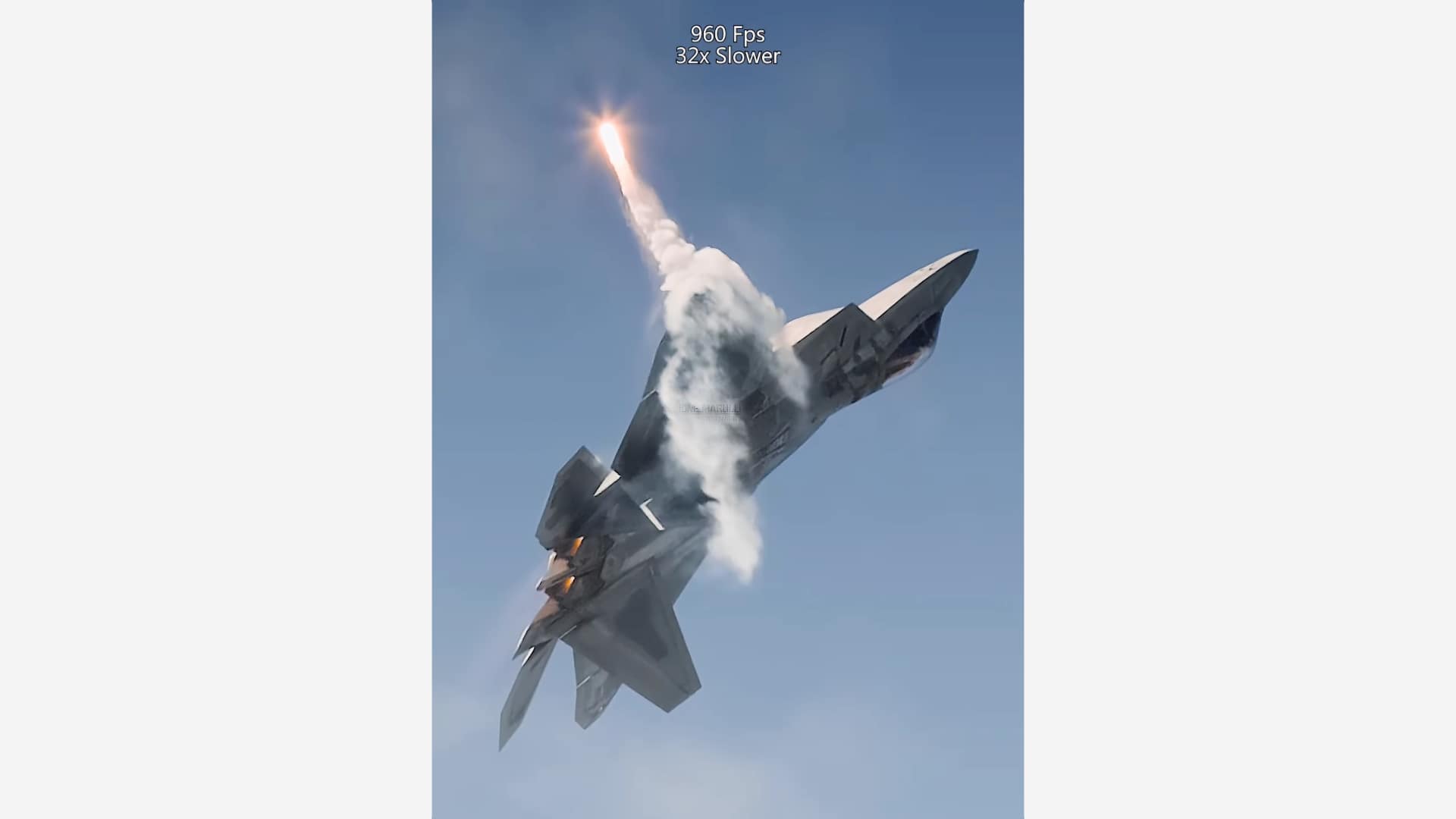
Mounting the camera onto a custom-built, unorthodox tracking rig affectionately dubbed "The Capriolo" (The Roe Deer), Marulli took to social media to showcase a breathtaking 50-second video. The centerpiece of the footage features an F-22 Raptor executing a steep climb and deploying countermeasures—flares—captured at an astonishing 960 frames per second (fps).
The resulting footage has gone viral across Instagram and other aviation communities, offering viewers an unprecedented, hyper-detailed look at rapid military maneuvers that happen far too quickly for the naked human eye to register. Marulli’s successful experiment has sparked widespread intrigue among photography enthusiasts, gear nerds, and aviation buffs alike, raising new questions about the viability of action cameras and specialized micro-cinema setups in extreme professional environments.
Chronology of Events
1. The Quest for Extreme Slow Motion
Simone Marulli has built a stellar reputation based on his jaw-dropping portfolio found on Marulli Photo. Typically relying on heavy, premium gear to freeze motion in the fraction of a second, Marulli grew curious about the outer limits of ultra-high-speed recording combined with telephoto reach. He sought a way to capture supersonic and high-speed subsonic aircraft maneuvers not just with photographic sharpness, but broken down into extreme temporal resolution.
2. Building "The Capriolo" Rig
To test these boundaries, Marulli engineered a slightly eccentric yet highly effective tracking rig. While full specifications have yet to be officially published, visual analysis of the rig suggests it pairs the GoPro Mission 1 Pro ILS with a manual-focus telephoto zoom lens—speculated by industry experts to be a vintage Canon FD glass adapted for the setup. This custom configuration was designed to handle the rigorous demands of tracking fast-moving aerial targets manually while maintaining razor-thin depth-of-field focus at immense distances.
3. The Capture: F-22 Flares at 960 FPS
Armed with "The Capriolo," Marulli descended upon an active flight environment to test the limits of the sensor. The defining moment of the recent field test came when an F-22 Raptor soared overhead, executing a steep climb and aggressively deploying thermal flares. Operating the rig, Marulli tracked the jet and recorded the sequence at an ultra-slow 960 fps.
4. Viral Sensation and Community Reaction
Marulli shared a 50-second compilation of this footage on Instagram. The clip immediately captivated digital audiences, accumulating thousands of views and sparking intense debates regarding lens choice, stabilization, and manual tracking mastery. Acknowledging the overwhelming public interest from creators wondering how a small-form-factor camera could produce such cinematic results, Marulli teased that a deeper dive into the rig’s components is currently on the way.
Supporting Data & Technical Breakdown
To fully appreciate the technical achievement behind Marulli’s viral video, it is necessary to examine the hardware, environmental variables, and physics involved in tracking modern military aircraft.
- The Camera: The GoPro Mission 1 Pro ILS bridges the gap between rugged action-camera heritage and specialized cinematic tooling. While traditional action cameras are praised for wide-angle POV shots, the Mission 1 Pro ILS variant utilized here opens doors to modular setups, specialized monitoring, and high-framerate acquisition.
- The Frame Rate: Recording at 960 fps means that every single second of real-time action is stretched across nearly 32 seconds of playback when viewed at a standard 30 fps timeline. This extreme slow-motion capability allows viewers to dissect the precise ignition pattern, chemical dispersion, and aerodynamic trajectory of countermeasure flares dropping away from a multi-million-dollar stealth fighter.
- The Optics & Manual Focus: Long-range aviation photography is notoriously difficult due to atmospheric distortion (heat haze), distance, and erratic aircraft movement. Marulli utilized a manual telephoto zoom lens mounted to his custom rig. When asked about the immense challenge of pulling focus on a jet moving at hundreds of miles per hour, Marulli offered a humbling perspective: beyond roughly 300 feet, maintaining sharp focus requires minuscule adjustments of merely a millimeter or two on the lens barrel.
- The Gear Contrast: Marulli’s daily driver cameras—the Sony a1 and a7R IV—represent the pinnacle of high-megapixel, full-frame mirrorless engineering, valued heavily for their lightning-fast autofocus tracking and high-resolution sensors. By contrast, adapting a compact cinema/action ecosystem like the GoPro Mission 1 Pro ILS with vintage manual glass demonstrates a raw, hands-on approach to optical experimentation that bypasses modern computer-assisted autofocus entirely.
Official Responses & Creator Commentary
The reception from Simone Marulli himself has been overwhelmingly enthusiastic, reflecting a genuine sense of discovery even for a seasoned professional used to capturing high-speed marvels.
Reflecting on the creation of "The Capriolo" and the performance of the camera, Marulli stated:
"I built this slightly ridiculous little tracking rig, which somehow ended up being called ‘The Capriolo’, because I wanted to see how far I could push the camera with fast-moving jets and extreme slow motion. And I have to say it: I’m genuinely impressed. This is a little monster Cinema camera, I truly love it!"
Elaborating on the unique educational and visual value of the footage, he added:
"Watching an F-22 deploy flares at up to 960 fps, seeing details that happen far too quickly for the human eye to catch, was exactly the kind of experiment I hoped this setup could make possible."
Addressing the flood of technical questions from fellow videographers, cinematographers, and aviation enthusiasts demanding to know the exact blueprint of his setup, Marulli offered a brief promise to his audience:
"A lot of you asked about this little cinema monster. Hold on — I’ve got something coming for you."
Implications for Aviation Photography and Indie Filmmaking
Marulli’s successful experiment with the GoPro Mission 1 Pro ILS and "The Capriolo" rig carries significant implications for both professional military documentation and independent filmmaking communities.
1. Democratizing High-Speed Cinematography
Historically, capturing high-definition footage at frame rates approaching or exceeding 1,000 fps required bulky, prohibitively expensive specialty high-speed broadcast cameras (such as Phantom Flex systems). By demonstrating that modular, smaller-form-factor cameras can achieve comparable high-frame-rate results when paired with clever rigging and manual telephoto optics, creators like Marulli prove that high-end cinematic looks are becoming increasingly accessible outside of major studio budgets.
2. The Renaissance of Vintage Glass and DIY Rigging
The intersection of modern micro-sensors and vintage manual lenses (such as adapted Canon FD telezooms) highlights a growing trend among modern visual artists. While modern autofocus systems are marvels of modern engineering, unpredictable environments—like tracking a jet against a bright, hazy sky where autofocus can easily hunt or get confused by atmospheric distortion—make manual tactile control superior in specific niches. Rigging solutions like "The Capriolo" showcase the value of custom engineering in solving unique optical challenges.
3. Redefining Action Camera Capabilities
Action cameras have long been typecast as tools for extreme sports athletes, vloggers, and crash-cam enthusiasts strapped to helmets or handlebars. Marulli’s work forces the industry to re-evaluate these devices as legitimate B-camera or specialized telemetry units in professional aerospace and documentary pipelines. As sensor technology, data read-out speeds, and modular mounting systems continue to evolve, the boundaries separating consumer action tech from professional cinema gear will continue to blur.
As the aviation photography community awaits Marulli’s promised breakdown of "The Capriolo," one thing is certain: the way we look at the skies, and the lightning-fast technology that guards them, will never look quite the same in real-time again.
