
Echoes of De-Evolution: Mark Mothersbaugh on Modern Darkness, the Origins of DEVO, and a Lifelong Career in Film Scoring
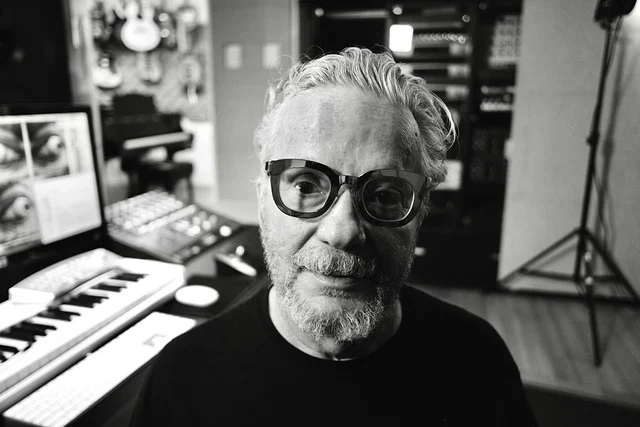
VANCOUVER — For Mark Mothersbaugh, co-founder and frontman of the iconic new-wave band DEVO, history feels less like a distant memory and more like an ominous loop. Speaking candidly at the Vancouver Film Festival, the veteran composer and multimedia artist reflected on the striking parallels between the politically fractured era that birthed his band in the 1970s and the turbulent social landscape of the present day.
Decades after conceptualizing human regression through a satirical lens, Mothersbaugh sees those dark prophecies manifesting in real-time. Yet, even as he critiques the modern resurgence of societal friction and contemplates the existential threats of new technologies like artificial intelligence, his creative engine shows no signs of slowing down. Balancing ongoing musical projects, a relentless feature film schedule, and a storied legacy in both rock and Hollywood orchestration, Mothersbaugh remains an active force in contemporary culture.
Main Facts: A Legacy of Satire, Cinema, and Survival
Mark Mothersbaugh’s career spans more than five decades, bridging the worlds of avant-garde rock and high-profile cinematic composition. Best known as the driving creative force behind DEVO—creators of the 1980 smash hit “Whip It”—Mothersbaugh has quietly built one of the most diverse composing portfolios in the entertainment industry.
Having scored roughly 100 films, television series, and video games, his credits range from indie classics to blockbuster franchises. His long-standing partnership with auteur Wes Anderson produced distinct sonic landscapes for Bottle Rocket, Rushmore, The Royal Tenenbaums, and The Life Aquatic with Steve Zissou. More recently, Mothersbaugh infused the Marvel Cinematic Universe with a distinct 1980s retro-futuristic aesthetic for Taika Waititi’s Thor: Ragnarok.
Despite a career that has earned him global acclaim and financial security, retirement is entirely off the table—largely due to his wife and manager, Anita Greenspan, who jokingly (or perhaps prophetically) noted that he is destined to die scoring music at his podium.
Chronology: From Kent State to the Studios of Hollywood
The Birth of "De-Evolution" (1970)
The genesis of DEVO is inextricably linked to one of the darkest moments in modern American history. In the wake of the May 4, 1970, shootings at Kent State University—where Ohio National Guardsmen opened fire on unarmed anti-war protesters, killing four students—Mothersbaugh and fellow co-founders like Gerald “Jerry” Casale sought a way to process the tragedy.
Rather than channeling their grief into traditional protest music, the students adopted the persona of "social scientists." They conceptualized the philosophy of "de-evolution"—the satirical idea that, rather than progressing, humanity was devolving morally, intellectually, and physically. This philosophy birthed DEVO in 1973, setting the stage for a musical movement rooted in biting social commentary and striking visual art.
Early Multimedia Experiments (1976)
Long before music videos became a standard promotional tool for the recording industry, DEVO was experimenting with the intersection of sound and vision. In 1976, the band collaborated with director Chuck Statler to release the short film In the Beginning Was the End: The Truth About De-Evolution. Starring members of the Mothersbaugh family alongside Casale, the project showcased the band’s early integration of conceptual art, quirky instrumentation, and dystopian storytelling.

The Breakthrough and the Cold War (Late 1970s–1980s)
DEVO achieved mainstream commercial success with albums like Q: Are We Not Men? A: We Are DEVO! and the ubiquitous chart-climber Whip It. During this period, the world was gripped by Cold War anxieties, atomic bomb scares, and the shadow of the 1962 Cuban Missile Crisis. For Mothersbaugh, the constant threat of nuclear annihilation felt like a sword of Damocles hanging over humanity—a theme that heavily influenced the band’s mechanized rhythms and deadpan lyrical delivery.
The Transition to Film and Television (1990s–Present)
As DEVO’s touring schedule slowed, Mothersbaugh pivoted toward commercial composition, founding Mutato Muzika, his Los Angeles-based studio on Sunset Boulevard. His transition into film scoring began in earnest through his creative partnership with Wes Anderson. Over the years, Mothersbaugh expanded his repertoire to include animation (The Lego Movie), action-comedy (21 Jump Street), and high-concept superhero spectacles (Thor: Ragnarok). Today, he juggles multiple feature film scores simultaneously, proving that his appetite for artistic exploration remains insatiable.
Supporting Data: The Scale of Mothersbaugh’s Output
To understand Mothersbaugh’s footprint in contemporary media, one must look at the sheer volume and reach of his work:
- Film and TV Credits: Approximately 100 projects scored across a 30-plus-year composing career.
- Collaboration History: Worked extensively with acclaimed directors including Wes Anderson, Taika Waititi, Phil Lord, and Christopher Miller.
- Box Office Reach: Contributed music to major commercial hits, including The Lego Movie ($469 million worldwide) and Thor: Ragnarok ($854 million worldwide).
- Studio Hub: Mutato Muzika serves as a creative laboratory housing vintage synthesizers, rare keyboards, and experimental sound-design gear used both for DEVO records and Hollywood orchestration.
Official Responses and Reflections: On Modern Paranoia and AI
Speaking from the Vancouver Film Festival, Mothersbaugh expressed deep dismay at the state of contemporary politics and public discourse, drawing a direct line between the reactionary social climates of his youth and today.
“It’s gone really dark again. We’re in a really dark place now, where we have greed and racism not hiding at all. They’re proud and displaying themselves, and it’s shocking that it could be this strong,” Mothersbaugh said.
The frontman also linked historical anxieties surrounding atomic warfare to the modern existential dread accompanying the rapid rise of generative artificial intelligence.
“With the atomic bomb, there were a lot of different opportunities for something really stupid and horrifying to happen. It could be the same with AI, with many things that are dark and not for the betterment of humans,” he explained.
Reflecting on his transition into big-budget Hollywood productions, Mothersbaugh recalled his interactions with Marvel Studios head Kevin Feige during the production of Thor: Ragnarok. Initially unaware of Feige’s industry clout, Mothersbaugh developed a working rapport with the producer while collaborating with director Taika Waititi.

“I didn’t even know who he [Feige] was at first,” Mothersbaugh recalled. “He’d come in when I was playing music for Taika, and there’d be this guy sitting there. And then we started talking and he was really interested.”
On his prolific output and the prospect of slowing down, Mothersbaugh shared a humorous exchange with his wife and manager, Anita Greenspan:
“My wife told me, ‘You’re not going to retire. You’ll slump over the podium and they’ll lift you up and carry you out of the room. That’s how you’re going to go.’”
Mothersbaugh added with a laugh: “It makes me nervous, because she’s also my agent.”
Implications: The Enduring Relevance of De-Evolution
As cultural anxieties shift around the challenges of generative AI, systemic polarization, and political extremism, the foundational philosophy of DEVO feels remarkably prescient. What began in the aftermath of the Kent State shootings as an avant-garde artistic critique of human regression has evolved into a prophetic lens through which generations view societal shifts.
For Mark Mothersbaugh, the antidote to this perceived de-evolution has always been unbridled creativity. Whether he is soldering circuits on vintage synthesizers in his Los Angeles studio, shaping the emotional core of an indie comedy, or crafting superhero themes for a global audience, his work remains a testament to the power of art as a survival mechanism.
As he continues to juggle multiple feature films, television projects, and video games concurrently, Mothersbaugh’s legacy extends far beyond the red energy domes of the 1980s. He stands today as a rare bridge between the countercultural punk ethos of the 20th century and the high-tech, hyper-connected storytelling landscape of the 21st—proving that while humanity may be de-evolving, the soundtrack to the decline has never sounded more vibrant.
