
Returning to the Deep End: How Peacock’s Crystal Lake Restructures the Lore of Friday the 13th
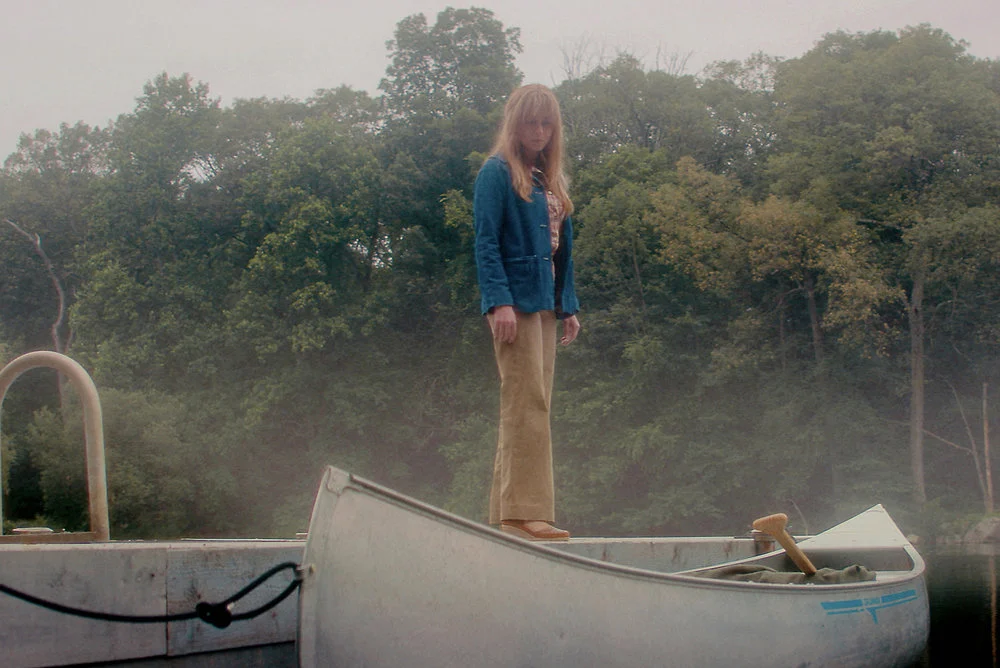
This article contains major spoilers for the series premiere of Peacock’s Crystal Lake.
Just when Jason Voorhees thought it was safe to go back into the water, the franchise’s legacy is dredged up once again. Peacock’s highly anticipated Friday the 13th prequel series, Crystal Lake, dropped all eight episodes as a special pre-Halloween streaming event, wasting zero time in subverting and expanding upon the seminal moment of cinematic terror that launched a 46-year horror dynasty.
Spanning 12 feature films, multiple video games, comic book adaptations, and now television, the Voorhees mythos has fundamentally shaped the pop-culture horror landscape. However, Crystal Lake aims to do something unprecedented: slow down, unpack the psychological underpinnings of Camp Blood, and humanize a monster long before he ever picked up a machete or donned a hockey mask.
Main Facts: A New Look at an Old Tragedy
Roughly six minutes into the Crystal Lake series premiere, a young Jason Voorhees (played by Callum Vinson) is seen splashing carelessly in the waters of the titular New Jersey summer camp. On the shore, his mother, Pamela Voorhees—portrayed by recent Emmy winner Linda Cardellini—watches with a proud, protective smile.
Just five minutes later, that warmth curdles into gut-wrenching horror. Neglected for a crucial moment, the young boy swims out far past his depth and slips beneath the surface of Crystal Lake, vanishing into the murky depths. Or so the audience is led to believe.
Unlike the original 1980 feature film—where Jason’s drowning was recounted strictly through brief, gritty flashbacks from an older Pamela’s (Betsy Palmer) decaying memory—Crystal Lake utilizes the expanded scale and resources of an NBCUniversal and A24 collaboration to deliver a visceral, lingering tragedy.

Showrunner Brad Caleb Kane and director Michael Lennox deliberately framed the sequence from the camp’s broader perspective, using long shots and agonizing cuts to emphasize the helpless reactions of those watching from the shore.
Chronology: Expanding the Bond Between Mother and Son
In the 1980 theatrical classic, Jason’s death is a quick inciting incident used to justify Pamela Voorhees’s psychotic grief-fueled rampage against the camp counselors. Crystal Lake, by contrast, lingers in the past. Through extended flashbacks woven across the premiere and the rest of the season, the series explores the intense, claustrophobic codependency shared by Pamela and Jason.
This narrative choice grants viewers the most extended screen time with Jason in his pre-killer era. Rather than depicting him immediately as a supernatural boogeyman, the series presents him as a complex, vulnerable child.
The Humanity Behind the Monster
Showrunner Brad Caleb Kane conceptualized young Jason not as an embryonic slasher, but as a normal child grappling with severe physical challenges. Canonically, Jason suffered from hydrocephalus, a medical condition resulting in severe facial disfigurement.
"For me, Jason really had to be a normal 11-year-old boy, except for the physical challenges that he has," Kane explains. "He just wants to fit in, but kids in the ’70s were cruel. They were cruel in the ’80s, too, and probably still cruel today! It’s just inherent to that age group; anybody who is different gets pushed outside the group."
Kane emphasizes that Pamela’s desperate desire for Jason to lead a normal life ultimately backfires, thrusting him into social environments he was unequipped to handle. This creates an acute psychological pressure cooker: "I wanted that dynamic to be as acute as possible so you can see why she would go off her head after losing the one thing she was ostensibly living for."

Supporting Data: The Cruelty of Camp Life and the 1970s Setting
The depiction of bullying in Crystal Lake draws heavily from psychological tropes seen in classic psychological horror films like The Bad Seed or The Good Son. However, Kane notes that the setting—the mid-1970s—was chosen deliberately to reflect a harsher reality of American childhood before the advent of modern anti-bullying initiatives.
"There were fewer mechanisms in place then to make sure that kids behaved themselves and treated each other with a little bit more kindness," says Kane, drawing on his own perspective as a parent. "There’s obviously since been a kindness movement in this country that’s pushed kids further in the direction of being responsible to others who are different from them."
This systemic lack of empathy forms the emotional core of a pivotal exchange in the premiere. At one point, a distraught Jason looks up at his mother and asks, "Mommy, why am I like this?"
According to Kane, that single line anchors the emotional stakes of the entire series, forecasting the tragic trajectory of the mother-son relationship:
"We, as parents, want to make everything OK for our kids. And the reality is that can’t… I really wanted that line to hammer home the idea that Pam loves Jason unconditionally, and wants to make everything okay—but in the end she can’t."
Official Responses: Behind the Creative Vision
Bringing a sacred cow of American horror to television presented a monumental challenge for the creative team. Kane and Lennox were tasked with respecting the rigid canon established over four decades while finding fresh dramatic angles to justify a television format.

Rather than going underwater with Jason during the drowning sequence, the creators intentionally kept the camera above the surface.
"We never wanted to go underwater with him; we wanted his drowning to feel mysterious to really play into the mystery that lingers when we pick up again nine months later," Kane notes. By keeping the camera on the shore with Pamela, the audience absorbs her specific flavor of helplessness—the realization that despite her hyper-protective instincts, she could not protect her child from fate.
"Something happens to him, and she’s not able to stop it," Kane adds. "So that sense of wanting to make things okay instead becomes this sense of ‘I failed my son.’"
Implications: What Crystal Lake Means for the Franchise’s Future
By anchoring its narrative in character-driven tragedy rather than immediate gore, Crystal Lake redefines how legacy horror properties can operate on television.
- Deconstructing the Villain: By spending significant time with an 11-year-old Jason navigating social cruelty, the series challenges audiences to view the Camp Crystal Lake massacre not merely as random slasher violence, but as the inevitable fallout of societal abandonment and maternal desperation.
- Elevating Linda Cardellini’s Pamela: Linda Cardellini’s post-Emmy win positioning adds immediate prestige gravity to the proceedings. Her portrayal of Pamela Voorhees shifts the character from a one-note twist villain in the 1980 film into a deeply tragic, multi-dimensional figure of maternal grief.
- Redefining Prequel Expectations: Rather than rushing to show hockey masks and machetes, Peacock and A24 are betting that fans are hungry for a slow-burn, atmospheric sociological tragedy set against the backdrop of 1970s summer camp nostalgia.
As the series unfolds its remaining episodes, one thing remains crystal clear: while Pamela Voorhees may have failed to save her son from the depths of the lake, when it comes to exacting bloody vengeance on the world that broke him, she is bound to succeed.
