
Echoes of Tulsa: How Laura Karpman and Raphael Saadiq Composed the Soul of Lovecraft Country
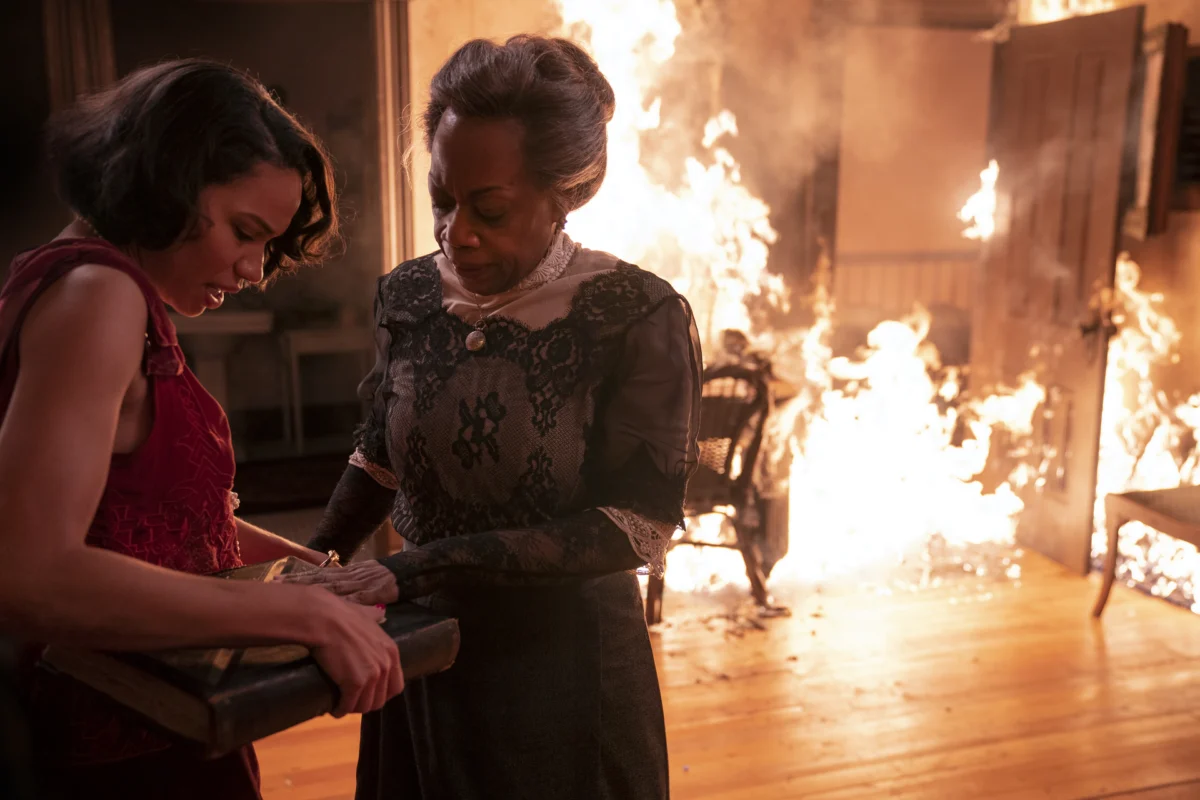
In the landscape of modern television, few sequences have achieved the visceral, haunting impact of the 1921 Tulsa Race Massacre montage in HBO’s Lovecraft Country. The sequence, which blends historical trauma with the show’s signature supernatural aesthetic, is anchored by a musical score that transcends traditional underscoring. Composed by the collaborative powerhouse of Laura Karpman and Raphael Saadiq, the music transforms a harrowing historical event into an operatic requiem—a testament to Black resilience, rage, and the preservation of legacy.
This article examines the meticulous craft behind that score, exploring how the composers bridged the gap between historical agony and genre-bending storytelling to create what showrunner Misha Green dubbed "Gothic R&B."
The Genesis of a Requiem: Adapting Sonia Sanchez
At the heart of the Tulsa sequence lies an inspired reimagining of Sonia Sanchez’s seminal poem, "Catch the Fire." While the poem appears earlier in the episode as a gentle, rhythmic invocation, the musical adaptation by Karpman and Saadiq serves a far more explosive purpose.
"Misha Green licensed the Sonia Sanchez poem, and it’s this beautiful, almost calm rendering in the early part of the episode," Karpman explained. "But our version takes that foundation and explodes it. We synthesized the message, cutting it down to the essential, visceral core: it is a call to action, a profound protest, and an expression of pure, unadulterated rage."

To achieve the desired operatic weight, the duo brought in Chicago-based soprano Janai Brugger. Her vocal performance provides the narrative spine of the montage, soaring over the visual chaos of fire, destruction, and the desperate, magical fight for survival. The result is a piece that feels both ancient and immediate, functioning as a funeral mass for the victims of the real-world 1921 massacre while simultaneously pushing the narrative toward a future defined by Black empowerment.
Chronology of Creation: A Pandemic-Era Achievement
The production of this score was as complex as the show’s narrative structure. Composed in June 2020, against the backdrop of the global COVID-19 pandemic and the massive social unrest following the murder of George Floyd, the process was one of profound isolation and intensity.
The "Unison Orchestra" Experiment
Because traditional recording studios were shuttered, the composers could not rely on the standard orchestral recording process. Instead, they pioneered an innovative approach: a "Unison Orchestra" of nearly 30 individual players. Each musician recorded their parts separately from home, sending their files to be layered and synthesized into a cohesive, sweeping whole.
"It was scored in June, when everything was really afire," Karpman recalled. "It was deep and surreal. There was a lot of isolation for everybody, and the music reflected that. It was one of those rare creative moments where the piece was accepted instantly, without notes or revisions. Misha simply heard it and said, ‘Good job, good cue.’"

The Influence of Mozart
The inspiration for the operatic tone came from an unlikely place: the Metropolitan Opera. Karpman had been moved by a performance of Mozart’s The Magic Flute, specifically the scene where the character Pamina walks through fire as a test of her resolve. Seeing the juxtaposition of classical opera and fiery trial provided the structural template for the Tulsa montage, where the character Leti (Jurnee Smollett) moves imperviously through the inferno, clutching the "Book of Names" to ensure her family’s legacy survives the destruction.
Defining "Gothic R&B": Genre-Bending as Activism
Misha Green’s vision for Lovecraft Country was ambitious: each of the ten episodes was designed to embrace a different genre, from sci-fi and action-adventure to war and period drama. For the composers, this required a fluid musical language that could shift gears while maintaining a consistent emotional thread.
Breaking the Silos
"Misha conceived the music as a mash-up," said Karpman. "She would tell us, ‘I want to put my people in Raiders of the Lost Ark, so give me that. Do opera, do military music for war movies.’"
This approach allowed Karpman and Saadiq to dismantle the "silos" of film music. Historically, many of these genres have excluded or caricatured Black protagonists. By utilizing the musical vernacular of these genres—the sweeping orchestral tropes of adventure films, the solemnity of war marches—Karpman and Saadiq reclaimed these spaces. They were not merely mimicking these styles; they were "claiming them for under-represented people," effectively decolonizing the sonic landscape of the adventure genre.

The Foundation of "Ardham"
The musical world of the show began with the theme for "Ardham," which set the tone for the dark, occult family legacy central to the series. The theme draws heavily from Saadiq’s own history in R&B, specifically his song "Sinners Prayer."
"To me, that track defined ‘Gothic R&B,’" Karpman noted. "It bridged the gap between the past and the present, which is the central tension of Lovecraft Country. The music needed to feel like it was rooted in the history of the South, but also capable of existing in a world where magic and sci-fi collide."
Supporting Data: The Composers’ Collaborative Synergy
The partnership between Laura Karpman and Raphael Saadiq was a deliberate collision of two distinct musical worlds. Karpman, an acclaimed orchestrator with a deep background in classical and cinematic composition, brought the technical precision of the "string heaven" she often refers to. Saadiq, a Grammy-winning producer and multi-instrumentalist, brought the soul, the rhythm, and the guitar-driven edge that grounded the show’s more surreal moments.
Their synergy is reminiscent of the great film composers of the 1960s, such as Jerry Goldsmith, who famously melded modernistic, experimental sounds with traditional orchestral structures.

"It was very spiritual, hymn-like, and orchestral," Saadiq reflected. "Laura is a master of strings, and I’ve always enjoyed exploring genres where people think you can’t go. When you have a deep respect for the past, you find yourself wanting to lend your spirit back to that history by trying to move it forward. That’s what we tried to do with Lovecraft."
Implications: The Legacy of the Score
The score for Lovecraft Country has become a case study in how television music can serve as a narrative force rather than mere background noise. By earning an Emmy nomination, the work solidified its place in the pantheon of significant television scores.
Redefining the "Requiem"
The success of the Tulsa montage music lies in its refusal to be purely mournful. As Karpman noted, "What makes the scene work is that the music is aggressive but gentle. It’s a mass for the dead, and that’s what a requiem is: beautiful, sad, and purposeful."
By using music to underscore the strength of the characters rather than just their suffering, Karpman and Saadiq ensured that the Tulsa sequence was not a hollow depiction of tragedy, but an active, breathing portrait of resistance.

Impact on Future Soundscapes
The "Gothic R&B" experiment proved that audiences are ready for genre-blending scores that prioritize cultural authenticity and emotional complexity over standard genre tropes. The ability to record during the pandemic using unconventional methods also opened new doors for future productions, showing that collaboration can transcend physical distance when the vision is clear.
In the final analysis, the music of Lovecraft Country does more than support the visual narrative—it provides the audience with a way to process the history being shown. It turns the "fire" of the 1921 massacre into a transformative force, ensuring that the legacy of the people of Tulsa is not silenced by the tragedy, but amplified by the music that remembers them.
