
The Great Convergence: How SPINVFX CEO Neishaw Ali Says AI, Real-Time Engines, and USD Are Reinventing the Screen-Based Content Economy
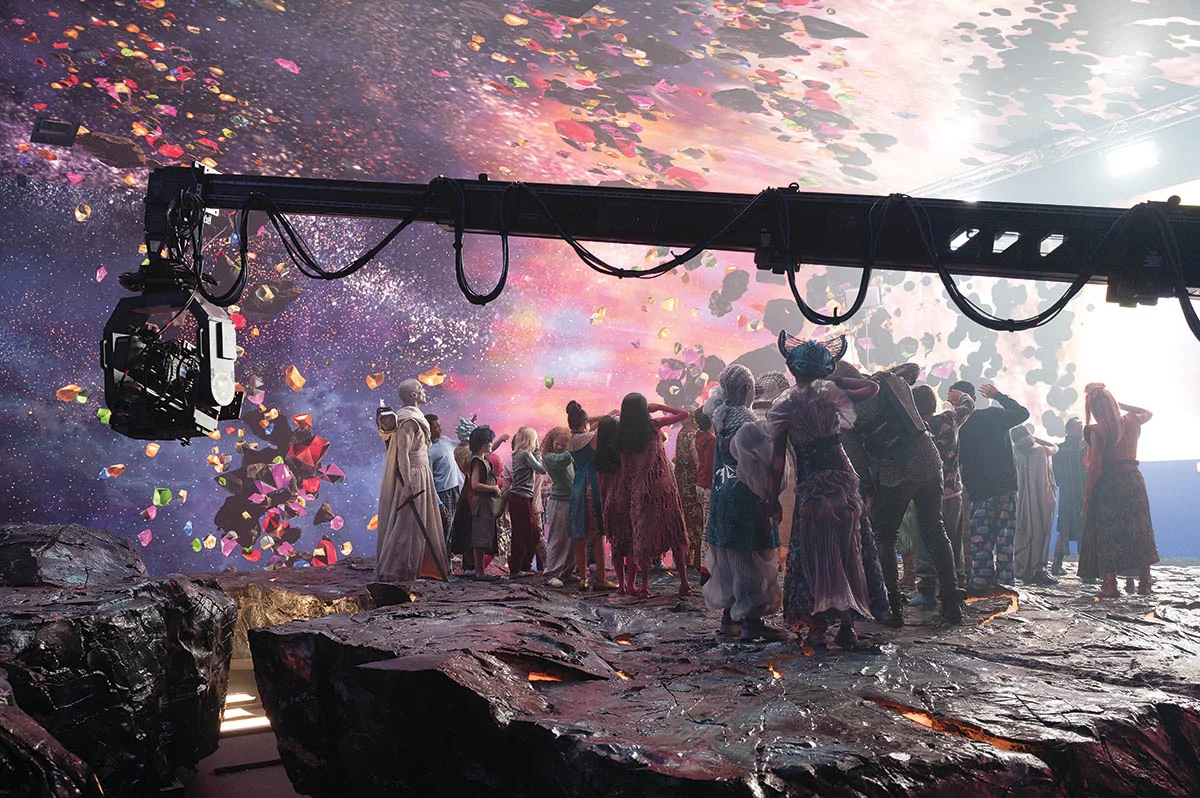
TORONTO — For nearly a century, the entertainment and media landscape has operated under a strict system of architectural segregation. Film, television, gaming, animation, visual effects, advertising, and immersive media have each functioned as sovereign fiefdoms. They maintained distinct talent pools, proprietary technologies, isolated workflows, and deeply entrenched business models.
Today, that traditional wall of separation is crumbling.
According to Neishaw Ali, Founding Partner, Chief Executive Officer, and Executive Producer of Toronto-based SPINVFX, the entertainment industry is no longer merely evolving—it is undergoing a profound and irreversible reinvention. As digital assets cross over seamlessly from cinematic blockbusters to immersive spatial computing environments, the entire production paradigm is shifting toward a unified, cross-platform reality.
In an in-depth industry analysis, Ali articulates a future where traditional studio classifications become obsolete. Studios will no longer identify simply as visual effects houses, animation hubs, or game developers. Instead, they will transform into agile "content technology companies" fueled by artificial intelligence, Universal Scene Description (USD) frameworks, real-time engines, and cloud-native collaboration.
Main Facts: The Anatomy of a Paradigm Shift
The core narrative emerging from Toronto’s digital production sector is built upon a few foundational pillars that are reshaping the global content supply chain:
- The Collapse of Silos: Traditional boundaries separating film, TV, gaming, and advertising are dissolving into a single, unified "screen-based content economy."
- Asset Multi-Use (The "Create Once, Deploy Everywhere" Model): Digital assets—such as 3D characters, virtual environments, and textures—are no longer built for a single project. They are engineered to migrate fluidly across feature films, streaming episodic content, video games, live concerts, and spatial computing/VR experiences.
- The Death of the Linear Pipeline: The historical sequential pipeline, where departments work in strict isolation and hand off data step-by-step, is being replaced by a simultaneous, connected ecosystem powered by USD (Universal Scene Description) and cloud infrastructure.
- AI as a Creative Catalyst: Rather than serving as an instrument for workforce replacement, artificial intelligence is functioning as a critical accelerator that eliminates low-level, repetitive administrative and technical friction, freeing up human creators for complex storytelling and emotional direction.
- The Rise of the Content Tech Studio: The next generation of successful studios will not be defined by headcount or raw computing power alone, but by the intelligence, interoperability, and adaptability of their technical pipelines.
Chronology: The Evolution Toward Real-Time, Connected Ecosystems
To understand where the entertainment industry is heading, it is necessary to examine how digital production has evolved over the past three decades from physical mechanics to hyper-connected cloud pipelines.
Phase 1: The Age of Siloed Specialization (Late 1990s – 2010s)
During the formative years of digital visual effects and computer animation, computing power was scarce, and data storage was expensive. Studios operated in rigid compartments. A visual effects house rarely communicated directly with a game developer building a tie-in title. Assets were built from scratch for specific mediums, and formats were largely incompatible. File formats had to be painstakingly converted, resulting in data loss, massive redundancy, and inflated budgets.
Phase 2: The Streaming Boom and Multi-Platform Demands (2010s – 2020)
The proliferation of subscription video-on-demand (SVOD) platforms dramatically increased the global demand for high-end visual effects and animation. Concurrently, the video game industry matured into a multi-billion-dollar juggernaut that routinely rivaled or exceeded box-office earnings. Content creators found themselves under immense pressure to deliver cinematic quality at television speeds. The cracks in the linear pipeline began to show, as manual data handoffs between departments created massive bottlenecks.
Phase 3: The Real-Time and Cloud Revolution (2020 – Present)
The COVID-19 pandemic acted as an unexpected catalyst for remote work and cloud infrastructure adoption. Simultaneously, real-time engines (such as Unreal Engine and Unity) matured to a point where they could render cinematic-quality environments instantaneously. Around the same time, Universal Scene Description (USD)—pioneered by Pixar and widely adopted across the tech and media landscape—emerged as the universal language for 3D data.
As Ali points out, we have now crossed the threshold into the modern screen-based content economy, where these technologies converge into a single, real-time workspace.
Supporting Data and Technical Foundations: The Engine Room of Modern Production
The transition from isolated media sectors to a unified screen economy is underpinned by specific technological breakthroughs that allow massive amounts of digital data to move at unprecedented speeds.
1. Universal Scene Description (USD)
Developed to solve the complex data-sharing challenges of modern computer graphics, USD allows multiple artists to work on the same 3D scene simultaneously. Instead of exporting heavy, static files between departments, USD acts as an open-source, extensible framework that references live data. A lighting artist, an animator, and a layout supervisor can open the exact same scene file and see updates in real-time, regardless of where they are physically located.
2. Real-Time Engines
Historically, rendering a complex cinematic frame could take hours or even days on a render farm. Today, real-time engines leverage advanced ray-tracing and GPU acceleration to render photorealistic imagery instantly. This technology allows filmmakers, visual effects artists, and game developers to make creative decisions on set and in real-time, collapsing the post-production timeline.
3. Cloud-Native Collaboration
Geographical boundaries are no longer a barrier to creative execution. Cloud storage and high-speed fibre networks enable global talent pools to collaborate seamlessly. Artists in Toronto, London, Los Angeles, and Vancouver can access identical asset libraries and project files via secure cloud nodes, turning the traditional brick-and-mortar studio into a borderless, 24-hour production machine.
4. AI-Driven Optimization
Machine learning models and generative AI tools are increasingly integrated into digital pipelines to automate mundane technical tasks. According to industry metrics, rotoscoping, clean-up, UV unwrapping, and basic texture generation—processes that historically consumed thousands of manual artist hours—can now be accelerated or partially automated, allowing human supervisors to focus on higher-level creative execution.
Official Perspectives: Neishaw Ali on the Future of Content
In her comprehensive assessment of the modern media marketplace, Neishaw Ali emphasizes that the transformation underway is not merely cosmetic or technological; it is philosophical.
"For decades, our industry has been organized around separate sectors such as film, television, gaming, animation, visual effects, advertising and immersive media," Ali explains. "Each had its own workflows, technology, talent and business models. That distinction is rapidly disappearing."
Ali argues that the true economic value in modern production no longer lies in the redundant creation of assets for a single medium. In the past, a 3D creature or digital environment built for a feature film had to be entirely rebuilt or heavily modified by a separate team if it was going to appear in a companion video game or marketing campaign. That inefficiency is no longer economically viable.
"We’re entering a screen-based content economy where content is no longer defined by where it’s viewed but by how efficiently it can move across platforms," says Ali. "The same characters, environments and digital assets can power a feature film, a streaming series, a game, a live event or an immersive experience. The value is no longer in creating assets once; instead, it’s in creating them once and using them everywhere."
To capture this value, studios must dismantle legacy workflows where departments operate in silos. Ali highlights the shift from sequential workflows to a concurrent production model:
"That requires a completely different production model. The traditional linear pipeline where departments work in isolation and hand work off one stage at a time is giving way to a connected ecosystem built on USD, real-time engines, AI tech and cloud collaboration. Production is becoming simultaneous rather than sequential. Artists, supervisors, clients, and technology are all interacting with the same data at the same time."
Addressing the widespread industry anxieties surrounding artificial intelligence, Ali offers a measured, human-centric perspective:
"AI is accelerating this shift, but I don’t believe its greatest impact is replacing artists. Its real value is removing the repetitive work that prevents artists from doing what humans do best: making creative decisions, solving complex problems and telling compelling stories."
Finally, Ali looks ahead to the definition of the modern studio, forecasting a landscape where technological agility and human ingenuity are inseparable:
"I believe the next generation of studios won’t be defined by whether they’re VFX studios, animation studios or game studios. They’ll be content technology companies that combine world-class artists with intelligent, interoperable pipelines capable of creating content for every screen. The competitive advantage will no longer come from having the most artists or even the newest technology. It will come from how well technology enhances human creativity, how quickly ideas move from concept to screen, and how effectively studios can adapt to a market that is changing faster than ever before. It isn’t an evolution of our business; it is a reinvention of it."
Implications: What This Means for the Global Entertainment Industry
The convergence articulated by SPINVFX leadership carries profound implications for stakeholders across the entire media and entertainment ecosystem.
For Studios and Production Companies
Traditional production houses that cling to legacy, siloed workflows risk pricing themselves out of the market. Studios must invest heavily in pipeline modernization—specifically adopting USD standards, training artists in real-time engine workflows, and securing cloud infrastructure. Profitability in the new screen economy will depend heavily on maximizing asset reusability across multiple distribution channels.
For Artists and Creative Professionals
The role of the digital artist is evolving. Technical execution alone is no longer a guaranteed differentiator, as software and AI tools automate repetitive tasks. Instead, the market is placing an even higher premium on human skills that cannot be automated: high-level artistic direction, complex emotional storytelling, spatial problem-solving, and cross-disciplinary collaboration. Artists who understand how to operate within real-time, interconnected pipelines will find themselves in high demand.
For Producers and Financiers
Financial models are also shifting. Because production is becoming simultaneous rather than sequential, budgeting and scheduling must account for concurrent multi-platform output. Investors are increasingly looking to fund companies that possess scalable, proprietary technological infrastructure capable of mitigating risk and accelerating time-to-market.
Conclusion
As the digital boundary lines between cinema, television, gaming, and immersive media continue to dissolve, industry leaders like Neishaw Ali are charting a clear path forward. The future belongs not to the isolated specialist, but to the agile content technology company—one that bridges the gap between raw technological capability and profound human creativity, ensuring that stories can be told seamlessly, efficiently, and brilliantly across every screen imaginable.
